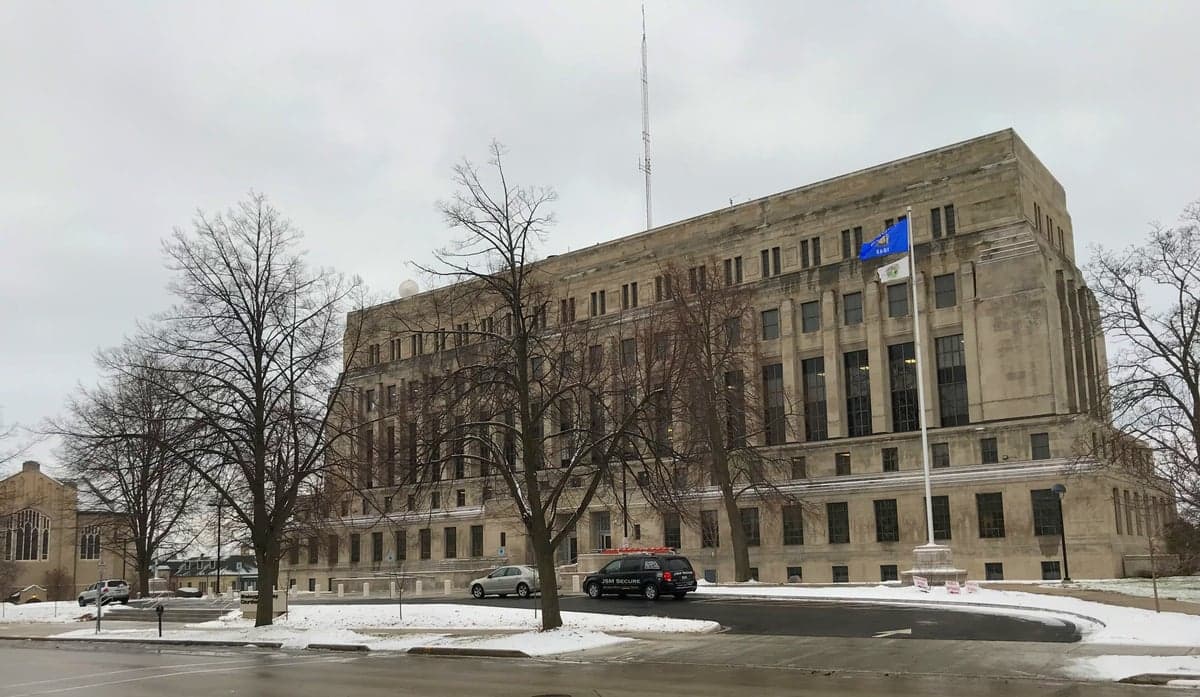
Photo: Wikipedia
Demographics of Sheboygan County
Affluence Level in Sheboygan County
A middle-class area roughly in line with national averages across income, home values, education, and employment.
People of Sheboygan County
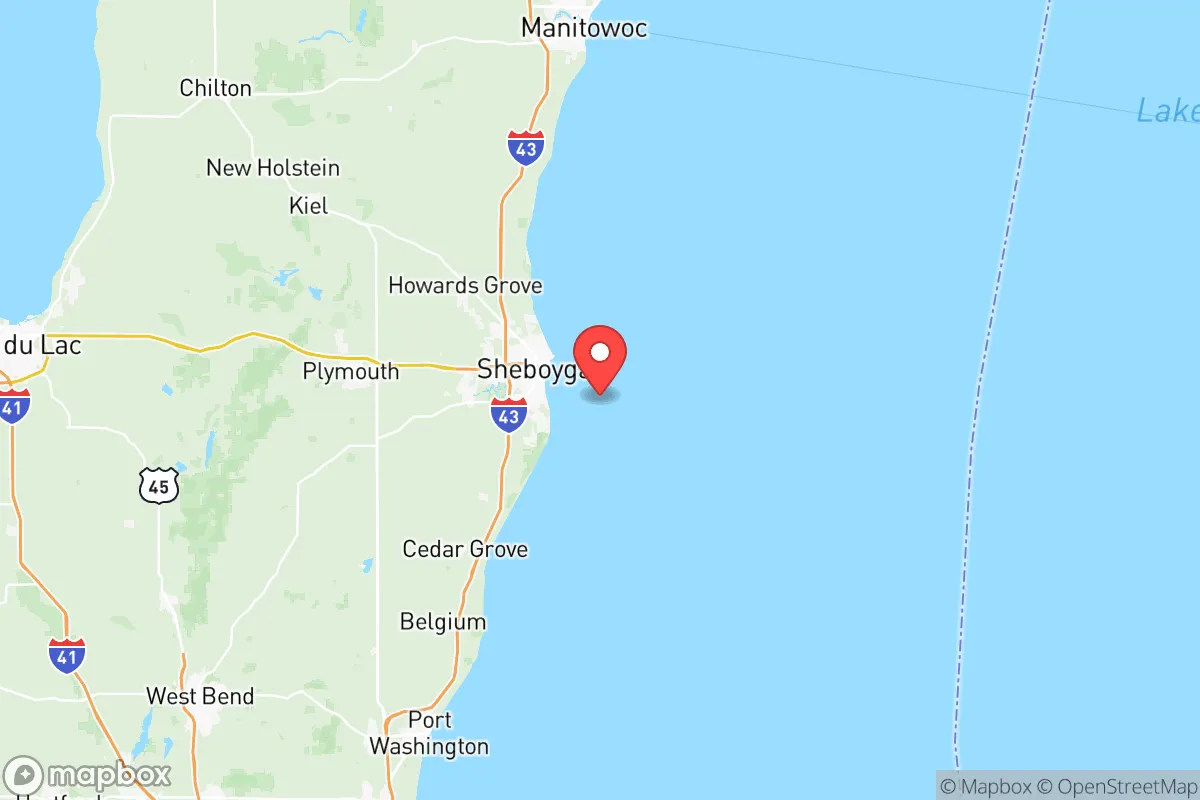
The people of Sheboygan County, Wisconsin, today number 117,783, forming a predominantly white (81.6%) and culturally rooted community with a distinctive German-American character that remains visible in its small cities, lakefront villages, and rural townships. The county is moderately dense for a Midwestern non-metro area, with a population spread across the city of Sheboygan (the urban core), the lakeside communities of Sheboygan Falls, Kohler, and Oostburg, and inland towns like Plymouth and Elkhart Lake. Its identity is shaped by a deep Lutheran and Catholic heritage, a manufacturing economy tied to the Kohler Company and other industrial employers, and a population that is notably less diverse than the national average, with a foreign-born share of just 2.6% and a college attainment rate of 27.3%.
Settlement & growth (pre-1960)
Before European settlement, the area now known as Sheboygan County was inhabited by the Menominee, Ojibwe, and Potawatomi nations, who used the Sheboygan River and Lake Michigan shoreline for fishing, trade, and seasonal camps. The name "Sheboygan" itself is derived from a Native word, likely meaning "passageway" or "river of the dead." French fur traders and missionaries passed through the region in the 17th and 18th centuries, but no permanent European settlements were established until the 1830s, when the U.S. government forced the Native nations onto reservations through treaties like the 1831 Treaty of Washington, opening the land to Yankee settlers from New England and New York.
The first major wave of American settlers arrived in the 1830s and 1840s, primarily Yankees from upstate New York and New England who founded the county seat of Sheboygan (1835) and the inland village of Plymouth (1845). These early settlers were drawn by cheap land, the promise of Lake Michigan shipping, and the region's dense forests, which fueled a lumber boom. They established the county's initial political and commercial institutions, including the first churches, schools, and sawmills.
The defining demographic event for Sheboygan County was the massive German immigration wave that began in the 1840s and continued through the 1890s. German-speaking immigrants—primarily from Prussia, Pomerania, and Bavaria—flooded into the county, drawn by the availability of farmland and the reputation of Wisconsin as a free state with strong German communities. They settled heavily in the city of Sheboygan, which became known as a "German Athens" for its dense network of German-language newspapers, churches, and social clubs. They also founded the inland towns of Kohler (named after the German-born industrialist John Michael Kohler) and Oostburg, which was settled by Dutch immigrants in the 1840s but quickly absorbed into the broader German cultural sphere. The village of Cedar Grove was established by Dutch settlers in the 1840s, and Elkhart Lake became a resort destination for German-American families from Milwaukee and Chicago. By 1900, German-Americans and their descendants made up an estimated 70-80% of the county's population, a proportion that remained stable through the mid-20th century.
Other European groups arrived in smaller numbers. Irish immigrants came in the 1850s and 1860s, many working on railroad construction and settling in Sheboygan and Plymouth. A small wave of Polish immigrants arrived in the 1880s and 1890s, primarily in Sheboygan, where they formed a distinct Catholic parish. The Kohler Company, founded in 1873, became the county's dominant employer, drawing workers from German, Dutch, and Irish backgrounds to its factory in Kohler and its planned company town. The county's population grew steadily from about 30,000 in 1860 to 66,000 by 1920, driven by natural increase and continued German immigration.
The period from 1920 to 1960 saw a slowdown in immigration due to the restrictive 1924 Johnson-Reed Act, which heavily favored Northern European groups and effectively ended mass migration from Germany. The county's population grew to about 100,000 by 1960, driven by the post-World War II baby boom and the expansion of manufacturing at Kohler and other factories. The African American population remained negligible—less than 0.5%—as the Great Migration largely bypassed Sheboygan County in favor of larger industrial cities like Milwaukee and Chicago. The county's cultural identity remained overwhelmingly German-American, with Lutheran and Catholic churches, bratwurst festivals, and a strong work ethic centered on factory labor and dairy farming.
Modern era (post-1965)
The 1965 Hart-Cellar Act, which eliminated national-origin quotas, had a limited immediate impact on Sheboygan County. The county's foreign-born population remained below 3% through the 1990s, as the region lacked the large urban job centers and established ethnic enclaves that attracted new immigrants to places like Milwaukee or Chicago. However, the 1990s and 2000s brought a modest but noticeable shift. The Hispanic population, which was essentially zero in 1970, grew to 7.5% by the 2020s, driven by Mexican and Central American immigrants who came to work in the county's manufacturing plants, dairy farms, and food processing facilities. These new residents concentrated in the city of Sheboygan, particularly in the near-south side neighborhoods near the Sheboygan River, and in Plymouth, where a small but growing Hispanic community formed around the Sargento Foods plant and other food processors.
The East/Southeast Asian population, now at 5.8%, is a more recent phenomenon, largely dating to the 2000s and 2010s. This group is primarily Hmong, with smaller numbers of Vietnamese and Chinese residents. The Hmong community, many of whom are refugees or descendants of refugees from Laos, settled in Sheboygan and Sheboygan Falls, drawn by the availability of manufacturing jobs at Kohler, Bemis Manufacturing, and other factories. They have established a small but visible cultural presence, including Hmong-language churches and a Hmong New Year celebration. The Indian subcontinent population remains tiny at 0.2%, concentrated among a handful of professionals working at Kohler and local hospitals.
The Black population, at 2.0%, is small but has grown slightly since 2000, primarily through domestic migration from Milwaukee and Chicago. Most Black residents live in Sheboygan, where they have formed a small but stable community centered on a few churches and social organizations. The county's overall racial and ethnic diversity remains low by national standards, but the city of Sheboygan is notably more diverse than the surrounding townships, with a non-white population of roughly 25% compared to less than 10% in rural areas like Elkhart Lake and Cedar Grove.
Domestic migration patterns have been relatively stable. The county has not experienced the dramatic Rust Belt-to-Sun Belt outflow seen in parts of Ohio or Pennsylvania; instead, it has maintained a slow but steady population growth of about 2-3% per decade since 1970. Suburbanization has been modest, with most growth occurring in the villages of Kohler and Sheboygan Falls, which have attracted families seeking larger homes and better schools while remaining close to the city of Sheboygan's jobs. The county's German-American cultural identity has proven remarkably durable, with many residents still identifying as German in ancestry surveys and local festivals like Sheboygan's Bratwurst Days and Plymouth's Cheese Festival drawing large crowds.
The future
Sheboygan County's population is projected to remain relatively stable over the next 10-20 years, with modest growth driven by natural increase and slow in-migration. The Hispanic and Hmong communities are likely to continue growing, as younger families in these groups have higher birth rates and as chain migration brings relatives to the area. However, the county's overall foreign-born share is unlikely to rise above 5-6% in the near term, as the region lacks the large ethnic enclaves and service-sector job base that attract immigrants to larger cities. The white population, while still dominant at 81.6%, will continue to age, with the median age rising above 40 as younger white residents move to Milwaukee or Madison for college and careers.
The county is not homogenizing into a single cultural bloc, but rather developing a modest degree of ethnic clustering. The city of Sheboygan will likely become more diverse, with Hispanic and Hmong neighborhoods growing in the south and east sides, while the rural townships and lakeside villages like Elkhart Lake and Oostburg will remain overwhelmingly white and German-American. The Kohler Company's continued dominance as an employer will anchor the economy, but the county's manufacturing base is slowly diversifying into food processing and logistics, which may attract additional immigrant workers. The cultural identity of the county is likely to remain German-American at its core, with new immigrant communities gradually assimilating into the broader culture while maintaining their own traditions.
For someone moving in now, Sheboygan County offers a stable, family-oriented environment with a strong sense of place and community, but with limited diversity and a relatively insular social fabric. The county is becoming slightly more diverse and slightly more urbanized around the city of Sheboygan, but the pace of change is slow, and the German-American heritage that has defined the region for 170 years will remain its dominant cultural force for the foreseeable future.

* Values derived from national, state, county, city and local statistics and may differ in a specific area. Last updated: 2026-06-02T15:50:01.000Z
Narrative content on this page is AI-generated and may contain mistakes. Verify any details that matter before acting on them.
ReloMaps may earn a commission from affiliate links at no extra cost to you.

