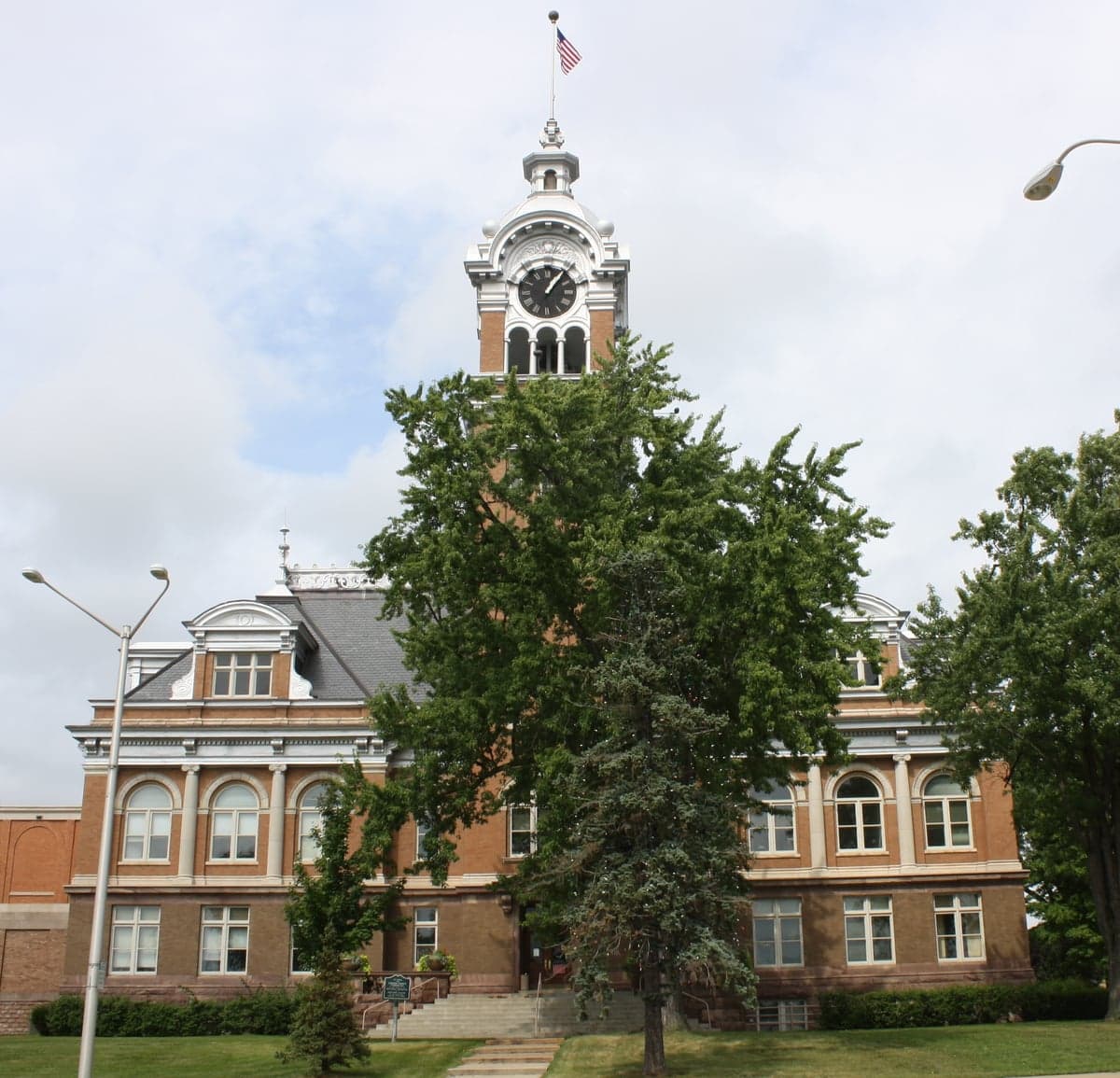
Photo: Wikipedia
Personal Sovereignty in Lincoln County
Moderate friction. Expect trade-offs in some aspect of personal liberty and independence.
What does Personal Sovereignty tell us?
Personal Sovereignty measures your capacity for self-reliance and independence with minimal government friction. Higher scores mean fewer barriers between you and the way you want to live... but it assumes you have the space you need and good neighbors.
What does this tell us?
Personal Sovereignty measures your capacity for self-reliance and independence with minimal government friction. Higher scores mean fewer barriers between you and the way you want to live... but it assumes you have the space you need and good neighbors.
State Policy
Energy independence: Importer (18% of energy produced in-state)
Personal Liberty
Homesteading

Personal Liberty Analysis
Lincoln County, Wisconsin, offers a notably high degree of personal sovereignty, particularly for those seeking a rural lifestyle with minimal government interference. The county’s regulatory environment is generally light-touch, with local governance in towns like Merrill and Tomahawk tending toward permissive land-use policies and a hands-off approach to daily life. For individuals and families prioritizing autonomy, this area presents a compelling balance of low taxes, strong self-defense rights, and viable homesteading opportunities, though the specific experience varies between the county’s small cities and its unincorporated townships.
Tax burden and regulatory posture: How Lincoln County compares to Wisconsin’s average
Lincoln County’s tax burden is moderate by Wisconsin standards, with a total property tax rate that typically falls below the state average. The county’s effective property tax rate hovers around 1.5% of assessed home value, which is competitive for the region. Wisconsin’s state income tax is a progressive structure with rates from 3.54% to 7.65%, but Lincoln County residents benefit from a lower cost of living that offsets this. Regulatory posture is distinctly rural: the county government in Merrill generally avoids zoning restrictions that would impede property use, especially in unincorporated areas. For example, towns like Corning and Skanawan have minimal building codes and no county-wide noise or nuisance ordinances that would restrict typical rural activities like woodworking or small-scale farming. The city of Merrill itself has more structured zoning, but even there, the permitting process for home-based businesses or accessory structures is straightforward compared to urban Wisconsin jurisdictions. The county’s overall regulatory philosophy leans toward enabling property owners to use their land as they see fit, provided basic health and safety standards are met.
Self-defense and gun law specifics: What Wisconsin’s Castle Doctrine means in Lincoln County
Wisconsin is a strong Second Amendment state, and Lincoln County reflects that culture. The state operates under a shall-issue concealed carry system, meaning permits are granted to any qualified applicant without discretionary denial by local authorities. Lincoln County’s sheriff’s office in Merrill processes permits efficiently, with typical turnaround times under 30 days. Wisconsin’s Castle Doctrine is robust: it provides a legal presumption of reasonable fear of death or great bodily harm when an intruder unlawfully enters a dwelling, vehicle, or business, and it grants civil immunity to those who use force in self-defense. This applies uniformly across Lincoln County, including in the city of Tomahawk and all unincorporated towns. Open carry is legal without a permit for anyone legally allowed to possess a firearm. The county’s gun culture is deeply ingrained; shooting ranges and hunting lands are abundant, particularly around the Harrison Hills area and the Lincoln County Forest. There are no county-specific firearm restrictions beyond state law, and local law enforcement is generally supportive of lawful gun ownership. For a reader prioritizing self-defense rights, Lincoln County offers one of the most permissive environments in the Midwest.
Self-reliance and homesteading viability: Lot sizes, zoning, and off-grid feasibility
Homesteading and self-reliance are not just possible in Lincoln County—they are a defining characteristic of the area. Unincorporated townships, such as Birch and Bradley, have no minimum lot size requirements for agricultural or residential use, allowing properties as small as one acre for a homestead. The county’s zoning code explicitly permits off-grid living in most rural areas: there are no county mandates requiring connection to municipal water or sewer systems. Wells and septic systems are regulated by state health codes, but the permitting process is straightforward and inexpensive. Solar panels, rainwater collection, and composting toilets are all legal and commonly used. The city of Merrill does require utility connections within its limits, but the surrounding townships offer full autonomy. For example, the area around Lake Nokomis has numerous off-grid cabins and year-round homes that operate independently of any utility grid. The county’s agricultural zoning is permissive, allowing livestock, beekeeping, and crop cultivation on parcels as small as five acres without special permits. This makes Lincoln County particularly attractive for families seeking to reduce reliance on external systems.
Personal liberties: Parental rights, medical autonomy, speech, and property
Lincoln County’s approach to personal liberties aligns with a conservative-leaning emphasis on individual choice and limited government. Parental rights are strongly protected: Wisconsin law grants parents broad authority over their children’s education, medical decisions, and religious upbringing. The county has a robust homeschooling community, with no mandatory reporting requirements beyond basic enrollment notifications. Medical autonomy is respected, though Wisconsin does not have a specific medical freedom law; however, the county’s health department in Merrill takes a non-intrusive stance, and vaccine mandates for school attendance have been subject to local opt-out provisions. Free speech is fully protected, and the county’s public forums—such as town board meetings in Tomahawk and Merrill—are known for open, often spirited debate. Property rights are the bedrock of local governance: the county’s comprehensive plan explicitly prioritizes private property rights, and eminent domain is rarely used. The town of Scott has a particularly strong tradition of resisting any zoning changes that would infringe on landowner discretion. For a reader concerned about overreach, Lincoln County’s local officials are generally responsive to constituents who value minimal government involvement in personal and family matters.
Overall, Lincoln County ranks among the more sovereignty-friendly areas in Wisconsin, especially when compared to the more regulated southeastern part of the state. The combination of low property taxes, permissive gun laws, viable off-grid living, and strong protections for parental and property rights creates an environment where self-reliance is not just tolerated but encouraged. For a single individual or family seeking to maximize personal freedom without moving to a more remote or less accessible region, Lincoln County offers a practical, middle-ground option that balances autonomy with access to basic services in Merrill and Tomahawk. The county’s regulatory posture is consistently light-touch, and its cultural norms reinforce the value of individual responsibility—making it a solid choice for those who prioritize personal sovereignty in their relocation decision.

* Values derived from national, state, county, city and local statistics and may differ in a specific area. Last updated: 2026-11-23T04:50:00.000Z
Narrative content on this page is AI-generated and may contain mistakes. Verify any details that matter before acting on them.
ReloMaps may earn a commission from affiliate links at no extra cost to you.

