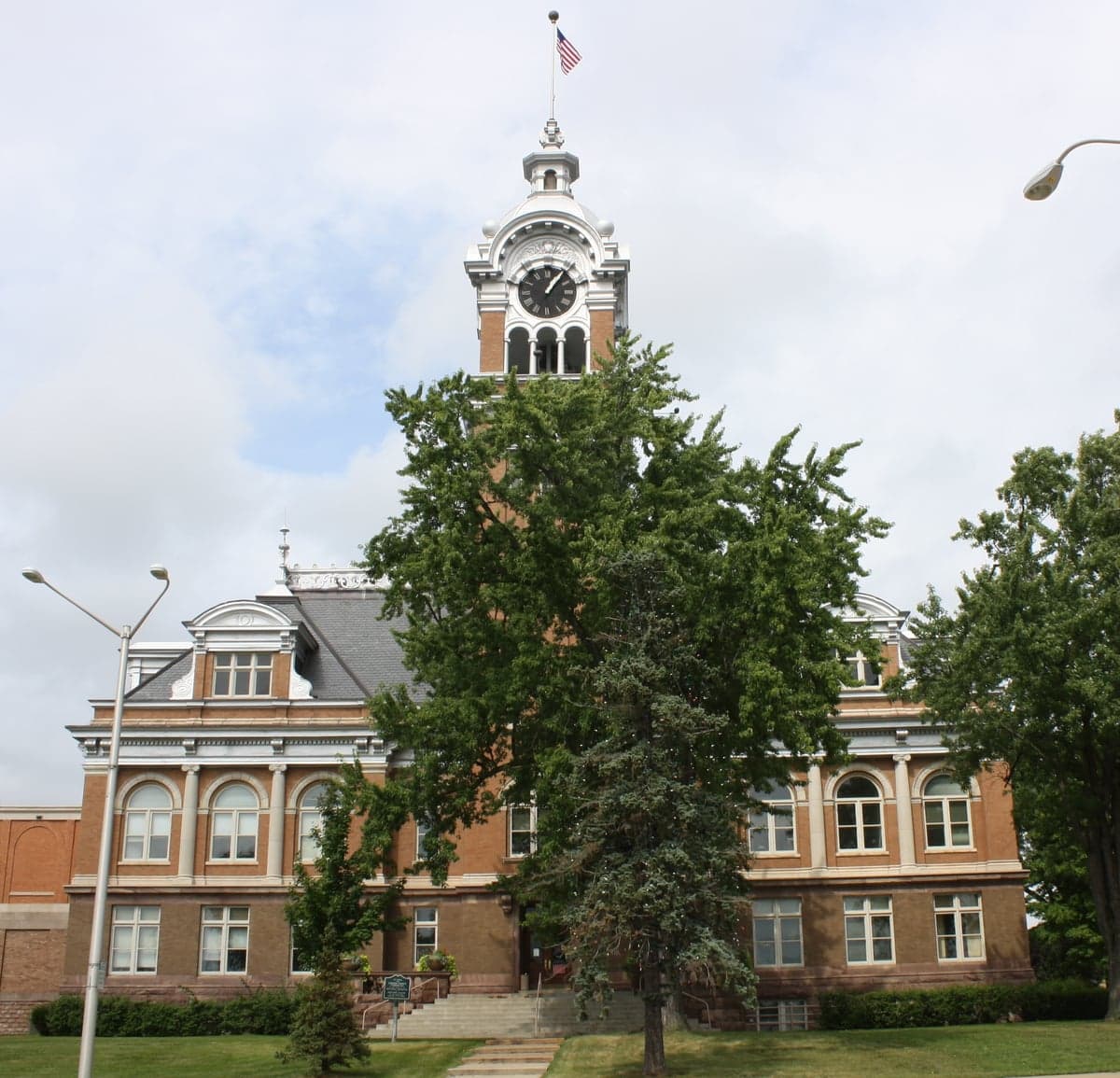
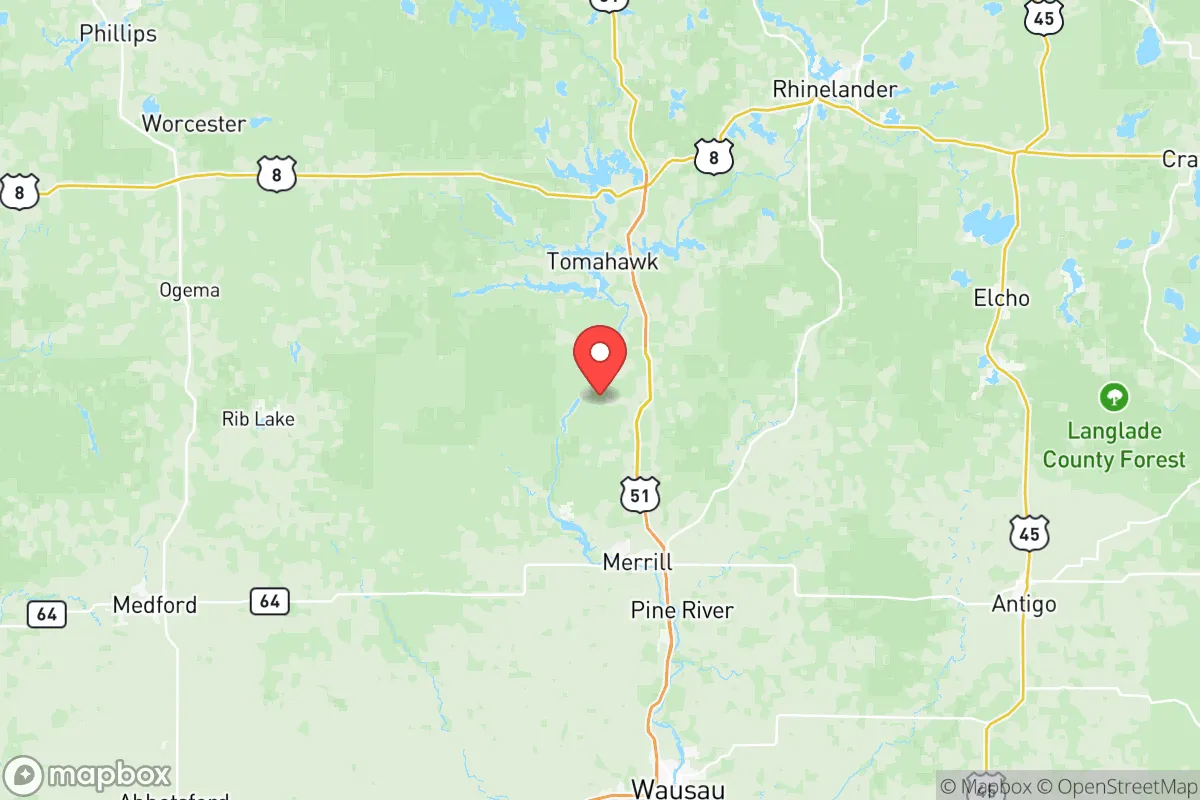
Photo: Wikipedia
Demographics of Lincoln County
Affluence Level in Lincoln County
A middle-class area roughly in line with national averages across income, home values, education, and employment.
People of Lincoln County
Lincoln County, Wisconsin, is home to roughly 28,400 residents, making it one of the state's more sparsely populated regions with a density of just 25 people per square mile. The population today is overwhelmingly white (93.5%) and native-born (99.3% U.S.-born), with a small but growing Hispanic community (2.1%) and a foreign-born share of only 0.7%. This is a deeply rooted, rural-to-small-town population shaped by successive waves of European immigration, a century of forest-based industry, and a quiet stability that sets it apart from Wisconsin's faster-growing urban corridors.
Settlement & growth (pre-1960)
Before European settlement, the area now known as Lincoln County was part of the ancestral homeland of the Ojibwe (Chippewa) people, who used the Wisconsin River and its tributaries for travel, fishing, and trade. The Ojibwe ceded the region to the United States in the 1837 Treaty of St. Peters, though they retained off-reservation hunting and fishing rights that remain legally active today. French-Canadian fur traders and voyageurs passed through as early as the 1700s, but permanent American settlement did not begin in earnest until the 1850s.
The first major wave of settlers were Yankees from New England and New York, who arrived in the 1850s and 1860s following the federal land surveys. They founded the county's earliest communities, including Merrill (originally called Jenny Bull Falls) and Tomahawk, drawn by the vast white pine forests. Merrill, the county seat, was platted in 1874 and quickly became a sawmill boomtown. The Wisconsin River provided water power and a highway for log drives, and by 1880 Merrill was shipping millions of board feet of lumber annually.
The second and larger wave came from Germany and Poland between 1870 and 1910. German immigrants, many from Pomerania and West Prussia, settled on farms in the towns of Corning, Scott, and Wilson, where they established dairy operations and Lutheran churches that still anchor those communities today. Polish immigrants concentrated in Merrill and the surrounding rural areas, working in the sawmills and later in the tanneries and paper mills. By 1910, roughly 40% of Lincoln County residents were either German-born or of German parentage, with another 15% Polish.
A smaller but notable group of Italian immigrants arrived between 1900 and 1920, primarily to work in the iron ore mines that briefly operated near Irma and Gleason. The mines closed by the 1930s, and most Italian families shifted to farming or mill work. The town of Bradley also saw a pocket of Finnish settlement in the early 1900s, with families clearing rocky cutover land for subsistence farms.
By 1930, the county's population had peaked at roughly 30,000, driven by the lumber industry. The Great Depression and the exhaustion of the old-growth pine forests caused a slow decline. The post-World War II era brought modest stabilization as paper manufacturing (at the Merrill mill, later owned by Stora Enso) and dairy farming provided steady employment. The population hovered around 27,000 from 1950 through 1970, with little net migration.
Modern era (post-1965)
The 1965 Hart-Cellar Act had almost no direct effect on Lincoln County. Unlike Wisconsin's urban centers—Milwaukee, Madison, Green Bay—the county received virtually no post-1965 immigration from Asia, Latin America, or Africa. The foreign-born share today (0.7%) is among the lowest in the state, and the county's East/Southeast Asian population (0.3%) and Indian-subcontinent population (0.1%) are negligible, consisting mostly of a handful of medical professionals at the Aspirus Merrill Hospital and a few university-connected families.
The most significant demographic change since 1965 has been domestic out-migration of young adults and the gradual aging of the population. The median age in Lincoln County is now 47.3 years, well above the Wisconsin average of 40.1. Young people graduating from Merrill High School or Tomahawk High School often leave for college or jobs in Wausau, Stevens Point, or the Twin Cities, and many do not return. This "brain drain" has kept the college-educated share low at 19.4%.
Hispanic population growth, while small in absolute terms (2.1%), represents the county's only notable ethnic diversification. Most Hispanic residents are of Mexican descent and arrived in the 1990s and 2000s to work in dairy farming and food processing. They are concentrated in Merrill and the town of Rib Mountain (the southern edge of the county), with a small but established community attending St. Francis Xavier Catholic Church in Merrill. The Black population (0.5%) remains tiny and is almost entirely composed of individuals employed in corrections at the Lincoln County Jail or in seasonal forestry work.
Suburbanization has been minimal. The county has no interstate highway; U.S. Highway 51 runs north-south through Merrill and Tomahawk, but the area has not experienced the exurban sprawl seen in counties closer to Wausau or the Fox Valley. New housing construction since 2000 has been mostly single-family homes on large lots in the towns of Merrill (the town, distinct from the city) and Schley, catering to retirees and remote workers seeking lakefront property on the Wisconsin River flowages.
The future
Lincoln County's population is projected to decline slowly over the next 20 years, from 28,403 today to roughly 26,500 by 2045, according to the Wisconsin Department of Administration. The primary driver is natural decrease—more deaths than births—combined with continued out-migration of young adults. The county's school districts (Merrill Area, Tomahawk, and the smaller Prentice district) have already seen enrollment drops of 15-20% since 2010.
Diversity will increase at a glacial pace. The Hispanic share may rise to 3-4% by 2040 as dairy operations continue to hire immigrant labor, but the county is unlikely to see significant Asian, Black, or Indian immigration. The foreign-born share will remain below 2%. The county's cultural identity—rooted in German and Polish Catholic and Lutheran traditions, hunting and fishing culture, and a strong local independence—will persist largely unchanged.
One wild card is climate-driven domestic migration. Lincoln County's abundant freshwater (the Wisconsin River, over 200 lakes) and relatively affordable land (median home value around $175,000) could attract a modest inflow of climate refugees from drought-prone western states or from coastal areas. If that occurs, the newcomers would likely settle around the Tomahawk and Merrill lake country, potentially bringing a slightly more diverse and educated population.
What does this mean for someone moving in now? Lincoln County is becoming a quieter, older, and more insular place—but also a more affordable and stable one. For families seeking low crime rates, strong community ties, and access to outdoor recreation, it offers a predictable, slow-paced life. For those seeking ethnic diversity, a vibrant job market, or a growing population, it will disappoint. The county's character is set: it will remain a white, native-born, rural stronghold with a small Hispanic minority, and its future is one of gentle decline rather than transformation.

* Values derived from national, state, county, city and local statistics and may differ in a specific area. Last updated: 2026-11-23T04:50:00.000Z
Narrative content on this page is AI-generated and may contain mistakes. Verify any details that matter before acting on them.
ReloMaps may earn a commission from affiliate links at no extra cost to you.

