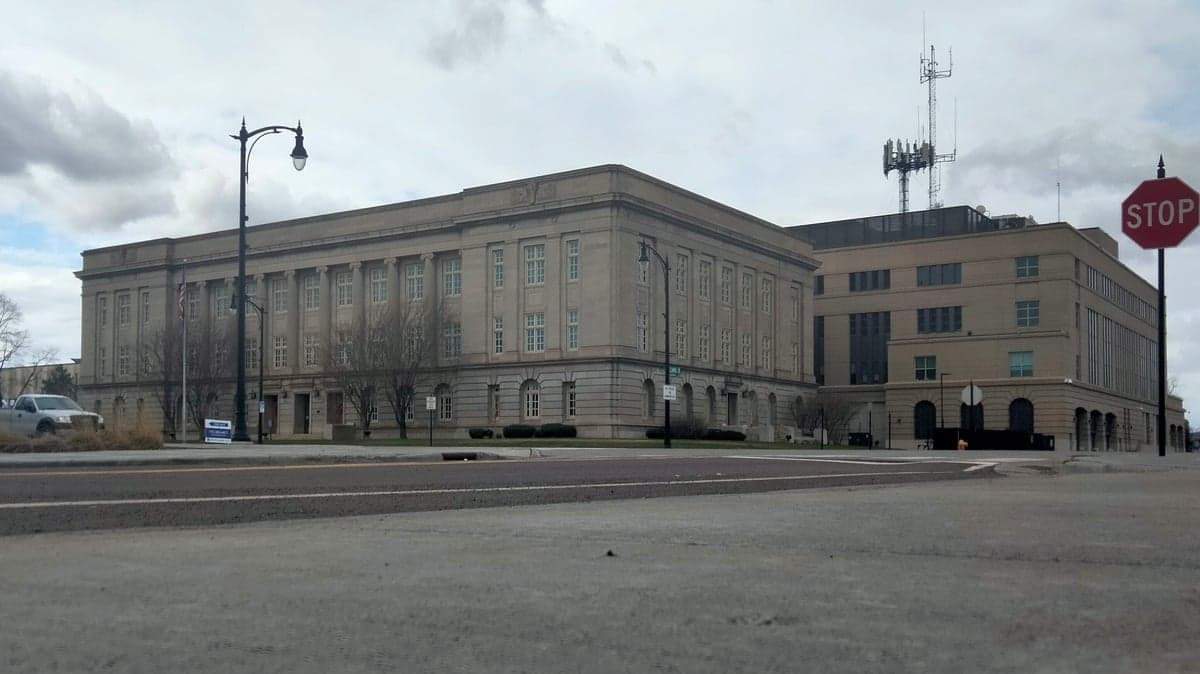
Photo: Wikipedia
Demographics of Douglas County
Affluence Level in Douglas County
A middle-class area roughly in line with national averages across income, home values, education, and employment.
People of Douglas County
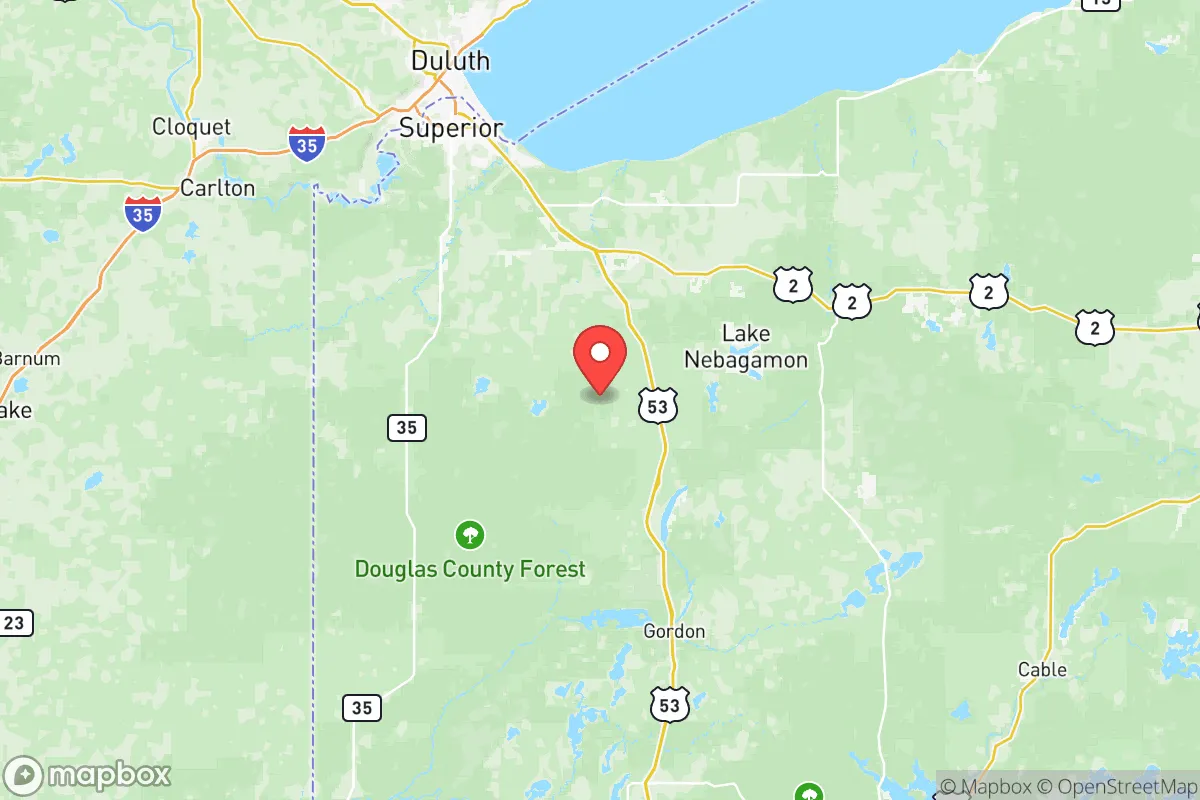
Douglas County, Wisconsin, today is a predominantly white, working-class region of roughly 44,000 residents, anchored by the city of Superior and shaped by a history of industrial boom and demographic stability. The population is notably homogeneous — over 90% white, with a foreign-born share of less than 1% — and its character reflects a blend of Scandinavian and Central European settler roots, a fading but still present industrial identity, and a slow, modest diversification driven by a handful of newer immigrant groups. The county’s people are concentrated along the Lake Superior shoreline and the St. Louis River valley, with a cultural identity that remains distinctly Northern Wisconsin: practical, community-oriented, and wary of rapid change.
Settlement & growth (pre-1960)
Long before European settlement, the region that is now Douglas County was the homeland of the Ojibwe (Chippewa) people, who established seasonal fishing and wild rice camps along the Lake Superior shore and the St. Louis River. French fur traders and voyageurs passed through as early as the 1600s, but no permanent European settlement took hold until the mid-19th century. The first major wave of American settlers arrived after the 1854 Treaty of La Pointe, which ceded Ojibwe lands and opened the area to logging and mining.
The city of Superior, founded in 1854, became the county’s primary population center and a boomtown for the lumber and shipping industries. Scandinavian immigrants — Norwegians, Swedes, and Finns — arrived in large numbers between 1870 and 1910, drawn by jobs in the sawmills, the ore docks, and the railroads that made Superior a Great Lakes shipping hub. Finnish immigrants in particular concentrated in the town of Brule and the rural townships north of Superior, where they established dairy farms and logging camps. A smaller wave of Polish and German immigrants settled in South Superior and the village of Oliver, working in the iron ore docks and the nearby steel mills of the Iron Range.
By 1910, Douglas County’s population had surged past 40,000, making it one of the most populous counties in northern Wisconsin. The opening of the Soo Line Railroad and the expansion of the Duluth-Superior harbor fueled continued growth through the 1920s. The Great Depression hit the county hard, as lumber and shipping collapsed, and many families left for the Twin Cities or the West Coast. World War II brought a temporary revival, with shipbuilding and munitions work in Superior, but the post-war decades saw a steady decline as the region’s extractive industries mechanized and shed labor. The population peaked at around 46,000 in 1960 and then began a slow, decades-long contraction.
Modern era (post-1965)
The 1965 Hart-Cellar Act had a minimal direct impact on Douglas County. Unlike major metropolitan areas, the county did not experience a wave of post-1965 immigration from Asia, Latin America, or Africa. The foreign-born population today is just 0.8%, one of the lowest rates in Wisconsin. The modest diversification that has occurred since the 1990s is driven almost entirely by domestic migration, not international arrivals.
The most notable demographic shift in the modern era has been the gradual out-migration of young adults to the Twin Cities and other urban job markets, leaving an aging, predominantly white population. The county’s Hispanic population, at 1.9%, is small but growing, concentrated in Superior and the village of Poplar, where a handful of Mexican-origin families have settled to work in agriculture and food processing. The Black population, at 1.3%, is almost entirely concentrated in Superior, with a small community that traces its roots to the post-World War II migration of African American workers to the Duluth-Superior industrial corridor. East and Southeast Asian residents, at 0.9%, include a small Hmong community in Superior that arrived in the 1980s as secondary migrants from the larger Hmong population in the Twin Cities. The Indian-subcontinent population, at 0.2%, is tiny and largely composed of professionals working at the University of Wisconsin-Superior or in the healthcare sector.
Suburbanization within Douglas County has been limited. The unincorporated community of Lake Nebagamon and the town of Maple have seen modest growth as bedroom communities for Superior and Duluth, but the county lacks the sprawling subdivisions common in southern Wisconsin. The village of Solon Springs has attracted a small number of retirees and remote workers drawn to its lakeside setting, but the overall population has remained flat or declined slightly since 2000.
The future
Douglas County’s population is projected to continue its slow decline or stagnation over the next 10 to 20 years, barring a major economic shift. The county’s age structure — with a median age above 45 and a birth rate below replacement — means natural decrease will likely outweigh any modest in-migration. The Hispanic and East/Southeast Asian populations are expected to grow slowly, but from such a small base that they will not significantly alter the county’s overall racial composition. The Indian-subcontinent population is likely to remain negligible.
The cultural identity of the county is unlikely to change dramatically. Newer residents, whether domestic migrants from the Twin Cities or the small number of international arrivals, tend to be absorbed into the existing Scandinavian- and Finnish-influenced social fabric rather than creating distinct enclaves. The county is not tribalizing into separate ethnic communities; instead, it is slowly homogenizing into an older, whiter, and more rural population. The primary demographic tension is not racial or ethnic but generational — between an aging cohort that values stability and tradition and a small but growing number of younger residents who seek more economic opportunity and cultural diversity.
For someone moving into Douglas County now, the region offers a stable, low-crime, and culturally cohesive environment, but one that is demographically static and economically limited. The population is not heading toward rapid diversification or urban-style growth; it is consolidating around its existing character. The kind of place Douglas County is becoming is a quieter, older, and more insular version of its industrial-era self — a place where the past still shapes the present, and where change comes slowly, if at all.

* Values derived from national, state, county, city and local statistics and may differ in a specific area. Last updated: 2026-06-06T21:38:18.000Z
Narrative content on this page is AI-generated and may contain mistakes. Verify any details that matter before acting on them.
ReloMaps may earn a commission from affiliate links at no extra cost to you.

