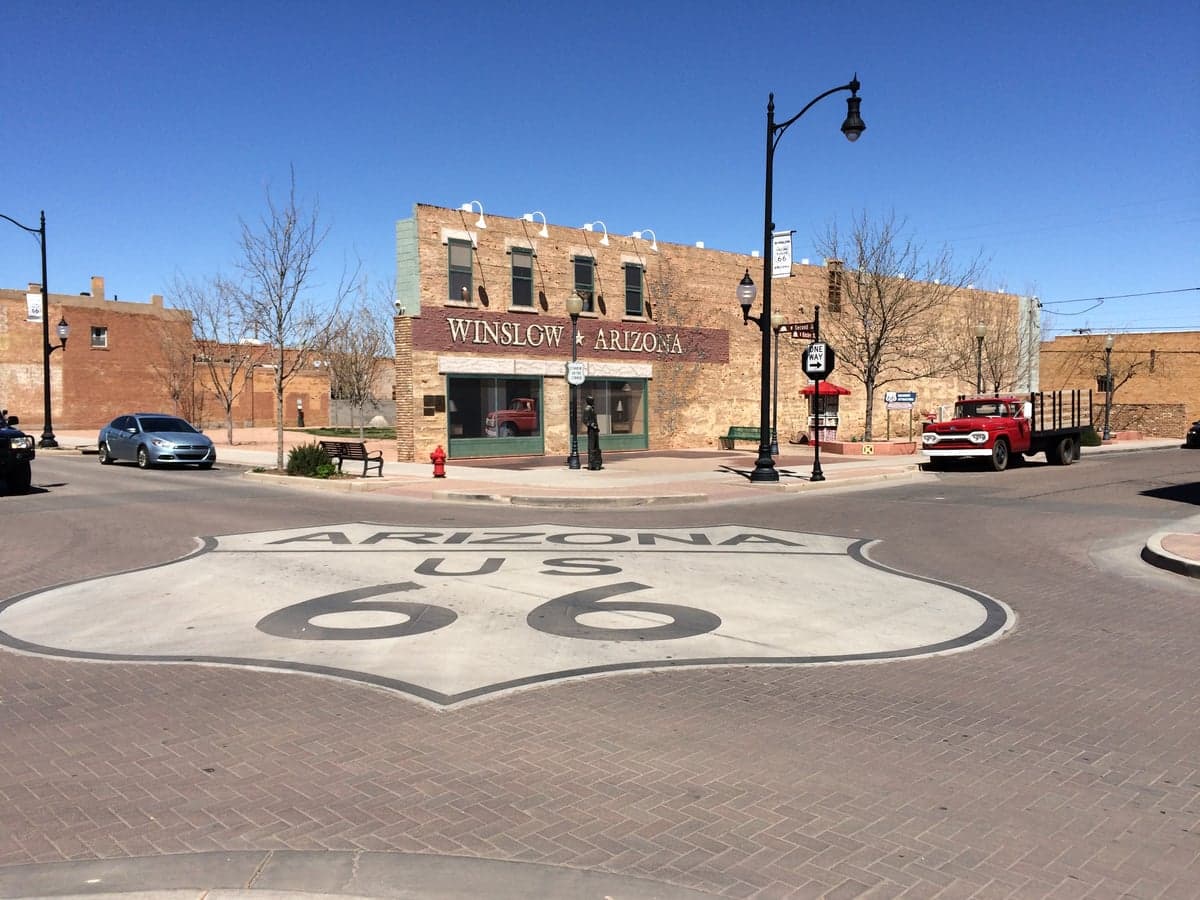
Photo: Wikipedia
Demographics of Winslow, AZ
Affluence Level in Winslow, AZ
A below-average socioeconomic profile. Incomes, home values, and educational attainment trail the U.S., with higher poverty and unemployment.
People of Winslow, AZ
Winslow, Arizona, is a small city of 8,831 residents where Native American heritage, Hispanic culture, and a fading railroad-town identity intersect. The population is predominantly Hispanic (35.4%) and White (21.6%), with a notable Native American presence reflecting the city's proximity to the Navajo Nation and Hopi tribal lands. With only 2.4% foreign-born and a low 8.7% college-educated rate, Winslow remains a working-class community shaped by the railroad, Route 66, and regional tribal economies rather than by immigration or professional migration.
How the city was settled and grew
Winslow was founded in 1880 as a railroad town on the Atlantic and Pacific Railroad line, later part of the Santa Fe Railway. The original population was a mix of Anglo railroad workers, Mexican laborers who built and maintained the tracks, and Native Americans from nearby pueblos and reservations who traded goods and worked as laborers. The historic Downtown Winslow district, centered on Second Street and Kinsley Avenue, was the commercial and social hub where Anglo merchants and Mexican families lived in close proximity, often in modest wood-frame houses behind storefronts. The La Plaza Vieja neighborhood, south of the railroad tracks, became the heart of the Mexican-American community, with families arriving from Sonora and Chihuahua to work on the railroad and in the region's sheep and cattle ranches. By the 1920s, the discovery of oil and natural gas in the surrounding area brought a second wave of Anglo workers, who settled in the Northside neighborhood, a grid of bungalows and ranch-style homes north of the tracks that remains the city's most stable middle-class area. The Navajo and Hopi populations, historically living on the surrounding reservations, began moving into Winslow in significant numbers during the 1950s and 1960s as federal relocation policies pushed Native families off the land and into towns for jobs and schooling. They concentrated in the West Winslow area, near the hospital and tribal health services, and in the Homestead Addition, a postwar subdivision of small concrete-block homes built specifically for Native families relocating from the reservations.
Modern era (post-1965)
After the 1965 Hart-Cellar Act, Winslow saw little direct immigration—its foreign-born share remains just 2.4%—but the city experienced a significant internal demographic shift as Native American in-migration accelerated. The closure of small reservation trading posts and the expansion of Indian Health Services in Winslow drew Navajo and Hopi families into the city, particularly into the West Winslow and Homestead Addition neighborhoods, which today have the highest concentration of Native residents in the city. Meanwhile, the Hispanic population grew through natural increase and continued migration from rural Arizona and New Mexico, expanding beyond La Plaza Vieja into the Southside area, a newer subdivision of manufactured homes and modest stucco houses built in the 1980s and 1990s. The White population, once the majority, has steadily declined as railroad employment shrank and younger Anglos left for Flagstaff or Phoenix. The Black population, at 3.7%, is small but stable, with families historically connected to the railroad and concentrated in the Downtown area near the old Santa Fe depot. East and Southeast Asian residents (0.4%) are almost entirely absent, and there is no measurable Indian-subcontinent population. The city's low college attainment rate (8.7%) reflects the limited white-collar job base—most employment remains in retail, healthcare, tribal government, and the remaining railroad and freight logistics operations.
The future
Winslow's population is becoming more Native American and Hispanic, while the White share continues to shrink. The city's proximity to the Navajo Nation and Hopi Reservation means that Native in-migration will likely persist, driven by housing shortages on the reservations and the pull of Winslow's healthcare and retail services. The Hispanic population is growing through natural increase and will likely become the largest single group within the next decade. New housing construction is concentrated in the Southside and Homestead Addition areas, where affordable lots and proximity to the hospital attract young Native and Hispanic families. The cultural identity of Winslow is shifting from a Route 66 railroad town to a tri-ethnic community where Navajo, Hispanic, and Anglo traditions coexist but remain somewhat separate—tribal ceremonies, Catholic feast days, and rodeo culture each have their own calendar and gathering places. For someone moving in now, Winslow offers a low-cost, quiet lifestyle with strong community ties, but the job market is limited and the educational attainment gap means that professional opportunities are scarce. The city is becoming more diverse in practice, but the diversity is primarily between Native and Hispanic populations rather than through new immigration, and the overall population is stable rather than growing rapidly.
Winslow is becoming a predominantly Native American and Hispanic working-class town, with a shrinking Anglo minority and little connection to national immigration trends. For a relocating family or individual, the city offers affordable housing and a slow pace of life, but the economic base is narrow and the population is not diversifying in the way that larger Sun Belt cities are. The character of Winslow is rooted in the railroad, the reservation, and Route 66 nostalgia, and that identity is likely to persist for the next generation.

* Values derived from national, state, county, city and local statistics and may differ in a specific area. Last updated: 2026-10-24T16:23:51.000Z
Narrative content on this page is AI-generated and may contain mistakes. Verify any details that matter before acting on them.
ReloMaps may earn a commission from affiliate links at no extra cost to you.

