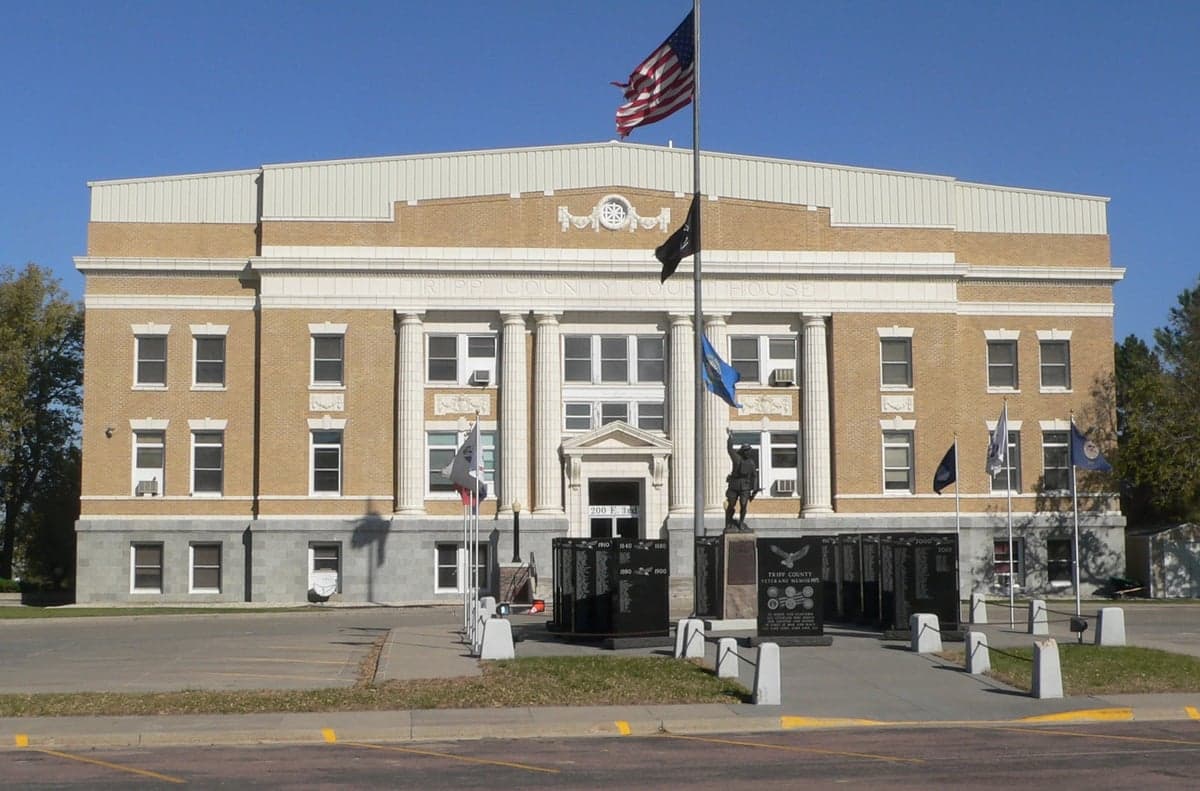
Photo: Wikipedia
Personal Sovereignty in Winner, SD
Viable for self-reliance. Generally workable, though some barriers may limit total independence.
What does Personal Sovereignty tell us?
Personal Sovereignty measures your capacity for self-reliance and independence with minimal government friction. Higher scores mean fewer barriers between you and the way you want to live... but it assumes you have the space you need and good neighbors.
What does this tell us?
Personal Sovereignty measures your capacity for self-reliance and independence with minimal government friction. Higher scores mean fewer barriers between you and the way you want to live... but it assumes you have the space you need and good neighbors.
State Policy
Energy independence: Importer (35% of energy produced in-state)
Personal Liberty
Homesteading

Personal Liberty Analysis
Winner, South Dakota, offers one of the strongest personal sovereignty environments in the Upper Midwest, functioning as a practical stronghold for those prioritizing autonomy over convenience. The town’s small population of roughly 2,900, combined with Tripp County’s light regulatory footprint, creates a setting where government overreach is minimal and daily life is governed more by personal responsibility than by bureaucratic oversight. For a survivalist or prepper mindset, Winner represents a place where the state stays out of the way—provided you’re willing to handle your own logistics, from water to waste to winter preparedness.
Tax burden and regulatory posture in Winner and Tripp County
South Dakota’s lack of a state income tax is the headline, but the real sovereignty advantage in Winner comes from the absence of a state-level sales tax on groceries and the county’s low property tax rates. Tripp County’s mill levy hovers around 0.8% of assessed value, meaning a $200,000 home carries an annual tax bill of roughly $1,600—far below the national average. There is no state estate tax, no inheritance tax, and no business inventory tax, which keeps the regulatory burden on property owners and small operators exceptionally light. The county’s zoning is minimal outside the town limits; agricultural land is largely unzoned, and building permits are straightforward for most structures. This regulatory posture means you can erect a shop, a barn, or a secondary dwelling without months of red tape, provided you meet basic septic and electrical codes. The state’s right-to-work laws and lack of a state-level minimum wage above the federal floor further reduce government interference in employment and contracting.
Self-defense and gun law specifics in South Dakota and Winner
South Dakota is a constitutional carry state, meaning no permit is required to carry a concealed firearm for anyone legally allowed to possess one. Winner’s local law enforcement, the Tripp County Sheriff’s Office, is known for a pro-Second Amendment stance, and there are no county-level restrictions on magazine capacity, firearm types, or ammunition purchases. The state preempts local gun ordinances, so Winner cannot enact its own bans or waiting periods. Stand-your-ground laws are fully in effect, with no duty to retreat in any place where you have a legal right to be. For preppers, the practical implication is clear: you can keep a defensive firearm in your vehicle, home, or on your person without worrying about permit reciprocity or jurisdictional quirks. The state also allows the use of suppressors for hunting and target shooting, and there are no restrictions on NFA items beyond federal requirements. The nearest gun ranges are within a 20-minute drive, and private land shooting is common with landowner permission.
Self-reliance and homesteading viability in Winner
Winner’s location in the heart of the Great Plains makes it a viable location for off-grid living, though the climate imposes real constraints. Lot sizes within town can be as small as a quarter-acre, but just outside the city limits, undeveloped parcels of 5 to 40 acres are available for under $3,000 per acre as of 2025. Zoning in unincorporated Tripp County is essentially nonexistent for agricultural use, meaning you can build a pole barn, install solar panels, drill a well, and set up a composting toilet without county approval—so long as you meet state health department standards for drinking water and septic. The area’s 18-inch annual rainfall makes rainwater catchment a supplementary rather than primary water source; a deep well (typically 200–400 feet) is the standard. Growing season runs about 140 days, suitable for cold-hardy crops like potatoes, squash, and grains. The local soil is loamy in the river bottoms and clay-heavy on the uplands, so raised beds or no-till methods are recommended. Off-grid solar is feasible given the region’s 220+ sunny days per year, but battery storage is essential for the -20°F winter nights. The town has a small but functional farm supply store, and the county extension office offers soil testing and crop advice.
Personal liberties in Winner: parental rights, medical autonomy, speech, and property
South Dakota has some of the strongest parental rights laws in the country, including a statutory requirement that schools obtain parental consent before administering any medical or mental health screening. The state’s 2023 “Parents’ Bill of Rights” explicitly affirms that parents have the fundamental right to direct their child’s education, healthcare, and religious upbringing. In practice, this means Winner’s public school—Winner School District 59-2—does not push curriculum or health policies that conflict with parental authority. Medical autonomy is similarly robust: the state has no vaccine mandate for adults or children, and there is no state-level prescription drug monitoring program that tracks patient data without a warrant. The state’s emergency powers law was reformed in 2021 to limit the governor’s ability to shut down businesses or mandate lockdowns without legislative approval, a direct response to 2020 overreach. Property rights are protected by South Dakota’s strong eminent domain laws, which require just compensation and a demonstrated public necessity; private property cannot be seized for economic development. Free speech is protected by the state constitution’s broad language, and Winner has no local noise or signage ordinances that would restrict political expression on private property. The town’s culture is one of live-and-let-live, where neighbors generally do not interfere with each other’s choices regarding firearms, homeschooling, or religious practice.
Overall, Winner’s personal sovereignty profile ranks among the highest in the region for those seeking to minimize government entanglement. The combination of no income tax, constitutional carry, minimal zoning, strong parental rights, and a culture of non-interference creates an environment where an individual or family can live largely on their own terms. The trade-offs are real: Winner is 90 miles from the nearest major hospital (Sioux Falls or Rapid City), and the local economy is tied to agriculture and energy, meaning job diversity is limited. But for a prepper or survivalist who values autonomy over convenience, Winner offers a rare balance of legal freedom and practical viability—a place where the state is a background presence, not a daily obstacle.

* Values derived from national, state, county, city and local statistics and may differ in a specific area. Last updated: 2026-04-29T23:23:00.000Z
Narrative content on this page is AI-generated and may contain mistakes. Verify any details that matter before acting on them.
ReloMaps may earn a commission from affiliate links at no extra cost to you.

