Photo: Wikipedia
Political ClimatePolitical Climate in Willingboro, NJ
District shown is the primary district for this city’s centroid. Cities may span multiple districts.
Local Political AnalysisPolitical Analysis of Willingboro, NJ
Willingboro, New Jersey, is a solidly Democratic community that has been reliably blue for decades, and it shows no signs of shifting. The town’s Cook Partisan Voting Index (PVI) of D+5 means it votes about five points more Democratic than the national average, which is exactly the same lean as the state of New Jersey as a whole. In practice, that means in a typical presidential election, Willingboro will deliver around 55-60% of its vote to the Democratic candidate, with Republican candidates rarely breaking 40%. This isn’t a swing town or a purple area — it’s a place where local and national Democratic candidates can count on strong support, and where Republican candidates have an uphill battle in every race.
How it compares
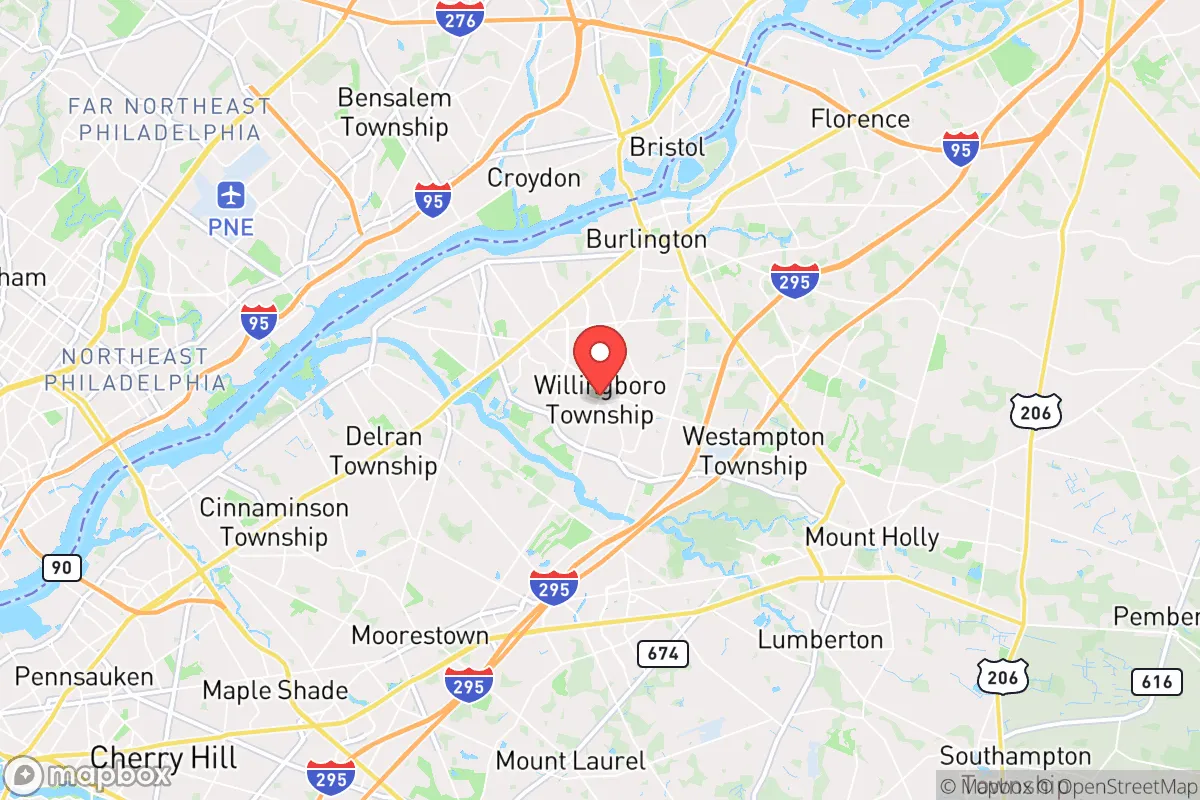
Willingboro’s D+5 PVI puts it right in line with New Jersey’s statewide average, but that masks a lot of local variation. The town is surrounded by communities with very different political personalities. Just a few miles west, Moorestown leans more moderate-to-Republican, with a PVI around R+1 or R+2, while Cherry Hill to the north is solidly Democratic but slightly less so than Willingboro. Head east toward Mount Holly or Lumberton, and you’ll find more conservative-leaning areas that can swing R+5 or higher in local races. So while Willingboro is typical of New Jersey’s overall partisan balance, it’s actually more Democratic than many of its immediate neighbors in Burlington County. The county itself has been trending blue over the past decade — it voted for Biden by about 10 points in 2020 — but Willingboro is one of the strongest Democratic strongholds within it. For a conservative resident, this means you’re living in a place where your political views are in the minority, but you’re only a 15-minute drive from towns where you’d feel more at home politically.
What this means for residents
For liberal residents, Willingboro’s political climate means local government, school board, and county-level representation will almost certainly align with their values. The town council and mayor’s office have been Democratic for as long as most people can remember, and policies around affordable housing, public transit investment, and social services tend to get strong local support. For conservative residents, the reality is more nuanced. You won’t find many Republican candidates on the ballot in local races, and your vote in the general election is unlikely to flip the town. However, New Jersey’s system of county and state representation means your voice isn’t completely drowned out — Burlington County has a mix of Republican and Democratic commissioners, and statewide offices are competitive enough that your vote still matters in primaries and general elections. The practical effect is that conservative residents often focus their political energy on state-level races or on specific local issues like property taxes and school funding, where there’s more room for cross-party agreement.
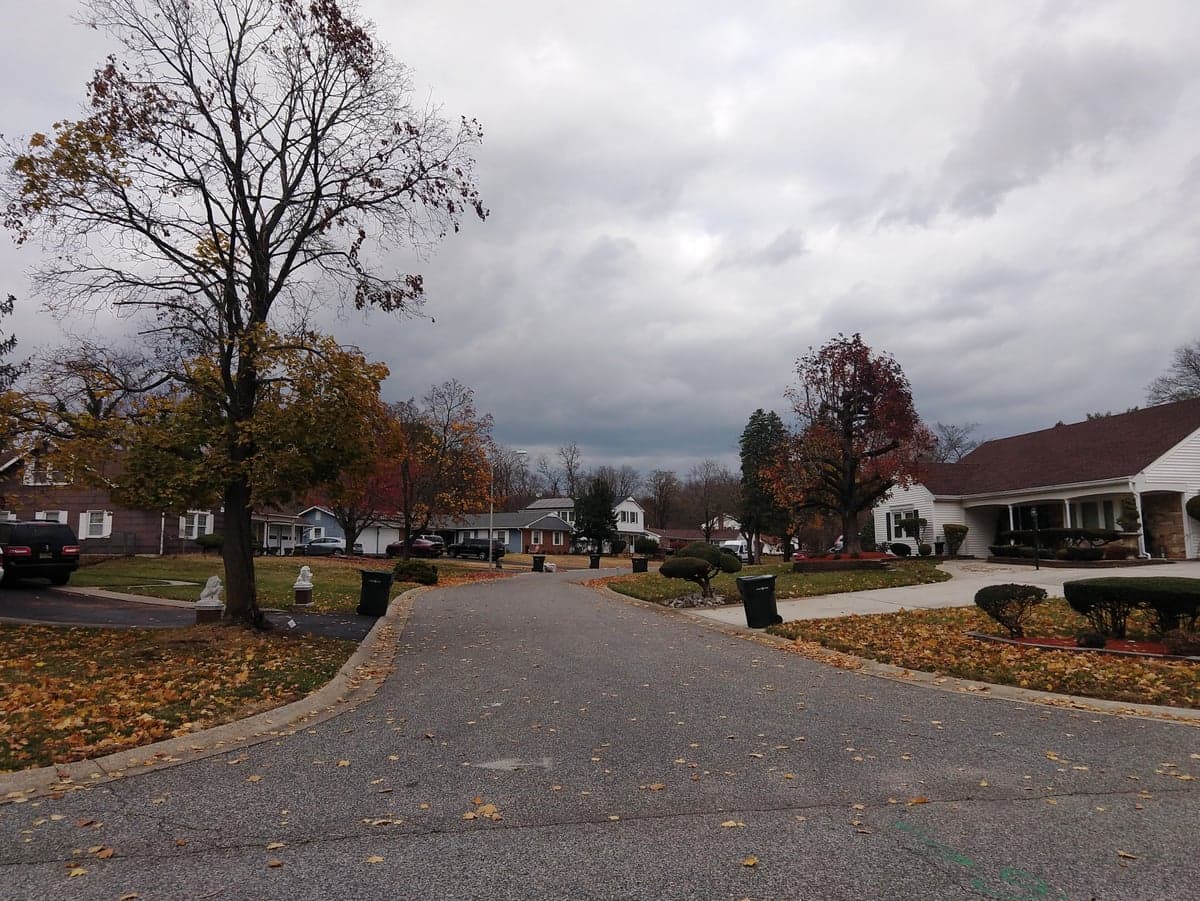
Culturally, Willingboro’s political lean is reflected in its community priorities. The town has a strong tradition of civic engagement around civil rights and social equity — it was one of the first planned racially integrated communities in the country, and that history still shapes local politics today. You’ll see more yard signs for Democratic candidates than Republican ones, and local events often emphasize inclusivity and community cohesion. That said, the political climate here is not particularly confrontational. People tend to get along across party lines in day-to-day life, and the biggest political fights are usually about property taxes and school budgets rather than national culture wars. For anyone moving here, the key takeaway is that Willingboro is a reliably Democratic town in a purple state, where your political views will either be comfortably mainstream or a quiet minority — but either way, you’ll find your neighbors more focused on local quality-of-life issues than on partisan battles.

State Political ClimatePolitical Climate in New Jersey
State Political AnalysisPolitical Environment in the State
New Jersey is a solidly Democratic state with a Cook PVI of D+5, meaning it votes about five points more Democratic than the national average in presidential elections. The state hasn't gone Republican in a presidential race since 1988, and the Democratic hold on state government has been nearly uninterrupted for decades. However, that blue veneer hides a deeply complicated political reality — New Jersey is one of the most expensive, heavily taxed, and tightly regulated states in the country, and the coalition that keeps Democrats in power is a fragile mix of urban machine politics, suburban anti-Trump sentiment, and a shrinking but still influential Republican base in the more rural and coastal areas. Over the last 10-20 years, the state has drifted leftward on social and cultural issues while maintaining a surprisingly moderate-to-conservative streak on fiscal matters, at least in rhetoric if not in practice.
Urban vs. rural divide
The political map of New Jersey is a study in extremes. The northern urban corridor — Newark, Jersey City, Paterson, and Elizabeth — is the engine of Democratic dominance, delivering massive vote margins driven by dense populations of union households, public sector workers, and minority communities. These cities reliably produce 70-80% Democratic vote shares. The suburbs of Bergen County, Essex County, and Middlesex County have shifted sharply left since 2016, driven by college-educated voters who recoiled from Trump-era Republicanism. Meanwhile, the rural and exurban areas of Sussex County, Hunterdon County, and Ocean County remain reliably Republican, with Ocean County in particular being one of the most GOP-friendly large counties in the Northeast. The Jersey Shore towns — Point Pleasant, Toms River, Seaside Heights — lean conservative, while the more affluent shore enclaves like Spring Lake and Rumson have historically been Republican but are now more competitive. The southwestern part of the state, around Camden and Trenton, mirrors the north: deep blue cities surrounded by purple-to-red suburbs and farmland.
Policy environment
New Jersey's policy environment is defined by high taxes and heavy regulation. The state has the highest property taxes in the nation, with an average effective rate around 2.2%, and a progressive income tax that tops out at 10.75% for income over $1 million. The sales tax is 6.625%, with some exemptions. The regulatory posture is business-unfriendly by national standards, with extensive environmental rules, strict land-use controls, and a powerful public-sector union presence. Education policy is a mixed bag: the state spends more per pupil than almost any other, but outcomes vary wildly between wealthy suburbs and struggling urban districts. School choice is limited, with charter schools tightly capped and no voucher program. Healthcare is heavily regulated, with mandated coverage requirements and a state-based insurance exchange. Election laws are moderately accessible: no-excuse mail-in voting was made permanent after the pandemic, and same-day registration is not available. Voter ID is not required at the polls, though first-time voters who registered by mail must show ID. The state has a strong "blue law" tradition — many counties still ban Sunday alcohol sales, and some towns restrict retail hours.
Recent policy direction
Over the last five years, New Jersey has moved decisively left on a range of issues. In 2022, the state enacted a sweeping gun law that bans carrying firearms in "sensitive places" including parks, libraries, and private businesses unless the owner explicitly permits it — one of the strictest carry regimes in the country after Bruen. The state also passed an "extreme risk" red flag law and requires a permit to purchase a handgun. On education and parental rights, the trend has been toward centralization: the state mandated LGBTQ-inclusive curriculum in 2020 and has resisted efforts to give parents more control over school library materials. Medical and bodily autonomy is broadly protected — abortion is legal up to viability and codified into state law, and the state has become a destination for out-of-state patients seeking care. On property rights, the state's rent control laws are among the strongest, and a 2024 law expanded tenant protections against "no-cause" evictions. Privacy and surveillance: New Jersey has a strong biometric privacy law and restricts police use of facial recognition, but also maintains one of the most aggressive automatic license plate reader networks in the country. Voting access expanded significantly during COVID and has not been rolled back — mail-in ballots are now a permanent fixture, and the state has automatic voter registration through the DMV. On taxation, the trend has been upward: the millionaire's tax was made permanent in 2023, and a proposed "wealth tax" on assets over $1 billion is being debated.
Civil unrest & political movements
New Jersey has a long history of organized political activism on both sides. The 2020 racial justice protests were large and sometimes violent in Newark and Trenton, leading to calls for police reform that resulted in a 2021 law requiring independent investigations of police-involved deaths. The state's sanctuary policies are among the strongest in the country — a 2018 executive order and subsequent legislation limit local law enforcement cooperation with federal immigration authorities, and the state has refused to participate in ICE detainers. This has been a flashpoint in more conservative areas like Ocean County, where some local officials have declared themselves "non-sanctuary" in symbolic opposition. Election integrity has been a persistent controversy since 2020, with Republican activists alleging irregularities in mail-in ballot processing, particularly in urban counties like Essex and Hudson. No major fraud has been proven, but the distrust remains. On the right, the New Jersey Firearms Coalition and local Second Amendment groups are well-organized and litigious, successfully challenging parts of the 2022 carry law in court. On the left, the Working Families Party and progressive activist groups have pushed for rent control expansion, single-payer healthcare, and a state public bank. Secession or nullification rhetoric is minimal — New Jersey is too small and too economically integrated with New York and Philadelphia for that to gain traction.
Projection
Over the next 5-10 years, New Jersey is likely to become more Democratic at the state level, but with growing internal friction. The demographic trends favor the left: the state's population is aging, but younger, more diverse, and more college-educated voters are concentrated in the suburbs and cities, while the rural Republican base is shrinking. In-migration patterns are a net negative — the state loses residents to lower-tax states like Florida, Texas, and the Carolinas, and those leaving tend to be higher-income and more conservative. The people moving in are often from New York City and are already acclimated to high taxes and progressive governance. The wild card is the state's fiscal health: pension obligations are massive, property taxes are unsustainable for many, and the state's debt burden is among the highest in the nation. If a fiscal crisis hits, it could break the Democratic coalition, as moderate suburbanites revolt against tax increases. More likely, the state will continue to muddle through with incremental tax hikes and service cuts, maintaining its blue lean while becoming increasingly unaffordable for middle-class families. The Republican Party will remain competitive only in local races in the exurbs and shore towns, and possibly in gubernatorial elections if they nominate a moderate — as they did with Chris Christie, who won twice.
For a new resident, the bottom line is this: if you're conservative, you'll find like-minded communities in Ocean, Sussex, and Hunterdon counties, but you'll be swimming against the current at the state level on taxes, guns, education, and regulation. If you're liberal, you'll find a state that largely aligns with your values on social issues and public services, but you'll pay heavily for it. Either way, the cost of living is the real political issue in New Jersey — it shapes everything else, and it's not getting better anytime soon.
* Values derived from national, state, county, city and local statistics and may differ in a specific area. Last updated: 2026-10-21T15:18:22.000Z
Narrative content on this page is AI-generated and may contain mistakes. Verify any details that matter before acting on them.
ReloMaps may earn a commission from affiliate links at no extra cost to you.

