Photo: Wikipedia
Demographics of Willingboro, NJ
Affluence Level in Willingboro, NJ
A middle-class area roughly in line with national averages across income, home values, education, and employment.
People of Willingboro, NJ
The people of Willingboro, New Jersey, today number roughly 2,489, forming a small, tight-knit community in Burlington County. The population is predominantly White (52.9%), with a significant Black or African American presence (24.6%) and a growing Hispanic or Latino community (13.1%). With a foreign-born rate of just 2.8% and a college-educated share of 24.3%, Willingboro is a largely native-born, working- and middle-class town whose identity is rooted in its history as a planned suburban community.
How the city was settled and grew
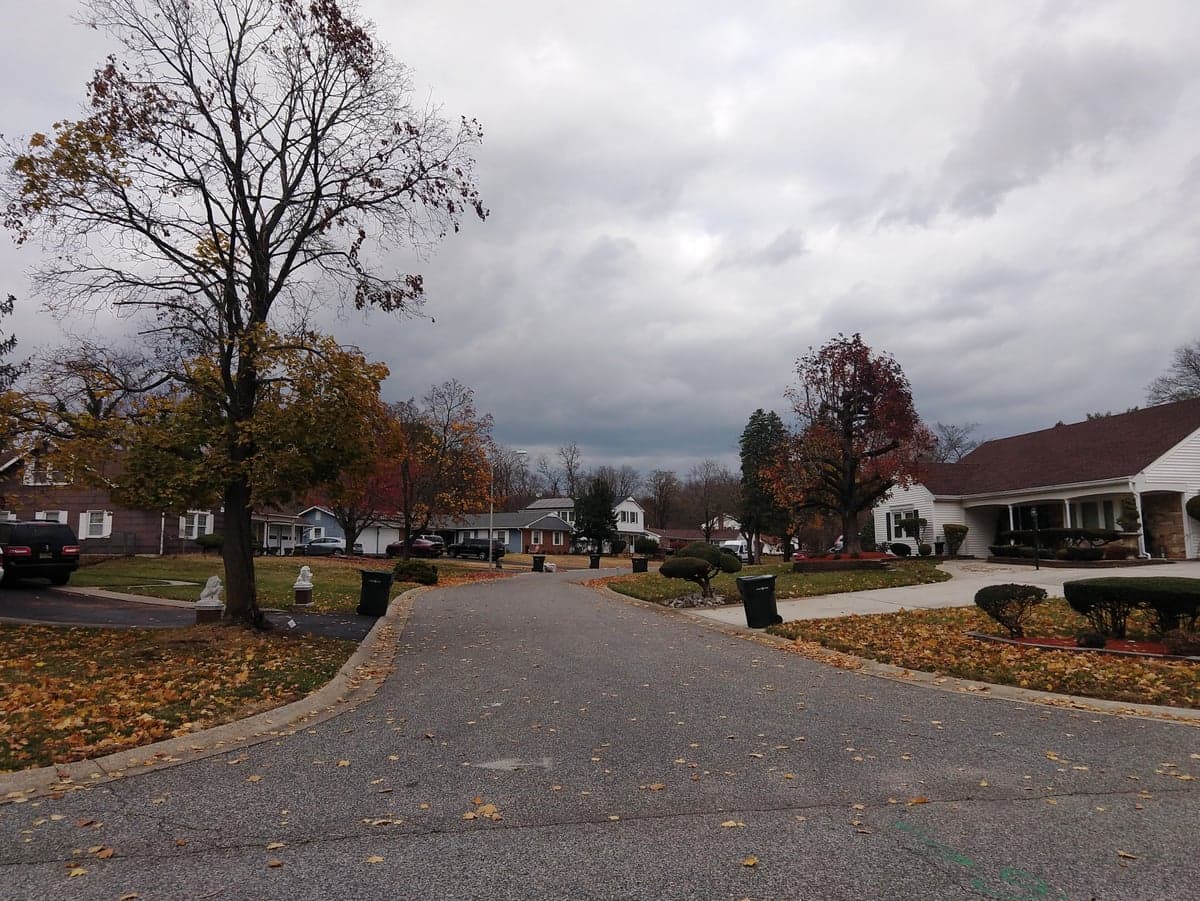
Unlike many older East Coast towns, Willingboro has no colonial or 19th-century settlement story. The area was originally part of the larger Willingboro Township, but the modern city of Willingboro was essentially created from scratch in the late 1950s and early 1960s as a planned suburban development. The Levitt & Sons company, famous for building Levittown, New York, and Levittown, Pennsylvania, purchased a large tract of farmland here and constructed thousands of affordable single-family homes. The first wave of residents were predominantly young, White, middle-class families moving out of Philadelphia and Camden, drawn by the promise of a new home, good schools, and a safe, orderly environment. The original neighborhoods, such as Garfield Park and Rancocas Valley, were built around this vision, with winding roads, community pools, and shopping centers designed to foster a suburban lifestyle. The city was officially incorporated in 1959, and by the mid-1960s, its population had exploded to over 40,000, making it one of the fastest-growing communities in the state.
Modern era (post-1965)
The post-1965 era brought profound demographic change to Willingboro. Following the passage of the Fair Housing Act of 1968 and the end of racially restrictive covenants, Black families began moving into the community in significant numbers. This "second wave" of settlement was driven by the same desire for affordable suburban homes and good schools that had attracted the original White families. By the 1970s and 1980s, Willingboro underwent a rapid racial transition, with the White population declining sharply as many original residents moved to farther-out exurbs, a phenomenon sometimes referred to as "white flight." The Black population became the majority, and neighborhoods like Millbrook and Country Club Ridge became centers of African American middle-class life. In recent decades, the Hispanic population has grown, now making up 13.1% of the city, with families settling across the city but with a visible presence in areas like Garfield Park East. The Asian and Indian populations remain negligible in the data, reflecting the city's limited draw for those immigrant groups compared to other New Jersey suburbs.
The future
Willingboro's population is currently stable but aging, and the city faces the challenge of attracting a new generation of residents. The population has declined significantly from its peak of over 40,000 in the 1970s to just over 2,400 today, a figure that reflects the city's reversion to a smaller, more rural township status after a period of de-annexation and consolidation. The demographic trend points toward a slow increase in Hispanic representation, while the Black and White shares are likely to remain relatively stable. The city is not experiencing the rapid diversification seen in many New Jersey suburbs; instead, it is becoming a more settled, predominantly Black and White community with a growing Hispanic minority. New development is limited, and most housing stock dates from the original Levitt-era construction, which may appeal to buyers seeking affordable entry into the Philadelphia suburbs. The cultural identity is evolving from a classic post-war suburb into a quieter, more established community with a strong sense of local history.
For someone moving in now, Willingboro offers a low-cost, low-density alternative to the more expensive and crowded suburbs closer to Philadelphia. It is a place where the past is still visible in the architecture and the demographics, and where the future likely holds gradual, rather than dramatic, change. The community is stable, family-oriented, and predominantly native-born, making it a fit for those seeking a straightforward, no-frills suburban lifestyle with a clear sense of its own history.

* Values derived from national, state, county, city and local statistics and may differ in a specific area. Last updated: 2026-10-21T15:18:22.000Z
Narrative content on this page is AI-generated and may contain mistakes. Verify any details that matter before acting on them.
ReloMaps may earn a commission from affiliate links at no extra cost to you.

