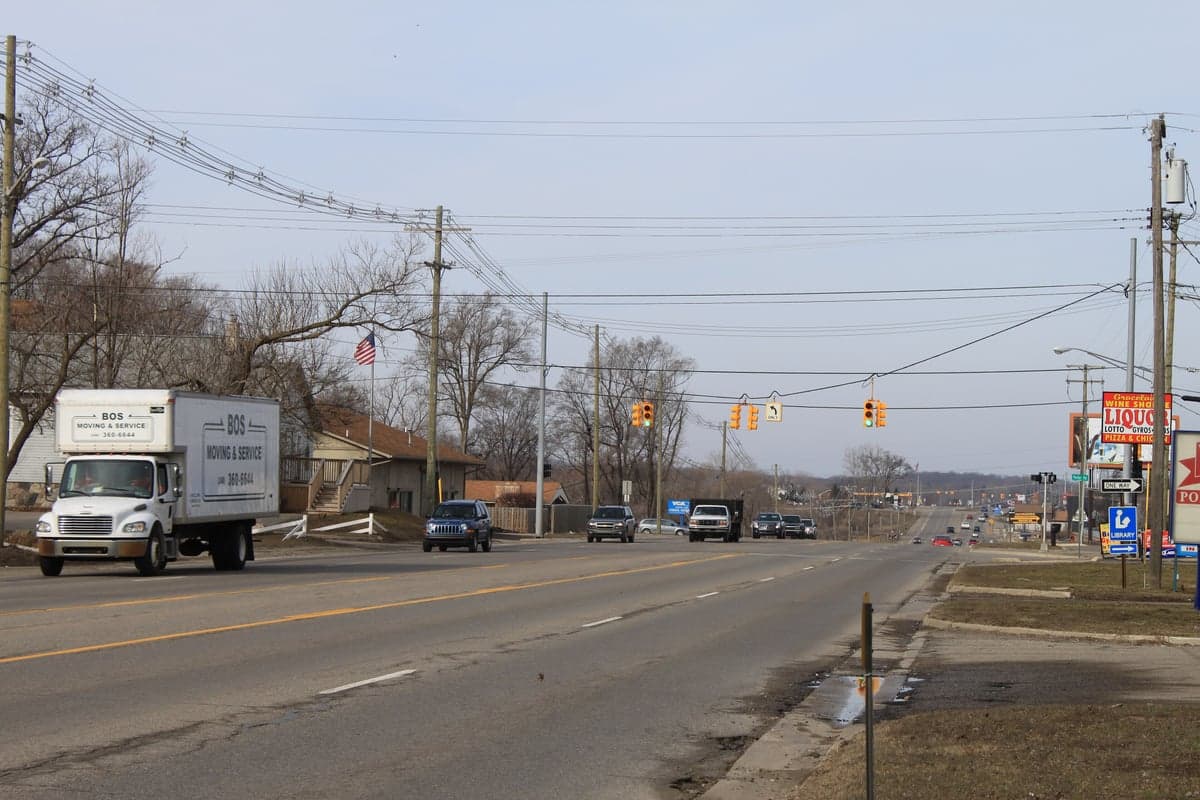
Photo: Wikipedia
Strategic Assessment of White Lake, MI
Meaningful friction. Expect exposure to either population pressure, blast zones, or natural disaster risk. Consider buying a retreat property.
What does the Strategic Assessment tell us?
Our Strategic Assessment grades tactical survivability of an area. Major population centers, military targets, fallout zones, natural disasters, and border exposure all drive risk — lower exposure means a more defensible position in a crisis.
This is heavily inspired by Joel Skousen's Strategic Relocation book. Highly recommended you checkout the book ($)What does this tell us?
Our Strategic Assessment grades tactical survivability of an area. Major population centers, military targets, fallout zones, natural disasters, and border exposure all drive risk — lower exposure means a more defensible position in a crisis.
This is heavily inspired by Joel Skousen's Strategic Relocation book. Highly recommended you checkout the book ($)Strategic Pillars

Key Distances
Regional Safe Places
Below is our recommended "safe zones" in Michigan and the surrounding area based on our strategic heuristics. For most people, it's unrealistic to live in a “safe zone” full-time due to work, family or other personal reasons. They tend to be more rural. However, many of these areas are perfect for second homes and retreat properties that double as a vacation home or even a short-term rental.


Important Note: For informational purposes only. This does not mean nothing bad ever happens in the green zones. Please use common sense. This is based on public data and modeled with AI. We tried to take a conservative approach but mistakes happen. We update this regularly as new information becomes available.
Solar Generator Recommendations
Backup power matters more here than in safer locations. We've picked three solar generators across budgets and capacity tiers — start with the budget unit if you only need a few essentials, or step up if you want to run a fridge and HVAC for days at a time.

Jackery Portable Power Station Explorer 300
Budget OptionPower on the Go: Weighing only 11 lbs, it's convenient to set up and store with book-sized foldable solar panels

BLUETTI Portable Power Station AC180
Designed for both indoor and outdoor scenarios, AC180 is highly capable as it has a robost capacity and continuous output power.

EF ECOFLOW DELTA Pro Ultra Power Station
Upgraded PickEcoFlow DELTA Pro Ultra is a whole-home energy system designed to grow with your family. Integrated with the Smart Home Panel 2, it scales to meet your evolving energy needs — keeping your home powered, intelligent, and secure through every stage of life.
We earn a commission, at no additional cost to you.
Strategic Assessment Analysis
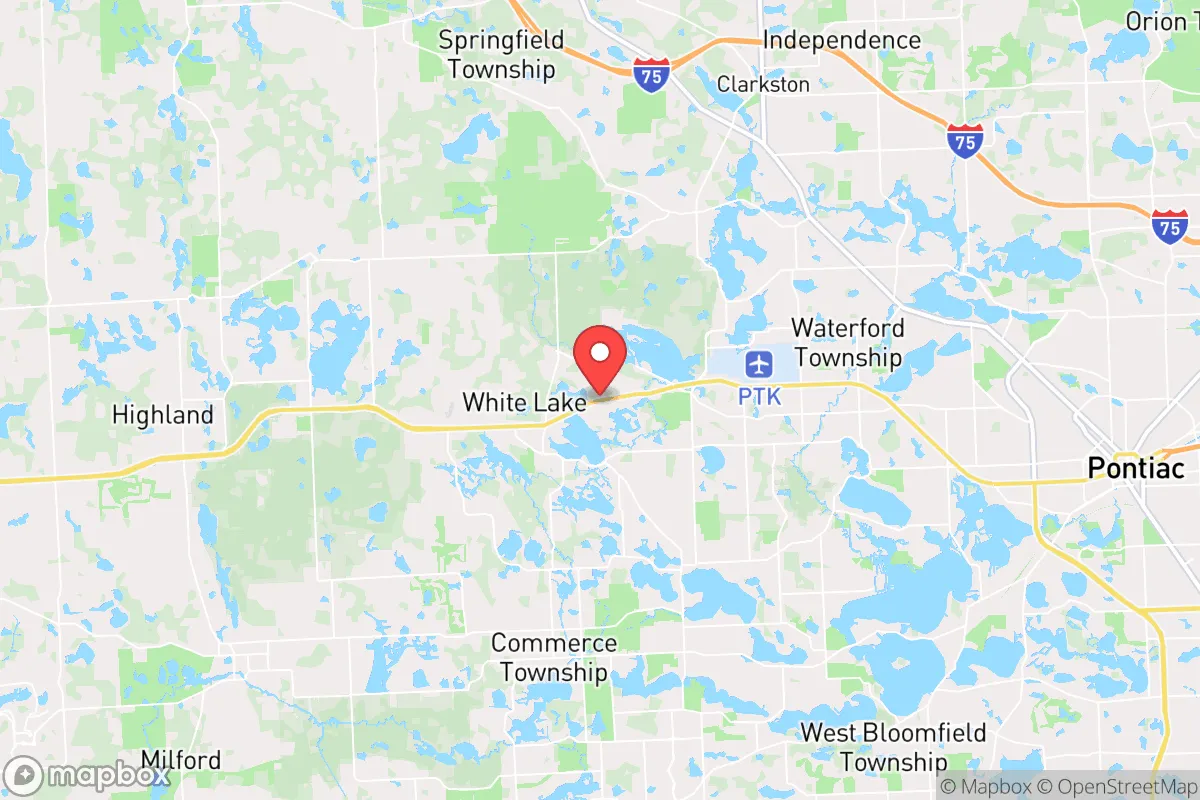
White Lake, Michigan, occupies a strategic position in Oakland County that balances proximity to major urban infrastructure with the kind of geographic buffer that appeals to a relocation-minded reader focused on resilience. Located roughly 35 miles northwest of Detroit and 20 miles west of Pontiac, the area sits at the edge of the suburban sprawl, where the transition from dense metro living to more rural, lake-studded terrain begins. For someone thinking seriously about disaster readiness and self-sufficiency, White Lake offers a meaningful middle ground: close enough to access jobs, hospitals, and supply chains, yet far enough from the core of a major metropolitan area to reduce exposure to the cascading failures that can follow a large-scale event. The area’s natural advantages—abundant freshwater, relatively low population density compared to inner-ring suburbs, and a temperate climate without extreme seismic or hurricane threats—make it a credible candidate for a strategic relocation, provided the relocator understands the specific risks that come with being near a major industrial and military target region.
Geographic position and natural advantages for self-sufficiency
White Lake’s geography is defined by its position within the Huron River watershed, which feeds a chain of lakes including White Lake itself, as well as nearby Oxbow, Woodhull, and Gallagher lakes. This abundance of surface water is a significant asset for anyone planning for long-term water security. The area sits on a glacial moraine, meaning the topography is gently rolling rather than flat, which aids natural drainage and reduces flood risk compared to low-lying communities along the Detroit River or Lake St. Clair. The local climate is typical of southeast Michigan: cold winters with reliable snowfall, warm summers, and no exposure to hurricanes, tornadoes (the region averages only one or two weak tornadoes per decade), earthquakes, or wildfires of any meaningful scale. The soil in Oakland County is generally fertile loam, supporting small-scale agriculture, though the growing season is short (roughly 140–160 frost-free days). For a relocator interested in food self-sufficiency, this means greenhouse or season-extension techniques are necessary for year-round production. The area’s tree cover is dense—mostly oak, hickory, and maple—providing both natural privacy and a source of firewood for heating. The proximity to the Huron River also offers a potential secondary water source, though access points are limited and require legal permissions or private land ownership. Overall, White Lake’s natural advantages are solid but not exceptional; it is a defensible, water-rich location that avoids the worst of the Midwest’s weather extremes, but it lacks the isolation or rugged terrain that would make it a true fortress.
Risks, exposures, and proximity to fallout-relevant landmarks
The most significant risk for White Lake in a disaster scenario is its proximity to Detroit and the broader southeast Michigan industrial corridor. Detroit is a major population center (roughly 4.3 million in the metro area) and a hub for automotive manufacturing, chemical plants, and logistics infrastructure. In a large-scale event—whether natural, economic, or geopolitical—this density creates a vulnerability cascade: supply chain disruptions, civil unrest, and resource competition that can radiate outward. More specifically, White Lake lies within roughly 40 miles of Selfridge Air National Guard Base in Harrison Township, a strategic military installation that could be a target in a conflict scenario. The area is also within 50 miles of the Fermi 2 nuclear power plant in Monroe County, Michigan, and roughly 60 miles from the Palisades nuclear plant (now decommissioned but still storing spent fuel) in Van Buren County. While the prevailing winds in southeast Michigan are from the west and southwest, which would carry fallout away from White Lake in the event of a release from Fermi, the proximity is still a concern for anyone modeling worst-case scenarios. Additionally, the area is crisscrossed by major natural gas pipelines (including the ANR Pipeline and Vector Pipeline) and high-voltage transmission lines that serve the Detroit metro grid. A coordinated attack or major infrastructure failure could disrupt power and fuel supplies for weeks. On the natural hazard front, the risk is low but not zero: the region is in a moderate seismic zone (rare, small earthquakes), and the primary weather threat is severe thunderstorms with occasional hail or straight-line winds. Flooding is localized to low-lying areas near the lakes and the Huron River, but most of White Lake’s residential areas are on higher ground. The bottom line: White Lake’s risk profile is dominated by man-made and infrastructure-related threats tied to its proximity to Detroit, not by natural disasters. A relocator should weigh this carefully—being near a major city offers economic opportunity but also introduces vulnerabilities that a more remote location would avoid.
Practical resilience for a relocator: food, water, energy, and defensibility
For a relocator serious about self-sufficiency, White Lake offers a mixed picture. Water is the strongest asset: the lakes and the Huron River provide ample surface water, and the groundwater table is high enough that a private well (common in the more rural parts of the area) can produce 10–20 gallons per minute at depths of 100–200 feet. The municipal water supply comes from the Detroit Water and Sewerage Department, which draws from Lake Huron—a massive, resilient source, but one that depends on a centralized treatment and distribution system that could fail in a prolonged grid-down scenario. Anyone planning for long-term independence should budget for a well or a reliable surface-water filtration system. Food resilience is more challenging. Oakland County is not a major agricultural producer; the nearest significant farmland is in Lapeer County to the northeast or Livingston County to the west. White Lake itself has limited arable land, and most residential lots are small (0.25–1 acre). A family could supplement with a substantial garden, chickens, and perhaps a few fruit trees, but full food self-sufficiency would require either a larger property (5+ acres) or a cooperative arrangement with nearby farms. The area does have several farmers’ markets and a strong local food movement, but these are not reliable in a crisis. Energy resilience is achievable: the area gets enough sun for a modest solar array (roughly 4.5 peak sun hours per day in summer, dropping to 1.5 in winter), and wood heating is viable given the forest cover. Natural gas is widely available for heating, but that pipeline dependency is a vulnerability. Defensibility is moderate. White Lake is not a gated community or a remote mountain valley; it is a suburban-exurban area with a road network that connects directly to M-59 and I-75. In a large-scale event, this accessibility is a double-edged sword—it makes evacuation easier but also makes the area more porous to outsiders. The terrain is not defensible in a tactical sense; there are no natural chokepoints or high ground. However, the lake itself provides a natural barrier on one side, and the community is small enough (roughly 30,000 people) that neighbors can organize effectively. The local police and fire departments are professional and well-funded by Oakland County standards, but they would be overwhelmed in a major event. Practical resilience in White Lake comes down to preparation: a well-stocked pantry, a backup power system, a reliable water source, and a strong local network. It is not a bug-out location, but it is a viable place to hunker down if you have the resources and the plan.
The overall strategic picture for White Lake is one of moderate resilience with clear trade-offs. It offers excellent water access, a low natural-disaster risk, and a location that balances urban proximity with enough space to maintain a degree of self-sufficiency. The primary vulnerabilities are man-made: proximity to Detroit’s infrastructure and population density, nearby military and nuclear targets, and a dependence on centralized systems for power, water, and food supply. For a relocator who values community, access to healthcare and jobs, and a temperate climate without extreme weather, White Lake is a solid choice—provided they invest in backup systems and build local relationships. It is not a remote survivalist retreat, but it is a defensible, livable area for someone who wants to be prepared without leaving civilization entirely. The key is to treat White Lake as a base of operations, not a fortress, and to plan accordingly for the risks that come with being within striking distance of a major American city.

* Values derived from national, state, county, city and local statistics and may differ in a specific area. Last updated: 2026-08-17T21:31:50.000Z
Narrative content on this page is AI-generated and may contain mistakes. Verify any details that matter before acting on them.
ReloMaps may earn a commission from affiliate links at no extra cost to you.

