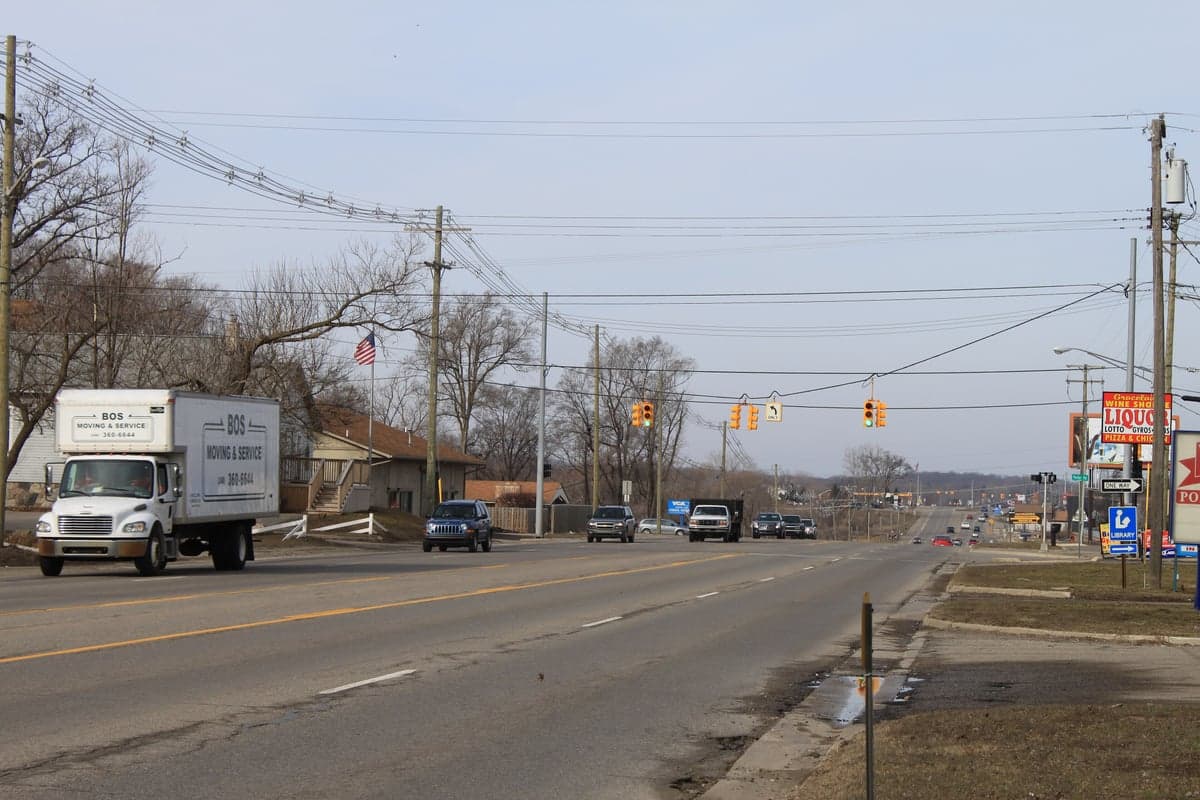
Photo: Wikipedia
Political ClimatePolitical Climate in White Lake, MI
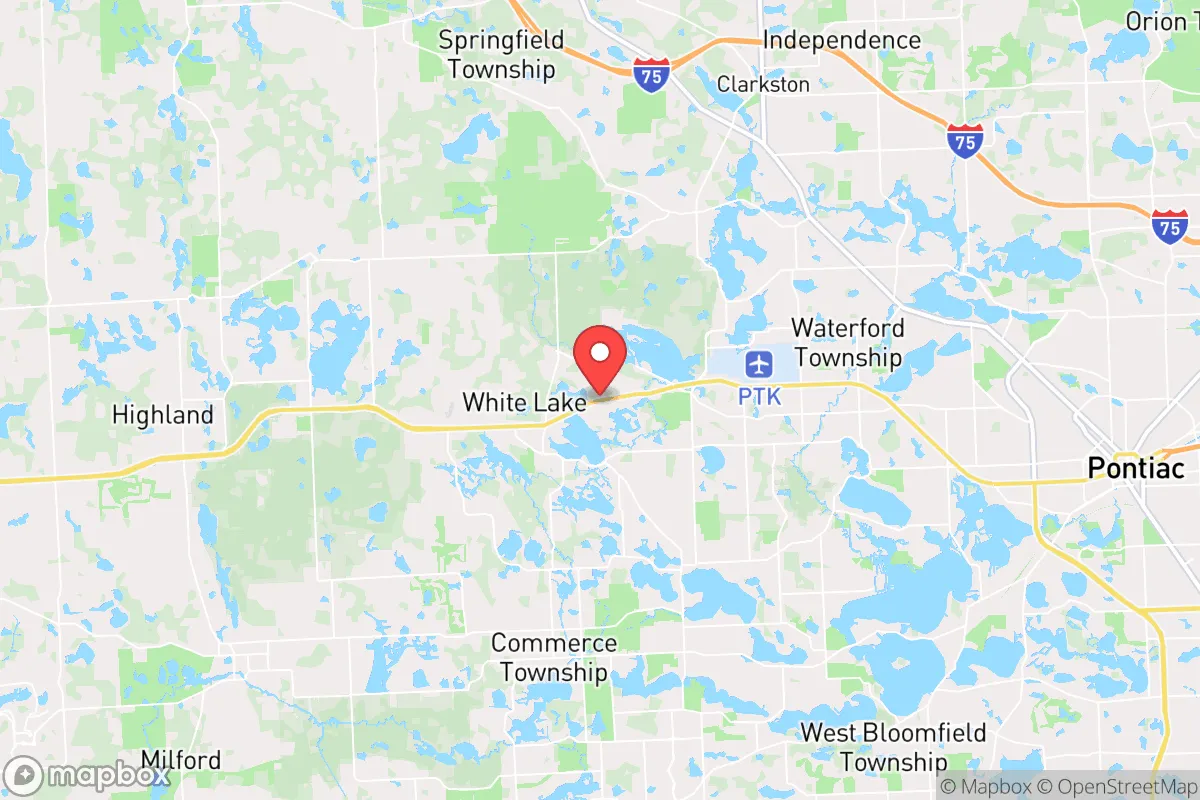
District shown is the primary district for this city’s centroid. Cities may span multiple districts.
Local Political AnalysisPolitical Analysis of White Lake, MI
White Lake Township sits in a political landscape that has shifted noticeably over the past decade. With a Cook Partisan Voting Index (PVI) of D+9, the area leans reliably Democratic, a tilt that has become more pronounced since the 2016 election. This isn't a deep-blue stronghold like Detroit proper, but it's a solidly blue suburb where Democratic candidates can expect to win by comfortable margins in most races. The trajectory here has been a steady march leftward, mirroring the broader suburban shift in Oakland County, as younger families and new residents have moved in from more conservative parts of the state.
How it compares
White Lake's D+9 rating puts it well to the left of Michigan as a whole, which sits at EVEN on the Cook PVI. That statewide "even" rating reflects a true battleground—think of the razor-thin margins in recent presidential elections. In contrast, White Lake is a reliable Democratic anchor in a county that has been trending blue for years. Drive 15 miles north to Holly or 20 miles west to Fenton, and you'll find communities that lean more conservative, often voting red by 5-10 points. Head east toward Pontiac or south to Farmington Hills, and the Democratic advantage grows even stronger. White Lake sits in a kind of political middle ground within Oakland County: blue enough to feel safe for Democrats, but not so deep that conservatives feel completely out of place.
What this means for residents
For liberal residents, the D+9 lean means their votes carry weight in local primaries and general elections. The township's Democratic tilt makes it a comfortable place to display yard signs or discuss politics without much pushback. Progressive candidates for county commission or state house can count on White Lake as a base of support. For conservative residents, the reality is more nuanced. They're in the minority, but not a tiny one—roughly 40-45% of voters here cast Republican ballots in recent elections. That means conservative voices are still heard at township board meetings and in local school board races, where turnout is lower and party labels matter less. The practical effect is that local governance tends to be pragmatic rather than ideological, with both sides needing to compromise to get things done.
One cultural distinction worth noting is how White Lake's politics play out in daily life. Unlike some deep-blue suburbs where political homogeneity can feel stifling, White Lake retains a mix of old-guard families who remember when the area was more conservative and newer arrivals who've shifted the balance. You'll see both Trump and Harris signs in the same neighborhoods during election season, and people generally get along. The township's growth—new subdivisions, retail development along M-59—has brought in a more diverse and younger population, which has accelerated the leftward trend. Looking ahead, expect White Lake to stay D+9 or even nudge slightly bluer, as Oakland County continues to be a Democratic stronghold in a purple state. For residents, that means the political climate here is stable, predictable, and ultimately more moderate than the PVI number might suggest.

State Political ClimatePolitical Climate in Michigan
State Political AnalysisPolitical Environment in the State
Michigan is a true battleground state, with a Cook PVI of EVEN that perfectly captures its split personality. Over the past 20 years, the state has swung from reliably blue (voting for Democrats in every presidential election from 1992 to 2012) to a pure toss-up, with Donald Trump flipping it in 2016 by just 10,704 votes, Joe Biden winning it back in 2020 by 154,000, and the 2024 race again razor-thin. The dominant coalitions are a shrinking, union-heavy blue wall in the southeast (Detroit, Washtenaw County) and a growing, exurban and rural red wave across the Lower Peninsula’s western and northern reaches, plus the entire Upper Peninsula. The trajectory is a slow rightward drift in the exurbs and small towns, offset by Democratic gains in affluent, college-educated suburbs like Oakland County and Kent County (Grand Rapids), making the state a perpetual knife-edge.
Urban vs. rural divide
The political map of Michigan is stark. Wayne County (Detroit) and Washtenaw County (Ann Arbor) are the Democratic strongholds, delivering margins of 300,000+ votes combined, enough to offset massive Republican wins elsewhere. Detroit’s Black population and union households anchor the left, while Ann Arbor’s University of Michigan community drives progressive energy. In contrast, the western side of the state—from the Grand Rapids suburbs of Kent County (which flipped from red to purple in 2020 and 2024) down to the lakeshore counties like Ottawa and Allegan—is deeply conservative. The Upper Peninsula, once a Democratic bastion due to mining unions, has shifted hard right; Dickinson County voted +30 points for Trump in 2024, mirroring the trend across rural Michigan. The key swing areas are Macomb County (north of Detroit), a classic Reagan Democrat stronghold that went +12 for Trump in 2016 and +8 in 2024, and the exurban ring of Livingston County, which remains deep red but is seeing in-migration from Detroit that may slowly moderate it. The divide isn’t just geographic—it’s cultural: a Detroit autoworker and a Traverse City retiree live in different political worlds.
Policy environment
Michigan’s policy landscape is a mixed bag that reflects its swing-state status. Taxes are moderate: a flat 4.25% individual income tax (down from 4.35% in 2023 via automatic rollback), with no tax on Social Security benefits and a phased-in retirement income exemption. Property taxes average about 1.5% of home value, but Proposal A (1994) caps annual increases at 5% or inflation, whichever is lower—a boon for long-term owners but a shock for new buyers. The regulatory posture is business-friendly in manufacturing and agriculture but strict on environmental issues, especially water quality (PFAS, Line 5 pipeline). Education policy is contentious: the state has a universal school choice program (schools of choice within districts, plus charter schools), but funding disparities between wealthy suburban districts like Birmingham and poor urban ones like Detroit persist. Healthcare is dominated by Blue Cross Blue Shield of Michigan, with Medicaid expansion under the ACA (Healthy Michigan) covering 1.2 million residents. Election laws are moderate: no-excuse absentee voting was approved by voters in 2018 (Prop 3), and same-day voter registration is available, but voter ID is required at the polls. Gun laws are relatively permissive: no permit required to purchase a rifle or shotgun, but a purchase license is needed for handguns, and the state has a “shall issue” concealed carry system with no duty to retreat in public (stand your ground was adopted in 2006).
Recent policy direction
The last few years have seen a sharp pendulum swing. Under Democratic Governor Gretchen Whitmer and a Democratic legislature (2023-2024), the state repealed its right-to-work law (which had banned mandatory union dues since 2012) and restored prevailing wage for public construction projects—a major win for organized labor. Gun laws tightened: universal background checks and safe storage requirements were passed in 2023, along with a “red flag” law (extreme risk protection orders). On abortion, a 2022 ballot measure (Prop 3) enshrined reproductive rights in the state constitution, overturning a 1931 ban. Parental rights in education saw a flashpoint: the state banned school districts from requiring teachers to out LGBTQ+ students to parents (2023), sparking backlash in conservative areas. Property rights remain strong, with no statewide rent control and limited eminent domain use. Privacy and surveillance: Michigan has a weak wiretap law (one-party consent), and police use of facial recognition is unregulated at the state level. Voting access expanded: automatic voter registration at the DMV and pre-registration for 16-year-olds were enacted in 2023, while ballot drop boxes were standardized. The overall direction under Whitmer has been leftward on labor, guns, and social issues, but the state’s divided government (Republican-controlled House from 2025 onward) will likely stall further moves.
Civil unrest & political movements
Michigan has been a flashpoint for political activism. The 2020 “Wolverine Watchmen” plot to kidnap Governor Whitmer exposed a fringe militia movement, but broader protests have been more mainstream. The 2020 lockdown protests at the state capitol in Lansing drew thousands of armed demonstrators, including members of the Michigan Liberty Militia, against COVID-19 restrictions—a defining image of the state’s rural-urban divide. On the left, the “Stand Up Michigan” coalition has organized around abortion rights and union issues. Immigration politics are muted compared to border states, but sanctuary policies exist in Detroit and Ann Arbor (city ordinances limiting cooperation with ICE), while rural counties like Ottawa have declared themselves “Second Amendment sanctuaries.” Election integrity remains a live issue: the 2020 “Stop the Steal” movement was strong in Macomb and Livingston counties, with local GOP officials challenging results, though no widespread fraud was found. The 2024 election saw record turnout in both urban and rural precincts, with no major disruptions. A new resident would notice the political polarization in yard signs, bumper stickers, and local news coverage—especially in swing counties like Kent and Macomb, where neighbors openly debate politics at coffee shops and church socials.
Projection
Over the next 5-10 years, Michigan will likely remain a toss-up, but the demographic currents are shifting. The Detroit metro area is losing population (down 5% since 2020), while the Grand Rapids area and northern lakeshore are growing fast, driven by remote workers and retirees from Chicago and Indiana. This in-migration is culturally conservative but economically moderate—think lower taxes, less regulation, but support for environmental protection of the Great Lakes. The college-educated suburbs of Oakland County (Bloomfield Hills, Novi) are trending left, while the exurbs (Fenton, Howell) are hardening right. The Upper Peninsula’s population decline (down 3% since 2020) will amplify its rural conservatism. By 2030, expect the political center of gravity to shift west, with Kent County becoming a true swing county and Macomb County remaining the bellwether. The wildcard is the auto industry’s transition to electric vehicles: if it creates jobs in the southeast, it could stabilize the Democratic base; if it kills traditional manufacturing jobs, it could fuel more populist anger. A new resident moving in now should expect a decade of close elections, divided government, and policy whiplash—but also a state where your vote genuinely matters.
For a new resident, the bottom line is that Michigan offers a genuine swing-state experience. If you’re conservative, you’ll find welcoming communities in the western suburbs, the Thumb, and the UP, with low taxes and strong gun rights, but you’ll need to accept that Detroit and Ann Arbor will set the cultural tone for the state. If you’re liberal, you’ll thrive in the southeast and college towns, with strong labor protections and abortion rights, but you’ll face a legislature that may block further progressive moves. Practical takeaways: your property taxes will reset to market value when you buy, so budget for a potential jump; your vote will be courted heavily every two years; and the political climate is intense but civil—most Michiganders are more focused on potholes and lake levels than national culture wars. It’s a state where you can find your tribe, but you’ll always live next to someone who disagrees with you.
* Values derived from national, state, county, city and local statistics and may differ in a specific area. Last updated: 2026-08-17T21:31:50.000Z
Narrative content on this page is AI-generated and may contain mistakes. Verify any details that matter before acting on them.
ReloMaps may earn a commission from affiliate links at no extra cost to you.

