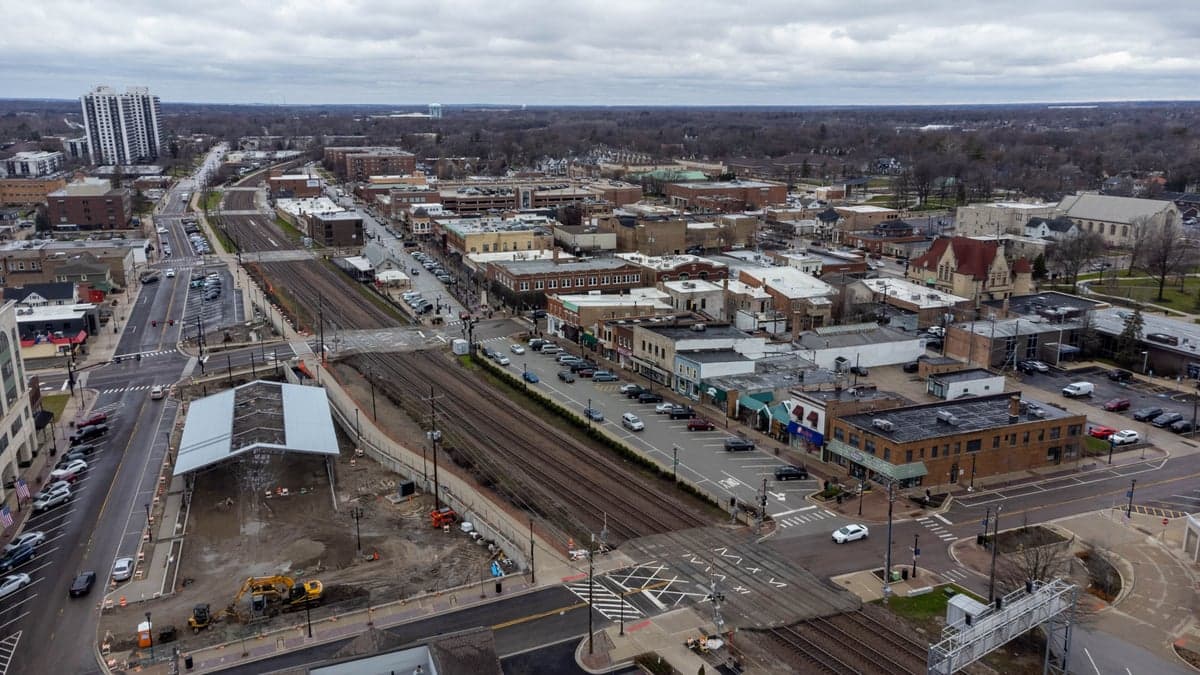
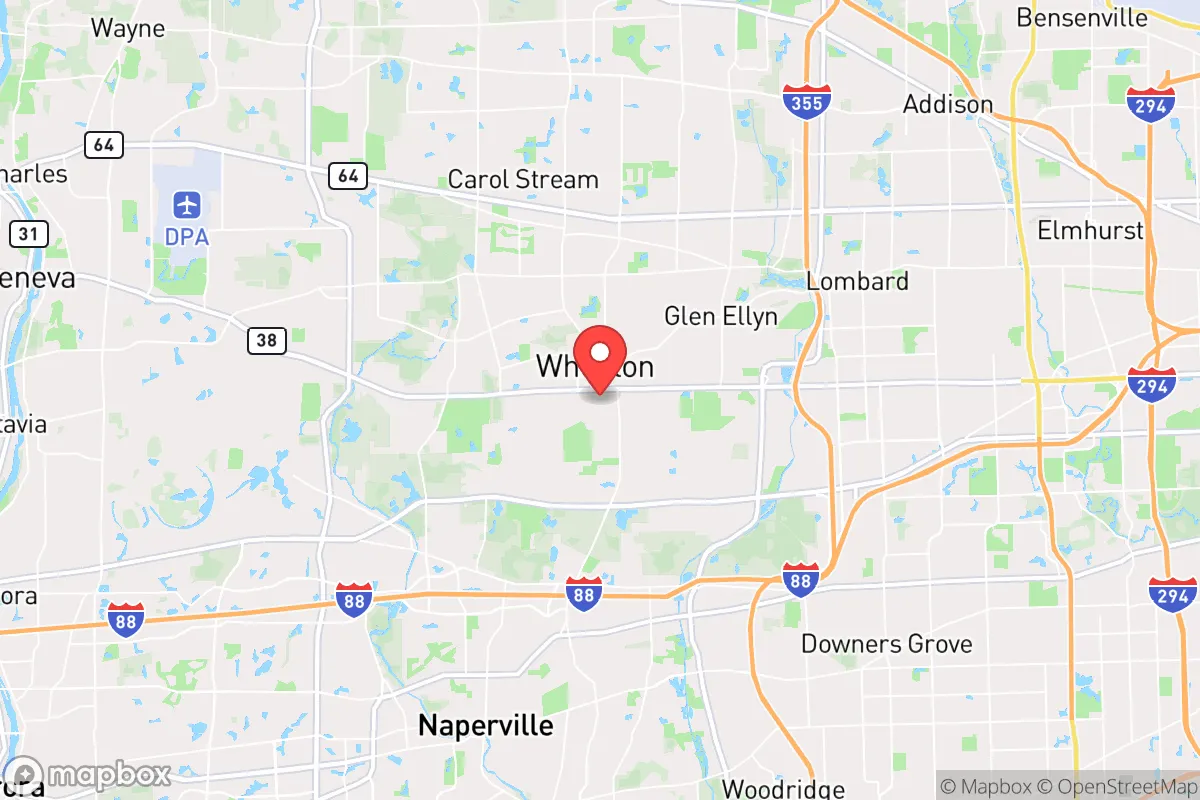
Photo: Wikipedia
Political ClimatePolitical Climate in Wheaton, IL
District shown is the primary district for this city’s centroid. Cities may span multiple districts.
Local Political AnalysisPolitical Analysis of Wheaton, IL
Wheaton, Illinois, has a political climate that’s increasingly at odds with the surrounding county. While the city itself has deep roots as a conservative stronghold—home to Wheaton College and a historically traditionalist base—the broader DuPage County and Cook County politics are pulling it left. The Cook County PVI of D+17 tells you everything about the regional tide, but Wheaton’s local elections and school board races still show a stubborn, though fading, conservative streak. If you’ve lived here a while, you’ve watched the shift from a place where fiscal responsibility and limited government were assumed values to one where progressive policies are creeping in, often under the radar.
How it compares
Drive ten minutes east and you’re in Glen Ellyn, which has swung noticeably left in recent years, with its downtown becoming a hub for activist groups and higher-density zoning that many locals see as government overreach. Head west to Carol Stream or Winfield, and you’ll find more of the old-school, live-and-let-live conservatism that Wheaton used to embody. But the real contrast is with Naperville to the south, which has embraced a more progressive agenda on housing and environmental mandates, and with Chicago itself, where the county machine dictates property tax hikes and unfunded pension liabilities that hit Wheaton homeowners hard. Wheaton’s city council still leans center-right, but the county board and state legislature are dominated by Democrats who don’t share the local ethos of personal responsibility and minimal interference.
What this means for residents
For the average Wheaton family, the political drift translates into real-life friction. Property taxes have climbed steadily, driven by Cook County’s pension obligations and school district spending that often feels disconnected from what parents actually want. The push for equity-based curriculum in District 200 schools has raised eyebrows among those who value academic rigor over social engineering. And the recent county-level health mandates and zoning overrides have felt like a slow erosion of local control. If you value the freedom to make your own choices about your property, your children’s education, and your business, you’re increasingly fighting a rear-guard action against a bureaucracy that doesn’t answer to Wheaton voters. The long-term trajectory is concerning: as more progressive transplants move in from Chicago, the local elections become tighter, and the old guard’s influence wanes.
Culturally, Wheaton still holds onto some distinctions that set it apart. The city’s historic downtown has resisted the kind of chain-dominated, high-density redevelopment seen in nearby suburbs, preserving a sense of place that feels more grounded. The Wheaton College community remains a bulwark of traditional values, though even there, you’ll hear rumblings about administrative shifts toward more progressive stances on social issues. On policy, Wheaton has so far avoided the most aggressive housing mandates and sanctuary-city declarations that have plagued other Cook County suburbs, but the pressure is mounting. For now, it’s a place where you can still have a reasonable conversation about limited government and personal freedom, but you’ve got to keep one eye on the ballot box—because the next few election cycles could decide whether Wheaton stays Wheaton or becomes another cookie-cutter progressive suburb.

State Political ClimatePolitical Climate in Illinois
State Political AnalysisPolitical Environment in the State
Illinois is a deeply blue state in statewide elections, with Democrats holding every statewide office and supermajorities in both legislative chambers, but this dominance masks a stark internal divide. Chicago and its inner suburbs drive the state’s progressive tilt, while the rest of Illinois—particularly downstate and the collar counties—has shifted rightward over the past two decades. The state has moved from a purple swing state in the 1990s to a solidly Democratic stronghold, with the 2020 presidential margin of +17 points for Joe Biden reflecting a consolidation of urban power and a shrinking rural electorate.
Urban vs. rural divide
The political map of Illinois is essentially a battle between Cook County and everywhere else. Chicago, which accounts for roughly 40% of the state’s population, delivers massive Democratic margins—often exceeding 80% in city wards. The surrounding collar counties (DuPage, Lake, Kane, Will, McHenry) have been trending blue since the 1990s, with once-reliable Republican suburbs like Naperville and Arlington Heights now regularly voting Democratic. Downstate, however, is a different world. Counties like Williamson, Effingham, and Macoupin vote Republican by 30-40 point margins, and rural areas have grown more conservative as the state’s Democratic machine has consolidated power in Chicago. The divide is visible in real estate: a home in deep-blue Evanston costs triple what a comparable property in red-leaning Quincy does, reflecting the economic and cultural chasm.
Policy environment
Illinois’s policy environment is defined by high taxes and expansive government. The state has a flat income tax rate of 4.95%, but combined with high property taxes (the second-highest in the nation, averaging over 2% of home value annually) and a sales tax that can exceed 10% in Chicago, the overall burden is crushing. The regulatory posture is business-unfriendly, with strict environmental rules, a $15 minimum wage (indexed to inflation), and a strong union presence that drives up construction and labor costs. Education policy is centralized: the state funds schools through a formula that heavily favors Chicago Public Schools, leaving rural districts underfunded. Healthcare is heavily regulated, with Medicaid expansion and a state-run health insurance exchange. Election laws are among the most liberal in the country, with no voter ID requirement, automatic voter registration, and mail-in ballots sent to all registered voters—a system that conservatives argue invites fraud, though no major scandals have been proven.
Trajectory & freedom
Illinois is becoming less free by almost any measure. The 2019 legalization of recreational marijuana, while popular, came with heavy taxation and licensing that favored large corporations over small businesses. The 2021 repeal of the Parental Notice of Abortion Act removed a key parental-rights safeguard. On gun rights, Illinois is one of the most restrictive states: the 2023 Protect Illinois Communities Act banned the sale of many semi-automatic firearms and standard-capacity magazines, and the state has a Firearm Owners Identification (FOID) card system that creates bureaucratic hurdles for law-abiding gun owners. Property rights have eroded with the 2020 elimination of cash bail (the Pretrial Fairness Act), which critics argue releases dangerous offenders without accountability. Medical autonomy took a hit with the state’s aggressive COVID-19 mandates, including a vaccine requirement for healthcare workers that led to staffing shortages. The trend is clear: Springfield is expanding government control over personal choices, from what you can own to how you can defend your home.
Civil unrest & political movements
Illinois has seen significant civil unrest, particularly in Chicago. The 2020 George Floyd protests turned into widespread looting and arson in the city’s downtown and affluent neighborhoods like Lincoln Park, with property damage exceeding $60 million. The state’s sanctuary status—codified by the 2017 Trust Act and expanded by the 2021 Way Forward Act—limits cooperation with federal immigration enforcement, creating flashpoints in suburbs like Elgin and Aurora where illegal immigration has strained public services. Election integrity remains a hot-button issue: the 2020 election saw widespread use of mail-in ballots without signature verification, and the state’s refusal to clean voter rolls has led to lawsuits from conservative groups. Organized movements on the right, such as the Illinois Family Institute and county-level Second Amendment sanctuary resolutions (passed in over 70 counties), push back against Springfield’s agenda, but they lack the legislative power to reverse course. A new resident will notice the contrast: Chicago’s progressive activism versus downstate’s quiet resistance.
Projection
Over the next 5-10 years, Illinois will likely become more Democratic and more centralized. Demographic trends favor the blue side: Chicago’s population is stabilizing after a decade of decline, while downstate counties continue to lose residents to Texas, Florida, and Indiana. In-migration from blue states like California and New York is modest but growing, particularly in the collar counties, reinforcing the progressive tilt. The state’s fiscal crisis—a $140 billion unfunded pension liability—will force either massive tax hikes or service cuts, both of which will accelerate the exodus of middle-class families. The Republican Party is increasingly confined to rural strongholds and a few suburban holdouts like DuPage County, but even those are slipping. Someone moving in now should expect higher taxes, more gun restrictions, and a government that prioritizes Chicago’s needs over the rest of the state. The freedom index will continue to decline.
For a new resident, the bottom line is this: Illinois offers economic opportunity in Chicago and its suburbs, but at the cost of high taxes, heavy regulation, and a government that is actively hostile to conservative values. If you value low taxes, gun rights, and local control, you will find yourself fighting an uphill battle against a powerful Democratic machine. The state is not unlivable—many conservatives thrive in places like Peoria, Springfield, and the collar counties—but you must be prepared to pay a premium for the privilege of living in a blue state. If you are a parent concerned about school choice, parental rights, or public safety, Illinois will test your patience. Choose your county carefully, and understand that the political winds are not blowing your way.
* Values derived from national, state, county, city and local statistics and may differ in a specific area. Last updated: 2026-04-29T19:18:21.000Z
Narrative content on this page is AI-generated and may contain mistakes. Verify any details that matter before acting on them.
ReloMaps may earn a commission from affiliate links at no extra cost to you.

