Photo: Wikipedia
Personal Sovereignty in Wheaton, IL
Viable for self-reliance. Generally workable, though some barriers may limit total independence.
What does Personal Sovereignty tell us?
Personal Sovereignty measures your capacity for self-reliance and independence with minimal government friction. Higher scores mean fewer barriers between you and the way you want to live... but it assumes you have the space you need and good neighbors.
What does this tell us?
Personal Sovereignty measures your capacity for self-reliance and independence with minimal government friction. Higher scores mean fewer barriers between you and the way you want to live... but it assumes you have the space you need and good neighbors.
State Policy
Energy independence: Importer (45% of energy produced in-state)
Personal Liberty
Homesteading

Personal Liberty Analysis
For a conservative-leaning individual or family evaluating personal sovereignty, Wheaton, Illinois presents a complex trade-off. The town offers a strong sense of community and historically conservative local governance, but it sits within a state whose political trajectory has increasingly centralized power in Springfield, eroding local autonomy. Your ability to live according to your own values here will depend heavily on your willingness to navigate state-level mandates on everything from firearms to education, while leveraging the relative stability of a well-off DuPage County suburb. The bottom line: Wheaton provides a decent buffer zone for like-minded community, but it is not a sovereignty sanctuary—you will be fighting state-level headwinds on multiple fronts.
Tax burden and regulatory posture: How much of your income and freedom is claimed by the state
Illinois is one of the most heavily taxed states in the union, and Wheaton residents feel this acutely. The state income tax is a flat 4.95%, and while there is no local income tax, the property tax burden is punishing. DuPage County’s effective property tax rate hovers around 2.1% of assessed value, meaning a $400,000 home carries an annual bill of roughly $8,400. This is a direct claim on your wealth that funds a school system and local services, but it also reflects a state government that has shown little appetite for fiscal restraint. The regulatory posture in Wheaton itself is moderate—zoning is enforced, but not aggressively hostile to small businesses or home-based enterprises. However, state-level regulations on everything from vehicle emissions to building codes add layers of compliance that a prepper-minded individual will find burdensome. The state’s pension debt and ongoing budget crises create a persistent risk of tax increases, meaning your sovereignty over your own earnings is perpetually under threat from Springfield.
Self-defense and gun law specifics: Navigating Illinois’ restrictive firearms environment
This is the single most significant sovereignty concern in Wheaton. Illinois is not a gun-friendly state, and the legal landscape has become markedly more restrictive. The state requires a Firearm Owners Identification (FOID) card to possess any firearm or ammunition—a process that involves a background check and state-level approval, which can be delayed for months. For concealed carry, a Concealed Carry License (CCL) is mandatory, requiring 16 hours of training and a separate application. The most contentious issue is the Protect Illinois Communities Act, passed in 2023, which bans the sale and possession of many semi-automatic rifles commonly referred to as "assault weapons," along with magazines over certain capacities. This law is currently facing legal challenges, but as of 2026, it remains in effect. Wheaton itself is a relatively safe community, with a violent crime rate well below national averages, but the state’s posture means that your ability to defend your home and family with the tools you deem necessary is heavily circumscribed. Magazine capacity limits and the ban on certain platforms directly impact a survivalist’s preparedness plans. You can still own handguns and shotguns, but the state has made clear it views the Second Amendment as a privilege, not a right.
Self-reliance and homesteading viability: Lot sizes, zoning, and off-grid feasibility in a suburb
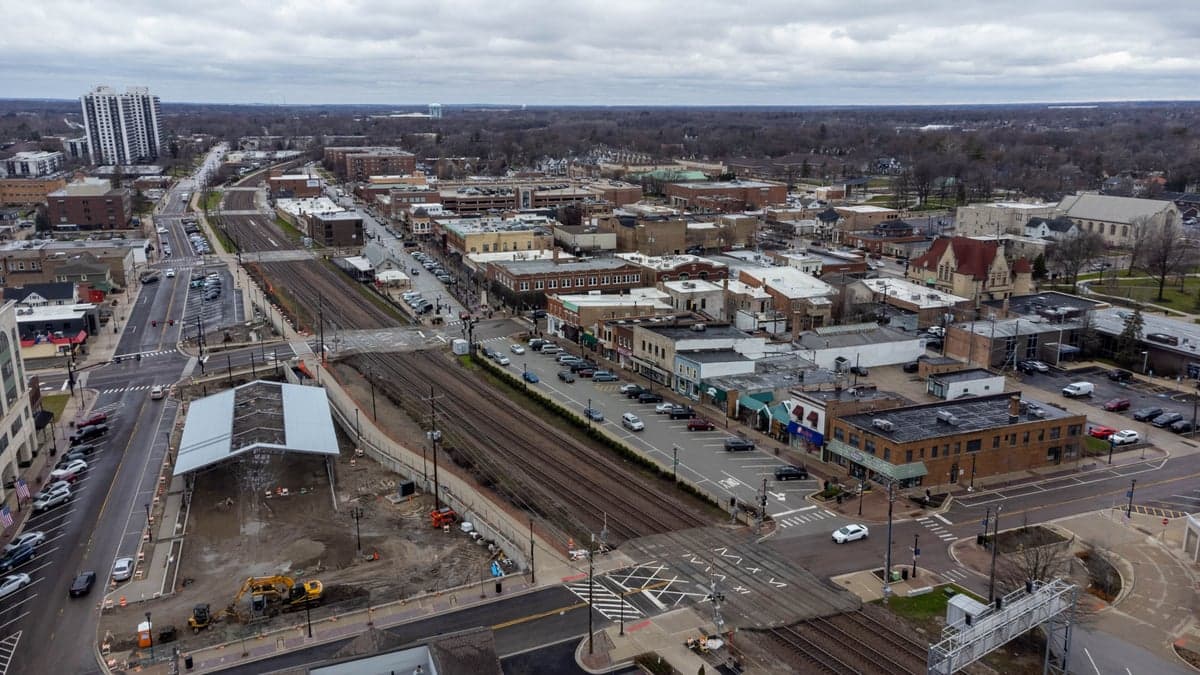
Wheaton is a dense, established suburb, not a rural homesteading zone. The typical residential lot size in the older parts of town is around a quarter-acre, with newer subdivisions offering slightly larger parcels, but rarely exceeding half an acre. Zoning is strictly enforced by the city, and raising livestock—chickens, goats, or bees—is heavily restricted or outright prohibited within most residential districts. Off-grid living is not feasible here. The city requires connection to municipal water and sewer, and building codes mandate grid-tied electrical systems. Rainwater collection for potable use is not permitted under state health codes. For a prepper seeking true self-reliance—growing a significant portion of your own food, generating your own power, or living without municipal dependencies—Wheaton is a poor fit. Your best bet for a garden is a raised bed in a backyard, and you will remain tethered to the grid and the local supply chain. The trade-off is that the community is stable, with good infrastructure and low crime, which reduces the immediate need for full self-sufficiency. But if your goal is to be able to weather a long-term disruption without external support, you will need to look further west, into Kane or DeKalb counties.
Personal liberties: Parental rights, medical autonomy, speech, and property
On cultural and personal liberty issues, Wheaton offers a mixed picture. The town has a strong evangelical Christian heritage and a history of conservative local politics, which has created a community where traditional values are generally respected. Parental rights in education are a live issue here. While Illinois state law has moved toward expansive LGBTQ+ curriculum mandates and limited parental opt-out options, the local school district (Community Unit School District 200) has historically been more responsive to conservative parents than districts in Cook County. School board meetings have been contentious, but parents have a real voice. On medical autonomy, the state’s vaccine mandates for school attendance and its emergency powers during health crises have been a flashpoint. Illinois does not have a broad religious or philosophical exemption for school vaccine requirements, which limits parental choice. Free speech is generally protected, though local ordinances on noise, signage, and public assembly are typical of a well-managed suburb—you won’t be shut down for expressing your views, but you will need to follow permitting processes for larger gatherings. Property rights are constrained by the aforementioned zoning and state-level environmental regulations, but eminent domain abuse is rare in Wheaton. The town’s character is one of order and predictability, which can feel like a safe harbor for conservative families, but the state’s reach into medical and educational decisions is a persistent source of friction.
Overall, Wheaton offers a higher degree of personal sovereignty than many other Chicago suburbs, particularly those in Cook County, but it falls well short of the autonomy available in rural Illinois or states like Indiana, Missouri, or Tennessee. If your priority is a like-minded community where your children can attend good schools and you can live without constant cultural friction, Wheaton is a solid choice. If your priority is maximum legal latitude to prepare for systemic collapse, defend your home with the tools you choose, and minimize your dependence on state systems, you will find the regulatory environment here suffocating. The town is a compromise—a place where you can build a stable life within the system, but not a place where you can easily opt out of it.

* Values derived from national, state, county, city and local statistics and may differ in a specific area. Last updated: 2026-04-29T19:18:21.000Z
Narrative content on this page is AI-generated and may contain mistakes. Verify any details that matter before acting on them.
ReloMaps may earn a commission from affiliate links at no extra cost to you.

