Photo: Wikipedia
Demographics of Putnam County
Affluence Level in Putnam County
A middle-class area roughly in line with national averages across income, home values, education, and employment.
People of Putnam County
Putnam County, West Virginia, is home to roughly 57,250 residents who form one of the state’s most stable and culturally homogeneous populations. With a population that is 94.0% white, a foreign-born share of just 0.6%, and a modest 28.4% college-educated rate, the county’s identity is rooted in Appalachian and Mid-Atlantic traditions, shaped by river commerce, industry, and suburban expansion from Charleston. The people of Putnam County today are characterized by a strong sense of local heritage, a preference for rural and small-town living, and a demographic profile that has changed little in recent decades, making it a distinctive outlier in a nation experiencing rapid diversification.
Settlement & growth (pre-1960)
Long before European settlers arrived, the area now known as Putnam County was part of the hunting and trading grounds of the Shawnee and Cherokee nations. The Kanawha River, which bisects the county, served as a vital travel and trade corridor for these Native peoples. European contact intensified in the mid-1700s, with French and British fur traders and explorers passing through, but permanent settlement did not begin in earnest until after the American Revolution.
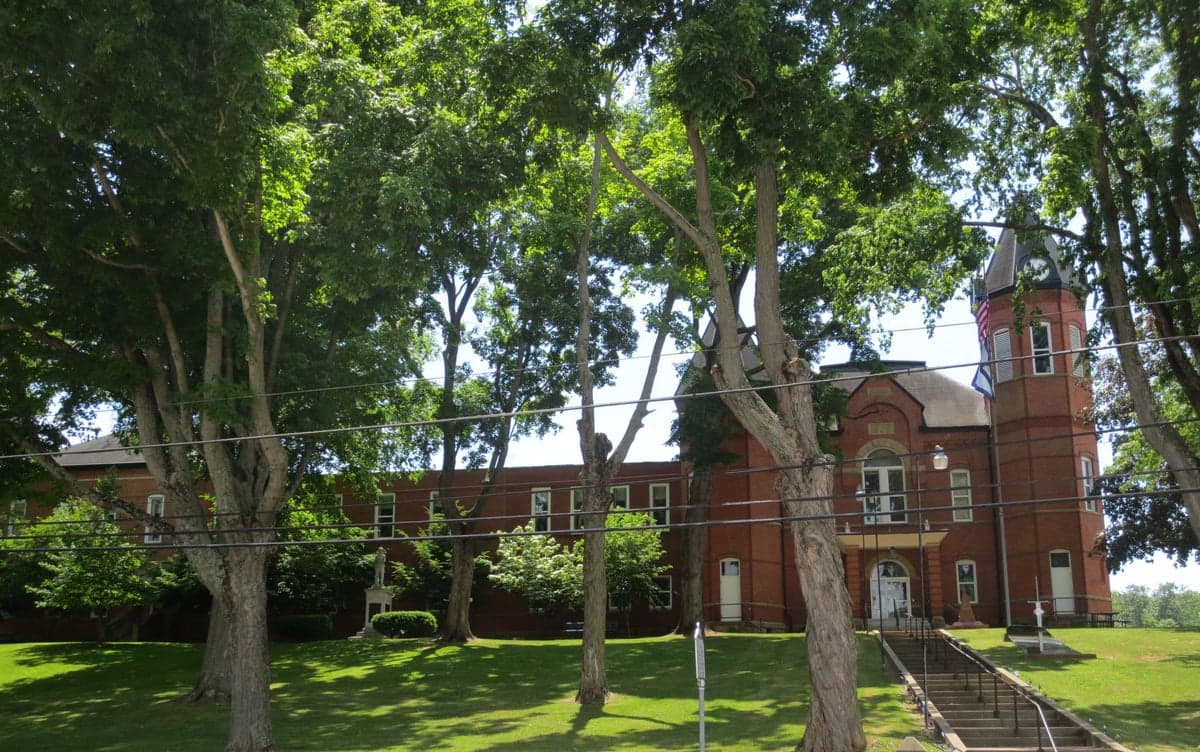
The first major wave of settlers were Scots-Irish and English pioneers who moved down the Great Wagon Road from Pennsylvania and Virginia’s Shenandoah Valley in the late 1700s and early 1800s. They were drawn by land grants offered to veterans of the Revolutionary War and by the fertile bottomlands along the Kanawha River. These early families established the county’s oldest settlements, including Winfield (the county seat, founded 1818), Red House, and Poca. The region was officially formed as Putnam County in 1848 from parts of Cabell, Kanawha, and Mason counties, named after Revolutionary War hero Israel Putnam. The economy was almost entirely agricultural, with small farms producing corn, wheat, and livestock, supplemented by salt production along the Kanawha.
The arrival of the Chesapeake and Ohio Railway in the 1870s transformed Putnam County. The railroad connected the county to Charleston and the eastern markets, spurring the growth of river towns like Buffalo and Eleanor. This period also saw a modest influx of German and Irish immigrants who worked on the railroad and in the emerging salt and timber industries. However, unlike many industrializing parts of West Virginia, Putnam County did not attract large numbers of Southern or Eastern European immigrants. The population remained overwhelmingly native-born and white, with small communities of freed African Americans settling in areas like Scott Depot and Teays Valley after the Civil War, working as sharecroppers and laborers.
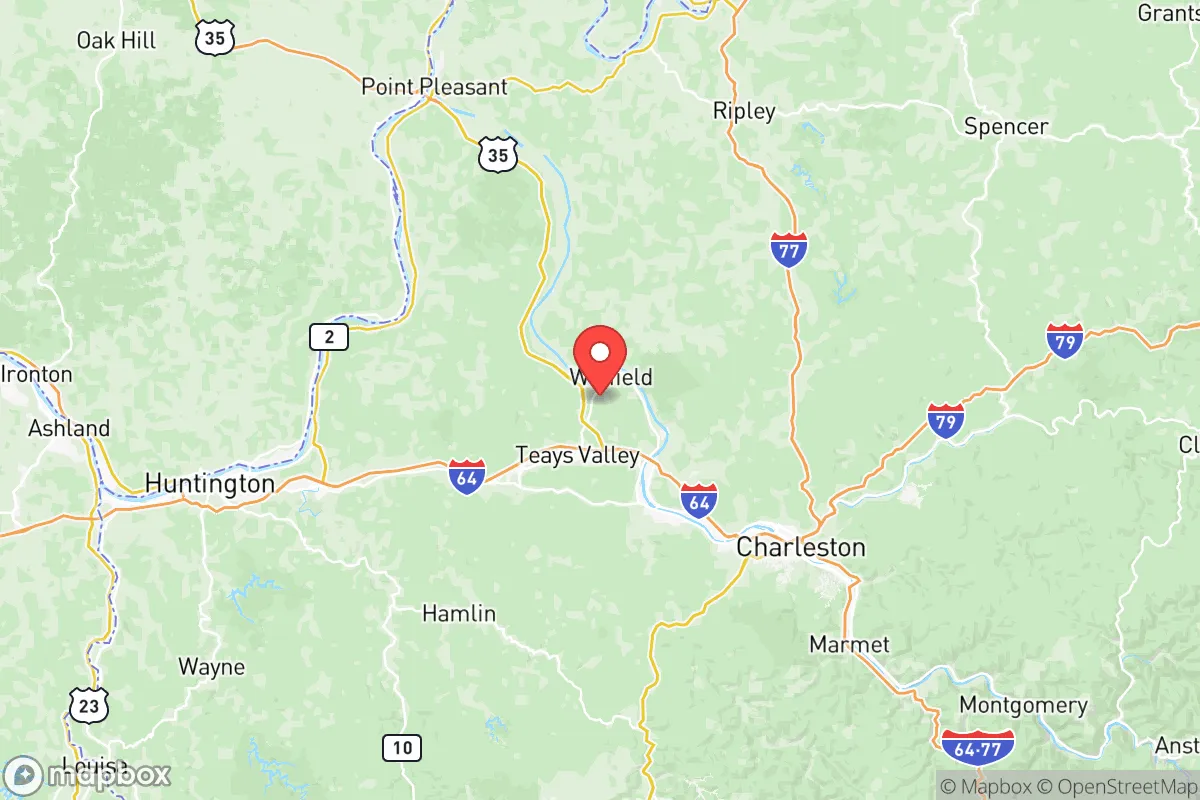
The 20th century brought the rise of the chemical industry along the Kanawha River, with Union Carbide and other plants opening in nearby South Charleston and Nitro. This industrial growth, combined with the construction of U.S. Route 35 and Interstate 64 in the 1960s, triggered a wave of domestic migration from rural Appalachia and the coalfields of southern West Virginia. Families moved to Putnam County for jobs in the chemical plants and for the promise of better schools and housing. Towns like Hurricane and Teays Valley began to grow as bedroom communities for workers commuting to Charleston and Huntington. By 1960, the county’s population had reached roughly 23,000, still overwhelmingly white and native-born, with a strong rural character.
Modern era (post-1965)
The 1965 Hart-Cellar Act, which dramatically reshaped U.S. immigration patterns, had almost no impact on Putnam County. The county’s foreign-born population remains at 0.6% today, one of the lowest rates in the nation. Unlike many parts of the country that saw waves of immigrants from Latin America, Asia, and Africa after 1965, Putnam County’s demographic story in the modern era is one of domestic migration and suburbanization, not international immigration.
The most significant demographic shift since 1965 has been the continued suburbanization of the county, driven by the expansion of Interstate 64 and the growth of the Charleston metropolitan area. From the 1970s through the 2000s, families moved from Charleston and other Kanawha Valley communities to Putnam County, seeking lower crime rates, better schools, and larger lots. This domestic migration concentrated in the county’s western corridor, particularly in Teays Valley, Hurricane, and Scott Depot, which evolved from rural crossroads into sprawling suburban subdivisions. The population more than doubled between 1970 and 2020, from roughly 27,000 to over 57,000.
Racial and ethnic diversity has remained minimal. The county is 94.0% white, with a Black population of just 0.7% and a Hispanic population of 1.5%. East and Southeast Asian communities (0.6%) and Indian subcontinent residents (0.2%) are present in very small numbers, mostly concentrated in the Teays Valley area, where a handful of professionals work in healthcare and engineering. The county’s Arab population is negligible. This lack of diversity is a direct result of the county’s limited economic draw for international immigrants and its geographic isolation from major immigrant gateways. The county’s cultural identity remains firmly rooted in Appalachian and Southern traditions, with a strong emphasis on family, church, and outdoor recreation like hunting and fishing.
The future
Demographic projections suggest that Putnam County will remain one of West Virginia’s most stable and least diverse counties for the foreseeable future. The population is expected to grow slowly, if at all, as the state as a whole faces population decline and an aging demographic. The county’s appeal as a safe, affordable, and family-oriented suburb will likely continue to attract domestic migrants from other parts of West Virginia and neighboring states, but this flow is unlikely to significantly alter the racial or ethnic composition.
The county’s cultural identity is likely to remain conservative and traditional, with a strong emphasis on local governance, gun rights, and religious institutions. The small East and Southeast Asian and Indian communities in Teays Valley may grow slightly as the healthcare and education sectors expand, but they will remain a tiny fraction of the population. The county’s future demographic trajectory is one of slow, incremental change, not transformation. For a family moving in now, Putnam County offers a stable, predictable community where the population is aging but still family-oriented, and where the cultural landscape will feel familiar for decades to come.
Putnam County is becoming a place where the past and present coexist comfortably, with little pressure for rapid demographic change. For someone moving in now, it offers a community where neighbors are likely to share a similar background, where schools are a top priority, and where the pace of life remains unhurried. The county’s future is not one of dramatic diversification, but of steady, quiet continuity—a rare and deliberate choice in an increasingly diverse America.

* Values derived from national, state, county, city and local statistics and may differ in a specific area. Last updated: 2026-07-26T05:07:27.000Z
Narrative content on this page is AI-generated and may contain mistakes. Verify any details that matter before acting on them.
ReloMaps may earn a commission from affiliate links at no extra cost to you.

