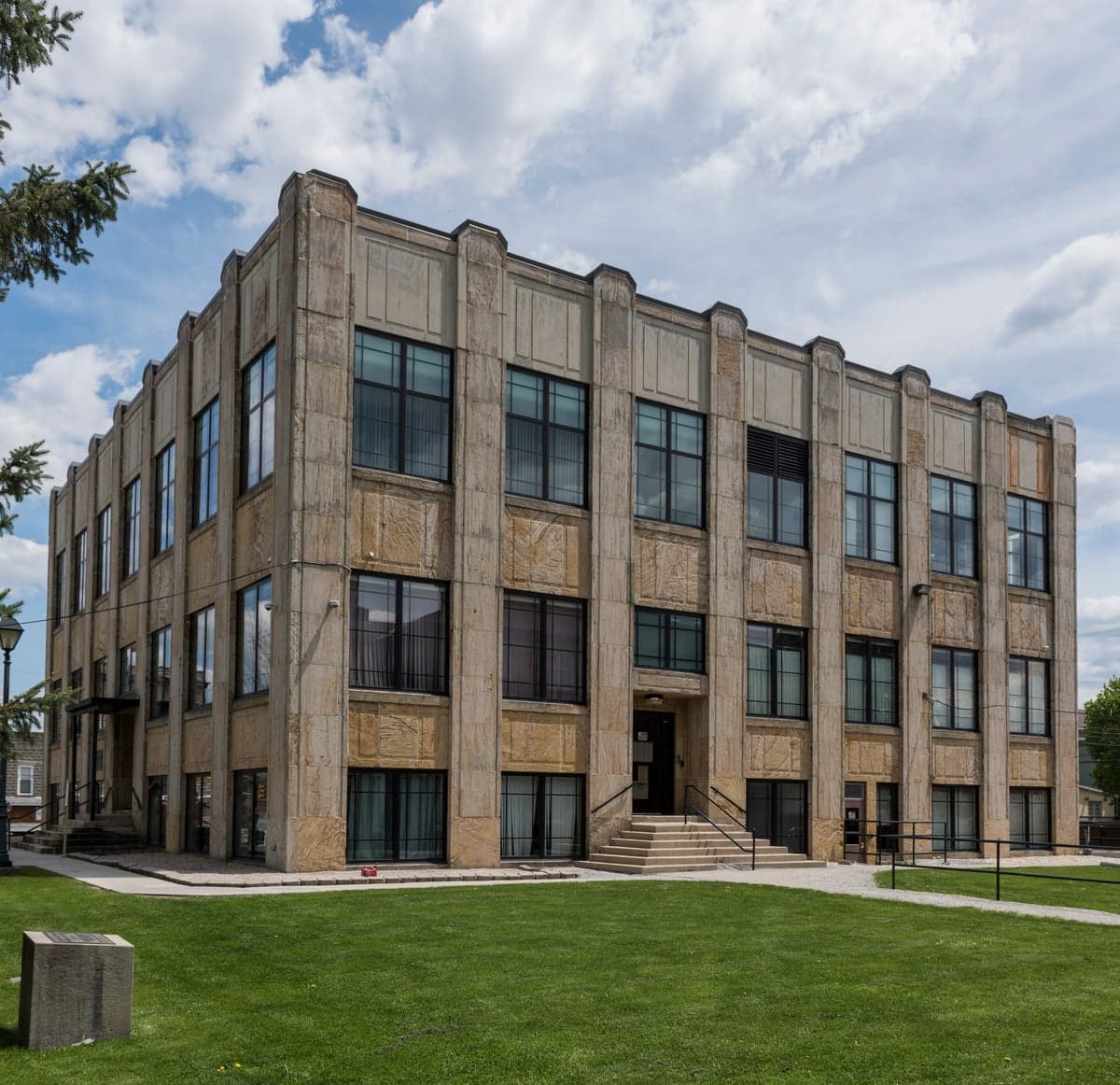
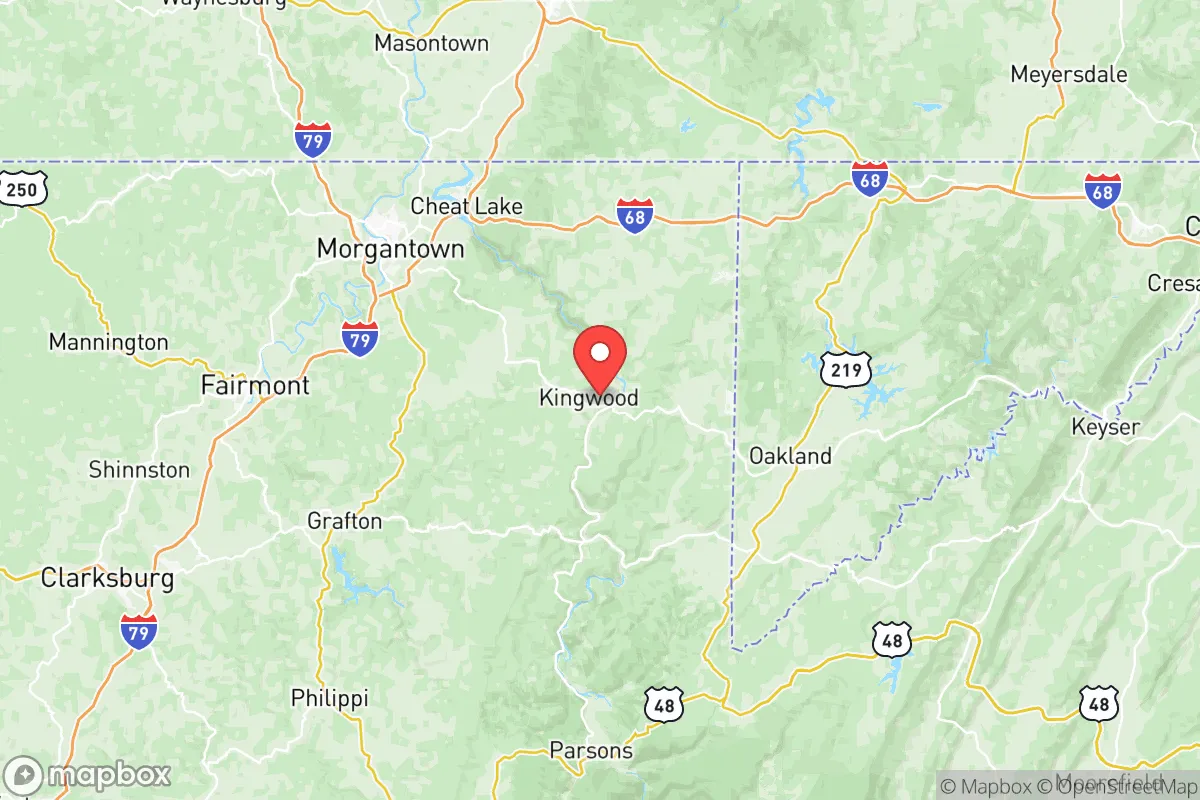
Photo: Wikipedia
Political ClimatePolitical Climate in Preston County
Showing district-level results — no local-only data available.
Local Political AnalysisPolitical Analysis of Preston County
Preston County, West Virginia, is a deeply Republican stronghold with a Cook Partisan Voting Index of R+20, making it slightly more conservative than the state as a whole (R+21) but still firmly within the same red-leaning orbit. The county has trended steadily rightward over the past two decades, with the GOP's margin of victory in presidential elections growing from around 15 points in 2000 to over 30 points in 2020. This shift mirrors the broader state trajectory, but Preston County's rural character and coal-country roots have kept it from swinging as hard as some neighboring counties like Monongalia (home to Morgantown), which has become a blue island in the region.
How it compares
Preston County's R+20 PVI is nearly identical to West Virginia's R+21, meaning the county votes about as Republican as the state average. However, there are notable internal variations. The county seat, Kingwood, leans slightly more moderate—often voting within 10-15 points of the state average—due to its small government workforce and a handful of college-educated residents. In contrast, Rowlesburg and Tunnelton are reliably deep red, often delivering 70-80% of their votes to GOP candidates. The only precincts that occasionally tilt blue are around Reedsville and Masontown, where a mix of WVU-affiliated commuters and younger families create a small but consistent Democratic vote share of 35-40%. Compared to Monongalia County (R+10), Preston is about 10 points more conservative; compared to Tucker County (R+25), it's about 5 points less so. The county's political identity is shaped by its reliance on natural resources (coal, timber, natural gas) and its distance from the urbanizing influence of Morgantown.
What this means for residents
For conservative residents, Preston County offers a political environment where their views are the clear majority. Local offices—from the county commission to the school board—are almost entirely held by Republicans, and policy debates tend to focus on property taxes, road maintenance, and Second Amendment rights. For liberal residents, the reality is more isolating. There is no organized Democratic Party presence in the county, and progressive candidates rarely run for local office. Socially, it means that openly liberal views on issues like gun control or environmental regulation are often met with polite silence or outright opposition. However, the county's small population (about 34,000) means that political disagreements rarely escalate into open conflict—most people just avoid the topic at the diner or the feed store. The biggest practical impact is on school funding and local infrastructure: the county's conservative leadership has kept taxes low but has struggled to fund road repairs and school upgrades, a trade-off that residents accept as part of the bargain.
Culturally, Preston County stands apart from the rest of West Virginia in a few subtle ways. The county has a stronger tradition of small-scale farming and outdoor recreation (hunting, fishing, ATV trails) than the coal-centric southern part of the state. There's also a noticeable libertarian streak—many residents are Republican but deeply skeptical of federal authority, whether it's the EPA or the ATF. This makes the county a bit more resistant to state-level GOP initiatives that expand government power, like certain law enforcement programs. In practice, this means that while Preston votes red, it does so with a grain of salt—locals are more likely to vote for a candidate who promises to "leave us alone" than one who promises to "fix things." The county's political future likely hinges on whether the growing number of remote workers and retirees from out of state (drawn by cheap land and low taxes) will shift the balance toward the moderate center or reinforce the existing conservative consensus. For now, it's a reliably red place where the biggest political fights are over potholes, not party platforms.

State Political ClimatePolitical Climate in West Virginia
State Political AnalysisPolitical Environment in the State
West Virginia is one of the most reliably Republican states in the nation, with a Cook Partisan Voting Index of R+21, meaning it votes about 21 points more Republican than the national average in presidential elections. The state has undergone a dramatic political realignment over the past 20 years, shifting from a Democratic stronghold that voted for Bill Clinton twice to a GOP fortress where Donald Trump won by nearly 39 points in 2020 and by over 40 points in 2024. This transformation is driven by a combination of cultural conservatism, a shrinking unionized industrial base, and a deep distrust of federal environmental and energy policies that have reshaped the state's coal economy.
Urban vs. rural divide
The political map of West Virginia is defined by a stark urban-rural split, though even the "urban" areas lean conservative by national standards. The state's largest metro, Charleston (Kanawha County), is a Republican-leaning area that voted for Trump by about 15 points in 2024, though it remains the most competitive major population center due to a concentration of government workers and healthcare professionals. Huntington (Cabell County) and Morgantown (Monongalia County) are more conservative than Charleston, with Morgantown's West Virginia University community providing a small but visible liberal enclave that makes it the state's most Democratic-leaning city of any size. The rural counties that dominate the state's geography are overwhelmingly Republican, with places like Mingo County, Logan County, and McDowell County in the southern coalfields routinely voting 80-85% Republican. The Eastern Panhandle, including Martinsburg and Berkeley County, has seen significant in-migration from the Washington D.C. suburbs, bringing a mix of fiscal conservatives and some moderate Democrats, but the area still votes solidly Republican. The Mountain State's political geography is essentially a sea of deep red with a few small islands of purple in the college towns and state capital.
Policy environment
West Virginia's policy environment is aggressively conservative, shaped by a Republican supermajority in the legislature and a GOP governor. The state has no personal income tax on Social Security benefits and has been phasing down its personal income tax rate, which was cut from 6.5% to 4.82% in 2023 with a trigger mechanism for further reductions as revenue allows. Sales tax is 6% with no local add-ons, and property taxes are among the lowest in the nation, capped by the state constitution at a maximum of 1.5% of assessed value. The regulatory posture is strongly pro-business, with a right-to-work law passed in 2016 and a tort reform environment that has made the state more attractive to employers. Education policy includes a robust charter school law passed in 2019 and the Hope Scholarship program, which provides state funding for private school tuition or homeschooling expenses. Healthcare is a mixed bag: the state expanded Medicaid under the Affordable Care Act in 2014, but the legislature has resisted further expansion of government healthcare programs. Election laws are moderately restrictive, requiring a valid ID to vote, with no-excuse absentee voting available and early voting beginning 13 days before an election. The state does not have a voter initiative process, meaning all policy changes go through the legislature.
Recent policy direction
Recent legislation points toward a consolidation of conservative priorities across multiple fronts. On gun rights, West Virginia passed constitutional carry in 2016, allowing concealed carry without a permit, and in 2023 passed a law prohibiting state and local law enforcement from enforcing any future federal gun restrictions deemed unconstitutional by the state. On parental and education rights, the 2021 "Parental Bill of Rights" requires schools to notify parents of any changes to a student's health or well-being, and the 2023 "Don't Say Gay" style law restricts classroom discussion of sexual orientation and gender identity in elementary grades. Medical and bodily autonomy is heavily restricted: abortion is banned at all stages of pregnancy with narrow exceptions for medical emergencies, rape, and incest, following a trigger law that took effect after Dobbs. Property rights are strong, with no state-level property tax on business inventory and a homestead exemption for seniors. On voting and ballot access, the state passed a voter ID law in 2017 and in 2021 tightened absentee ballot rules, though same-day voter registration is available. Privacy and surveillance law is relatively undeveloped, with no comprehensive data privacy law, though the state has resisted federal surveillance programs in principle. The overall direction is toward maximizing individual liberty in economic and gun matters while restricting it on social and medical issues.
Civil unrest & political movements
West Virginia has a history of political activism that predates the current partisan alignment, rooted in labor struggles and environmental protests. The 2018 statewide teachers' strike, which shut down all public schools for nine days and won a 5% pay raise, was the largest labor action in the state's history and demonstrated that organized labor still has some muscle, particularly in education. The Coalfields region has seen periodic protests over mountaintop removal mining and water contamination, most notably the 2014 Elk River chemical spill that left 300,000 residents without drinking water. On the right, the state has been a hotbed of Second Amendment activism, with "Second Amendment Sanctuary" resolutions passed in dozens of counties. Immigration politics are relatively muted given the state's small foreign-born population (about 1.5%), but there have been symbolic resolutions opposing sanctuary city policies. Election integrity controversies flared after 2020, with the state's Republican secretary of state conducting a limited audit that found no widespread fraud, though some grassroots activists continue to push for hand-counting of ballots. The state has seen occasional secessionist rhetoric, particularly from the Eastern Panhandle, where some residents have floated joining Virginia or Maryland due to feeling disconnected from the rest of the state. A new resident would notice that political activism is less visible than in swing states, but the teachers' strike and periodic coal industry protests show that the state's political culture still has a populist, anti-establishment streak that cuts across party lines.
Projection
Over the next 5-10 years, West Virginia's political trajectory points toward continued Republican dominance, but with potential shifts driven by demographic and economic change. The state's population is aging and shrinking, with the 2020 census showing a 3.2% decline from 2010, the largest of any state. In-migration is concentrated in the Eastern Panhandle, where commuters to D.C. and Northern Virginia are bringing more moderate Republican and some Democratic voters, potentially making counties like Berkeley and Jefferson more competitive over time. The decline of the coal industry continues to reshape the economy and politics, with the state investing heavily in natural gas, petrochemicals, and tourism as replacements. The Mountain Valley Pipeline, completed in 2024, has brought construction jobs and natural gas revenue, but also environmental opposition. The state's Republican supermajority is likely to persist, though internal divisions between establishment conservatives and more populist, libertarian-leaning factions could emerge over issues like further tax cuts versus education funding. A new resident moving in now should expect to find a state that remains deeply conservative on social issues, with a growing emphasis on economic diversification and tax competitiveness, but with the Eastern Panhandle gradually becoming a more politically diverse region that could shift the state's center of gravity slightly toward the center over the next decade.
For someone choosing West Virginia, the bottom line is that you are moving to a state where conservative values dominate every level of government, from the courthouse to the capitol. If you are a conservative, you will find a policy environment that supports gun rights, low taxes, school choice, and traditional social values, with a government that is actively working to reduce its footprint. If you are a liberal, you will find limited political representation and a policy landscape that is hostile to your views on most social and economic issues, though you may find community in Morgantown, Charleston, or Shepherdstown. The practical takeaway is that West Virginia offers a predictable, stable conservative governance environment, but with a shrinking population and an economy in transition, the state's long-term political future will depend on whether it can attract new residents and diversify its economy without losing the cultural identity that defines it.
* Values derived from national, state, county, city and local statistics and may differ in a specific area. Last updated: 2026-06-12T02:48:47.000Z
Narrative content on this page is AI-generated and may contain mistakes. Verify any details that matter before acting on them.
ReloMaps may earn a commission from affiliate links at no extra cost to you.

