Photo: Wikipedia
Demographics of Mason County
Affluence Level in Mason County
A below-average socioeconomic profile. Incomes, home values, and educational attainment trail the U.S., with higher poverty and unemployment.
People of Mason County
Mason County, West Virginia, is one of the most demographically homogeneous counties in the United States, with a population of 25,214 that is 95.7% white and only 0.1% foreign-born. This is a deeply rooted, rural Appalachian community where family lineages often stretch back to the late 18th century, and the county's identity is shaped by its Ohio River border, its history of salt and chemical industries, and a slow, steady population decline that has accelerated since the mid-20th century. For a relocating individual or family, moving to Mason County means entering a place where the population is older, less diverse, and more culturally insular than nearly any other part of the country.
Settlement & growth (pre-1960)
Before European settlement, the area that is now Mason County was part of the hunting grounds of the Shawnee and Mingo nations, who used the Ohio River as a major travel and trade corridor. The region saw no permanent European settlements until after the American Revolution, when the 1783 Treaty of Paris opened the Ohio Valley to Anglo-American expansion. The first permanent white settlers arrived in the 1790s, predominantly Scots-Irish and English farmers moving west from Virginia and Pennsylvania, drawn by the promise of fertile bottomlands along the Kanawha and Ohio Rivers. These early families established the nuclei of what would become the county's oldest settlements: Point Pleasant, founded at the confluence of the Kanawha and Ohio Rivers in 1794, and Mason City, laid out in 1806.
The county was formally created from Kanawha County in 1804 and named after George Mason, the Virginia founding father. Throughout the 19th century, population growth was driven by natural increase and a steady trickle of additional Scots-Irish and German immigrants from the Mid-Atlantic states, who settled in small farming communities like Hartford City (founded 1836) and New Haven (platted 1849). The Ohio River provided the economic backbone: flatboats and later steamboats carried agricultural goods, timber, and salt to downstream markets. The salt industry, centered around Glenwood and West Columbia, boomed in the 1840s and 1850s, attracting a small number of Irish laborers who dug wells and built furnaces, though most remained transient workers rather than permanent settlers.
The Civil War split Mason County, as it did much of western Virginia, with Union sympathizers ultimately prevailing when West Virginia became a state in 1863. The postwar period saw the arrival of the railroad in the 1870s, which connected Point Pleasant and Henderson to the broader national market. This spurred a modest industrial expansion: sawmills, gristmills, and a growing chemical industry that exploited local brine deposits. The 1890s and early 1900s brought a small wave of Italian and Eastern European immigrants to work in the chemical plants and on the railroad, but their numbers were never large, and most either assimilated quickly or moved on to larger industrial cities. By 1900, the county's population had reached 24,142, and it would peak at 27,324 in 1940.
The mid-20th century was the industrial high-water mark. The construction of the Mason County section of U.S. Route 35 and the opening of the Mountaineer Gas Company's facilities in the 1940s and 1950s created a stable blue-collar economy centered on chemical manufacturing, natural gas extraction, and agriculture. The county's population remained overwhelmingly white, native-born, and Protestant, with a small Catholic minority descended from the 19th-century Irish and German immigrants. The communities of Leon and Apple Grove grew as bedroom suburbs for workers at the nearby Dow Chemical plant and the Appalachian Power Company's Philip Sporn Power Plant, which opened in 1950.
Modern era (post-1965)
The 1965 Hart-Cellar Act, which transformed U.S. immigration by eliminating national-origin quotas, had virtually no effect on Mason County. The county's foreign-born population today stands at just 0.1%, meaning that the post-1965 waves of Asian, Latin American, and African immigrants that reshaped urban America entirely bypassed this corner of West Virginia. The county's demographic story since 1965 is instead one of domestic out-migration, aging, and a slow erosion of the industrial base that once anchored the population.
The chemical and manufacturing industries that sustained Mason County through the mid-20th century began contracting in the 1970s and 1980s. The Philip Sporn Power Plant closed in 2011, and the Dow Chemical facility in nearby South Charleston downsized repeatedly. Young adults, particularly those with college degrees, began leaving for job opportunities in Charleston, Huntington, Columbus, and Charlotte. The county's population fell from 27,324 in 1940 to 25,214 in 2020, a decline that masks an even steeper drop in the working-age population. The college-educated share of adults is just 16.2%, well below the West Virginia state average of 21.1% and far below the national average of 33.1%.
Racial and ethnic diversity remains negligible. The county is 95.7% white, with a Black population of 0.9%, a Hispanic population of 0.8%, and an East/Southeast Asian population of 0.4%. There is no measurable Indian-subcontinent population. The small Black community is largely concentrated in Point Pleasant and traces its roots to families who moved to the area during the World War II era to work in the chemical plants. The Hispanic and Asian residents are almost entirely individuals who have moved in for specific professional roles—teachers, doctors at the Pleasant Valley Hospital, or engineers at the remaining industrial facilities—and they are dispersed across the county rather than forming any enclave.
Suburbanization has been minimal. Unlike the fast-growing exurbs of the Washington, D.C., or Charlotte metros, Mason County has not attracted significant commuter-driven development. The town of Point Pleasant, with roughly 4,000 residents, remains the county's commercial and cultural center, while Mason City and New Haven function as quiet residential villages. The most notable demographic trend of the past two decades has been the arrival of a small number of retirees and second-home buyers from Ohio and Michigan, drawn by low property taxes and riverfront property prices that are a fraction of what they would pay in the Great Lakes region.
The future
Mason County's population is projected to continue declining slowly over the next 10 to 20 years, driven by an aging population and the ongoing out-migration of young adults. The county's median age is already above 45, and the under-18 population has been shrinking for decades. Without a major economic catalyst—such as the development of the proposed Mountaineer Xpress natural gas pipeline or a significant expansion of the region's chemical industry—there is little reason to expect a reversal of this trend.
Diversity is unlikely to increase meaningfully. The county's remote location, lack of major employers, and limited housing stock make it unattractive to the immigrant populations that are driving growth in other parts of the country. The small Hispanic and Asian populations will likely remain tiny and transient. The most plausible demographic shift is a continued influx of retirees from Ohio and Michigan, who may accelerate the county's aging trend but also bring some economic stabilization through property purchases and local spending.
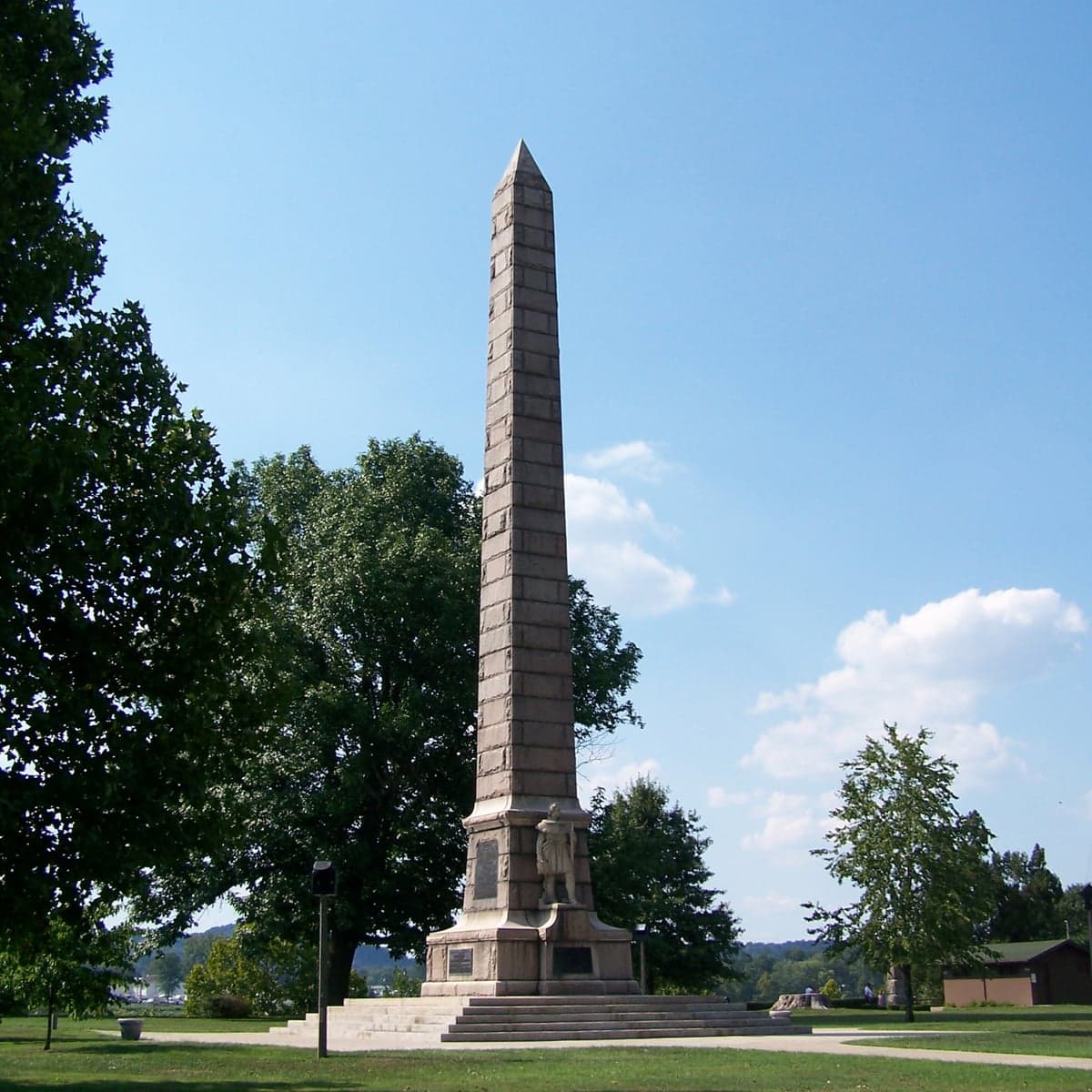
Culturally, Mason County will remain a deeply traditional, rural Appalachian community. The county's identity is closely tied to its history—the 1774 Battle of Point Pleasant is commemorated annually, and the Mothman legend, which originated in Point Pleasant in the 1960s, has become a quirky but genuine source of local pride. The political culture is strongly conservative, with the county voting Republican by wide margins in every recent presidential election. For someone moving in now, Mason County offers a quiet, low-cost, and safe environment, but one with limited economic opportunity, minimal diversity, and a population that is slowly shrinking.
Mason County is becoming a quieter, older, and more economically fragile version of itself—a place where the population is declining but the community bonds remain strong, and where the future depends on whether the region can attract new industry or a new generation of residents willing to embrace a slow-paced, river-valley way of life.

* Values derived from national, state, county, city and local statistics and may differ in a specific area. Last updated: 2026-07-03T16:27:19.000Z
Narrative content on this page is AI-generated and may contain mistakes. Verify any details that matter before acting on them.
ReloMaps may earn a commission from affiliate links at no extra cost to you.

