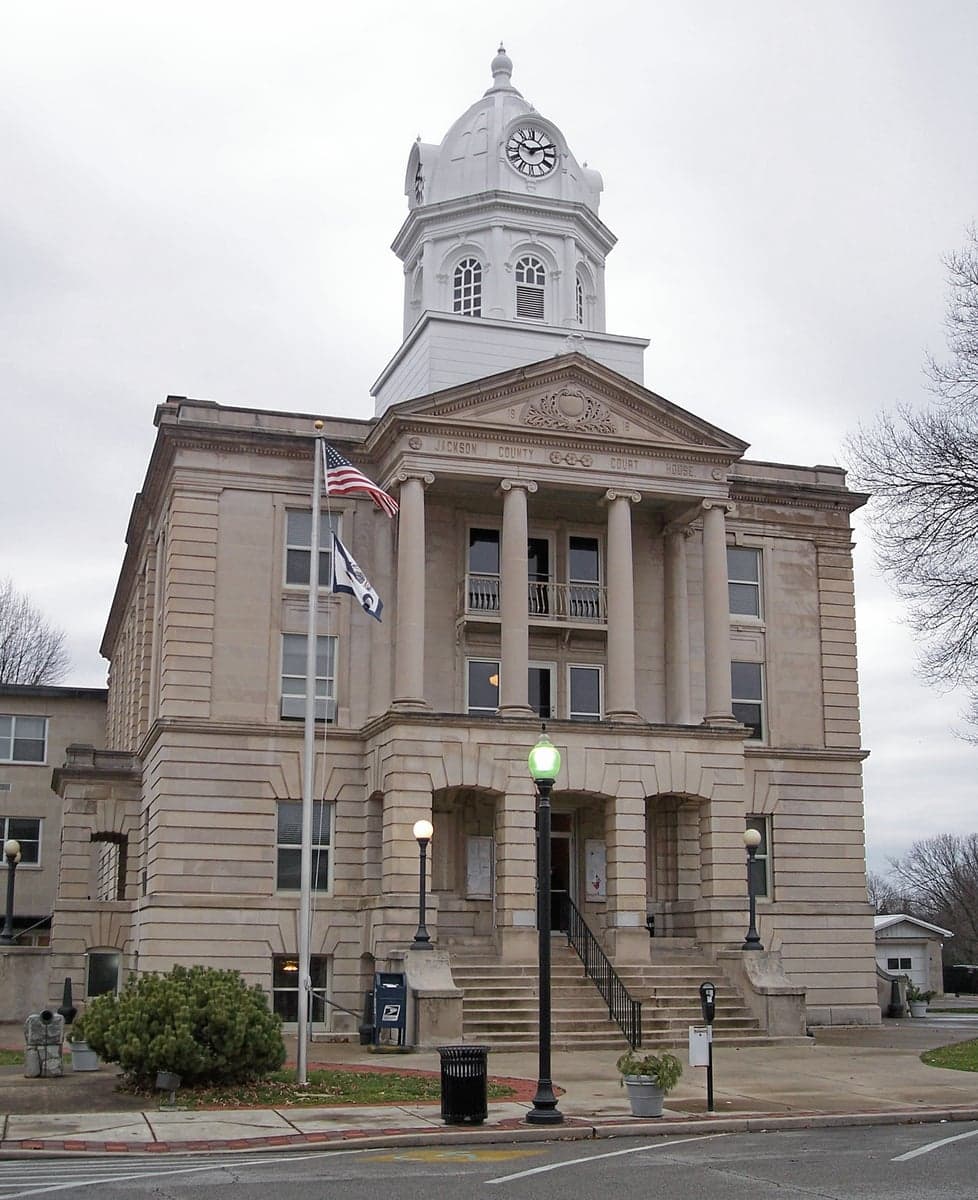
Photo: Wikipedia
Personal Sovereignty in Jackson County
Strong independent fundamentals that actively favor personal liberty and low regulation.
What does Personal Sovereignty tell us?
Personal Sovereignty measures your capacity for self-reliance and independence with minimal government friction. Higher scores mean fewer barriers between you and the way you want to live... but it assumes you have the space you need and good neighbors.
What does this tell us?
Personal Sovereignty measures your capacity for self-reliance and independence with minimal government friction. Higher scores mean fewer barriers between you and the way you want to live... but it assumes you have the space you need and good neighbors.
State Policy
Energy independence: Net exporter (200% of energy produced in-state)
Personal Liberty
Homesteading

Personal Liberty Analysis
Jackson County, West Virginia, offers a notably high degree of personal sovereignty compared to much of the eastern United States, particularly for those seeking to minimize government entanglement in daily life. The county’s rural character, combined with West Virginia’s generally permissive state-level legal framework, creates an environment where individual autonomy—from tax burden to self-defense to homesteading—is the default rather than the exception. For conservative-leaning individuals and families evaluating relocation, Jackson County presents a landscape where local governance is minimal, state overreach is comparatively low, and the culture strongly favors self-reliance over dependency on public systems.
Tax burden and regulatory posture: How Jackson County compares to surrounding areas
West Virginia’s tax structure is a mixed bag, but Jackson County benefits from some of the state’s most favorable conditions for personal financial sovereignty. The state’s personal income tax is a flat 4.12% as of 2026, which is moderate, but property taxes are among the lowest in the nation—typically under 0.6% of assessed value. In Jackson County, the effective property tax rate hovers around 0.55%, meaning a $200,000 home carries an annual tax bill of roughly $1,100. This is significantly lower than in neighboring Ohio or even parts of Virginia. The county also has no local sales tax beyond the state’s 6% rate, and there are no municipal income taxes in towns like Ripley (the county seat) or Ravenswood. Regulatory posture is equally light: Jackson County has no county-wide zoning ordinance, which is a major draw for those wanting to build, modify, or use their land without bureaucratic hurdles. The towns of Ripley and Ravenswood have limited zoning for commercial areas, but residential and agricultural land outside these small municipal boundaries is essentially unregulated. This stands in stark contrast to more populated areas of West Virginia like Morgantown or Charleston, where zoning and permitting processes are far more intrusive.
Self-defense and gun law specifics: What you can and cannot do in Jackson County
West Virginia is a constitutional carry state, and Jackson County fully reflects that ethos. As of 2026, any law-abiding adult 21 or older can carry a concealed firearm without a permit, and open carry is legal without any license. The state preempts all local gun ordinances, meaning towns like Ripley, Ravenswood, and the smaller community of Kenna cannot enact their own restrictions—no magazine bans, no waiting periods, no “sensitive places” lists beyond what state law allows. Stand-your-ground laws are in effect, and there is no duty to retreat in any place where you have a legal right to be. Castle doctrine protections extend to vehicles and occupied structures. For those with a prepper mindset, this is critical: you can defend your home, your vehicle, and your person without fear of prosecution for exercising that right. The only notable restriction is that carrying in bars or restaurants that serve alcohol is prohibited unless you have a concealed carry permit (which is still available for reciprocity purposes). Jackson County’s sheriff’s office is known for being pro-Second Amendment, and there are no local “red flag” laws or extreme risk protection orders—West Virginia has explicitly rejected such measures. For families, this means you can train your children in firearms safety without government interference, and there are no storage mandates that would require locking up defensive weapons.
Self-reliance and homesteading viability: Lot sizes, zoning, and off-grid feasibility
Jackson County is a homesteader’s dream, provided you choose the right location. The absence of county-wide zoning means you can keep livestock, build a workshop, or install a septic system on most parcels without permits—though the state health department does regulate well and septic installations for safety. Lot sizes vary widely: in the unincorporated areas around Evans and Gay, you can find 5- to 20-acre parcels for under $3,000 per acre, while closer to Ripley and Ravenswood, smaller lots (1-3 acres) are more common but still affordable. Off-grid living is entirely feasible. There are no county laws prohibiting solar panels, rainwater collection, or composting toilets, though the state does require a permit for any structure intended for habitation (to ensure basic safety). Many residents in the Kentuck area live on well water and septic, with no municipal utilities at all. The county’s agricultural extension office is supportive of small-scale farming, and there are no nuisance ordinances that would prevent you from raising chickens, goats, or even a few head of cattle on a few acres. The biggest practical consideration is access: some remote parcels in the Statts Mills area have unpaved roads that can become impassable in winter, so a 4WD vehicle is essential. For those serious about self-sufficiency, Jackson County’s regulatory vacuum is a feature, not a bug.
Personal liberties: Parental rights, medical autonomy, speech, and property
West Virginia has strong parental rights protections, and Jackson County’s school system—while not exceptional—respects family decisions. The state’s “Parental Bill of Rights” (enacted in 2023) gives parents explicit authority over their children’s education, medical decisions, and religious upbringing. In practice, this means you can opt your child out of any curriculum you find objectionable, and homeschooling is lightly regulated—no portfolio reviews, no standardized testing requirements, just a simple notification to the county superintendent. Medical autonomy is more complicated: West Virginia has not enacted vaccine mandates for adults, but some employers and healthcare facilities may require them. However, there are no state-level mandates for COVID-19 or other vaccines, and the legislature has repeatedly blocked attempts to create a vaccine passport system. For those concerned about medical freedom, Jackson County’s rural hospitals (like Jackson General in Ripley) are less likely to enforce controversial protocols than urban systems. Speech and assembly rights are robust; there are no local ordinances restricting political expression, and the county’s conservative majority means that dissenting views on government overreach are the norm, not the exception. Property rights are also strong: eminent domain is rarely used, and there are no county-level rent control or landlord-tenant laws beyond state statutes. The main property concern is mineral rights—West Virginia is a split-estate state, meaning you may own the surface but not the coal or gas beneath. This is common in areas like Given and LeRoy, so title searches are essential before purchase.
Overall, Jackson County ranks among the top 10% of U.S. counties for personal sovereignty, particularly for those willing to live outside municipal limits. Compared to the heavily regulated environments of the Northeast or West Coast, or even to more populous parts of West Virginia like Kanawha County, Jackson County offers a rare combination of low taxes, minimal zoning, strong gun rights, and cultural support for self-reliance. It is not a libertarian utopia—state income tax and some health regulations remain—but for a family or individual seeking to maximize personal autonomy while remaining within driving distance of basic services (Charleston is 45 minutes from Ripley), it is one of the strongest options in the Appalachian region. The key is to choose your specific location carefully: stick to unincorporated areas for maximum freedom, and avoid the small-town limits of Ripley or Ravenswood if you want to avoid any local oversight at all.

* Values derived from national, state, county, city and local statistics and may differ in a specific area. Last updated: 2026-05-13T12:34:43.000Z
Narrative content on this page is AI-generated and may contain mistakes. Verify any details that matter before acting on them.
ReloMaps may earn a commission from affiliate links at no extra cost to you.

