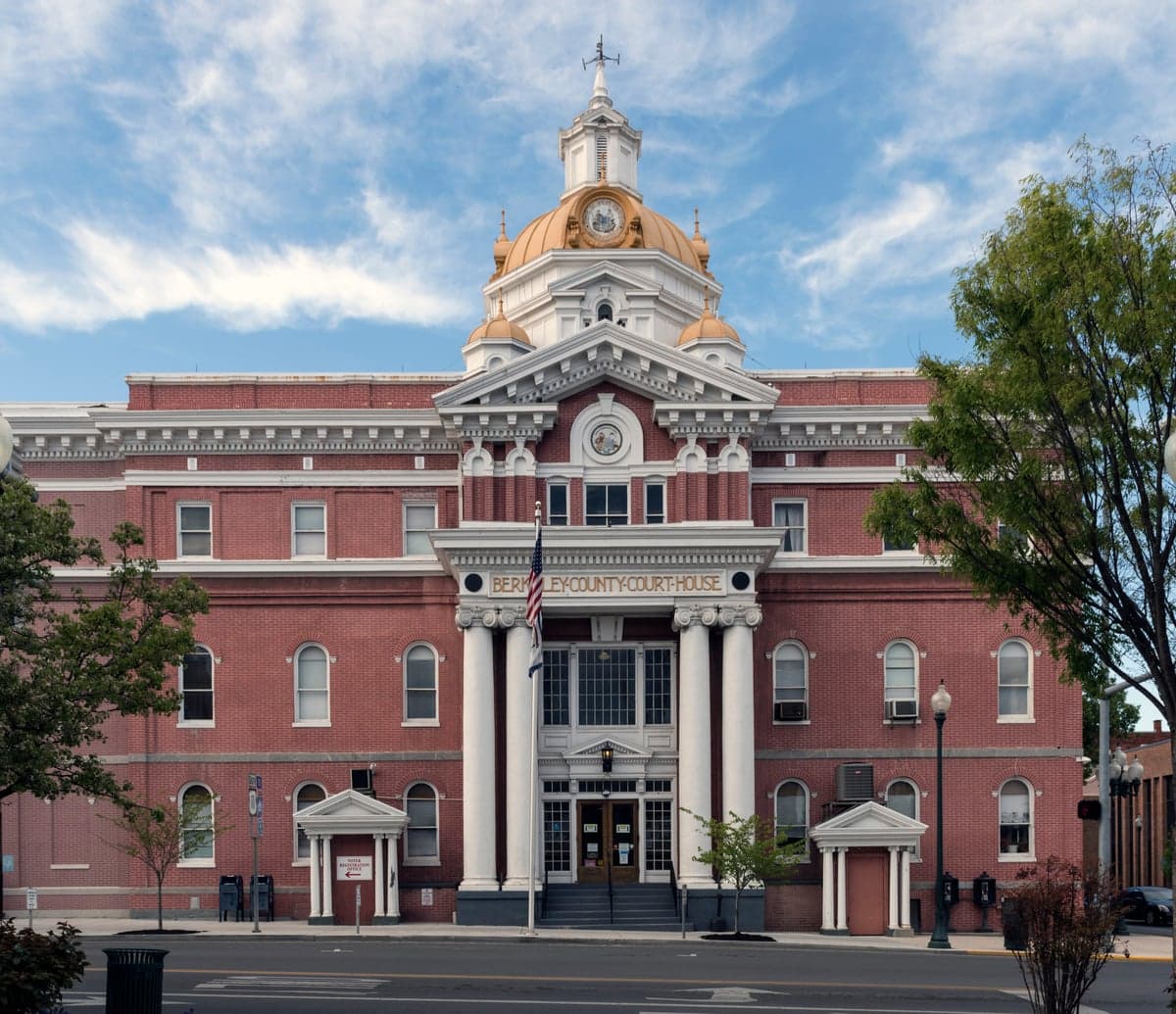
Photo: Wikipedia
Quality of Life in Berkeley County
A livable area that tracks near national norms for affordability, walkability, and neighborhood health.
What does Quality of Life tell us?
Quality of Life measures an area by evaluating factors like cost of living, nearby amenities, country club access, airport proximity, socioeconomic signals and neighborhood character. For large states, this is a general average — quality of life can vary dramatically between metro areas, suburbs, and rural communities within the same state.
What does this tell us?
Quality of Life measures an area by evaluating factors like cost of living, nearby amenities, country club access, airport proximity, socioeconomic signals and neighborhood character. For large states, this is a general average — quality of life can vary dramatically between metro areas, suburbs, and rural communities within the same state.
Cost of Living
1% below national average
109%
The Real Cost of Living in Berkeley County for 2026
| Tier | Individual | Family (4) |
|---|---|---|
| Survival | $20k | $37k |
| Comfortable | $48k | $71k |
| Luxury | $118k+ | $183k+ |
| Elite (Top 5%) | $139k+ | $215k+ |
Quality-of-Life Analysis
Berkeley County, West Virginia, offers a quality-of-life spectrum that ranges from the walkable, amenity-rich core of Martinsburg to the quiet, agricultural landscapes of places like Hedgesville and Glengary. This diversity attracts a broad mix of residents, from Washington D.C. commuters seeking lower housing costs to retirees looking for small-town pace and families wanting land without sacrificing proximity to retail. The county's character shifts noticeably within a 20-minute drive, making it essential for newcomers to match their lifestyle preferences to the right specific area.
Largest town(s) & population centers
Martinsburg is the county seat and by far the largest population center, home to roughly 18,000 residents and the hub of commercial activity. Daily life here centers around the historic downtown district along Queen Street, which features local restaurants, breweries, and the Berkeley County Courthouse. The city also contains the region's primary retail corridor along Foxcroft Avenue and Edwin Miller Boulevard, anchored by the Martinsburg Mall and big-box stores. For commuters, the Martinsburg MARC train station provides direct rail service to Washington, D.C.'s Union Station, a roughly 90-minute ride that is a major draw for professionals. The adjacent community of Inwood functions as a secondary commercial node, with rapid residential growth and easy access to Interstate 81. Life in these centers is car-dependent for most errands but offers the densest concentration of jobs, healthcare (WVU Medicine Berkeley Medical Center), and entertainment in the county.
Smaller towns & rural pockets
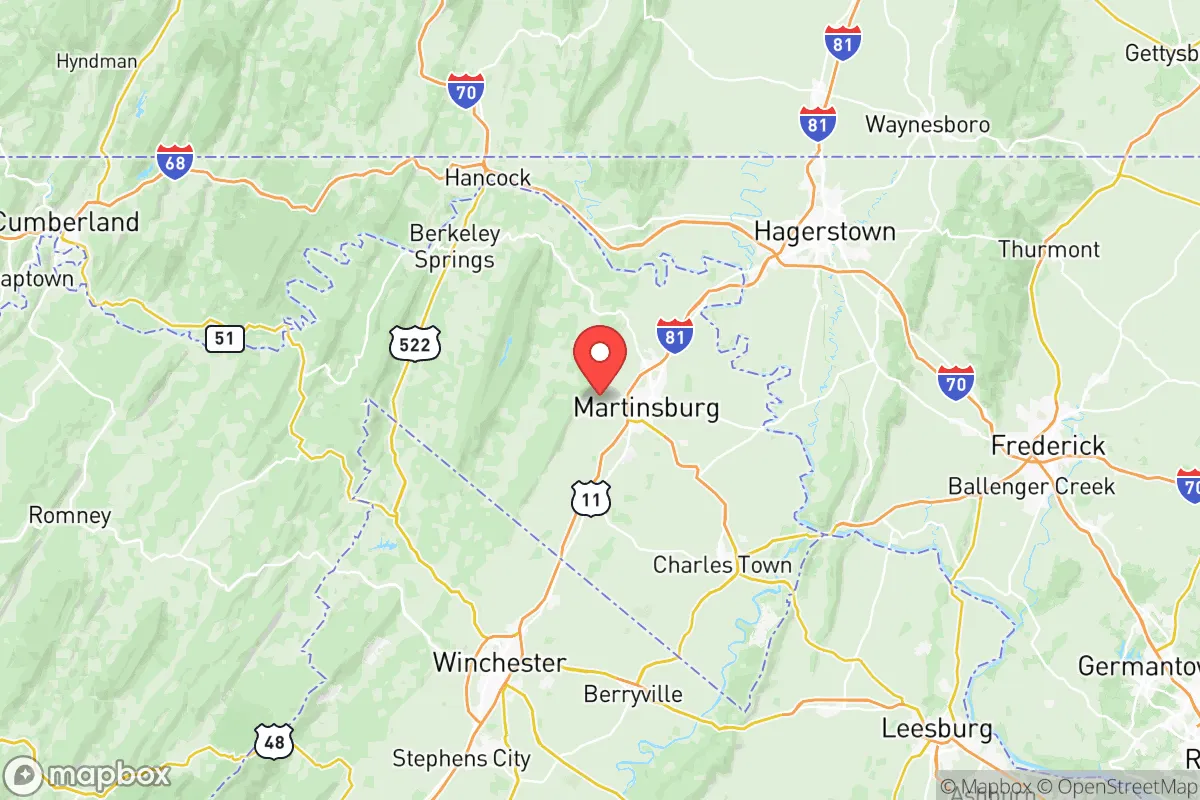
Moving east and north from Martinsburg, the county transitions into distinct smaller communities. Hedgesville, about 10 miles northeast, is a classic small town with a population under 300, a single traffic light, and a strong sense of local identity centered on the annual Hedgesville Apple Butter Festival. Further east, Glengary is an unincorporated crossroads community that feels deeply rural, with farm stands, horse properties, and minimal commercial development. To the south, Falling Waters offers a mix of newer subdivisions and historic homes along the Potomac River, popular with anglers and kayakers. The Sleepy Creek Wildlife Management Area, spanning over 20,000 acres in the county's western portion, defines the most remote pockets, where residents live on large wooded lots with no municipal services. These areas attract people who prioritize privacy, land, and outdoor recreation over convenience to stores or restaurants.
Cost & lifestyle range
The cost of living in Berkeley County sits at a 99 on the COL index, essentially at the national average, but the spread within the county is significant. At the higher end, newer subdivisions near Spring Mills and Arden feature homes with median values around $248,000 — well above the countywide figure — and offer homeowners' associations, community pools, and proximity to the highly-rated Spring Mills High School. Rents in these areas average $1,238 per month for a three-bedroom house. At the lower end, older housing stock in central Martinsburg and rural properties near Shanghai or Tomahawk can be found for under $150,000, though these often require significant renovation or a longer drive to amenities. The average commute across the county is 31 minutes, but this varies dramatically: a resident of Glengary commuting to the Pentagon faces a 90-minute one-way drive, while someone living in downtown Martinsburg and working at the county government complex has a 10-minute trip. Lifestyle trade-offs are stark — walkability and nightlife are essentially absent outside of Martinsburg's small downtown, while land, quiet, and lower taxes are the rewards of the rural fringe.
Berkeley County best suits people who want a tangible trade-off: lower housing costs and more space in exchange for a long commute or a car-dependent lifestyle. Commuters who can tolerate the MARC train or I-81 traffic, families seeking good schools in Spring Mills or Hedgesville, and retirees wanting a slower pace with access to Winchester or Hagerstown for medical care all find their niche here. Those seeking urban density, robust public transit, or a vibrant nightlife scene will be disappointed; the county's strength is its variety of residential settings within a single, affordable region.

Crime in Berkeley County
Generally safer than 69% of comparable U.S. locations.
Violent CrimeViolent Crime Analysis
Property CrimeProperty Crime Analysis
Crime Analysis
Berkeley County, West Virginia, presents a mixed safety profile for prospective residents. The county's violent crime rate of 220 incidents per 100,000 people is notably lower than the national average, while its property crime rate of 923 per 100,000 sits slightly above the national median. This dynamic creates a situation where residents in communities like Martinsburg and Inwood may experience different levels of risk, particularly regarding theft and vehicle-related crimes, compared to those in more rural pockets or the city of Hedgesville.
Crime in context
When measured against both West Virginia state averages and national figures, Berkeley County's violent crime rate of 220 per 100,000 is a clear positive. This is roughly 25% lower than the U.S. rate of approximately 380 per 100,000 and aligns closely with the safer end of the spectrum for counties in the Eastern Panhandle. However, the property crime rate of 923 per 100,000 is a concern. This figure is higher than the national average of around 800 per 100,000 and significantly exceeds the West Virginia state average, which often falls below 700 per 100,000 due to the state's many rural, low-crime areas. The elevated property crime is largely concentrated in the county's more urbanized zones, particularly along the I-81 corridor that runs through Martinsburg and Falling Waters, where transient populations and easy highway access create opportunities for theft from vehicles and burglaries.
What residents experience
Daily life in Berkeley County for most residents does not involve violent encounters, but property crime is a tangible nuisance. Residents in Martinsburg, the county seat and largest city, report higher instances of package theft, vehicle break-ins, and occasional vandalism, especially in neighborhoods near the downtown core and the shopping districts along Foxcroft Avenue. In contrast, communities like Hedgesville and the rural areas around Gerrardstown experience far fewer incidents, with residents often citing a small-town feel where neighbors watch out for one another. A significant factor influencing the local justice system is the political climate. Berkeley County, while part of a largely conservative state, has seen progressive-leaning judicial candidates elected in recent cycles, particularly in the 23rd Judicial Circuit. These judges and the local district attorney's office have, at times, prioritized diversion programs and reduced sentencing for non-violent property offenders. While intended to reduce recidivism, this approach has led to a perception among some residents that property crimes are not taken seriously enough, potentially contributing to repeat offenses and a sense that the justice system is more sympathetic to offenders than to victims. This is a common concern in areas with liberal prosecutorial philosophies, where the focus on rehabilitation can sometimes result in more criminals remaining on the street.
Neighborhood-level variation is stark. The safest areas are generally the newer subdivisions in Inwood and the outskirts of Martinsburg near the Spring Mills area, where homeowner associations and active patrols by the Berkeley County Sheriff's Office keep incidents low. Conversely, the older, denser parts of central Martinsburg and some apartment complexes near the interstate see the bulk of reported crime. For those moving to the county, choosing a home in the outer townships or investing in a good security system for a property in the city limits is a practical step to mitigate the property crime risk that defines the area's safety challenge.
* Values derived from national, state, county, city and local statistics and may differ in a specific area. Last updated: 2026-05-12T14:10:24.000Z
Narrative content on this page is AI-generated and may contain mistakes. Verify any details that matter before acting on them.
ReloMaps may earn a commission from affiliate links at no extra cost to you.

