Photo: Wikipedia
Demographics of Berkeley County
Affluence Level in Berkeley County
A middle-class area roughly in line with national averages across income, home values, education, and employment.
People of Berkeley County
Berkeley County, West Virginia, is home to 126,165 residents who form a predominantly white (80.8%) and native-born population, with only 1.5% foreign-born. The county’s character is shaped by its position as the fastest-growing county in West Virginia, a bedroom community for the Washington, D.C., and Baltimore metro areas, and a place where a historic Appalachian and German heritage meets modern suburban expansion. Distinctive identity markers include a strong sense of local independence, a growing conservative political leaning, and a population that is younger and more family-oriented than the state average, yet less college-educated (24.3%) than the national norm.
Settlement & growth (pre-1960)
Long before European settlement, the area now known as Berkeley County was inhabited by the Iroquois Confederacy, particularly the Seneca, and earlier by the Shawnee and Delaware nations, who used the fertile Shenandoah Valley for hunting and seasonal camps. The first European presence came in the early 18th century with German and Scots-Irish pioneers moving south from Pennsylvania along the Great Wagon Road. These settlers were drawn by the promise of rich limestone soil and land grants from Lord Fairfax, whose vast Northern Neck Proprietary covered the region.
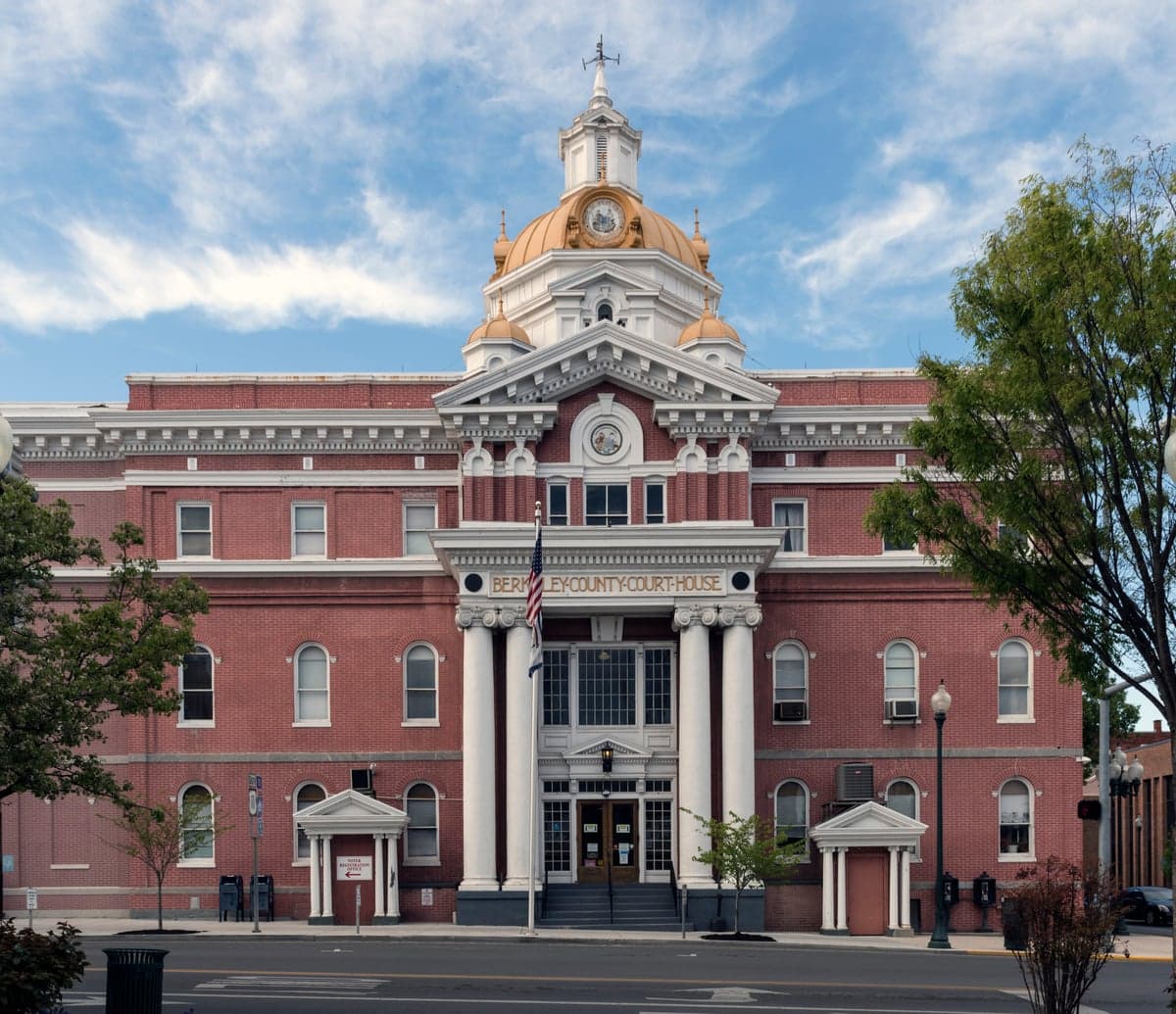
The county was officially formed in 1772 from Frederick County, Virginia, and named after Norborne Berkeley, a colonial governor. The town of Martinsburg, founded in 1778, became the county seat and a critical hub for German and Scots-Irish farmers. These early groups established a pattern of small, independent farms and a Protestant work ethic that persists in local culture. The arrival of the Baltimore and Ohio Railroad in the 1840s transformed Martinsburg into a major rail center, attracting Irish laborers and later Italian and Eastern European immigrants who worked in the rail yards and nearby limestone quarries. The town of Hedgesville and the rural community of Gerrardstown also grew as agricultural service centers during this period.
The Civil War deeply divided Berkeley County, which was part of Virginia but had strong Unionist sympathies. The county was occupied by both armies multiple times, and the rail yards in Martinsburg were a strategic target. After the war, the county’s economy remained tied to agriculture and rail, with a small but steady influx of African Americans moving from deeper south into towns like Arden and Bunker Hill for work on farms and in the railroad. The 20th century saw a gradual decline in rail employment, but the county’s population remained stable and overwhelmingly white, with German and Scots-Irish surnames dominating local directories through the 1950s.
Modern era (post-1965)
The 1965 Hart-Cellar Act had a minimal direct impact on Berkeley County, as the foreign-born population remains tiny at 1.5%. Instead, the county’s modern demographic story is one of domestic migration. Beginning in the 1980s and accelerating after 2000, Berkeley County became a primary destination for people leaving the Washington, D.C., and Baltimore metropolitan areas in search of affordable housing, lower taxes, and a slower pace of life. This wave of in-migration has been overwhelmingly white and middle-class, drawn by new subdivisions in Inwood, Falling Waters, and the rapidly expanding outskirts of Martinsburg.
The Hispanic population, now 6.0%, has grown from near zero in 1990, driven by labor demand in construction, landscaping, and agriculture. This community is concentrated in Martinsburg and the rural areas around Tablers Station, where many work in apple orchards and nurseries. The Black population, at 6.9%, is largely native-born and historically rooted in Martinsburg and Glengary, with a smaller presence in newer suburban developments. The East/Southeast Asian population (0.5%) and Indian subcontinent population (0.4%) are very small, mostly professionals in healthcare and technology who live in the newer subdivisions near Interstate 81. The county has not seen the formation of distinct ethnic enclaves; rather, these groups are dispersed and assimilating into the broader, predominantly white suburban culture.
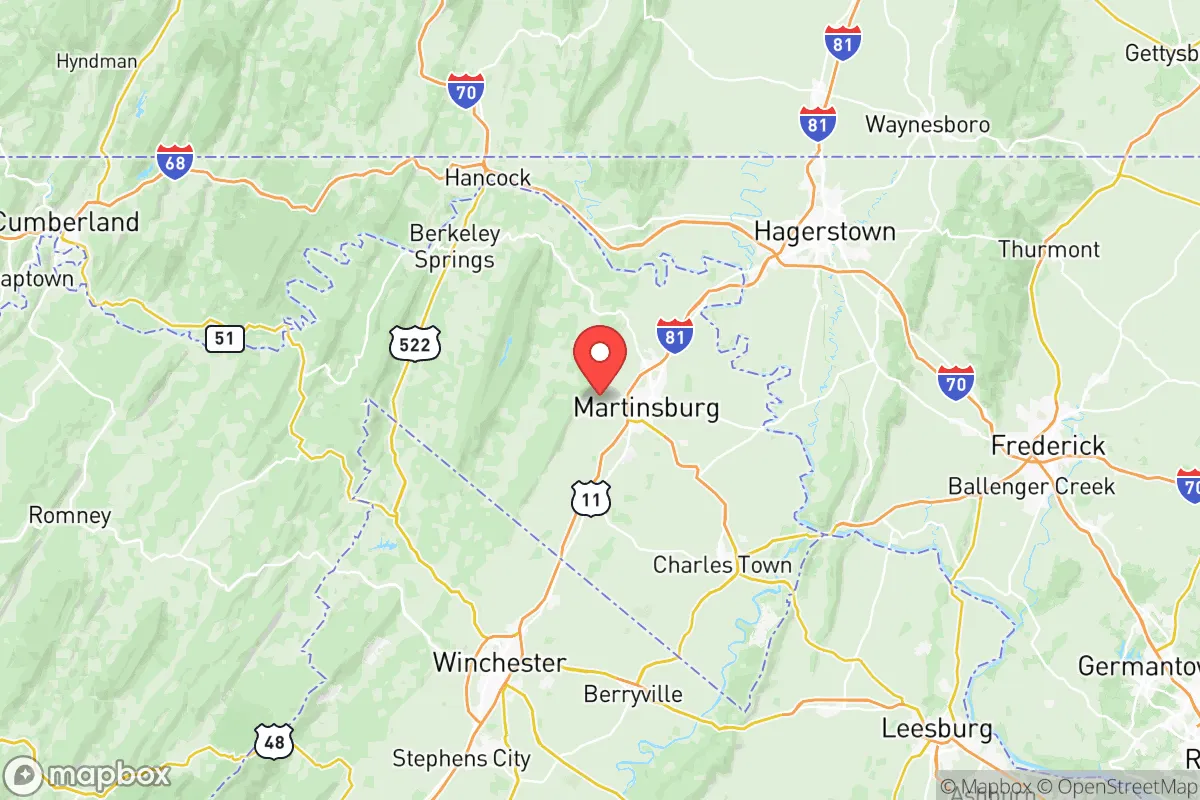
Suburbanization has reshaped the county’s geography. The once-rural corridor along Route 9 between Martinsburg and the Virginia line is now lined with shopping centers, housing developments, and commuter parking lots. The town of Charles Town, in neighboring Jefferson County, exerts some pull, but Berkeley County’s own growth is centered on Martinsburg’s expansion and the new communities of Spring Mills and Mountain View. This in-migration has made Berkeley County the fastest-growing in West Virginia, but it has also created cultural friction between long-time residents who value the county’s rural, Appalachian identity and newcomers who bring suburban, metro-area expectations.
The future
Berkeley County’s population is projected to continue growing, driven by the ongoing exodus from the D.C. and Baltimore regions. The county is not homogenizing into a single identity but is instead tribalizing into distinct zones: the older, rural areas around Hedgesville and Gerrardstown remain more traditional and agricultural, while the Route 9 corridor and Martinsburg’s suburbs are becoming culturally indistinguishable from exurban Virginia or Maryland. The Hispanic population is likely to grow slowly, plateauing as labor demand stabilizes, while the Black and Asian populations will remain small and dispersed. The foreign-born share will likely stay below 3% for the foreseeable future, as the county lacks the urban job base or ethnic networks that attract larger immigrant flows.
The cultural identity of the county is being reshaped by in-migration, but the newcomers are largely absorbing into the existing conservative, family-oriented ethos rather than transforming it. The county’s political leanings have shifted rightward even as it grows, reflecting the preferences of the new residents. The next 10-20 years will likely see continued suburban expansion, a slow diversification of the population, and a persistent tension between preservation and development.
For someone moving in now, Berkeley County offers a place that is growing but still affordable, conservative but not insular, and increasingly connected to the D.C. economy while maintaining a distinct West Virginia character. It is becoming an exurban extension of the Mid-Atlantic, not a rural backwater, and its future is one of steady, moderate growth within a predominantly white, native-born framework.

* Values derived from national, state, county, city and local statistics and may differ in a specific area. Last updated: 2026-05-12T14:10:24.000Z
Narrative content on this page is AI-generated and may contain mistakes. Verify any details that matter before acting on them.
ReloMaps may earn a commission from affiliate links at no extra cost to you.

