Photo: Wikipedia
Strategic Assessment of West Liberty, IA
Meaningful friction. Expect exposure to either population pressure, blast zones, or natural disaster risk. Consider buying a retreat property.
What does the Strategic Assessment tell us?
Our Strategic Assessment grades tactical survivability of an area. Major population centers, military targets, fallout zones, natural disasters, and border exposure all drive risk — lower exposure means a more defensible position in a crisis.
This is heavily inspired by Joel Skousen's Strategic Relocation book. Highly recommended you checkout the book ($)What does this tell us?
Our Strategic Assessment grades tactical survivability of an area. Major population centers, military targets, fallout zones, natural disasters, and border exposure all drive risk — lower exposure means a more defensible position in a crisis.
This is heavily inspired by Joel Skousen's Strategic Relocation book. Highly recommended you checkout the book ($)Strategic Pillars
Key Distances
Regional Safe Places
Below is our recommended "safe zones" in Iowa and the surrounding area based on our strategic heuristics. For most people, it's unrealistic to live in a “safe zone” full-time due to work, family or other personal reasons. They tend to be more rural. However, many of these areas are perfect for second homes and retreat properties that double as a vacation home or even a short-term rental.
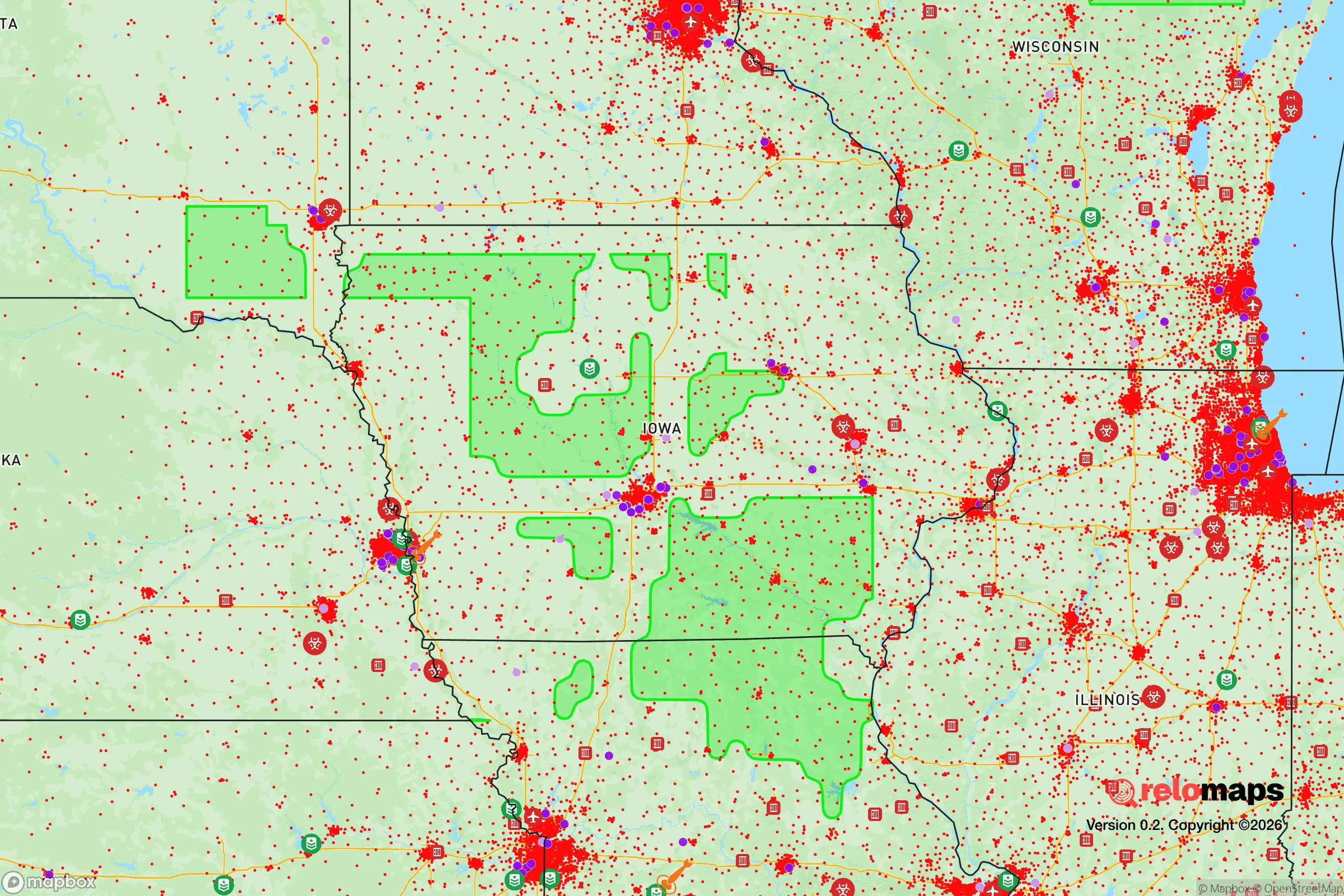
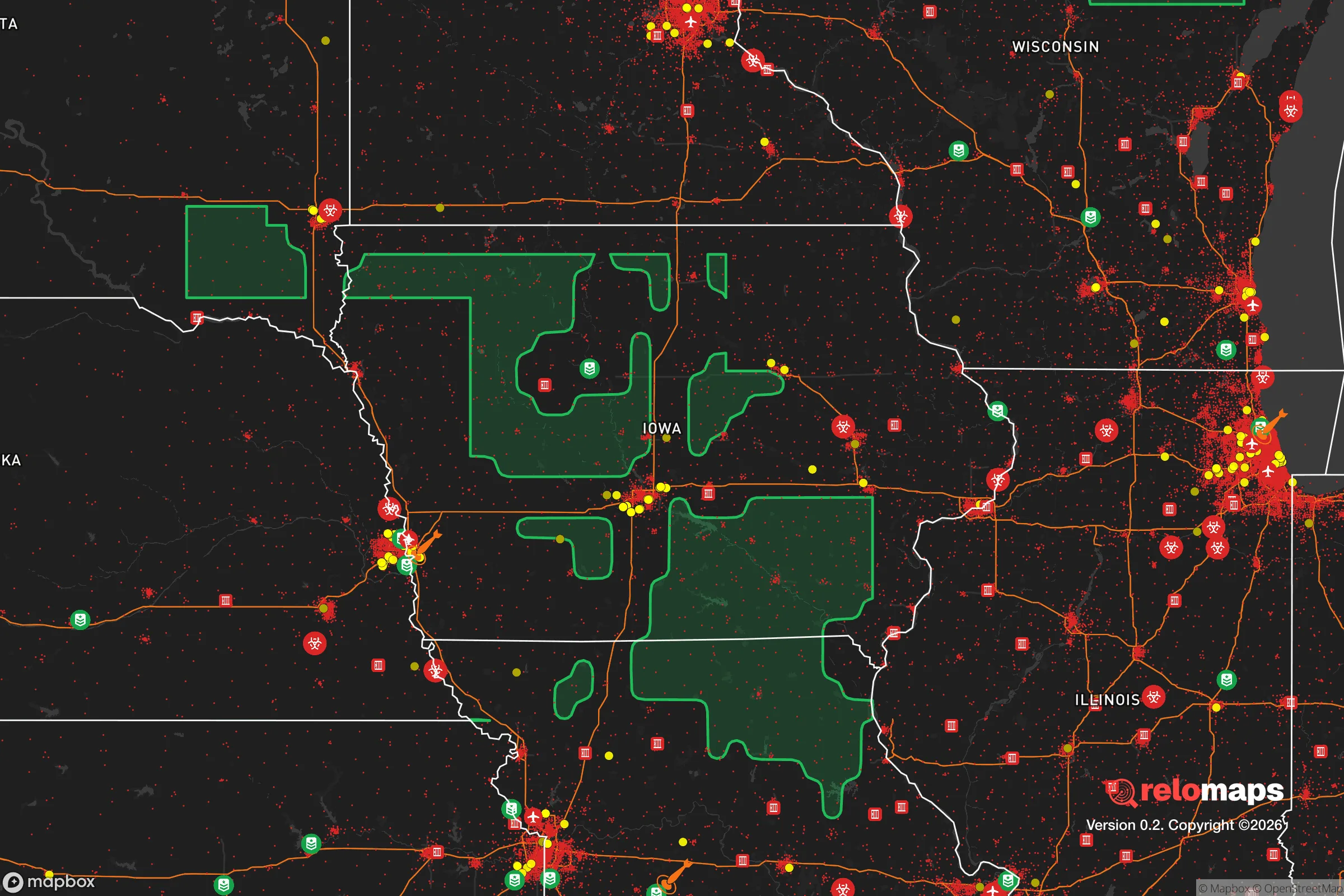


Important Note: For informational purposes only. This does not mean nothing bad ever happens in the green zones. Please use common sense. This is based on public data and modeled with AI. We tried to take a conservative approach but mistakes happen. We update this regularly as new information becomes available.
Solar Generator Recommendations
Backup power matters more here than in safer locations. We've picked three solar generators across budgets and capacity tiers — start with the budget unit if you only need a few essentials, or step up if you want to run a fridge and HVAC for days at a time.
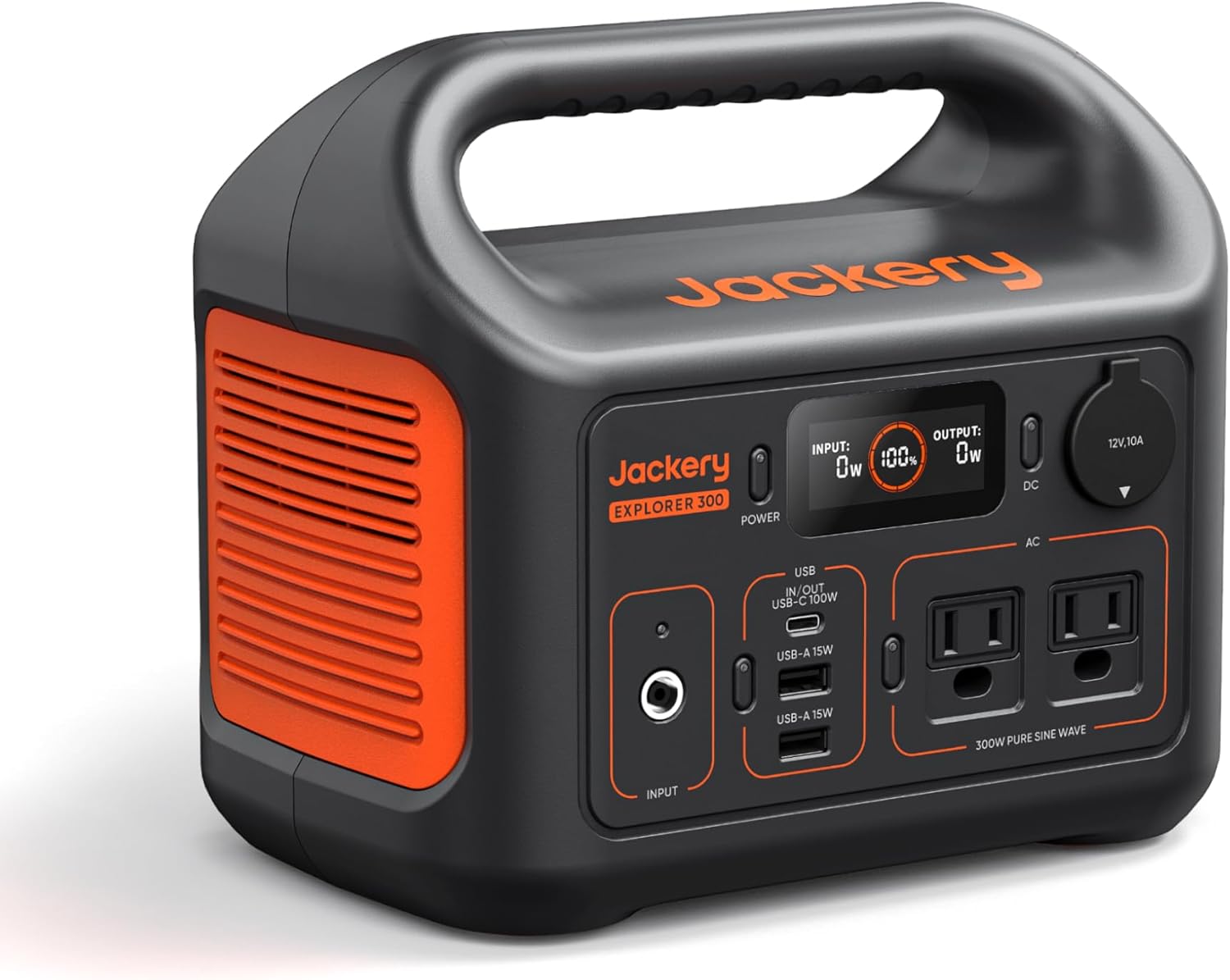
Jackery Portable Power Station Explorer 300
Budget OptionPower on the Go: Weighing only 11 lbs, it's convenient to set up and store with book-sized foldable solar panels

BLUETTI Portable Power Station AC180
Designed for both indoor and outdoor scenarios, AC180 is highly capable as it has a robost capacity and continuous output power.

EF ECOFLOW DELTA Pro Ultra Power Station
Upgraded PickEcoFlow DELTA Pro Ultra is a whole-home energy system designed to grow with your family. Integrated with the Smart Home Panel 2, it scales to meet your evolving energy needs — keeping your home powered, intelligent, and secure through every stage of life.
We earn a commission, at no additional cost to you.
Strategic Assessment Analysis
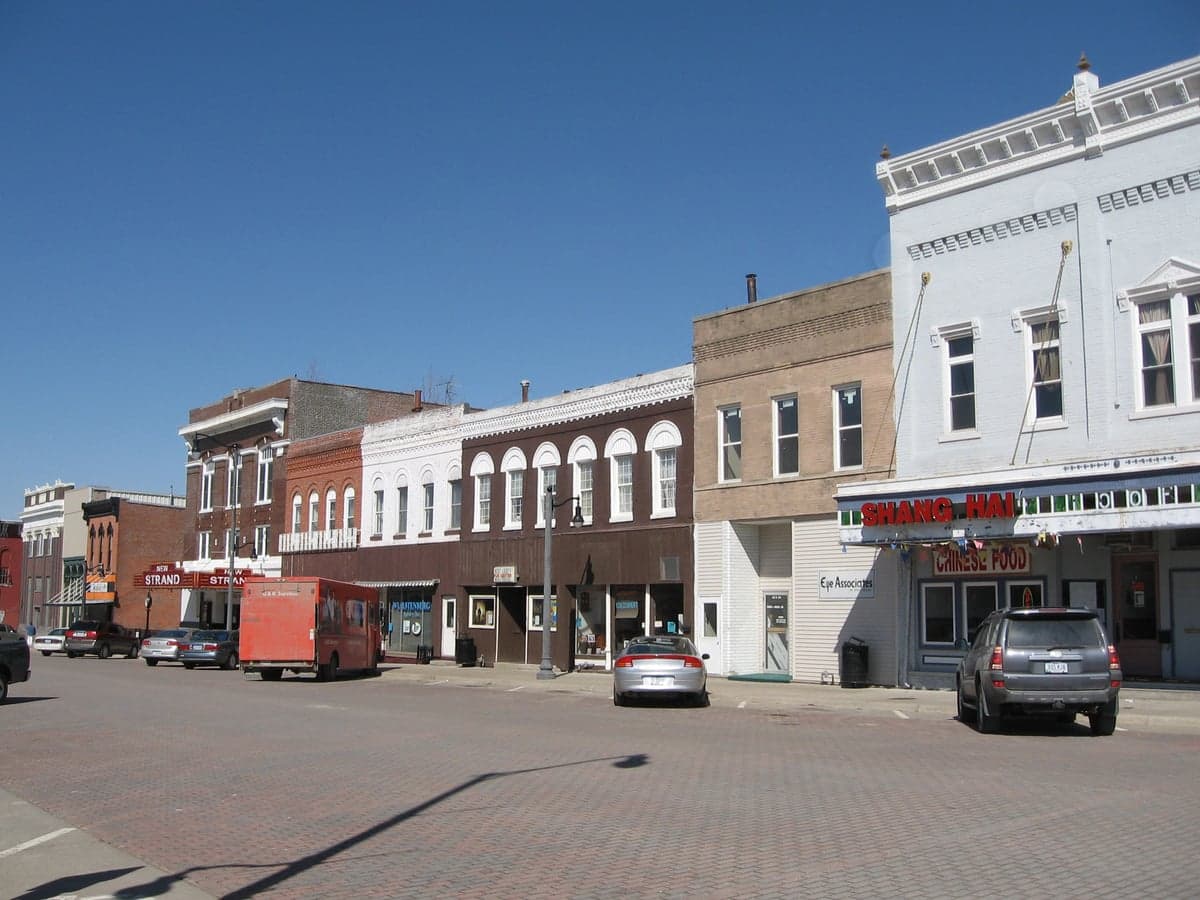
West Liberty, Iowa, presents a mixed strategic picture for the relocation-minded reader focused on resilience and self-sufficiency. While its location in the fertile Iowa River Valley offers strong agricultural advantages and a degree of natural buffering, its proximity to major transportation corridors and industrial targets introduces significant risk factors that demand careful consideration. For a single individual or family weighing disaster readiness, West Liberty offers a workable balance of rural access and practical resources, but it is not a remote or hardened location.
Geographic position and natural advantages for self-sufficiency
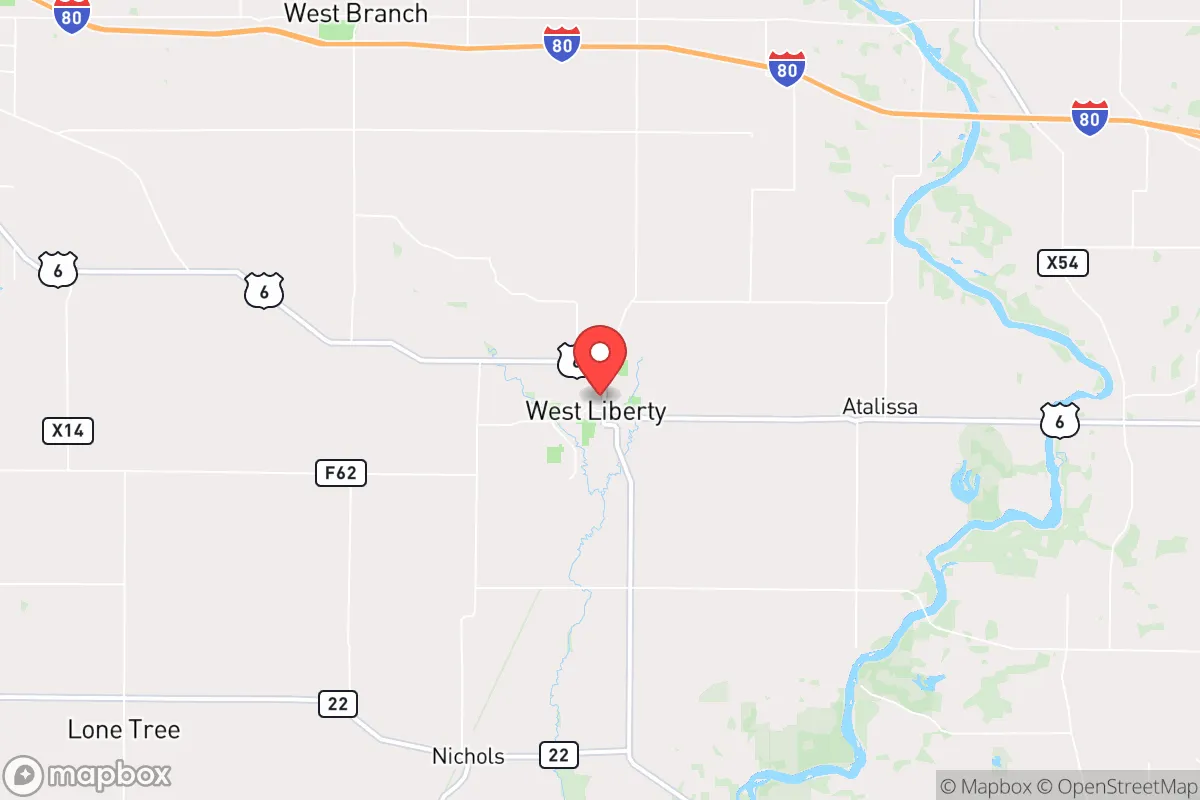
West Liberty sits in Muscatine County, roughly 15 miles west of the Mississippi River and 30 miles southwest of the Quad Cities metro area. Its position in the Iowa River Valley provides several natural advantages. The surrounding terrain is predominantly flat to gently rolling agricultural land, which supports robust local food production. The area’s soils are among the most productive in the nation, part of the Corn Belt, meaning that in a prolonged disruption, local food supply chains would likely hold up better than in less fertile regions. The climate is continental, with cold winters and hot, humid summers, but it is not prone to the extreme weather events that plague other parts of the country—hurricanes, wildfires, or earthquakes are effectively non-issues here. Tornadoes are a genuine seasonal risk, but the region’s open landscape allows for good visibility and warning times, and basements are standard in most homes. The Iowa River itself provides a potential water source, though it is not a pristine mountain stream; it carries agricultural runoff and would require robust filtration or treatment for long-term use. Groundwater access via wells is feasible in many parts of the county, which is a meaningful plus for off-grid water security.
Risks, exposures, and proximity to fallout-relevant landmarks
The most significant strategic weakness of West Liberty is its proximity to high-value, high-risk infrastructure. The Quad Cities metro area, with its population of roughly 380,000, is a major transportation and industrial hub. It hosts the Quad Cities International Airport, several rail yards, and the I-80/I-74 interchange—all potential targets in a conflict or major disruption scenario. More critically, the Quad Cities area is home to the Quad Cities Nuclear Power Station, located just 20 miles northeast of West Liberty in Cordova, Illinois. This plant is a boiling water reactor that has been in operation since the 1970s. While safety records are generally good, any incident—whether from accident, sabotage, or attack—would place West Liberty well within the 10-mile emergency planning zone and the 50-mile ingestion pathway zone. Prevailing winds in the region are from the west and northwest, meaning fallout from a release at the plant would likely move eastward, but wind shifts are common and unpredictable. Additionally, the I-80 corridor running just north of town is a major east-west logistics artery; in a crisis, it could become a chokepoint or a vector for displaced populations. The town’s location along U.S. Highway 6 and a rail line also means it is not isolated—convenient for normal life, but a liability when you want to avoid attention or congestion during a collapse scenario.
Practical resilience for a relocator: food, water, energy, and defensibility
For someone serious about self-sufficiency, West Liberty offers a few concrete advantages and several notable gaps. On the positive side, the town itself is small—roughly 3,800 residents—which means a lower population density and less competition for resources in a crisis compared to a suburb of the Quad Cities. The surrounding farmland is a genuine asset: you can realistically source local produce, meat, and dairy from nearby farms, and the Amish and Mennonite communities in the region (particularly around Kalona, 20 miles west) are a reservoir of traditional skills and barter networks. The local economy is anchored by West Liberty Foods, a large turkey processing plant that employs a significant portion of the town. In a disruption, this facility could become a critical food resource, but it also represents a single point of failure and a potential target for looting or labor unrest. Water is manageable: the town draws from a municipal well system, and many rural properties have private wells. A hand pump or solar-powered pump on an existing well would provide a reliable off-grid water supply. Energy is more challenging. The grid is standard, and while solar potential is decent (Iowa averages about 4.5 peak sun hours per day), winters are cloudy and short. Wood heating is viable given the surrounding timber along the river bottoms, but you would need to secure a woodlot or reliable supply chain. Defensibility is moderate. West Liberty is a compact town with a grid street pattern, not a natural fortress. Rural properties offer more standoff distance but also more exposure. The community itself is diverse—West Liberty has a large Latino population and a growing refugee community—which can be a strength in terms of skill diversity but also means that social cohesion may be lower than in more homogeneous rural towns. For a relocator, the best strategy would be to secure a property on the outskirts with good sightlines, a well, and space for a garden and small livestock.
The overall strategic picture for West Liberty is one of moderate resilience with clear trade-offs. It is not a remote bug-out location, nor is it a hardened survivalist enclave. What it offers is a functional, working-class town in a fertile agricultural region with decent access to water and local food networks, but with the shadow of the Quad Cities nuclear plant and major transportation corridors hanging over it. For a family that wants to be close enough to urban amenities for work and school but maintain a credible level of self-sufficiency, West Liberty is a reasonable choice—provided you invest in water filtration, a backup power system, and a solid plan for evacuation or sheltering in place if the nuclear plant becomes a liability. It is a place where you can live a normal, productive life while being better prepared than most, but it is not a place that will protect you from the worst-case scenarios. If your priority is absolute isolation from industrial targets and population centers, look farther west or north. If you want a practical, affordable base with good soil and a realistic path to self-reliance, West Liberty deserves a spot on your short list.

* Values derived from national, state, county, city and local statistics and may differ in a specific area. Last updated: 2026-11-07T02:23:49.000Z
Narrative content on this page is AI-generated and may contain mistakes. Verify any details that matter before acting on them.
ReloMaps may earn a commission from affiliate links at no extra cost to you.

