Photo: Wikipedia
Political ClimatePolitical Climate in West Liberty, IA
District shown is the primary district for this city’s centroid. Cities may span multiple districts.
Inherited from parent county — no local data available.
* Lean and PVI are calculated from the surrounding county’s 2020 and 2024 presidential results, Cook-style — a finer measure here than its congressional district (IA-1).
Political rankings in Iowa
- Most Conservative Cities in Iowa
- Most Liberal Cities in Iowa
- Best Liberal-Leaning Towns in the Midwest
- Safest Liberal-Leaning Towns in the Midwest
- Safest Conservative-Leaning Towns in the Midwest
- Affordable Small Towns for Conservatives
- Most Affordable Liberal-Leaning Small Towns in the U.S.
- Safest Conservative-Leaning Cities in the U.S.
- Most Conservative Counties in Iowa
- Most Liberal Counties in Iowa
Local Political AnalysisPolitical Analysis of West Liberty, IA
West Liberty, Iowa, has long been a political outlier in a deeply red region, leaning Republican but with a Cook PVI of R+4 that makes it noticeably less conservative than the surrounding state of Iowa, which sits at R+6. This difference isn't just a number on a map—it reflects a community shaped by a strong agricultural base and a growing, diverse population, particularly a significant Latino community that has shifted local voting patterns over the past two decades. While the county and state have trended rightward in recent cycles, West Liberty has held a more moderate, sometimes even competitive, political ground, making it a fascinating pocket of relative balance in an otherwise solidly Republican area.
How it compares
Compared to the rest of Iowa, West Liberty is a clear moderate counterweight. The state as a whole has a PVI of R+6, meaning it votes about six points more Republican than the national average, while West Liberty's R+4 is two points closer to the center. This gap is even more pronounced when you look at nearby cities like Muscatine (R+8) or Iowa City (D+18), which sits just 20 miles east. West Liberty's political climate is closer to that of Cedar Rapids (R+3) or Davenport (R+2) than to the deep-red rural towns that dominate the region. The difference comes down to demographics: West Liberty's population is over 30% Latino, a community that has historically leaned Democratic or independent, while the rest of Iowa's rural areas are overwhelmingly white and conservative. In the 2020 presidential election, West Liberty precincts voted for Joe Biden by a slim margin, while the surrounding county and state went heavily for Donald Trump—a clear sign of the town's unique political DNA.
What this means for residents
For conservative residents, West Liberty still feels like home—Republican candidates regularly win local races, and the county commission and school board often lean right. But the political reality is more nuanced than in neighboring towns like Wilton or Tipton, where GOP dominance is near-total. Liberal residents here find a more welcoming environment than in most of rural Iowa, with a visible activist community and a city council that has occasionally passed progressive resolutions on immigration and housing. In practice, this means you'll see both Trump and Biden yard signs in the same neighborhood, and local debates over issues like school funding or zoning tend to be less polarized than in the state at large. The trajectory is toward continued moderation: as the Latino population grows and younger families move in from Iowa City and the Quad Cities, the town's political center is likely to hold steady or shift slightly left, even as the rest of Iowa moves right.
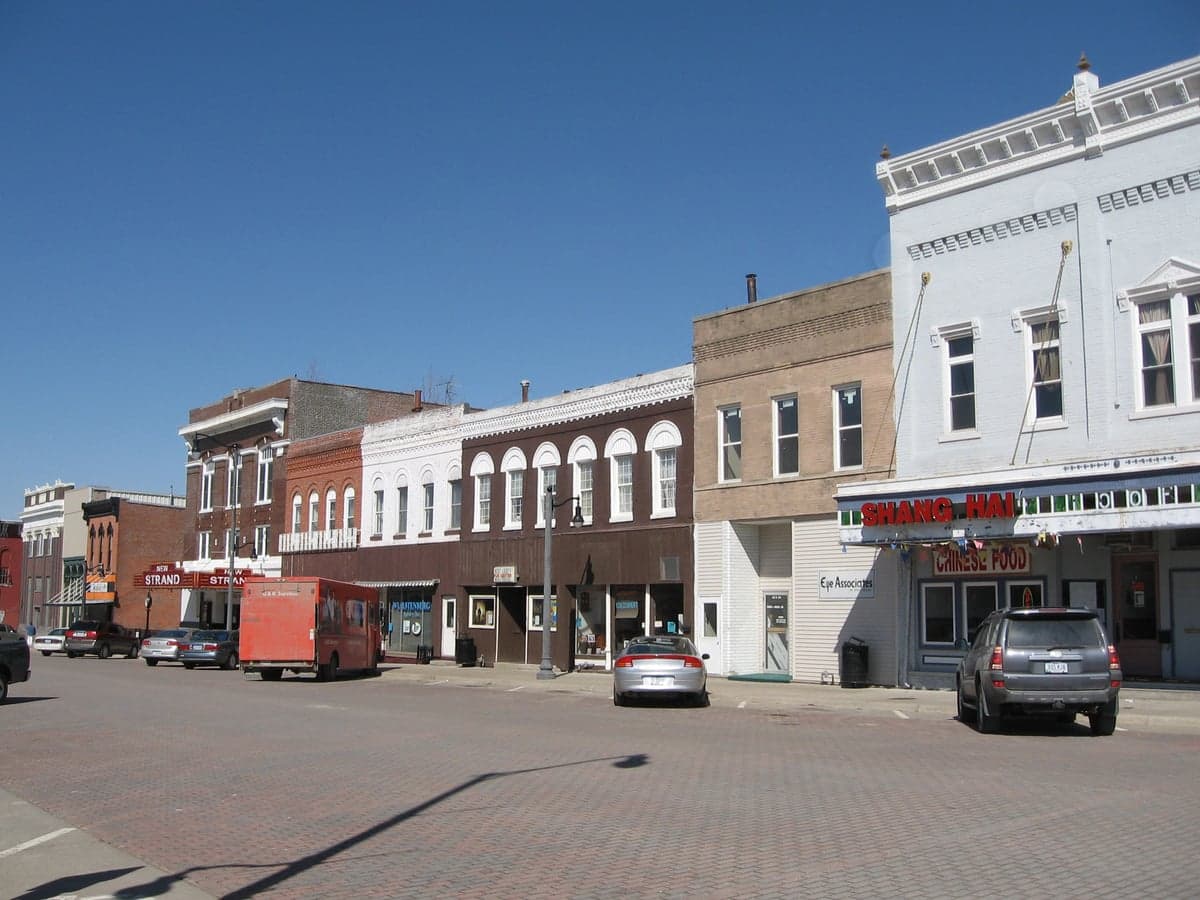
Culturally, West Liberty stands apart from its surroundings in ways that go beyond voting. The town's annual Latino Heritage Festival draws thousands, and bilingual signage is common downtown—a rarity in most of Iowa's small towns. Policy-wise, the city has been more proactive on affordable housing and community policing than many of its neighbors, reflecting a pragmatic, problem-solving approach that transcends party lines. For a conservative, this means living in a place where your values are still the majority, but you'll encounter genuine diversity and occasional political friction. For a liberal, it means having a real voice in local affairs without the isolation of being in a deep-blue city. Either way, West Liberty offers a political climate that's more interesting—and more representative of America's future—than the red monolith that surrounds it.

State Political ClimatePolitical Climate in Iowa
State Political AnalysisPolitical Environment in the State
Iowa has shifted from a classic purple swing state to a solidly Republican one, carrying a Cook PVI of R+6 after backing Donald Trump by double digits in both 2016 and 2020. The state’s political transformation over the past 15 years has been driven by a realignment of its rural and small-town base, which now votes overwhelmingly Republican, while the state’s few urban centers have become Democratic strongholds. For a relocator, this means you’re moving into a state where conservative values dominate state policy, but where local politics can vary dramatically depending on whether you’re in Des Moines, Iowa City, or a farm town like Storm Lake.
Urban vs. rural divide
The political map of Iowa is a textbook case of the urban-rural split. The state’s two largest metros, Des Moines (Polk County) and Iowa City (Johnson County), are the Democratic anchors. Johnson County, home to the University of Iowa, routinely votes 2-to-1 Democratic, while Polk County has trended blue in recent cycles, though it remains competitive. In contrast, the vast rural expanse—counties like Plymouth, Sioux, and Lyon in the northwest, and Decatur and Ringgold in the south—vote 70-80% Republican. The suburbs of Des Moines, such as Ankeny and Waukee, have been a key battleground; they voted for Trump in 2020 but by narrower margins than in 2016, suggesting a slight suburban shift toward Democrats. Meanwhile, smaller industrial cities like Dubuque and Council Bluffs have trended redder as union ties weaken and cultural issues take precedence. The net effect is a state where Republicans dominate legislative and statewide races, but Democrats can still win in the two urban islands and a handful of competitive state house districts.
Policy environment
Iowa’s policy environment is unmistakably conservative, shaped by a Republican trifecta that has held the governorship and both legislative chambers since 2017. The state has a flat income tax rate of 3.8%, set to drop to 3.65% in 2026, with a path toward a single-rate system. Property taxes are relatively low, with a median effective rate around 1.5%, though local levies vary. The state is a right-to-work state, and its regulatory posture is business-friendly, with minimal red tape for small businesses. On education, Iowa has enacted a universal school voucher program (Education Savings Accounts) that allows public funds to follow students to private schools, a major win for school-choice advocates. Healthcare policy is mixed: the state expanded Medicaid under the Affordable Care Act, but the current administration has pushed for work requirements and privatization of managed care. Election laws have tightened: Iowa now requires voter ID, limits early voting to 20 days, and closes polls at 8 p.m. sharp. Absentee ballot drop boxes are restricted to one per county, and the secretary of state’s office has purged inactive voters from rolls. For a conservative relocator, these policies align with limited government and local control; for a liberal one, they represent barriers to access.
Recent policy direction
Over the past five years, Iowa has moved decisively to the right on a broad range of liberties. On gun and self-defense law, the state passed permitless carry in 2021, allowing any legal adult to carry a concealed firearm without a permit or training. On parental and education rights, the 2023 law banning instruction on sexual orientation and gender identity through sixth grade (SF 496) and the 2024 law requiring schools to notify parents of any student requests to change pronouns or names have made Iowa a national leader in the parental rights movement. Speech and privacy protections are strong: the state has no shield law for journalists, but it has enacted a law prohibiting public universities from requiring diversity statements in hiring. On medical and bodily autonomy, Iowa passed a six-week abortion ban in 2023 (HF 732), which was temporarily blocked but ultimately upheld by the state supreme court in 2024; the law bans most abortions after cardiac activity is detected, with narrow exceptions for rape, incest, and life of the mother. Property rights are robust, with no state-level rent control and a strong eminent domain statute that requires just compensation. Taxation has been cut repeatedly: the 2022 tax reform bill accelerated income tax rate reductions and eliminated the inheritance tax. Voting and ballot access has been restricted, as noted, with the state moving from same-day registration to a pre-registration deadline of 15 days before an election. For a relocator, this means Iowa is a state where conservative policy preferences are being enacted quickly, with little appetite for compromise.
Civil unrest & political movements
Iowa has seen its share of political flashpoints, though large-scale civil unrest is rare. The most visible recent protests occurred in the summer of 2020 in Des Moines and Iowa City, where Black Lives Matter demonstrations drew thousands, leading to some property damage and a heavy police response. On the right, the state has been a hotbed for the “Parents’ Rights” movement, with organized groups like the Iowa Parents Alliance successfully pushing for the school curriculum laws. Immigration politics are less volatile than in border states, but Governor Kim Reynolds has deployed the Iowa National Guard to Texas under the state’s compact, and she signed a 2024 law making it a state crime to enter Iowa after being deported. There are no sanctuary cities in Iowa; in fact, the state passed a law in 2018 requiring local law enforcement to cooperate with federal immigration authorities. Election integrity controversies flared after the 2020 election, with some rural counties passing symbolic resolutions questioning the results, but no widespread fraud was found. The state’s first-in-the-nation caucus status has also made it a perennial target for political activism, with both parties’ campaigns flooding the state every four years. A new resident will notice a politically engaged populace, but not a volatile one—most Iowans are polite about their disagreements.
Projection
Over the next 5-10 years, Iowa is likely to remain solidly Republican, but with some demographic nuance. The state’s population is aging and slowly declining in rural areas, while the Des Moines metro is growing, attracting younger, more diverse residents. This could make Polk County and its suburbs more competitive, potentially flipping a few state house seats. However, the rural exodus is accelerating the Republican lean of the rest of the state, and the GOP’s structural advantages—gerrymandered legislative maps, a closed primary system, and a strong grassroots network—will be hard to dislodge. In-migration from blue states like California and Illinois is modest but real, and those newcomers tend to be more moderate or conservative, not progressive. The state’s policy direction will likely continue: more tax cuts, further restrictions on abortion, and expanded school choice. A relocator moving in now should expect to find a state that is reliably conservative in statewide elections, with a vibrant but contained liberal minority in the cities. The practical reality is that your vote will matter most in local primaries, not general elections.
Bottom line for a new resident: If you’re a conservative, Iowa is a state where your values are reflected in law and where you can live with minimal government interference. If you’re a liberal, you’ll find a welcoming community in Des Moines or Iowa City, but you’ll be swimming against the tide on state policy. Either way, the political climate is stable, predictable, and grounded in a Midwestern tradition of civility—even when the disagreements are deep.
* Values derived from national, state, county, city and local statistics and may differ in a specific area. Last updated: 2026-11-07T02:23:49.000Z
Narrative content on this page is AI-generated and may contain mistakes. Verify any details that matter before acting on them.
ReloMaps may earn a commission from affiliate links at no extra cost to you.

