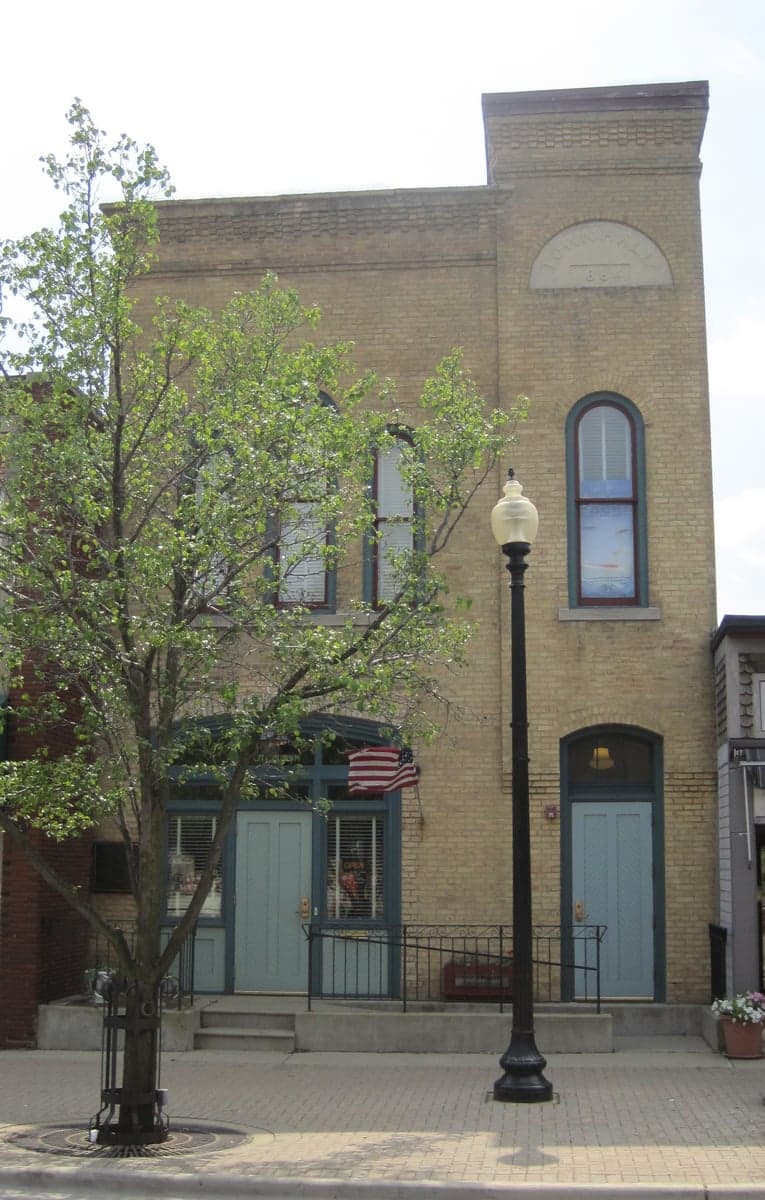
Photo: Wikipedia
Political ClimatePolitical Climate in West Chicago, IL
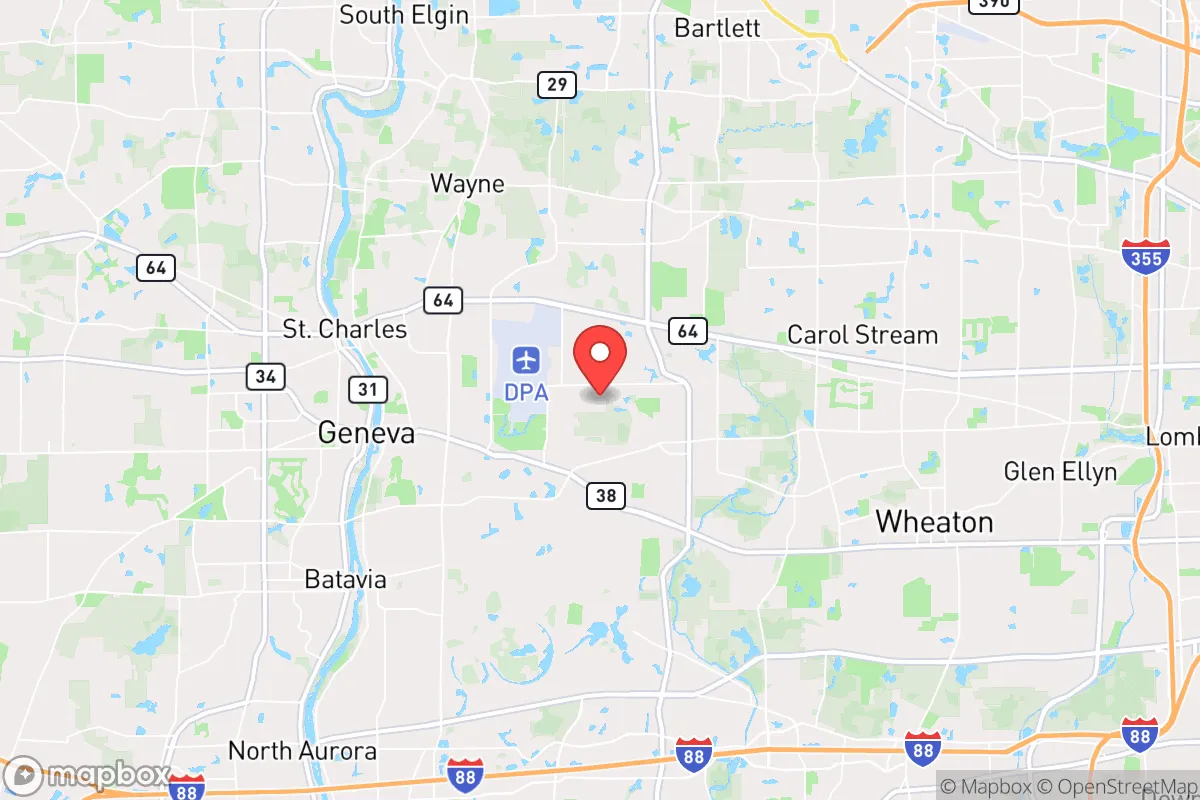
District shown is the primary district for this city’s centroid. Cities may span multiple districts.
Local Political AnalysisPolitical Analysis of West Chicago, IL
West Chicago is a deep blue stronghold in a state that's already reliably Democratic, with a Cook Partisan Voting Index (PVI) of D+17 — a full ten points more liberal than Illinois as a whole, which sits at D+7. This isn't a recent shift; the city has been trending left for decades, driven by a growing and politically active Latino population, a strong union presence tied to the area's industrial and manufacturing base, and a suburban professional class that leans progressive. While the surrounding DuPage County was once a Republican bastion, West Chicago has consistently voted blue by wide margins, and that trajectory shows no signs of reversing.
How it compares
To understand West Chicago's political character, you have to look at its neighbors. Drive ten minutes east to Wheaton or Winfield, and you'll find communities that still vote Republican — Wheaton, home to Wheaton College, is a conservative holdout in an otherwise purpling county. Head west to St. Charles or Geneva in Kane County, and you'll see a more mixed picture, with those towns trending purple but still capable of electing GOP officials. West Chicago, by contrast, is the most reliably Democratic city in western DuPage County. Its D+17 PVI means that in a typical statewide election, Democrats win here by roughly 17 points more than the national average. That's a sharper lean than Chicago's inner suburbs like Oak Park (D+15) or Evanston (D+16), and it puts West Chicago in the same league as some of the city's most liberal wards. The gap with Illinois's D+7 is significant: West Chicago is not just a blue dot in a blue state — it's a deep blue anchor in a region that's still politically contested.
What this means for residents
For liberal residents, West Chicago is a comfortable place to live politically. Local elections are dominated by Democrats, and the city council, school board, and county board seats are all held by progressives. You'll see yard signs for Democratic candidates in every election cycle, and community events often have a civic-activism vibe. For conservative residents, the reality is more nuanced. You're not going to be ostracized for your views — this isn't a place where people get shouted down at town hall — but you will be in a clear minority. Republican candidates rarely campaign here seriously, and your vote in local races is unlikely to change the outcome. That said, the broader DuPage County GOP still has a presence, and conservative residents can find their community in neighboring towns like Wheaton or Carol Stream. The practical effect is that West Chicago's policies lean left: the city has a strong rental assistance program, a community policing model that emphasizes de-escalation, and a school district that prioritizes bilingual education and equity initiatives. Property taxes are high, but residents generally accept that as the cost of well-funded public services.
Culturally, West Chicago stands apart from its neighbors in a few key ways. The city's large Mexican-American community gives it a distinct character — you'll hear Spanish spoken as often as English in the grocery stores and parks, and the annual Fiestas Patrias celebration is a bigger deal than the Fourth of July parade. Politically, this translates into a focus on immigrant rights and affordable housing that you won't see in Wheaton or Geneva. The city also has a strong environmental streak, with a community garden program and a solar energy initiative that's more ambitious than anything in the surrounding towns. If you're looking for a place where the politics are unapologetically progressive and the culture reflects that, West Chicago delivers. If you're a conservative who values low taxes and a smaller government footprint, you'll find that easier to live with in the towns just a few miles down the road.

State Political ClimatePolitical Climate in Illinois
State Political AnalysisPolitical Environment in the State
Illinois is a solidly Democratic state with a Cook PVI of D+7, but that top-line number masks a deep and growing urban-rural chasm. The Chicago metro area, home to roughly two-thirds of the state’s population, drives the blue lean, while the rest of the state—from the Mississippi River towns to the southern tip—votes reliably Republican. Over the last 10-20 years, the state has shifted leftward on social and cultural issues, even as downstate conservatives have grown more entrenched and vocal, creating a political landscape that feels like two different countries sharing a border.
Urban vs. rural divide
The political map of Illinois is a study in extremes. Cook County, anchored by Chicago, delivers massive Democratic margins—often 70-80% of the vote in presidential elections. The collar counties (DuPage, Lake, Kane, Will, McHenry) have been trending blue over the past decade, with suburban voters moving left on social issues and gun policy. In 2020, Joe Biden won DuPage County by 18 points, a county that voted for George W. Bush in 2004. Meanwhile, downstate regions like the Metro East (around St. Louis), the Quad Cities, and the southern “Little Egypt” area are deeply red. Counties like Effingham, Jasper, and Wayne routinely vote 75-80% Republican. The divide is stark: drive 90 minutes southwest of Chicago and you’ll go from a precinct that voted 85% for Biden to one that voted 85% for Trump. The state’s political power is concentrated in Chicago and its suburbs, which means downstate conservatives often feel their votes are irrelevant in statewide races.
Policy environment
Illinois’s policy environment is shaped by its Democratic supermajority in the legislature and a progressive governor, JB Pritzker. The state has a flat income tax rate of 4.95% (after a failed 2020 attempt to switch to a progressive rate), but property taxes are among the highest in the nation—averaging over 2% of home value, with some Chicago suburbs topping 3%. Sales tax rates vary by locality, often exceeding 10% in Chicago. The regulatory posture is business-friendly in some sectors (e.g., data centers, cannabis) but heavily regulated in others (e.g., labor, environmental). Education policy is centralized: the state funds schools through a formula that favors property-wealthy districts, and Chicago Public Schools remains a political battleground. Healthcare is broadly accessible, with expanded Medicaid under the Affordable Care Act and a state-based insurance exchange. Election laws are liberal: no-excuse mail-in voting, automatic voter registration, and same-day registration are all in place. Gun laws are among the strictest in the nation, including a 2023 ban on assault weapons and high-capacity magazines.
Recent policy direction
Over the past five years, Illinois has moved decisively left on several fronts. The Protect Illinois Communities Act (2023) banned the sale and possession of many semi-automatic firearms and magazines over 10 rounds, a direct response to the 2022 Highland Park parade shooting. This law is being challenged in court but remains in effect. On education, the state eliminated cash bail via the SAFE-T Act (2021), though it was later amended to keep judges’ discretion for serious offenses. Parental rights have been a flashpoint: Illinois law allows minors to access reproductive healthcare without parental consent, and a 2023 law expanded gender-affirming care protections for minors, including shielding providers from out-of-state lawsuits. On privacy, the state passed the Biometric Information Privacy Act (BIPA), which has led to massive class-action lawsuits against employers. Property rights are constrained by strict rent control preemption (Chicago has its own ordinance) and a strong tenant-friendly eviction process. On voting, Illinois has expanded ballot access significantly, including permanent vote-by-mail lists and early voting centers. The overall direction is toward more regulation, more state-level mandates, and a safety-net approach to social services.
Civil unrest & political movements
Illinois has seen its share of political flashpoints. The 2020 George Floyd protests in Chicago were large and sometimes violent, leading to looting and property damage in the Loop and along the Magnificent Mile. The city has a long history of organized labor activism, and recent years have seen teacher strikes in Chicago and suburban districts. On the right, the “Illinois is corrupt” movement is less an organized group than a pervasive sentiment, fueling a steady outflow of residents to Indiana, Wisconsin, and Florida. The state’s sanctuary policies—Illinois is a “Welcoming State” with laws limiting local cooperation with federal immigration enforcement—have been a rallying point for conservative activists, particularly in downstate towns like Murphysboro and Effingham, where local officials have passed symbolic resolutions opposing the policy. Election integrity controversies have been muted compared to swing states, but some rural counties have passed resolutions calling for audits or hand-counting of ballots. The most visible flashpoint for a new resident is likely the constant tension between Chicago’s progressive agenda and downstate conservative resistance, visible in everything from license plate designs to state fair politics.
Projection
Over the next 5-10 years, Illinois’s political trajectory is likely to continue its current path: a slow, steady leftward shift in the Chicago metro area, with downstate areas becoming more Republican and more frustrated. Demographic trends favor Democrats: the Chicago suburbs are growing more diverse and more educated, while downstate population is stagnant or declining. In-migration from other states is minimal—Illinois has lost population for nine consecutive years—so the political balance will be determined by internal migration within the state. Expect continued fights over gun laws, education funding, and property taxes. The state’s fiscal health is a wild card: Illinois has the worst-funded pension system in the nation, and a future fiscal crisis could force tax increases or service cuts that reshape the political landscape. A new resident moving in now should expect to find a state where Chicago and its suburbs set the policy agenda, and where conservative voices are increasingly concentrated in rural enclaves with limited statewide influence.
For a conservative-leaning relocator, the bottom line is this: Illinois offers a high-cost, high-regulation environment with strong protections for organized labor, strict gun laws, and a progressive social agenda. If you value low taxes, gun rights, or local control over education, you will find yourself at odds with state policy. However, if you work in a field like finance, tech, or healthcare, and you can afford the property taxes, the Chicago suburbs offer excellent schools, cultural amenities, and a stable job market. The state’s political reality is one of permanent tension—a blue metropolis ruling a red hinterland—and your experience will depend heavily on which side of that divide you choose to live on.
* Values derived from national, state, county, city and local statistics and may differ in a specific area. Last updated: 2026-08-10T03:24:24.000Z
Narrative content on this page is AI-generated and may contain mistakes. Verify any details that matter before acting on them.
ReloMaps may earn a commission from affiliate links at no extra cost to you.

