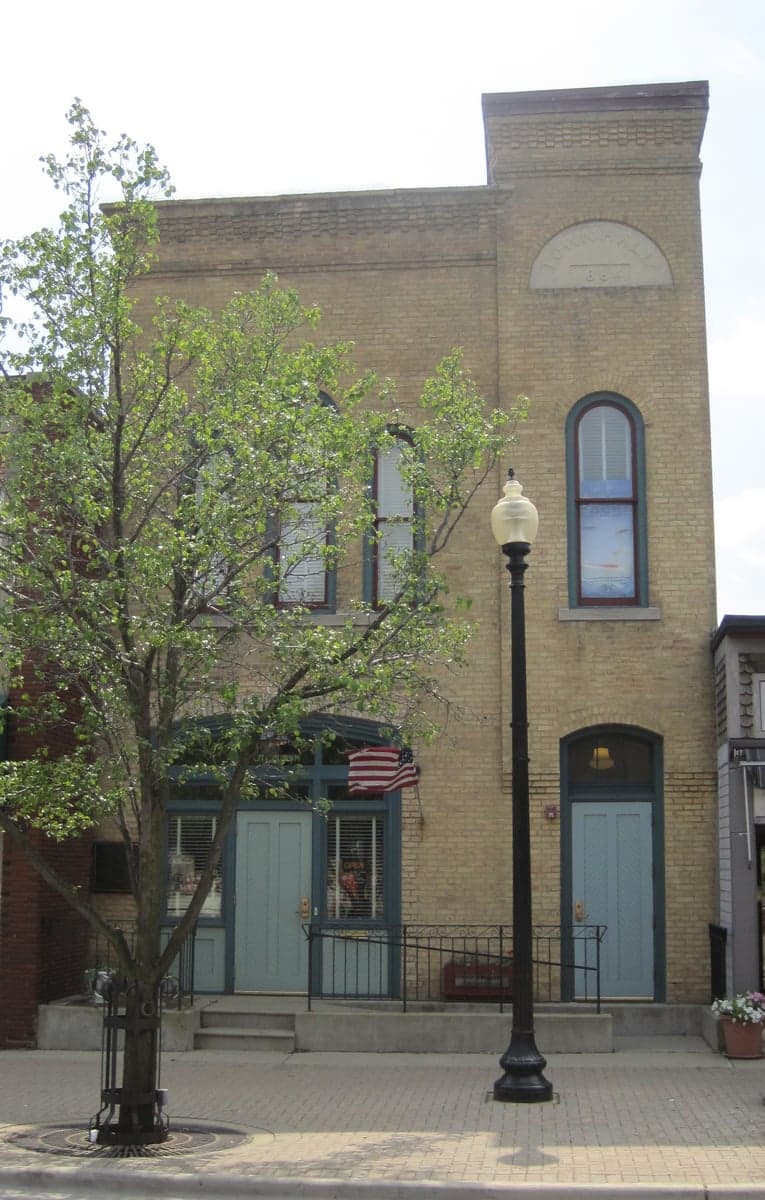
Photo: Wikipedia
Personal Sovereignty in West Chicago, IL
Viable for self-reliance. Generally workable, though some barriers may limit total independence.
What does Personal Sovereignty tell us?
Personal Sovereignty measures your capacity for self-reliance and independence with minimal government friction. Higher scores mean fewer barriers between you and the way you want to live... but it assumes you have the space you need and good neighbors.
What does this tell us?
Personal Sovereignty measures your capacity for self-reliance and independence with minimal government friction. Higher scores mean fewer barriers between you and the way you want to live... but it assumes you have the space you need and good neighbors.
State Policy
Energy independence: Importer (45% of energy produced in-state)
Personal Liberty
Homesteading

Personal Liberty Analysis
West Chicago, Illinois, presents a complex personal sovereignty environment where state-level regulatory density often overrides local autonomy, creating a landscape that requires strategic navigation for freedom-minded individuals and families. While the city itself operates within DuPage County's relatively affluent and orderly framework, residents must contend with Illinois' broad preemptive laws on firearms, taxation, and property rights, making West Chicago a location where personal independence is exercised more through careful compliance than through outright self-governance. The overall autonomy picture is one of moderate constraint: the state sets a high floor for taxes and regulations, but the city's suburban character and local zoning offer some room for self-reliance within established boundaries.
Tax burden and regulatory posture in West Chicago and DuPage County
Illinois imposes one of the heaviest tax burdens in the nation, and West Chicago residents feel this directly. The state's flat income tax rate of 4.95% is paired with a combined state and local sales tax rate of 8.75% in DuPage County, which is among the highest in the Midwest. Property taxes are particularly onerous: the average effective property tax rate in DuPage County hovers around 2.1% of assessed home value, meaning a $300,000 home carries an annual tax bill of roughly $6,300. This is significantly above the national average and reflects Illinois' reliance on local property taxes to fund schools and municipal services. The regulatory posture in West Chicago is typical of a first-ring Chicago suburb: the city enforces a detailed municipal code covering everything from lawn height to building permits, with a zoning board and planning commission that review most development proposals. There is no local income tax, but the state's regulatory footprint extends to business licensing, environmental regulations, and building codes that add layers of compliance. For a self-employed individual or small business owner, the combined tax and regulatory burden is a real cost of doing business in the area, though the city's proximity to Chicago's job market and transportation infrastructure offsets some of that friction.
Self-defense and gun law specifics in Illinois and West Chicago
Illinois has some of the most restrictive firearm laws in the United States, and West Chicago residents must comply with state-level mandates that leave little room for local variation. The state requires a Firearm Owner's Identification (FOID) card for possession of any firearm or ammunition, a process that includes a background check and can take weeks or months to process. For concealed carry, Illinois is a "shall-issue" state, but the Concealed Carry License (CCL) requires 16 hours of in-person training, a fee of $150, and a separate application through the Illinois State Police. Open carry is prohibited entirely. The state also bans "assault weapons" and high-capacity magazines under the Protect Illinois Communities Act, passed in 2023, which has faced ongoing legal challenges but remains in effect. West Chicago itself has no additional local gun ordinances beyond state law, meaning the city does not impose its own registration or storage requirements. However, the state's preemption statute prevents any municipality from enacting stricter laws than the state's baseline, so the regulatory environment is uniform across DuPage County. For a self-defense-minded individual, the practical reality is that carrying a firearm for protection is legal but heavily regulated, with a multi-step process that discourages casual ownership. Home defense with a handgun or shotgun is permitted, but magazine capacity limits (10 rounds for long guns, 15 for handguns) apply. The overall posture is one of tight state control, with local enforcement focused on compliance rather than additional restriction.
Self-reliance and homesteading viability: lot sizes, zoning, and off-grid feasibility
West Chicago's suburban character limits the scope for traditional homesteading, but some opportunities for self-reliance exist within the city's zoning framework. The typical residential lot size in West Chicago ranges from 0.15 to 0.25 acres in older subdivisions, with newer developments offering slightly larger parcels up to 0.5 acres. The city's zoning code permits backyard chickens on lots of 10,000 square feet or more, with a limit of four hens and no roosters, and a permit is required. Vegetable gardens are unrestricted, and many residents maintain substantial raised beds or in-ground plots. However, keeping larger livestock such as goats, pigs, or cows is prohibited within city limits, and beekeeping requires a separate permit with specific setback requirements. Off-grid living is effectively impossible within West Chicago: the city requires connection to municipal water and sewer systems for all habitable structures, and solar panel installations must comply with building codes and utility interconnection agreements. Rainwater harvesting is allowed for non-potable uses like irrigation, but the state's plumbing code restricts its use for indoor purposes. For a family seeking a more self-sufficient lifestyle, the practical option is to look at unincorporated areas of DuPage County or neighboring Kane County, where lot sizes of 1-5 acres are more common and zoning is less restrictive. Within West Chicago itself, self-reliance is best pursued through intensive gardening, food preservation, and energy efficiency upgrades rather than full-scale homesteading.
Personal liberties: parental rights, medical autonomy, speech, and property
Illinois law provides a mixed environment for personal liberties in West Chicago. Parental rights are generally respected in educational matters: the state's Parental Rights in Education law, passed in 2023, requires school districts to notify parents of any changes to a student's health or well-being, including mental health services and gender identity discussions. However, Illinois also mandates comprehensive sex education in public schools, and parents cannot opt their children out of all health-related curriculum without providing an alternative. Medical autonomy is constrained by state mandates: Illinois requires all children to receive certain vaccinations for school attendance, with medical exemptions allowed but religious and philosophical exemptions eliminated in 2021. The state also has a strong public health authority that can impose quarantine or isolation orders during outbreaks. Free speech is protected under the First Amendment, but Illinois has a "bias-motivated crime" statute that enhances penalties for speech or conduct deemed to intimidate based on race, religion, or other protected characteristics. Property rights are subject to the state's eminent domain authority, which has been used for infrastructure projects like the expansion of the nearby DuPage Airport. The city's zoning board has significant discretion over land use, and variances for non-conforming uses are granted on a case-by-case basis. Overall, personal liberties in West Chicago are exercised within a framework of state-level regulation that prioritizes public health, safety, and non-discrimination over individual autonomy, but the city itself does not add significant additional restrictions beyond what state law requires.
Compared to other areas in the Midwest, West Chicago offers a moderate-to-low level of personal sovereignty, ranking below most of Indiana, Wisconsin, and rural Illinois in terms of tax burden, gun freedom, and homesteading viability. For a freedom-oriented individual or family, the city's strengths lie in its stable suburban infrastructure, good schools, and access to Chicago's economy, but the trade-off is a regulatory environment that demands compliance and limits self-reliance. Those who prioritize maximum autonomy would find better options in more rural parts of Illinois or neighboring states, but for someone who values the conveniences of a well-serviced suburb and is willing to navigate state-level constraints, West Chicago provides a workable, if not liberating, environment for personal independence.

* Values derived from national, state, county, city and local statistics and may differ in a specific area. Last updated: 2026-08-10T03:24:24.000Z
Narrative content on this page is AI-generated and may contain mistakes. Verify any details that matter before acting on them.
ReloMaps may earn a commission from affiliate links at no extra cost to you.

