Photo: Wikipedia
Demographics of West Chicago, IL
Affluence Level in West Chicago, IL
A middle-class area roughly in line with national averages across income, home values, education, and employment.
People of West Chicago, IL
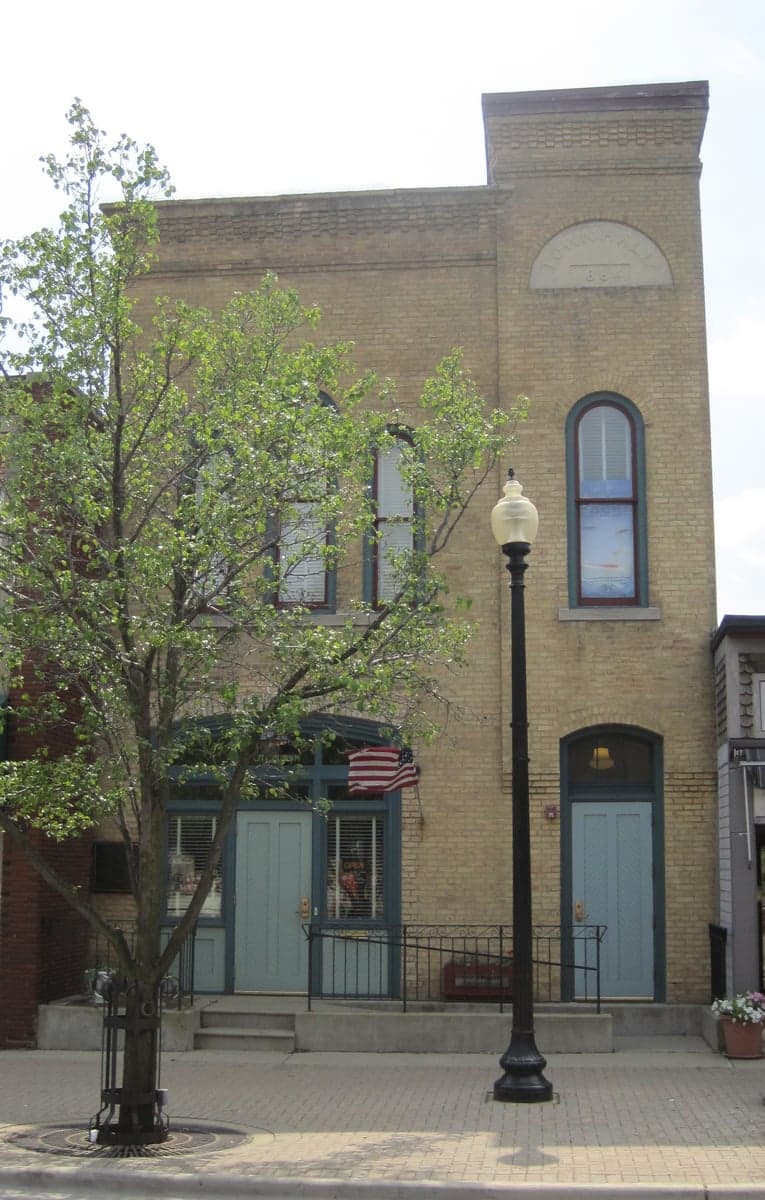
West Chicago, Illinois, is a city of 25,434 residents defined by its deep immigrant roots and a rapidly shifting demographic landscape. Today, the population is 48.0% Hispanic, 35.1% White, 6.1% East/Southeast Asian, 4.3% Indian (subcontinent), and 2.5% Black, with 17.2% foreign-born. This is a working-class suburb with a strong family orientation, where the historic downtown and older neighborhoods reflect a layered history of German, Polish, Mexican, and more recent Asian and Indian settlement.
How the city was settled and grew
West Chicago began as a railroad town, founded in 1849 as a junction for the Galena & Chicago Union Railroad. The original settlers were largely German and Irish immigrants who built the rail lines and established the first farms. The historic Downtown West Chicago area, centered around Main Street and the railroad depot, became the commercial and social hub for these early European families. By the late 19th century, Polish and Czech immigrants arrived to work in the area's brickyards and farms, settling in the East Side neighborhood near the tracks. The city was officially incorporated in 1873 as "West Chicago," and its population remained predominantly white, working-class, and Catholic through the mid-20th century. The North Side neighborhood, with its modest bungalows and post-war ranch homes, absorbed many of the second- and third-generation European families who moved up the economic ladder after World War II.
Modern era (post-1965)
The 1965 Immigration and Nationality Act opened the door to new waves of immigration that reshaped West Chicago. Mexican immigrants began arriving in the 1970s and 1980s, drawn by jobs in manufacturing, warehousing, and the DuPage County construction boom. They concentrated in the South Side neighborhood, south of Route 38, and in the Westwood subdivision, where affordable housing and proximity to industrial corridors made settlement practical. By 2000, the Hispanic share of the population had risen to over 40%, and it now stands at 48.0%. The 1990s and 2000s also saw the arrival of East/Southeast Asian families—primarily of Filipino and Vietnamese ancestry—who settled in the Woodland Hills area near the western edge of the city, drawn by good schools and newer housing stock. More recently, Indian (subcontinent) professionals have moved into the Pheasant Creek subdivision, a newer development near the DuPage Airport, attracted by tech and healthcare jobs in the broader Chicago region. The Black population remains small at 2.5%, concentrated in scattered pockets across the city rather than a single neighborhood.
The future
West Chicago's population is becoming more diverse, but the trend is toward a Hispanic-majority city with a significant Asian and Indian minority. The white share has declined from over 60% in 1990 to 35.1% today, and this decline is expected to continue as older European-ancestry residents age out and younger families move to farther exurbs. The Hispanic population is likely to grow past 55% within the next decade, driven by both immigration and higher birth rates. The East/Southeast Asian and Indian communities are also growing, though more slowly, as new arrivals are drawn to the area's relatively affordable housing compared to Naperville or Schaumburg. The South Side and Westwood neighborhoods will likely remain the core of Hispanic settlement, while Pheasant Creek and Woodland Hills will see continued Asian and Indian in-migration. The city's cultural identity is evolving from a white ethnic railroad town into a polyglot, working-to-middle-class suburb where Spanish, Tagalog, and Gujarati are increasingly heard alongside English.
For someone moving in now, West Chicago offers a genuinely diverse, family-oriented community with a strong sense of place and a lower cost of entry than many DuPage County suburbs. The city is becoming more Hispanic and more Asian, with a stable working-class character and a growing professional class. It is not a wealthy enclave or a gentrifying hotspot—it is a solid, middle-American suburb where the American story of immigration and upward mobility continues to play out in real time.

* Values derived from national, state, county, city and local statistics and may differ in a specific area. Last updated: 2026-08-10T03:24:24.000Z
Narrative content on this page is AI-generated and may contain mistakes. Verify any details that matter before acting on them.
ReloMaps may earn a commission from affiliate links at no extra cost to you.

