Photo: Wikipedia
Demographics of Wellsville, KS
Affluence Level in Wellsville, KS
A middle-class area roughly in line with national averages across income, home values, education, and employment.
People of Wellsville, KS
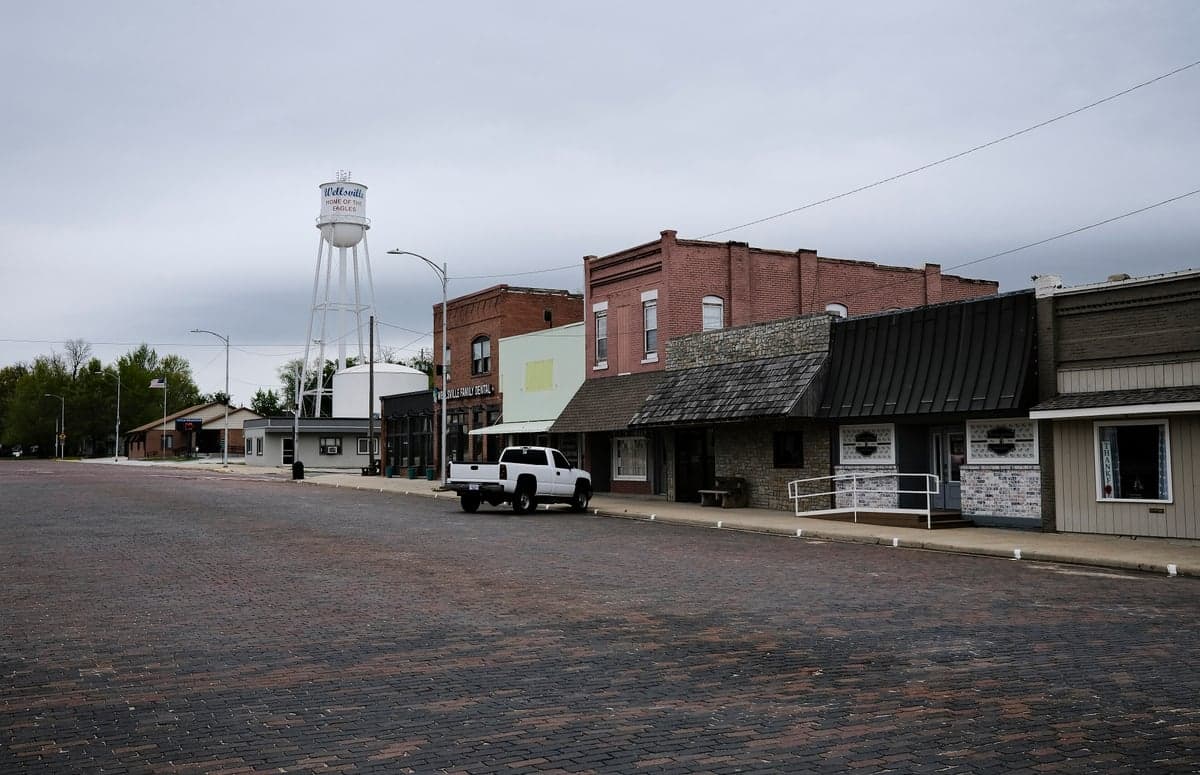
The people of Wellsville, Kansas, today form a small, tightly-knit community of 2,003 residents, characterized by its overwhelming racial and ethnic homogeneity. The city is 90.7% White, with a Hispanic population of 5.7% and a Black population of just 1.3%, reflecting a demographic profile that has changed little in recent decades. With only 0.5% of residents foreign-born and 19.1% holding a college degree, Wellsville is a predominantly working-class, native-born community where family ties and local institutions—like the Wellsville High School Eagles—anchor daily life. Its identity is rooted in a quiet, rural conservatism, shaped by generations of families who have lived in the area for over a century.
How the city was settled and grew
Wellsville’s human history begins with its founding in 1857 by settlers drawn to the fertile plains of eastern Kansas under the Homestead Act. The city was platted along the Santa Fe Trail, and its early growth was fueled by agriculture—specifically wheat and corn farming—and the arrival of the Leavenworth, Lawrence & Galveston Railroad in the 1870s. The original population was almost entirely of Anglo-American stock, with families migrating from the Ohio River Valley and the Upper South. These early settlers built their homes in what is now known as Old Town Wellsville, the historic core centered around Main Street and 2nd Street, where many original wood-frame houses still stand. A second wave arrived in the 1880s, composed of German and Irish immigrants who found work on the railroad and in local grain elevators. They established a distinct enclave in the South Side neighborhood, south of the railroad tracks, where St. John’s Catholic Church (built 1889) became their cultural anchor. By 1900, Wellsville’s population had reached roughly 800, and the town’s character as a farming and railroad service center was firmly set.
Modern era (post-1965)
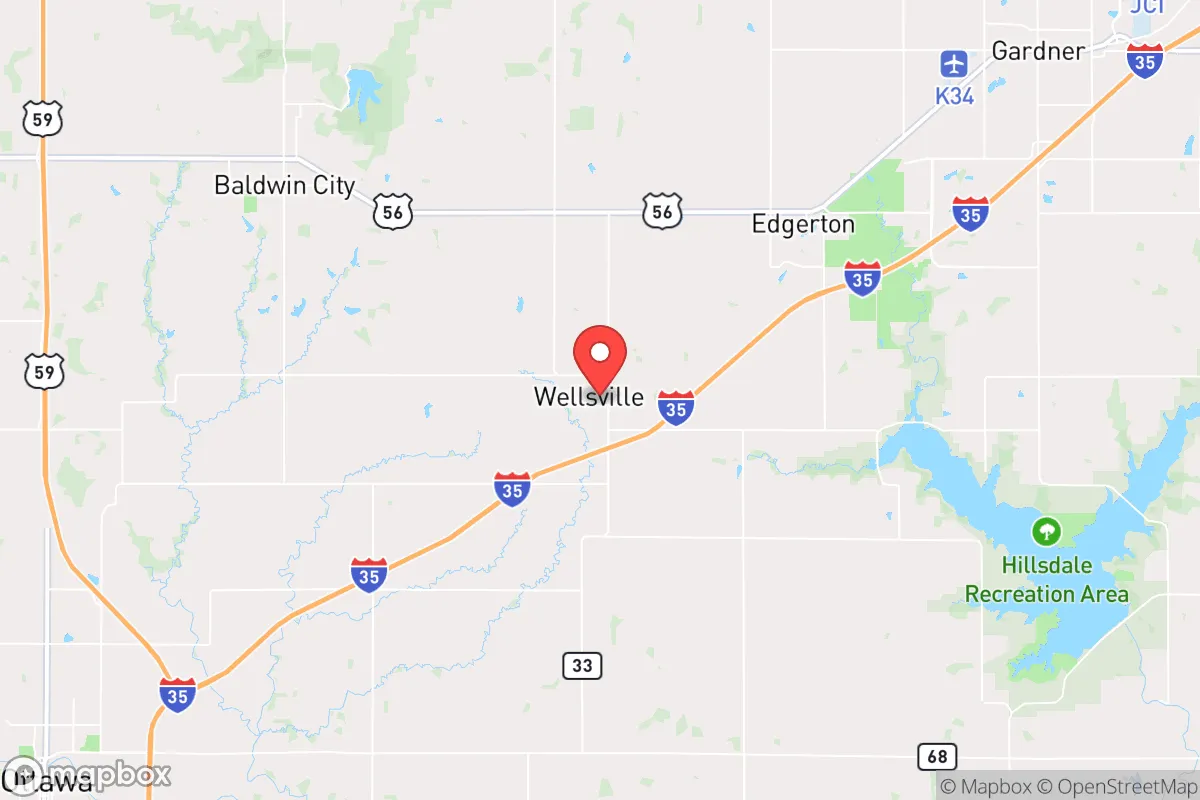
The post-1965 period brought little demographic change to Wellsville, as the city remained largely insulated from the immigration waves that reshaped many American towns. The 1965 Hart-Cellar Act had minimal impact here; the foreign-born population today is a mere 0.5%, and the city’s racial composition has stayed overwhelmingly White. The most significant domestic shift was the gradual out-migration of younger residents to larger cities like Lawrence (20 miles north) and Kansas City (40 miles east) for college and employment, a trend that has kept the population stagnant—hovering around 2,000 since the 1990 census. The small Hispanic population (5.7%) is concentrated in the West End neighborhood, near the old grain elevator and along Highway 33, where a handful of families arrived in the 1990s to work in agricultural processing. The Black population (1.3%) is dispersed across the city, with no single neighborhood majority, and the Asian and Indian populations are effectively zero. Suburbanization bypassed Wellsville; it never became a bedroom community for nearby metros, preserving its rural, independent character. The Northwood Addition, a small subdivision built in the 1970s, attracted a few commuters to Ottawa and Lawrence, but the city’s housing stock remains dominated by older single-family homes.
The future
Wellsville’s population is projected to remain stable or decline slightly over the next 10–20 years, as the aging cohort of long-term residents (median age is roughly 40) is not being replaced by younger families at a sufficient rate. The city’s diversity is unlikely to increase significantly; the Hispanic share may inch up to 7–8% as agricultural labor demand persists, but the White share will likely remain above 85%. New residents are expected to be domestic migrants—mostly retirees and remote workers seeking lower property taxes and a slower pace—who will settle in the Prairie View Estates subdivision, a recent development of 30 lots on the city’s eastern edge. The cultural identity of Wellsville will stay rooted in its agricultural and railroad heritage, with little pressure to change. For someone moving in now, the city offers a stable, low-crime environment where neighbors know each other, but it also means accepting a community with limited ethnic diversity and few amenities beyond the local grocery, hardware store, and a handful of churches.
Wellsville is becoming a quieter, older version of itself—a place where the past is preserved more than the future is built. For a family or individual seeking a conservative, rural lifestyle with strong community ties and minimal demographic flux, it remains a reliable choice. The trade-off is clear: stability and familiarity in exchange for limited economic opportunity and cultural variety.

* Values derived from national, state, county, city and local statistics and may differ in a specific area. Last updated: 2026-10-06T17:35:13.000Z
Narrative content on this page is AI-generated and may contain mistakes. Verify any details that matter before acting on them.
ReloMaps may earn a commission from affiliate links at no extra cost to you.

