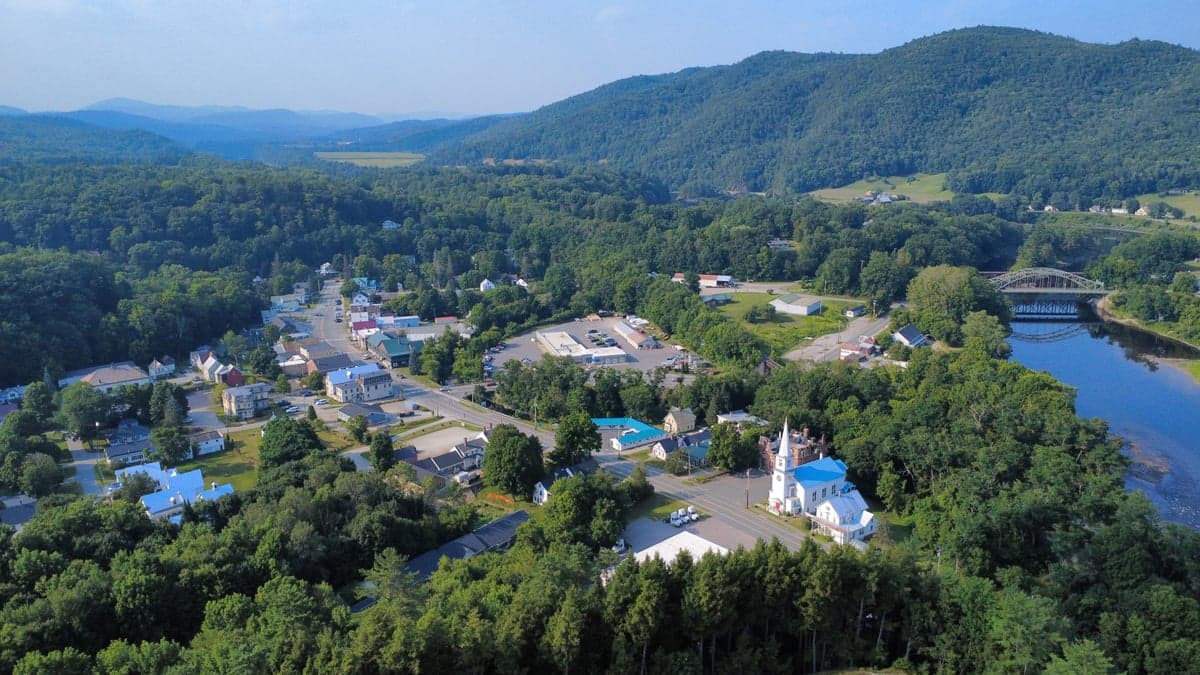
Photo: Wikipedia
Political ClimatePolitical Climate in Wells River, VT
District shown is the primary district for this city’s centroid. Cities may span multiple districts.
Inherited from parent state — no local data available.
Local Political AnalysisPolitical Analysis of Wells River, VT
Wells River, Vermont, leans heavily Democratic, with a Cook PVI of D+17, meaning the area votes about 17 points more Democratic than the national average. That’s a pretty strong blue tilt, and it’s been that way for a while, but the real story is how much the political climate has shifted here over the last decade or so. It used to be a place where folks kept their politics to themselves and focused on getting through the winter, but now you see more yard signs and more talk about state-level policies that feel like they’re coming from Burlington or Montpelier, not from the neighborhoods along the Connecticut River. The trajectory is toward a more progressive, activist brand of politics, which is a concern for anyone who values local control and personal freedoms.
How it compares
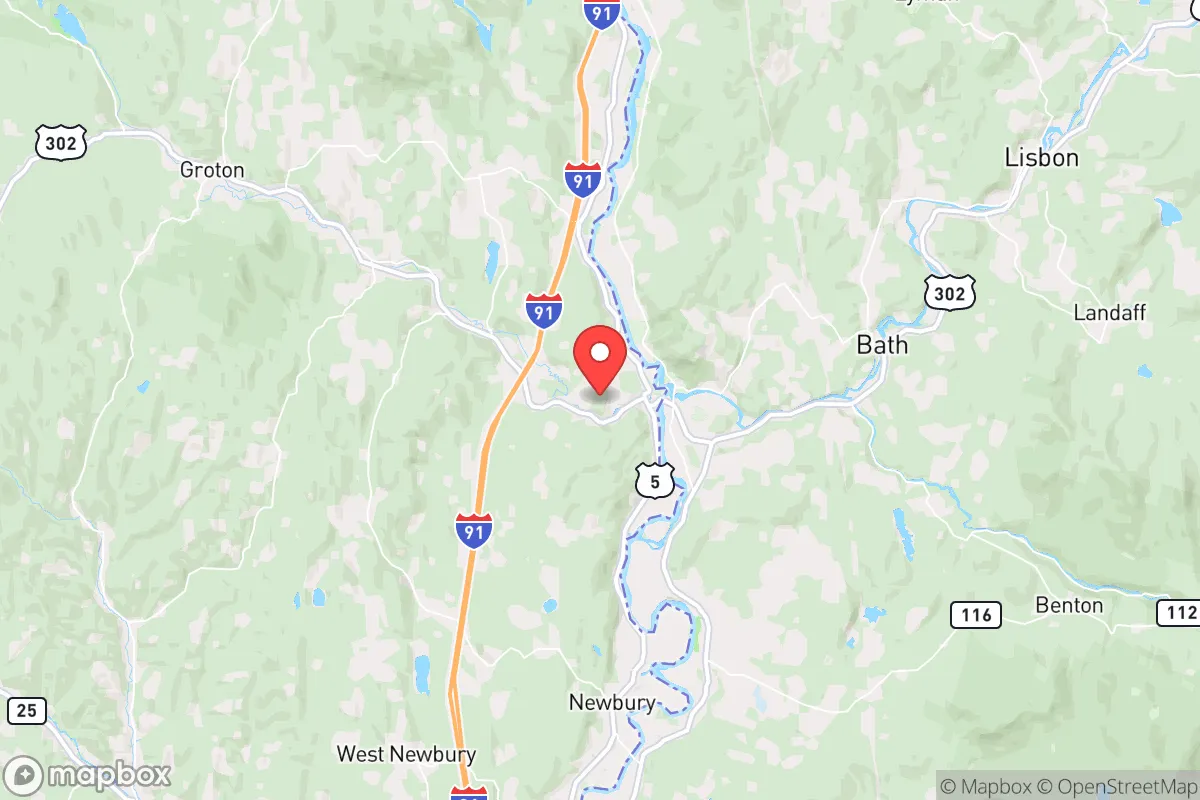
If you drive ten miles south to Woodsville, New Hampshire, you’ll find a completely different political vibe—more libertarian-leaning, lower taxes, and a general distrust of government overreach. The contrast is stark: Wells River is in Orange County, which voted about 65% for Biden in 2020, while Grafton County, New Hampshire, where Woodsville sits, was closer to 52% for Trump. Even nearby towns like Bradford and Fairlee have a more moderate, independent streak, but Wells River has become a bit of a progressive stronghold in the region. The state legislature in Montpelier has pushed through things like mandatory paid family leave, strict gun laws, and a carbon tax on heating fuels, and those policies get a lot of support in Wells River. It feels like the local government is more interested in following the party line than listening to the folks who actually live here.
What this means for residents
For residents, the biggest impact is on your wallet and your daily life. Property taxes in Vermont are among the highest in the nation, and they keep climbing to fund state mandates on education and social programs. You’ve got less say in how your money is spent, and more rules about everything from what kind of wood stove you can use to how you can use your land. The push for renewable energy mandates means you might see solar farms popping up on farmland, and there’s talk of banning gas-powered leaf blowers and lawn mowers. It’s not just about inconvenience—it’s about the principle of the thing. The state government in Montpelier seems to think it knows better than you do about how to run your home, your business, and your life. That’s a red flag for anyone who moved here to get away from that kind of control.
Cultural and policy distinctions
One thing that stands out about Wells River is the strong sense of community—people still look out for each other during mud season and help with barn repairs. But that community spirit is being tested by the political divide. There’s a growing tension between longtime residents who remember when the town was more independent and newcomers who bring big-city progressive ideas. The local school board and town selectboard meetings have gotten more contentious, with debates over things like diversity initiatives and climate action plans. The state’s gun laws, which include a ban on magazines over ten rounds and a waiting period, are a sore spot for many hunters and sports shooters. And the push for a statewide single-payer healthcare system, while popular in some circles, raises concerns about cost and access. If you value personal freedom and local decision-making, Wells River is still a beautiful place to live, but you’ll need to be prepared to push back against the tide of government overreach that’s rising from Montpelier.

State Political ClimatePolitical Climate in Vermont
State Political AnalysisPolitical Environment in the State
Vermont has long been a deep blue state, but the reality on the ground is far more complex than the national headlines suggest. The state’s overall partisan lean is heavily Democratic, with the party holding a supermajority in the legislature and every statewide office, but this masks a fierce urban-rural split that has widened dramatically over the past two decades. Since the early 2000s, the state has shifted leftward at the state level, driven by the explosive growth of Chittenden County and the influx of out-of-state transplants, while the more conservative, working-class regions in the Northeast Kingdom and southern counties have been steadily losing political influence.
Urban vs. rural divide
The political map of Vermont is essentially a story of two states. The urban core is anchored by Burlington and its surrounding suburbs in Chittenden County, which now casts roughly a quarter of the state’s vote. This area is overwhelmingly progressive, with Burlington itself electing a socialist mayor and city council that have pushed rent control, defunded police initiatives, and a carbon tax on heating fuel. The rest of the state is a patchwork of deep red and purple towns. The Northeast Kingdom—counties like Essex, Orleans, and Caledonia—votes reliably Republican, with towns like Newport and St. Johnsbury consistently backing GOP candidates by 20-30 points. The Rutland area and the Bennington corridor are more competitive but lean conservative on most issues, especially gun rights and taxes. The divide is stark: a voter in Montpelier lives under entirely different political assumptions than one in Derby Line.
Policy environment
Vermont’s policy environment is a cautionary tale for anyone concerned about government overreach. The state has the highest combined state and local tax burden in the nation, with income taxes topping 8.75% and property taxes among the steepest in the country. The regulatory posture is aggressively progressive: the state passed a universal paid family leave program funded by a payroll tax, a carbon tax on heating fuel (the first of its kind in the U.S.), and a clean heat standard that effectively mandates the phase-out of fossil fuel heating. Education policy is dominated by the teachers’ union, with school choice virtually nonexistent—Vermont has no charter schools and limited homeschooling flexibility. Healthcare is a single-payer-style system in all but name, with Green Mountain Care controlling costs and access. Election laws are among the most permissive in the country: universal mail-in voting, same-day registration, and no voter ID requirement. For a conservative, this is a state where the government is deeply involved in nearly every aspect of daily life.
Trajectory & freedom
Vermont is becoming less free by almost any measure of personal liberty. The most glaring example is gun rights: in 2023, the legislature passed Act 59, which banned the sale of many semi-automatic firearms, limited magazine capacity to 10 rounds, and raised the purchasing age to 21. This came on top of a 2018 red flag law and a 2020 ban on carrying firearms in public buildings. Parental rights have been eroded by a 2023 law that allows minors to receive gender-affirming care without parental consent, and a 2024 law that prohibits schools from notifying parents if a child changes their name or pronouns. Medical autonomy took a hit with the state’s mandatory vaccination law for schoolchildren, which has no philosophical exemption. Property rights are constrained by Act 250, a sprawling land-use law that gives state bureaucrats veto power over development, and by the Clean Heat Standard, which forces homeowners to pay for alternative heating systems. On the plus side, Vermont has no sales tax and no right-to-work law, but the trend is unmistakably toward more state control.
Civil unrest & political movements
Vermont has seen its share of political flashpoints. The Burlington area experienced repeated protests in 2020-2021 over racial justice and police funding, with the city council voting to cut the police budget by 30%—a move that was later partially reversed after a spike in violent crime. The Montpelier statehouse has been the site of large, organized rallies by both the left-wing Vermont Progressive Party and the right-wing Vermonters for Liberty group. Immigration politics are a live wire: Vermont is a sanctuary state by executive order, and Burlington has a formal “Welcoming City” ordinance that limits cooperation with ICE. There have been scattered secessionist murmurs from the Northeast Kingdom, with some towns passing resolutions declaring themselves “Second Amendment sanctuaries” and threatening to nullify state gun laws. Election integrity is a growing concern among conservatives, given the state’s lack of voter ID and its reliance on universal mail-in ballots—though no major fraud has been proven. A new resident will notice the political tension most in the small towns, where neighbors openly disagree about the direction of the state.
Projection
Over the next 5-10 years, Vermont is likely to continue its leftward drift, driven by demographic trends. The state is losing native-born residents—especially young families and working-class conservatives—while gaining out-of-state transplants from New York, Massachusetts, and California, who bring progressive voting habits and higher incomes. Chittenden County will keep growing, while the rural counties will continue to shrink and age. This means the legislature will become even more Democratic and more willing to pass ambitious progressive legislation. The carbon tax and clean heat standard will likely be expanded, and a statewide rent control bill is a real possibility. Gun rights will face further restrictions, and parental rights will continue to be contested. The only wild card is the state’s fiscal crisis: Vermont’s pension system is underfunded by billions, and the tax base is shrinking. If the economy falters, the progressive agenda could hit a wall. But for now, anyone moving in should expect a state where government intervention in daily life is the norm, not the exception.
For a conservative considering relocation, Vermont presents a clear trade-off. The natural beauty, low crime in rural areas, and tight-knit communities are genuine draws. But the policy environment is hostile to many core conservative values: high taxes, weak gun rights, limited school choice, and an increasingly intrusive state government. If you’re looking for a place where you can be left alone to live your life, Vermont is not that place—and it’s getting less so every year. The best bet for a conservative is to target the Northeast Kingdom or the Rutland area, where local culture is more libertarian, but even there, state-level laws will constrain your freedom. Bottom line: come for the scenery, but be prepared to fight for your rights.
* Values derived from national, state, county, city and local statistics and may differ in a specific area. Last updated: 2026-04-21T22:54:52.000Z
Narrative content on this page is AI-generated and may contain mistakes. Verify any details that matter before acting on them.
ReloMaps may earn a commission from affiliate links at no extra cost to you.

