 Popular
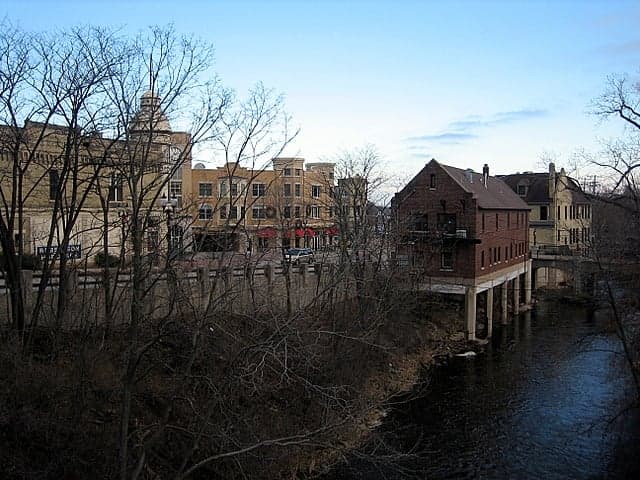
Photo: Wikipedia
Political ClimatePolitical Climate in Wauwatosa, WI
District shown is the primary district for this city’s centroid. Cities may span multiple districts.
Local Political AnalysisPolitical Analysis of Wauwatosa, WI
Wauwatosa leans heavily Democratic, with a Cook PVI of D+26, but that number doesn't tell the whole story of how much things have shifted here. I remember when this was a reliably moderate, middle-class suburb where folks voted for the person, not the party, and you could have a reasonable conversation about taxes or schools without it turning into a shouting match. Now, it feels like the progressive wave has washed over the city council and school board, and the old-school, live-and-let-live attitude is getting squeezed out by a one-size-fits-all approach to everything from zoning to public health.
How it compares
Drive ten minutes west to Brookfield or Elm Grove, and you're in a different world politically — those areas lean solidly Republican, with a much stronger emphasis on property rights and local control. Head east toward Milwaukee proper, and you'll find an even more progressive environment, but Wauwatosa used to be the sensible middle ground. That's fading. The city's current leadership has pushed through policies that feel less like common-sense governance and more like social experiments — think mask mandates that lingered long after the science moved on, and a zoning overhaul that prioritizes dense apartment buildings over the single-family homes that built this community. Compared to surrounding towns, Wauwatosa now votes more like a mini-Madison than a traditional Milwaukee suburb, which is a red flag for anyone who values keeping government out of their backyard and their wallet.
What this means for residents
For the average homeowner or small business owner, the political shift translates into real, tangible headaches. Property taxes have crept up as the city funds new initiatives — bike lanes, equity programs, and consultant-led studies — that don't always align with what residents actually asked for. There's a growing sense that the city council is more interested in checking progressive boxes than listening to the people who show up at meetings. If you value personal freedom — say, the right to decide what's best for your own kids' education or your own property — you'll find yourself increasingly at odds with a local government that seems to think it knows better. The school board has also become a battleground, with curriculum changes and diversity, equity, and inclusion mandates that some parents feel prioritize ideology over academic rigor.
Long-term, I worry we're heading toward a scenario where Wauwatosa becomes a one-party town, and that's never healthy for democracy. When dissent is dismissed as "not being on the right side of history," you lose the kind of honest debate that keeps a community grounded. The progressive majority here is young, energetic, and well-organized, but they often lack the perspective of folks who've weathered economic ups and downs and know that government overreach rarely ends well. If you're considering moving here, just know that the political climate is increasingly activist, and the days of a quiet, hands-off local government are probably gone for good.

State Political ClimatePolitical Climate in Wisconsin
State Political AnalysisPolitical Environment in the State
Wisconsin has long been a classic swing state, but over the past decade it has hardened into a deeply polarized battleground where the blue urban crescent of Milwaukee and Madison battles the redder rural and exurban rest of the state. The 2024 presidential race saw Donald Trump carry the state by a razor-thin margin, continuing a pattern where statewide elections are decided by less than a point. The real story, though, is the steady rightward drift of the WOW counties (Waukesha, Ozaukee, Washington) and the growing Republican strength in the Fox Valley and western Wisconsin, which has offset Democratic gains in Dane County and Milwaukee. For a conservative considering relocation, the state offers a mixed bag: a Republican-controlled legislature that has passed significant conservative reforms, but a Democratic governor who has vetoed many of them, creating a tense policy stalemate.
Urban vs. rural divide
The political map of Wisconsin is a tale of two worlds. The Democratic stronghold is the urban crescent: Milwaukee and its inner suburbs, plus Madison (Dane County), which together deliver roughly 40% of the statewide Democratic vote. Dane County alone gave Biden 75% of its vote in 2020. Meanwhile, the WOW counties (Waukesha, Ozaukee, Washington) are among the most reliably Republican suburbs in the nation, routinely delivering 60-65% for GOP candidates. The Fox Valley cities like Appleton and Green Bay have shifted rightward, with Brown County flipping from blue to red in recent cycles. The rural northwoods and the Driftless Region in the southwest are deeply Republican, while the Eau Claire and La Crosse areas remain competitive but trending left. The key battleground is the Milwaukee suburbs and the exurban WOW counties, where Republican margins have grown as the city itself becomes more Democratic.
Policy environment
Wisconsin’s policy landscape is a tug-of-war. The Republican-controlled legislature has passed a flat income tax (currently 4.4%, with a phase-down to 3.5% by 2026), eliminated the state’s personal property tax, and enacted a school choice program that now serves over 50,000 students statewide. Governor Tony Evers has vetoed bills to expand school choice further, ban abortion after 14 weeks, and require voter ID for absentee ballots. The state’s election laws are a flashpoint: Wisconsin has strict voter ID requirements for in-person voting, but no-excuse absentee voting remains legal, and the state uses drop boxes (though their use was restricted by the conservative-controlled Supreme Court in 2022). On healthcare, Wisconsin did not expand Medicaid under the Affordable Care Act, leaving a coverage gap for about 80,000 low-income adults. The state’s regulatory posture is generally business-friendly, with a right-to-work law (passed in 2015) and a relatively low corporate tax rate of 7.9%.
Trajectory & freedom
Wisconsin’s trajectory on personal freedom is a mixed bag trending in the right direction on some fronts but stalled on others. On gun rights, the state is a shall-issue concealed carry state with no permit required for open carry, and in 2023 the legislature passed a bill allowing school staff to carry firearms (vetoed by Evers). On parental rights, the state has a law requiring schools to notify parents of any changes to a student’s gender identity or sexual orientation (passed in 2023, but blocked by a court order). The state’s medical freedom took a hit during COVID: Evers issued a statewide mask mandate and business closures, though the state Supreme Court struck down his stay-at-home order in 2020. Property rights are generally strong, with no statewide rent control and limited zoning restrictions outside of Madison and Milwaukee. The biggest freedom concern is the state’s income tax, which, while being reduced, still ranks in the middle of the pack nationally. The 2023 Act 12, which limited local governments’ ability to raise property taxes without a referendum, was a win for taxpayers.
Civil unrest & political movements
Wisconsin has a history of political activism that can get heated. The 2011 Act 10 protests against collective bargaining restrictions drew over 100,000 people to the Madison Capitol, and the 2020 Kenosha unrest following the Jacob Blake shooting saw riots, arson, and the Kyle Rittenhouse trial, which became a national flashpoint on self-defense rights. The state has a strong grassroots conservative movement, particularly in the WOW counties and the Fox Valley, with groups like the Wisconsin Family Action and the Wisconsin Institute for Law & Liberty pushing for school choice and religious liberty. On the left, the Wisconsin Democratic Party is heavily influenced by the teacher’s union (WEAC) and the Service Employees International Union. Immigration politics are relatively quiet, as Wisconsin has no sanctuary city policies and the state’s foreign-born population is only about 5%. Election integrity remains a live issue: the 2020 election saw widespread use of private grant money for election administration (the “Zuckerbucks” controversy), which the legislature banned in 2022. The state’s Supreme Court flipped to a 4-3 liberal majority in 2023, leading to a redrawing of legislative maps that could shift the balance of power in 2024.
Projection
Over the next 5-10 years, Wisconsin is likely to remain a purple state, but the demographic trends favor Republicans. The WOW counties are growing faster than Dane County, and the Fox Valley is becoming more Republican as manufacturing and agriculture workers shift right. The biggest wildcard is the new legislative maps: if the liberal Supreme Court draws maps that give Democrats a chance to win the Assembly, the state could see a wave of progressive legislation on abortion, gun control, and taxes. However, the state’s in-migration patterns are mixed: people are moving to the WOW counties and the Fox Valley from Illinois and Minnesota, often for lower taxes and more conservative policies, while Madison and Milwaukee attract younger, more liberal transplants. The 2024 election will be a bellwether: if Trump wins the state again, expect continued Republican gains in the legislature and a push for a constitutional amendment to require voter ID for absentee ballots. If Harris wins, expect a Democratic push to codify abortion rights and expand Medicaid. For a conservative, the state’s trajectory is uncertain but not hopeless—the rural and exurban areas are solidifying, and the policy wins on taxes and school choice are real.
For a conservative moving to Wisconsin, the bottom line is this: you’ll find a state where your vote matters, your tax burden is moderate and falling, and your kids can attend a school of your choice. But you’ll also face a governor who will veto conservative priorities and a Supreme Court that could reshape the political landscape. Pick your location carefully: the WOW counties and the Fox Valley offer the most freedom-friendly environment, while Madison and Milwaukee are increasingly progressive. The state is a battleground, but for those willing to engage, it’s a place where conservative values can still win the day.
* Values derived from national, state, county, city and local statistics and may differ in a specific area. Last updated: 2026-05-01T06:21:32.000Z
Narrative content on this page is AI-generated and may contain mistakes. Verify any details that matter before acting on them.
ReloMaps may earn a commission from affiliate links at no extra cost to you.

