 Popular
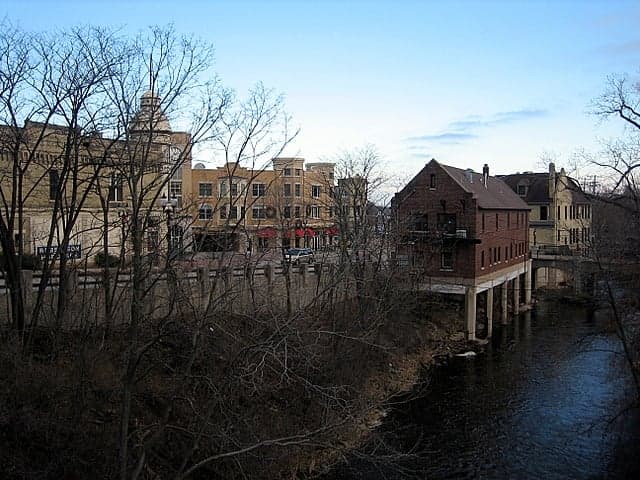
Photo: Wikipedia
Personal Sovereignty in Wauwatosa, WI
Moderate friction. Expect trade-offs in some aspect of personal liberty and independence.
What does Personal Sovereignty tell us?
Personal Sovereignty measures your capacity for self-reliance and independence with minimal government friction. Higher scores mean fewer barriers between you and the way you want to live... but it assumes you have the space you need and good neighbors.
What does this tell us?
Personal Sovereignty measures your capacity for self-reliance and independence with minimal government friction. Higher scores mean fewer barriers between you and the way you want to live... but it assumes you have the space you need and good neighbors.
State Policy
Energy independence: Importer (15% of energy produced in-state)
Personal Liberty
Homesteading

Personal Liberty Analysis
Wauwatosa, Wisconsin, presents a mixed picture for those prioritizing personal sovereignty. While the city itself leans progressive and its local ordinances reflect that, the broader state framework—particularly Wisconsin's preemption laws on firearms and its right-to-work status—provides a meaningful buffer against the most aggressive forms of government overreach. For a conservative-leaning individual or family weighing relocation, the key question is whether the city's regulatory density and tax burden are offset by the state-level protections and the practical realities of daily life in a first-ring suburb of Milwaukee. The answer is nuanced: you get more autonomy than in Cook County, Illinois, but less than in rural Wisconsin counties like Washington or Waukesha.
Tax burden and regulatory posture in Wauwatosa
Wauwatosa's tax burden is a significant factor for anyone focused on financial sovereignty. The city's property tax rate is among the highest in Milwaukee County, driven by a combination of school district levies (Wauwatosa School District) and municipal services. In 2025, the combined mill rate hovered around 22-23 per $1,000 of assessed value, meaning a $400,000 home carries an annual tax bill of roughly $9,000. This is roughly 30-40% higher than comparable homes in neighboring Waukesha County, where the tax base is more commercial and the school spending is more restrained. On the regulatory front, Wauwatosa has a robust zoning code and a permitting process that can feel intrusive. The city requires permits for most exterior modifications, including fences, sheds, and even certain landscaping changes. There is no county-level zoning overlay—Wauwatosa is its own municipality—so local officials have direct control over property use. For a prepper or homesteader, this means that any attempt to build a root cellar, install a rainwater catchment system, or keep backyard chickens (allowed with a permit, but limited to 4 hens, no roosters) will require navigating city hall. The state of Wisconsin does not have a statewide preemption on local zoning, so Wauwatosa's rules stand. The regulatory posture is best described as "managed growth with a green agenda," which translates to higher compliance costs for property owners.
Self-defense and gun law specifics in Wisconsin
Wisconsin is a "shall-issue" state for concealed carry, and Wauwatosa must follow state law on firearms. This means that no local ordinance can ban the carrying of a concealed weapon by a permit holder, nor can the city impose its own waiting periods or magazine capacity limits. The state preemption statute (Wis. Stat. § 66.0409) is strong and has been upheld in court, preventing cities like Wauwatosa from enacting their own gun control measures. That said, the city's police department has a reputation for proactive enforcement of other laws—traffic stops, noise complaints, and suspicious person calls—which can create friction for those who prefer to keep a low profile. Open carry is legal without a permit in Wisconsin, but local law enforcement may respond to calls about a person openly carrying a firearm, especially in a dense suburban environment. For a survivalist, the key takeaway is that your right to keep and bear arms is protected at the state level, but the social climate in Wauwatosa is not gun-friendly. You will not find the same level of acceptance as in rural areas, and you may face scrutiny from neighbors or police if you are visibly armed. Stand-your-ground laws apply statewide, and Wisconsin has a Castle Doctrine, so your home and vehicle are considered places where you have no duty to retreat. However, the city's proximity to Milwaukee means that legal self-defense incidents can attract media attention and potential civil liability, so discretion is advised.
Self-reliance and homesteading viability in a first-ring suburb
Wauwatosa's lot sizes are typical of an older suburb: most residential lots range from 0.15 to 0.25 acres, with a few larger parcels in the historic district. This is not conducive to serious homesteading. The city's zoning code limits accessory structures to 200 square feet without a conditional use permit, and there are strict setback requirements. Off-grid living is effectively impossible within city limits. The city requires connection to municipal water and sewer, and there are no provisions for solar panels that are not grid-tied (net metering is available, but battery storage for full off-grid operation is not supported by local code). Rainwater harvesting for outdoor use is allowed, but indoor use is prohibited by state plumbing codes. For those interested in food production, the city allows vegetable gardens without a permit, but the small lot sizes limit yield. Community gardens exist, but they are city-managed and subject to rules about pesticide use and plot sizes. For a prepper, the realistic approach in Wauwatosa is to focus on urban preparedness: stockpiling, home defense, and community networking, rather than land-based self-sufficiency. The nearby Menomonee River Valley and county parks offer some foraging opportunities, but these are public lands with restrictions. If your vision of sovereignty involves acreage, livestock, and independence from municipal utilities, Wauwatosa is not the place. You would be better served by looking at towns like Richfield or Slinger in Washington County, where lot sizes are larger and zoning is more permissive.
Personal liberties: parental rights, medical autonomy, speech, and property
Parental rights in Wisconsin are generally strong, but Wauwatosa's school district has adopted policies that may concern conservative parents. The district has implemented "equity" initiatives and inclusive curriculum standards that some parents view as overreach. Wisconsin law does allow parents to opt their children out of specific sex education lessons, but the process requires a written request and is not always straightforward. On medical autonomy, Wisconsin did not expand Medicaid under the ACA, which means the state has a more limited public health infrastructure than some neighbors. However, Wisconsin has no state-level vaccine mandate for adults, and while schools require certain vaccinations for attendance, medical and religious exemptions are available. The city of Wauwatosa does not have its own health department that imposes additional mandates beyond state law. Free speech is protected under the First Amendment, and Wisconsin has no state-level hate speech law that criminalizes protected speech. However, the city's social climate can be intolerant of conservative viewpoints, particularly on social media or in public forums. Property rights are where Wauwatosa's progressive governance is most felt. The city has an active rental inspection program, and landlords face strict regulations on evictions and rent increases (though there is no rent control). For homeowners, the historic preservation commission has authority over exterior changes in designated districts, which can limit your ability to modify your property as you see fit. The city also has a tree preservation ordinance that requires permits for removing trees over a certain size, even on private property.
Overall, personal sovereignty in Wauwatosa is a trade-off. You get the benefit of Wisconsin's state-level protections on firearms and a relatively low income tax burden (Wisconsin's flat income tax rate is 4.4% as of 2025), but you pay for it with high property taxes and a local government that is comfortable regulating the details of your property and daily life. For a survivalist or prepper, the city offers a decent base for urban preparedness—good infrastructure, proximity to medical facilities, and a strong state legal framework—but it lacks the space and regulatory freedom for true self-reliance. Compared to Milwaukee proper, Wauwatosa is a clear step up in terms of safety and property rights. Compared to exurban or rural Wisconsin, it is a step down. If your priority is maximum autonomy with minimal government interference, you would be better served by moving 20 miles west to Waukesha County or 40 miles north to Fond du Lac County. But if you need to be near Milwaukee for work or family and want a suburb with decent schools and a functional police force, Wauwatosa is a livable compromise—just know that you will be navigating a system that values order over liberty.

* Values derived from national, state, county, city and local statistics and may differ in a specific area. Last updated: 2026-05-01T06:21:32.000Z
Narrative content on this page is AI-generated and may contain mistakes. Verify any details that matter before acting on them.
ReloMaps may earn a commission from affiliate links at no extra cost to you.

