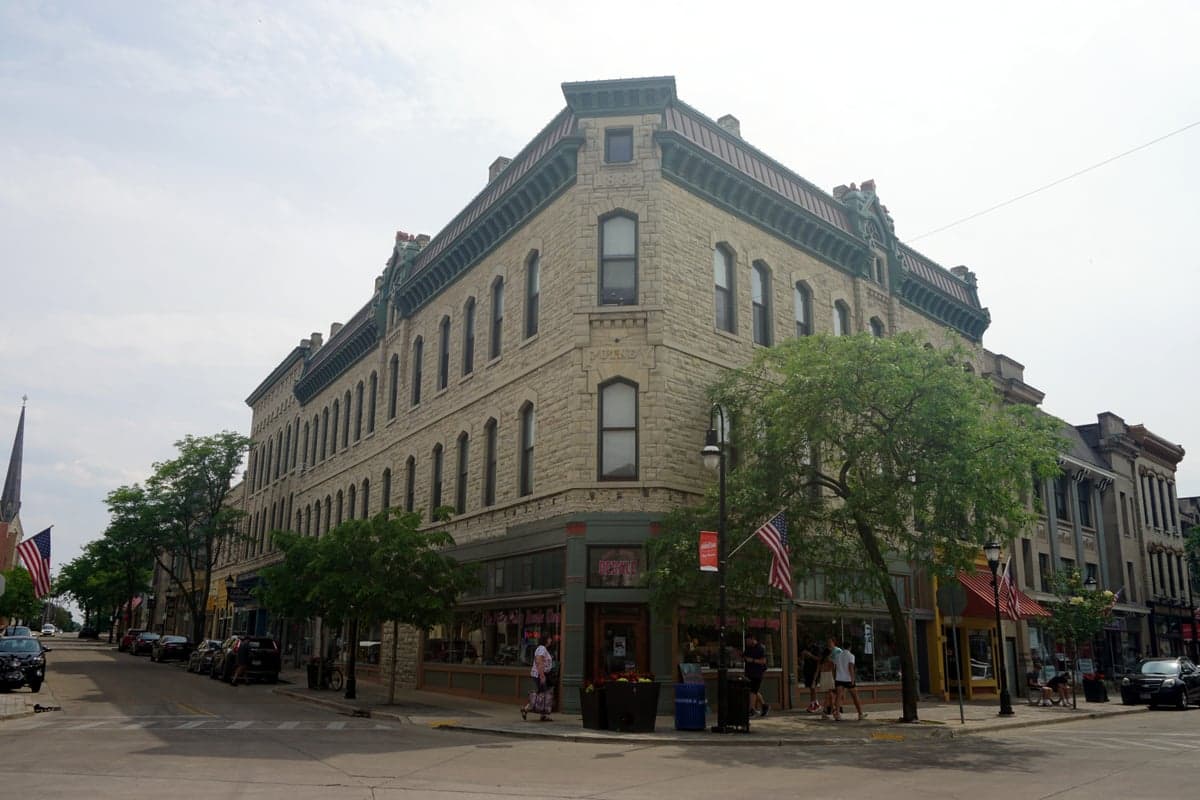
Photo: Wikipedia
Political ClimatePolitical Climate in Waukesha, WI
District shown is the primary district for this city’s centroid. Cities may span multiple districts.
Local Political AnalysisPolitical Analysis of Waukesha, WI
Waukesha has long been a stronghold for conservative values, and the political climate here reflects that deeply. The Cook PVI rating of R+11 isn't just a number—it's a testament to a community that consistently votes for limited government, personal responsibility, and traditional freedoms. Over the past decade, the city has held steady, even as nearby Milwaukee has shifted further left. You can feel it in local elections, where school board and city council races often hinge on keeping government out of our lives, not expanding it. The trajectory feels stable, but there's a quiet concern about creeping progressive influence from the state capital and larger cities.
How it compares
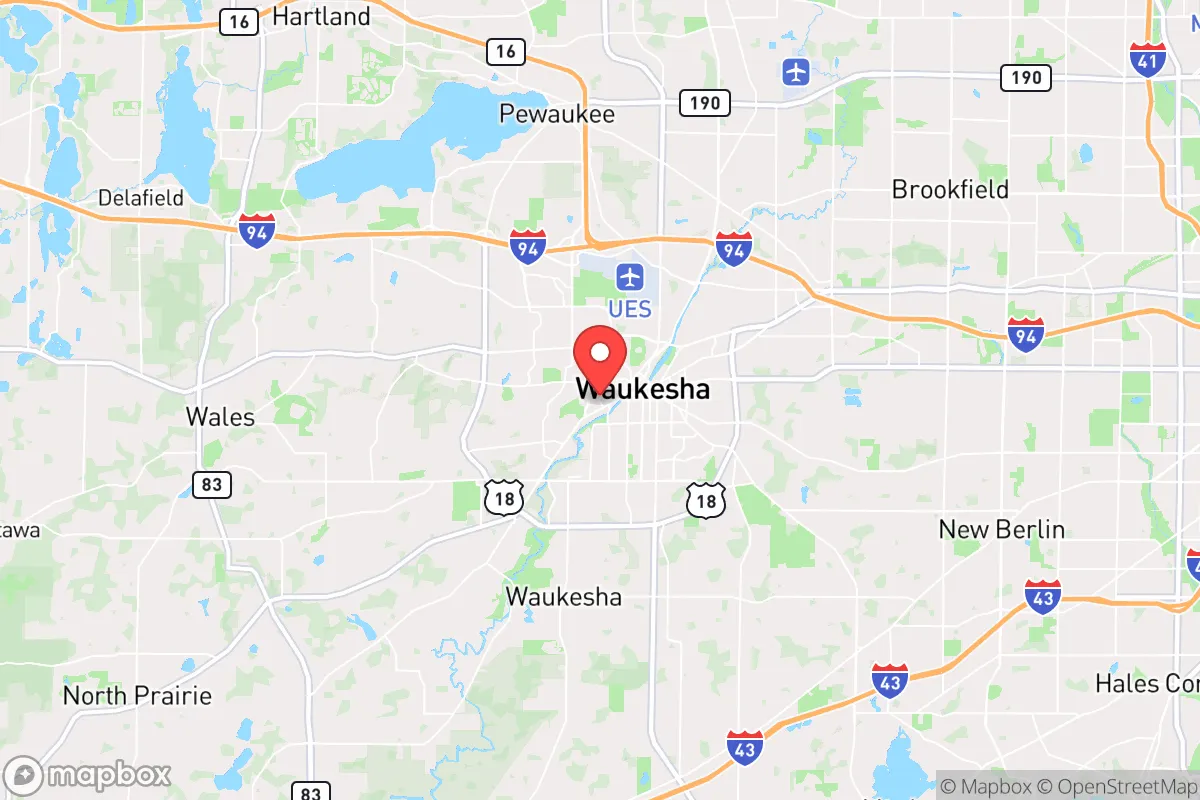
Compared to surrounding areas, Waukesha stands out as a conservative anchor. Drive east to Milwaukee, and you're in a completely different world—a Democratic stronghold where policies often prioritize collective goals over individual rights. Head west to towns like Pewaukee or Delafield, and you'll find similar conservative leanings, but Waukesha is the hub. It's more politically engaged than suburban Oconomowoc, where folks are a bit more laid-back, and definitely more red than Brookfield, which has seen some moderate drift. The contrast is stark: Waukesha residents tend to vote for candidates who promise to cut taxes, protect gun rights, and push back against state mandates, while neighboring cities like Wauwatosa have embraced progressive zoning and spending initiatives. This isn't just about party labels—it's about a fundamental belief that local control matters more than top-down directives.
What this means for residents
For those of us living here, the political climate means a daily life with fewer government intrusions. You won't see the same level of overreach you might in Madison or Milwaukee—no heavy-handed business regulations, no aggressive mask mandates that outlast their usefulness, and a school system that still emphasizes parental rights over curriculum experiments. Property taxes are higher than some rural areas, but the trade-off is a city that invests in infrastructure without borrowing from future generations. The real concern is the long-term trend: as younger families move in from blue areas, there's a risk of diluting the conservative majority. Local leaders have held the line so far, but it takes vigilance. If you value the Second Amendment, school choice, and a government that stays out of your backyard, Waukesha is still a safe bet—but you've got to stay involved in local politics to keep it that way.
Culturally, Waukesha has a distinct identity that sets it apart. The annual Waukesha County Fair and the downtown Farmers Market are more than traditions—they're statements of community self-reliance. You won't find the same push for bike lanes or public art projects that dominate in liberal suburbs; instead, the focus is on practical amenities like parks, roads, and public safety. The city's policy on short-term rentals, for instance, leans toward property rights, not heavy licensing. And while there's been some debate over a proposed diversity initiative at the county level, most residents see it as unnecessary government meddling. The bottom line: Waukesha is a place where you can still raise a family without feeling like the government is breathing down your neck. It's not perfect, but it's a hell of a lot better than the alternative across the county line.

State Political ClimatePolitical Climate in Wisconsin
State Political AnalysisPolitical Environment in the State
Wisconsin has long been a classic purple state, but over the past decade it has shifted from a traditional battleground into a state where conservatives hold a narrow but durable edge in statewide elections, with Republicans winning the governorship in 2010, 2014, and 2022, and consistently controlling the state legislature through aggressive redistricting. The state’s political identity is a tug-of-war between the reliably blue, union-heavy Milwaukee metro and Dane County (Madison), and the increasingly red, exurban, and rural areas that dominate the rest of the map. The 2024 presidential race saw Wisconsin remain a toss-up, but the GOP’s structural advantages in the legislature and its ability to hold the line on key cultural issues suggest the state is not trending leftward as fast as its neighbors, though the influx of out-of-state transplants into places like Waukesha and Ozaukee counties is actually reinforcing conservative strongholds.
Urban vs. rural divide
The political map of Wisconsin is a textbook example of the urban-rural chasm. Milwaukee County, home to the state’s largest city, delivers massive Democratic margins—often exceeding 60% of the vote—while Dane County, anchored by Madison, is the most liberal region in the state, with margins approaching 75% for Democrats. These two counties alone can swing a statewide election. But the rest of the state is a sea of red. The WOW counties—Waukesha, Ozaukee, and Washington—northwest of Milwaukee are among the most reliably Republican suburbs in the Midwest, routinely voting 60-70% GOP. Further north, the rural Northwoods counties like Vilas and Oneida have trended sharply right, while the Driftless Region in the southwest, including counties like Vernon and Crawford, has become a mix of libertarian-leaning independents and conservative farmers. The Fox Valley, anchored by Appleton and Green Bay, is a bellwether: these areas have shifted rightward as union ties weakened and cultural issues took precedence. The key takeaway: if you live outside of Milwaukee or Madison, you are likely in a conservative area, and the state’s legislative maps reflect that reality.
Policy environment
Wisconsin’s policy environment is a mixed bag for conservatives, but recent years have seen significant wins. The state has a flat income tax rate of 4.4% (down from 7.75% in 2010), and property taxes are among the lowest in the Midwest, thanks to state-imposed levy limits. The legislature passed a near-total ban on abortion after 14 weeks in 2023, though it was vetoed by Democratic Governor Tony Evers. However, the state’s 1849 abortion ban was effectively overturned by a 2023 court ruling, leaving the issue in legal limbo. On education, Wisconsin has a robust school choice program—the Milwaukee Parental Choice Program is the oldest in the nation—and the state expanded it to include rural districts in 2023. Election integrity remains a flashpoint: the state passed voter ID laws in 2011, and in 2022, the legislature banned most private grant funding for election administration (the so-called “Zuckerbucks” ban). However, the state’s election system is still heavily decentralized, with 1,800+ municipal clerks, leading to ongoing concerns about uniformity. The regulatory environment is generally business-friendly, with a right-to-work law passed in 2015 and a repeal of the state’s prevailing wage law in 2017. But the governor’s veto power has blocked conservative priorities on welfare reform and school funding.
Trajectory & freedom
On personal freedom, Wisconsin is a state of contradictions. Gun rights are strong: Wisconsin is a shall-issue state for concealed carry, and in 2011 it passed a Castle Doctrine law. In 2023, the legislature passed a bill to allow permitless carry, but it was vetoed by Governor Evers. The state has no red flag law, and local governments are preempted from enacting their own gun ordinances. On parental rights, Wisconsin passed a law in 2023 requiring schools to notify parents if a student requests a name or pronoun change, though it was vetoed. The state has no gender-affirming care ban for minors, but the legislature has tried repeatedly to pass one. Medical freedom took a hit during COVID: Governor Evers issued a statewide mask mandate and closed businesses, but the state Supreme Court struck down his stay-at-home order in 2020, and the legislature later banned future mask mandates in schools. Property rights are generally respected, with no statewide rent control and limited zoning restrictions outside of Madison and Milwaukee. The trend is concerning: the state’s Supreme Court flipped to a 4-3 liberal majority in 2023 after a heavily funded election, and that court has already struck down the state’s legislative maps as unconstitutional, ordering new ones for 2024. This could erode the GOP’s structural advantages and lead to more progressive policies in the near future.
Civil unrest & political movements
Wisconsin has a history of intense political activism, from the 2011 Act 10 protests against public union reforms that drew 100,000 people to the Capitol, to the 2020 Kenosha riots after the Jacob Blake shooting, which saw businesses burned and two people killed by a 17-year-old armed civilian. The state is a hotbed for both left-wing and right-wing organizing. The John Doe investigations of the 2010s, which targeted conservative activists and donors, were seen by many as political prosecutions and fueled distrust in the justice system. Election integrity remains a live issue: the 2020 election saw widespread use of drop boxes and private grants, leading to ongoing lawsuits and a 2022 ruling that banned drop boxes except in clerk’s offices. The state’s election commission has been deadlocked 3-3 along partisan lines for years. Immigration politics are less visible than in border states, but the influx of migrants into Milwaukee has strained resources and sparked local debates. The “Wisconsin Idea” of progressive governance is still alive in Madison, but the rest of the state is increasingly skeptical of government overreach. A new resident would notice the stark cultural divide between the liberal enclaves and the conservative heartland, with the state’s political identity constantly up for grabs.
Projection
Over the next 5-10 years, Wisconsin is likely to remain a battleground, but the demographic trends favor conservatives in the long run. The state’s population is aging and growing slowly, with most growth occurring in the conservative WOW counties and the Fox Valley, while Milwaukee and Madison are losing residents to other states. In-migration from Illinois is bringing some moderate conservatives to places like Kenosha and Racine, but also some left-leaning transplants to Madison. The 2023 Supreme Court decision to redraw legislative maps could shift the balance of power in the legislature, potentially giving Democrats a chance to pass progressive policies on abortion, guns, and taxes. However, the state’s constitutional amendment process (which requires a majority vote in two consecutive sessions and then a statewide referendum) gives conservatives a tool to lock in policies like voter ID and right-to-work. The wildcard is the 2024 election: if Republicans win the governorship in 2026, they could enact a conservative agenda that includes school choice expansion, tax cuts, and election reforms. If Democrats hold the governor’s office, expect more veto battles and gridlock. For a new resident, the bottom line is that Wisconsin offers a high degree of personal freedom in the suburbs and rural areas, but the state’s trajectory depends on who controls the levers of power in Madison.
For a conservative moving to Wisconsin, the practical takeaway is this: choose your location carefully. The WOW counties and the Fox Valley offer strong schools, low taxes, and a community that shares your values. Milwaukee and Madison are increasingly progressive and may feel hostile to traditionalist families. The state’s political future is uncertain, but its structural advantages for conservatives—including a flat tax, school choice, and strong gun rights—are not going away overnight. If you value local control and limited government, Wisconsin is still a good bet, but you’ll need to stay engaged to keep it that way.
* Values derived from national, state, county, city and local statistics and may differ in a specific area. Last updated: 2026-04-21T10:22:50.000Z
Narrative content on this page is AI-generated and may contain mistakes. Verify any details that matter before acting on them.
ReloMaps may earn a commission from affiliate links at no extra cost to you.

