Political ClimatePolitical Climate in Waterford Township, MI
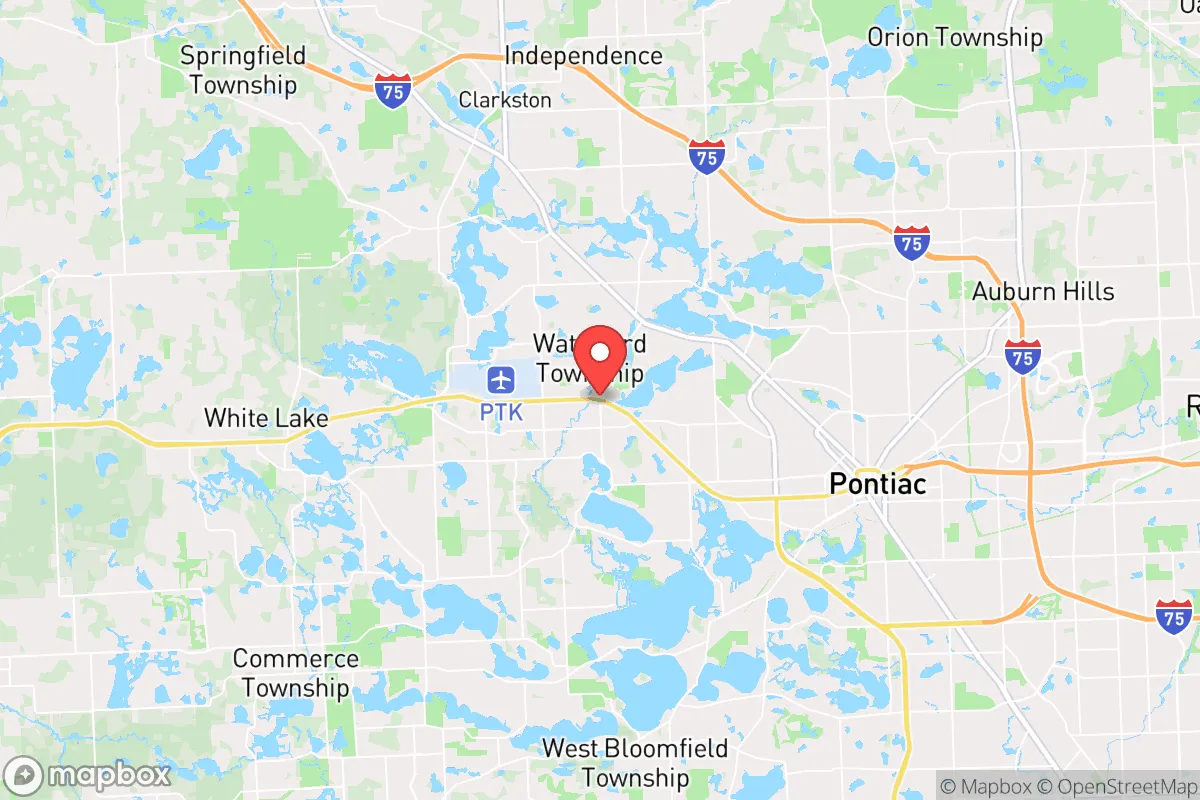
District shown is the primary district for this city’s centroid. Cities may span multiple districts.
Local Political AnalysisPolitical Analysis of Waterford Township, MI
Waterford Township, Michigan, leans reliably Democratic, with a Cook Partisan Voting Index (PVI) of D+9, meaning it votes about nine points more Democratic than the national average. That’s a solid blue anchor in a county—Oakland—that’s been trending left for decades, but it’s not a monolith. The township itself has a long history as a middle-class, largely white suburban community, and while it’s shifted blue over the past two cycles, you’ll still find plenty of conservative-leaning pockets, especially in the more rural northern fringes near Clarkston and along the M-59 corridor. The real story here is how Waterford’s Democratic lean contrasts with the rest of Michigan, which sits at a Cook PVI of EVEN—a pure swing state that flipped from Trump in 2016 to Biden in 2020 by just 2.8 points. So Waterford is bluer than its state, but not as deep blue as Detroit or Ann Arbor.
How it compares
Compared to Michigan as a whole, Waterford Township is a Democratic stronghold in a state that’s evenly split. The township’s D+9 rating puts it in the same league as neighboring Pontiac (D+25) and Royal Oak (D+18), but it’s noticeably more moderate than those cities. Drive ten minutes west to White Lake or Commerce Township, and you’ll hit areas that lean Republican—White Lake is roughly R+4, Commerce is R+2. That’s the real contrast: Waterford sits right on the edge of Oakland County’s blue belt, where the suburban sprawl of Detroit gives way to more rural, conservative townships. In the 2020 presidential election, Waterford went for Biden by about 8 points, while Michigan overall went for Biden by just 2.8. That gap has widened since 2016, when Hillary Clinton carried Waterford by only 3 points—a sign the township is moving left faster than the state. For context, neighboring Clarkston (a village within Independence Township) is more purple, often splitting tickets between local GOP candidates and national Democrats.
What this means for residents
For liberal residents, Waterford’s D+9 lean means local elections—like county commission races and school board seats—tend to favor Democrats, though not by landslides. You’ll see Democratic candidates win most township-level offices, but often by single-digit margins, so your vote genuinely matters. For conservatives, it’s not a hostile environment; you’ll find plenty of neighbors with Trump signs in their yards, especially in the subdivisions off Dixie Highway or near the Oakland County Sportsmen’s Club. The practical reality is that Waterford’s politics are moderate-to-liberal on social issues (think LGBTQ+ protections, environmental policies) but more centrist on fiscal matters—property taxes here are higher than in neighboring Republican townships, but the schools and parks are well-funded. The township’s Democratic lean also means it’s a safe bet for progressive candidates in statewide races, but don’t expect the kind of activist energy you’d see in Ann Arbor or Ferndale. It’s a quiet, family-oriented blue—not a loud one.
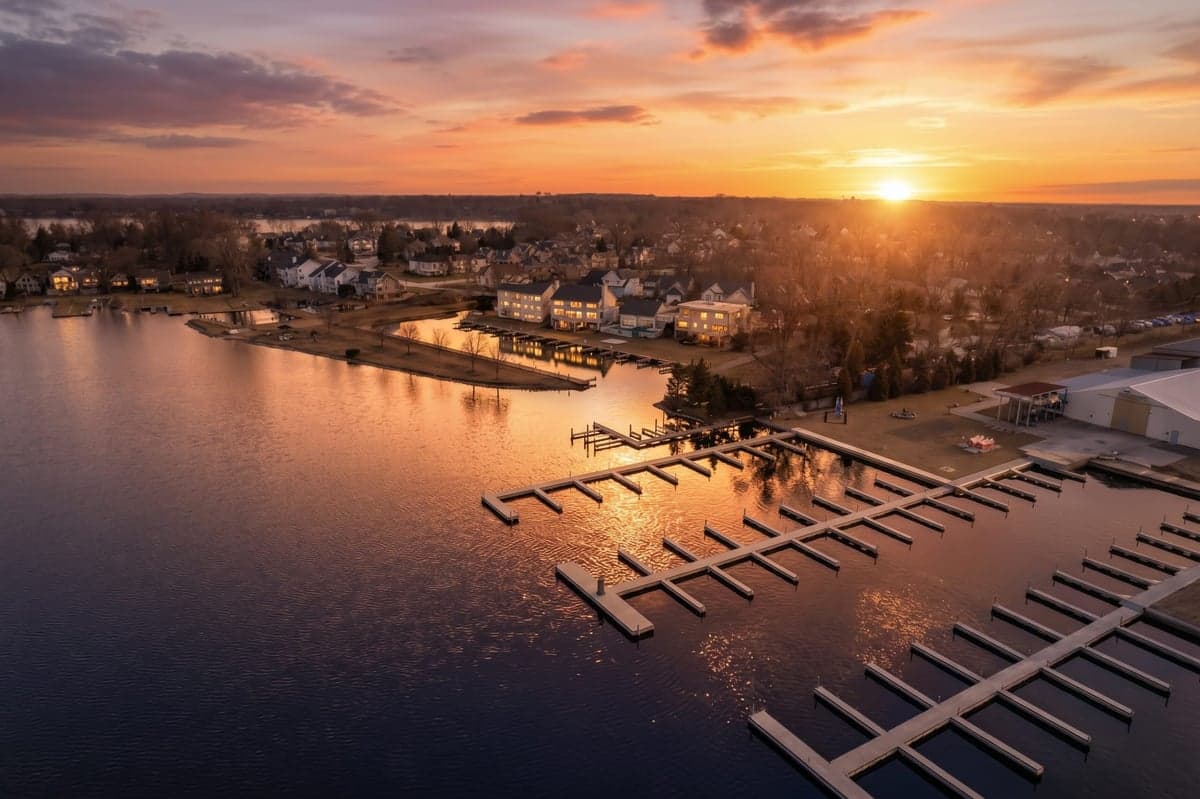
Culturally, Waterford Township stands out for its blend of suburban convenience and lake-country identity. The area’s politics are shaped by its large number of union households (auto workers, trades) and a growing population of younger families priced out of Royal Oak and Birmingham. You won’t see the same intensity of partisan street-corner protests you’d find in downtown Detroit or Lansing. Instead, the political divide shows up in local debates over development—like the ongoing fight over high-density housing near the Oakland County International Airport—and in school funding referendums. For both conservatives and liberals, the key takeaway is that Waterford is a place where your vote carries weight in a swing county within a swing state, but the day-to-day vibe is more about community events at the Waterford Oaks County Park than about partisan gridlock. If you’re moving here, expect a politically engaged but not polarized atmosphere—a blue dot in a purple state, with enough red nearby to keep things interesting.

State Political ClimatePolitical Climate in Michigan
State Political AnalysisPolitical Environment in the State
Michigan is the ultimate swing state, with a Cook PVI of EVEN that perfectly captures its knife-edge balance. Over the past 20 years, the state has lurched from reliably blue (voting for Gore, Kerry, Obama twice) to a Trump pickup in 2016, then back to Biden in 2020 by just 154,000 votes. The dominant coalition is a three-way tug-of-war: the heavily unionized, diverse Detroit metro area pulls left; the western side of the state, anchored by Grand Rapids and Holland, is a bastion of socially conservative Dutch Reformed and evangelical voters; and the northern Lower Peninsula and Upper Peninsula are ancestrally Democratic but have shifted hard right on cultural and gun issues. The result is a state where no party can rest easy, and where the legislature and governor's office have flipped repeatedly.
Urban vs. rural divide
The political map of Michigan is a study in stark contrasts. Wayne County (Detroit) alone delivers roughly 30% of the statewide Democratic vote, with Detroit proper and its inner-ring suburbs like Southfield and Dearborn providing massive margins. The collar counties of Oakland and Washtenaw (Ann Arbor) are also reliably blue, driven by educated professionals and university communities. In contrast, the western side of the state is dominated by Kent County (Grand Rapids), which has been a Republican stronghold for decades, though it's slowly trending purple as the city of Grand Rapids itself becomes more liberal. The real story is the exurban and rural shift: counties like Macomb (north of Detroit) and Ottawa (west of Grand Rapids) have moved decisively right. Macomb County, once the quintessential "Reagan Democrat" bellwether, voted for Trump by 8 points in 2020 after backing Obama twice. The Upper Peninsula, historically a Democratic stronghold due to mining and timber unions, has flipped hard: Dickinson County voted for Trump by 30 points in 2020, a 40-point swing from Obama's 2012 win there. The rural-urban divide is now the defining feature of Michigan politics.
Policy environment
Michigan's policy environment is a mixed bag that reflects its swing-state status. The state has a flat income tax rate of 4.25%, which was cut from 4.35% in 2023 via a trigger law. Property taxes are relatively high, with an average effective rate of 1.54%, but the Headlee Amendment and Proposal A cap annual increases on assessed value to the rate of inflation or 5%, whichever is lower, providing stability for homeowners. Sales tax is 6%, with no local add-ons. On the regulatory side, Michigan is a "right-to-work" state — but that law was repealed by the Democratic legislature in 2023, taking effect in 2024. This is a major flashpoint: unions are resurgent, and the state is now the first in decades to repeal right-to-work. Education policy is dominated by the 2023 "Let MI Kids Learn" law, which expanded school choice and created a universal school aid fund, though it was watered down from the original proposal. Healthcare is a mix: Michigan expanded Medicaid under the Affordable Care Act, and the state has a robust individual insurance market. Election laws are relatively accessible: no-excuse absentee voting was approved by voters in 2018, and same-day voter registration is available. However, voter ID is required at the polls, with a signed affidavit as an alternative.
Recent policy direction
The last two years have seen a dramatic shift leftward under Governor Gretchen Whitmer and a Democratic trifecta (2023-2024). Key legislation includes the repeal of right-to-work, the repeal of the 1931 abortion ban (replaced with the 2022 Proposal 3 constitutional amendment enshrining abortion rights), and the expansion of the Elliott-Larsen Civil Rights Act to include sexual orientation and gender identity. On gun policy, the state passed universal background checks and a red flag law in 2023, a major shift for a state with a strong hunting culture. For conservatives, the picture is more mixed: the state still has a shall-issue concealed carry system (no discretion by local sheriffs), and the Castle Doctrine is strong — no duty to retreat in your home or vehicle. However, the new red flag law allows for temporary seizure of firearms based on a court order, which has drawn sharp criticism from gun rights groups. On education, the 2023 "Let MI Kids Learn" law created a $500 per-pupil school aid fund for private and homeschool expenses, a win for school choice advocates. On property rights, the state has no statewide zoning preemption, meaning local governments can impose strict land-use regulations, which has frustrated builders. On privacy, Michigan has a biometric information privacy act (BIPA) that requires consent for fingerprint and facial recognition data collection, but no comprehensive data privacy law. The overall direction is clearly leftward on social and labor issues, but with significant carve-outs for gun rights and school choice that moderate the impact.
Civil unrest & political movements
Michigan has been a flashpoint for political activism on both sides. The 2020 Whitmer kidnapping plot by a far-right militia group put the state in the national spotlight, and the Operation Gridlock protests at the state capitol in April 2020 — where armed protesters entered the building to oppose COVID-19 restrictions — became a symbol of the national divide. Since then, the state has seen a surge in local activism. On the left, the Michigan Democratic Party has been energized by the repeal of right-to-work and the abortion rights amendment, with heavy organizing in the suburbs. On the right, the Michigan Republican Party has been fractured between establishment and Trump-aligned factions, with the 2023 election of a far-right chair, Kristina Karamo, who was later removed in 2024. Immigration politics are relatively quiet compared to border states, but the city of Detroit is a designated "sanctuary city" (though the term is not official), and the state has a law limiting cooperation with ICE. Election integrity remains a hot-button issue: the 2020 election in Michigan saw numerous lawsuits and audits, with the GOP-led Senate investigation finding no widespread fraud but recommending changes to ballot processing. The 2024 election saw a record number of poll watchers and legal challenges, but no major disruptions. A new resident would notice the political tension most acutely in the suburbs of Macomb County and Kent County, where yard signs and bumper stickers are a constant feature of daily life.
Projection
Over the next 5-10 years, Michigan is likely to remain a competitive swing state, but with a slight leftward tilt driven by demographic shifts. The Detroit suburbs are becoming more diverse and educated, trends that favor Democrats. The western side of the state, particularly Grand Rapids, is seeing an influx of younger, more liberal professionals, which could turn Kent County purple by 2030. However, the rural and exurban areas are becoming more Republican, and the Upper Peninsula's shift is likely permanent. The wild card is in-migration: Michigan is seeing a net inflow from other states for the first time in decades, particularly from Illinois and California, and these new residents tend to be more conservative (seeking lower taxes and less regulation) or more liberal (seeking affordable housing and progressive policies). The state's 2024 redistricting created more competitive congressional districts, which will keep the balance of power in play. A relocator moving in now should expect a state where the governor's office and legislature will continue to flip, where policy will swing with each election cycle, and where the culture war battles over education, guns, and labor will remain front-page news. The practical takeaway: Michigan offers a moderate cost of living and a high quality of life, but you will need to be comfortable with political uncertainty and active civic engagement.
For a new resident, the bottom line is that Michigan is a state where your vote truly matters. If you are a conservative, you will find strong gun rights, a growing school choice movement, and a vibrant network of conservative churches and community groups, especially in the western part of the state. If you are a liberal, you will find a strong union presence, a protected right to abortion, and a growing progressive infrastructure in the cities. The key is to choose your location carefully: Grand Rapids and its suburbs offer a conservative-friendly environment with a strong economy, while Ann Arbor and Ferndale are progressive havens. The state's political climate is not for the faint of heart, but for those who enjoy being at the center of the national conversation, it is an exciting place to live.
* Values derived from national, state, county, city and local statistics and may differ in a specific area. Last updated: 2026-08-17T21:35:02.000Z
Narrative content on this page is AI-generated and may contain mistakes. Verify any details that matter before acting on them.
ReloMaps may earn a commission from affiliate links at no extra cost to you.

