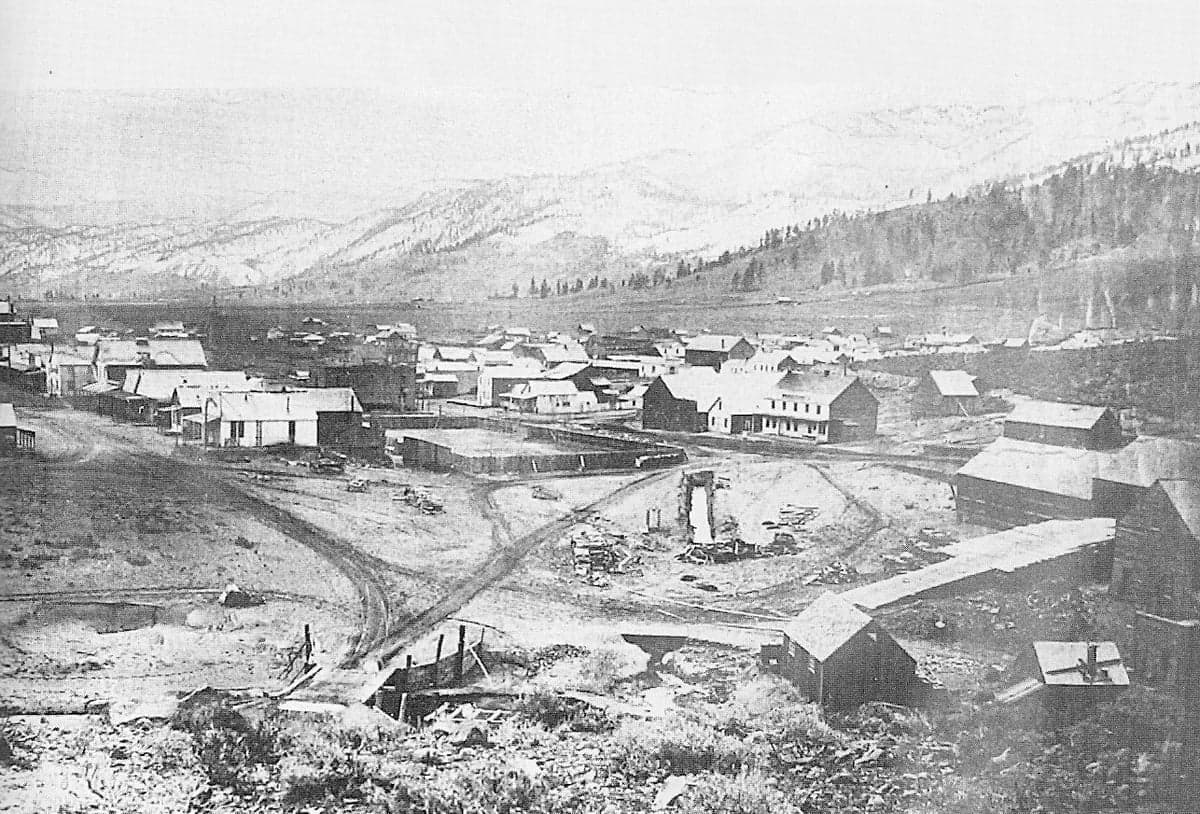
Photo: Wikipedia
Political ClimatePolitical Climate in Washoe City, NV
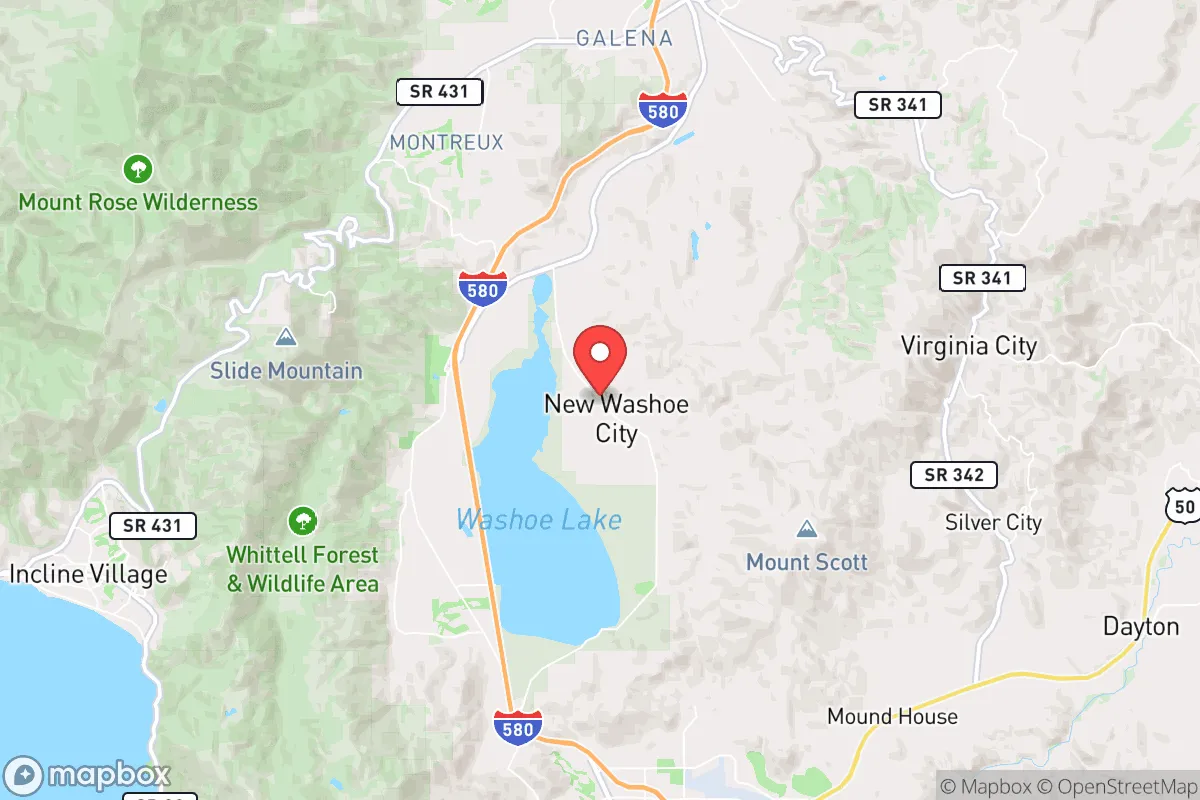
District shown is the primary district for this city’s centroid. Cities may span multiple districts.
Local Political AnalysisPolitical Analysis of Washoe City, NV
Washoe City leans solidly Republican, with a Cook PVI of R+7 that makes it significantly more conservative than Nevada as a whole, which sits at R+1. This isn’t a new development—the area has been a GOP stronghold for decades, but the margin has tightened slightly as Reno’s suburban sprawl pushes southward. Locals will tell you that Washoe City used to be a place where you could count on a 20-point Republican win in most elections, but the influx of tech workers and remote professionals from California has nudged things a few points leftward. Still, the core remains deeply red, and that’s unlikely to change dramatically in the near term.
How it compares
Compared to Nevada’s statewide R+1 lean, Washoe City is a full six points more conservative. That gap matters because Nevada is a genuine swing state—it voted for Biden by 2.4 points in 2020 and for Trump by 2.4 points in 2024—while Washoe City consistently delivers 55-60% of its vote to Republican candidates. The contrast is even sharper when you look at nearby cities: Reno, just 15 miles north, has a Cook PVI of D+3, and its downtown and university areas are reliably blue. Sparks leans slightly left as well, while Carson City, about 20 miles south, is more balanced with a PVI of R+2. So Washoe City sits in a kind of conservative bubble between two more moderate-to-liberal population centers. The rural areas to the east, like the Pah Rah Range foothills, are even redder, often pushing R+12 or higher in local precincts.
What this means for residents
For conservative residents, Washoe City feels like a natural fit—local government tends to be pro-business, taxes are low, and Second Amendment rights are broadly supported. You’ll see Trump signs on lawns year-round, and the county commission usually votes along party lines on development and land-use issues. For liberal residents, the political climate can feel isolating, but it’s not hostile. Most people are neighborly regardless of party, and there’s a live-and-let-live attitude that comes from the area’s ranching and outdoor-recreation roots. The practical impact is that progressive policy proposals—like stricter gun laws or higher density zoning—rarely gain traction here. School board meetings and planning commission hearings tend to draw a conservative-leaning crowd, so if you’re on the left, you’ll need to be vocal to be heard. That said, the growing diversity of the Reno-Sparks metro area is slowly filtering down, and younger residents are more politically mixed than their parents were.
Culturally, Washoe City stands apart from Nevada’s more libertarian “what happens in Vegas stays in Vegas” vibe. This is a place where church attendance is high, hunting and off-roading are common weekend activities, and the local diner conversations often drift to water rights and property taxes. The policy distinction that matters most day-to-day is land use: Washoe County has resisted the kind of dense, transit-oriented development seen in Reno, favoring larger lots and rural zoning. That keeps the area feeling spacious and quiet, but it also means fewer rental options and higher housing costs for newcomers. Looking ahead, the trajectory is toward gradual moderation as the population grows, but Washoe City’s political identity will likely remain distinctly more conservative than the state average for at least another decade.

State Political ClimatePolitical Climate in Nevada
State Political AnalysisPolitical Environment in the State
Nevada is the ultimate swing state, and it’s not even close. With a Cook PVI of R+1, the Silver State has voted for the winner in every presidential election since 1992, making it a perfect bellwether. Over the last 10-20 years, the state has shifted from a reliably red-leaning Western state to a true purple battleground, driven by massive growth in the Las Vegas metro area and an influx of retirees and service workers. The dominant coalitions are a three-way tug-of-war: the powerful Culinary Union (a Democratic powerhouse), the libertarian-leaning rural and exurban voters, and a growing population of moderate independents who decide every close race.
Urban vs. rural divide
The political map of Nevada is a study in extremes. The Las Vegas metro area, anchored by Clark County (home to Las Vegas, Henderson, and North Las Vegas), contains about 75% of the state’s population and votes reliably Democratic. Reno and Sparks in Washoe County are the swing counties—Reno itself leans blue, but the surrounding suburbs and rural areas lean red. The vast rural expanse—places like Elko, Ely, and Winnemucca—votes overwhelmingly Republican, often by 50-point margins. The divide is stark: a voter in Boulder City (a conservative enclave near Vegas) lives in a completely different political universe than someone in downtown Reno. The key battleground is the fast-growing exurbs of Las Vegas, like Pahrump and Mesquite, where libertarian-leaning retirees and second-home owners are pushing the state rightward in non-presidential years.
Policy environment
Nevada’s policy environment is a mixed bag that reflects its swing-state status. On taxes, it’s a standout: no state income tax, no corporate income tax, and no franchise tax. The state relies heavily on sales tax (8.25% average) and gaming/lodging taxes. This low-tax posture is a major draw for conservatives and libertarians. On regulation, Nevada is business-friendly but heavily regulated in gaming and hospitality. Education policy is a perennial battleground: the state ranks near the bottom nationally in per-pupil spending and graduation rates, and the powerful teachers’ union (NSEA) fights school choice measures. Healthcare is mixed—Nevada expanded Medicaid under the ACA, but rural areas face severe provider shortages. Election laws are among the most accessible in the West: automatic voter registration, same-day registration, no-excuse mail voting (made permanent after 2020), and a top-five primary system (passed in 2021) that allows nonpartisan voters to participate in all primaries. This system, championed by moderate Republicans and Democrats, has weakened party insiders but also drawn criticism from both far-left and far-right activists who see it as diluting their influence.
Recent policy direction
The last five years have seen Nevada lurch left on social issues while holding the line on fiscal conservatism. On gun rights, the state passed a “red flag” law (SB 143) in 2023, allowing temporary seizure of firearms from individuals deemed a threat, which drew fierce opposition from rural counties. On abortion, a 2024 ballot measure enshrined the right to abortion in the state constitution, passing with 58% support. On parental rights, the state has moved left: a 2023 law (AB 195) prohibits schools from requiring parental notification if a student changes their gender identity or pronouns, a flashpoint for conservative families. On property rights, Nevada remains landlord-friendly with no rent control (except in mobile home parks), but a 2023 law (SB 426) requires 60-day notice for rent increases over 5%. On voting and ballot access, the state has expanded access aggressively: same-day registration and universal mail ballots are now permanent, and a 2021 law (AB 121) requires counties to have at least one ballot drop box per 10,000 registered voters. On privacy and surveillance, Nevada passed a strong consumer privacy law (SB 220) in 2019, giving residents the right to opt out of data sales. The overall direction is a classic swing-state compromise: low taxes and business-friendly policies paired with expanding social services and voting access.
Civil unrest & political movements
Nevada has seen its share of political flashpoints. The 2020 election was a major battleground: Clark County was the epicenter of baseless fraud claims, and the state was one of the few where Trump’s legal team filed multiple lawsuits. The “Stop the Steal” movement had a strong presence in rural counties, with armed protests outside the Clark County election office. On the left, the Culinary Union (representing 60,000 hospitality workers) is the most powerful political force in the state, organizing massive get-out-the-vote operations and pushing for paid sick leave and housing affordability. Immigration politics are hot: Nevada has a large undocumented population (estimated 200,000), and while the state has no official “sanctuary” law, local police in Clark County do not enforce federal immigration detainers. The “Rural Nevada” movement has seen talk of secession from Clark County, with some legislators proposing a split into two states—a non-starter but a reflection of deep cultural divides. The 2023 legislative session saw a dramatic walkout by Republican assemblymembers over the parental rights bill, a sign of the growing polarization.
Projection
Over the next 5-10 years, Nevada will likely remain a true swing state, but with a slight rightward drift in non-presidential years. The demographic trends are contradictory: the Las Vegas metro is growing younger and more diverse (Latino population now 30% statewide, trending Democratic), but the exurbs and rural areas are growing faster in percentage terms, driven by Californians fleeing high taxes. The top-five primary system will continue to weaken party control, producing more moderate general election candidates. The biggest wildcard is housing: if the state fails to build enough homes, the cost of living could push out the working-class voters who currently tip the state blue. Expect continued fights over school choice (a voucher bill nearly passed in 2023), water rights (the Colorado River crisis will force painful cuts), and election integrity (rural counties are pushing for hand-counting of ballots). A new resident moving in now should expect a state that is politically competitive, culturally divided, and constantly negotiating its identity between libertarian individualism and union-driven collectivism.
For a new resident, the bottom line is this: Nevada offers a unique blend of low taxes and high personal freedom, but that comes with a volatile political environment where every election is a toss-up. Conservatives will appreciate the lack of income tax and the business-friendly climate, but they’ll need to accept that the state’s social policies are moving left. Liberals will find a strong union presence and expanding voting access, but they’ll have to live with a state that refuses to raise taxes on the wealthy. The key is to pick your community wisely: Henderson and Boulder City lean conservative, while Reno and Las Vegas proper lean liberal. The state’s political future is as uncertain as its water supply—but that’s exactly what makes it the most interesting place to watch in American politics.
* Values derived from national, state, county, city and local statistics and may differ in a specific area. Last updated: 2026-09-28T10:01:21.000Z
Narrative content on this page is AI-generated and may contain mistakes. Verify any details that matter before acting on them.
ReloMaps may earn a commission from affiliate links at no extra cost to you.

