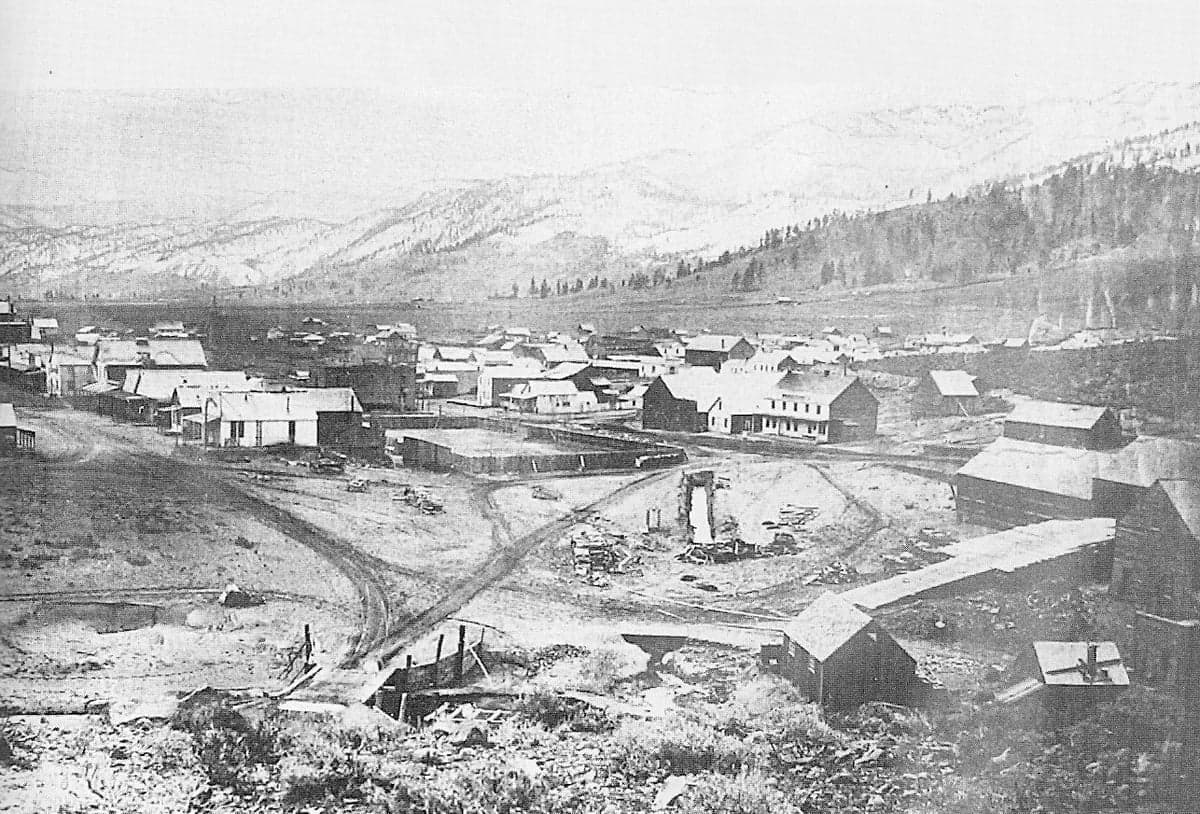
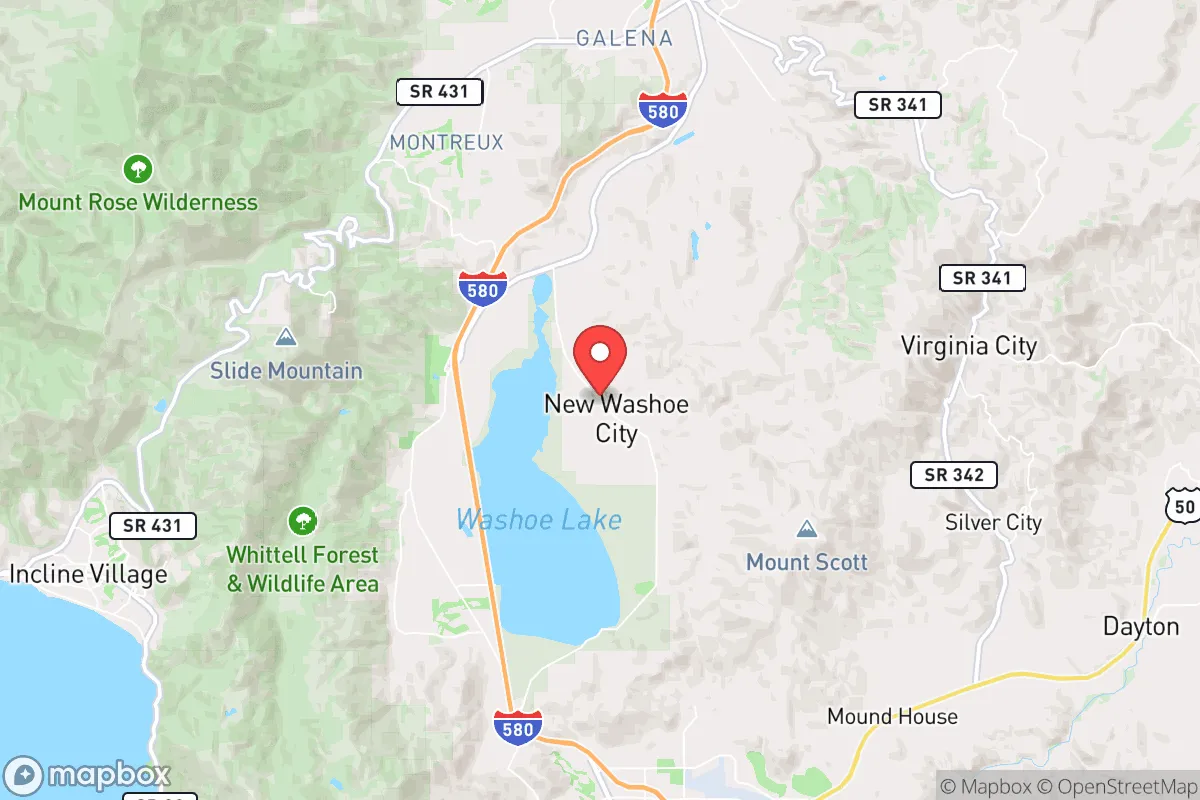
Photo: Wikipedia
Demographics of Washoe City, NV
Historical data isn't available for Washoe City, NV. Trends shown are for Washoe County, Nevada.
Affluence Level in Washoe City, NV
An upper-middle-class area. Household wealth, education levels, and homeownership run ahead of national benchmarks.
People of Washoe City, NV
Washoe City, Nevada, is a small, unincorporated community of 4,077 residents that remains overwhelmingly white and native-born, with a distinctly rural, conservative character. The population is notably less diverse than the broader Reno-Sparks metro area, with 84.7% of residents identifying as white alone, and a foreign-born population of exactly 0.0%. This is a place where the historical settlement patterns of the 19th and early 20th centuries have left a lasting demographic imprint, and where future growth is likely to be driven by domestic in-migration seeking space and a slower pace of life.
How the city was settled and grew
Washoe City’s human history begins not with a grand land grant or a railroad, but with the discovery of the Comstock Lode in 1859. The community was founded as a milling and supply center for the Virginia City mines, drawing its first wave of settlers—predominantly white, American-born prospectors, merchants, and laborers from California and the eastern states. The original town site, located along the Carson River, was a bustling hub of quartz mills and freight wagons. The historic Old Washoe City district, centered around the intersection of what is now State Route 28 and Franktown Road, contains the few remaining structures from this era, including the 1860s Washoe City Cemetery. A second, smaller wave of homesteaders arrived in the late 19th century, drawn by the promise of irrigated farming along the river. These families, largely of Northern European descent (English, German, and Irish), established the River Bend area, a cluster of small farms and ranches that still defines the community’s southern edge. The town’s population peaked around 5,000 during the Comstock boom, then declined sharply after the mines played out, settling into a quiet agricultural existence for the next 70 years.
Modern era (post-1965)
The post-1965 era brought no significant foreign-born influx to Washoe City. Instead, the community’s modern growth has been almost entirely domestic, driven by two trends: the expansion of Reno’s suburban footprint and a desire for rural living. The 1970s and 1980s saw the first wave of this in-migration, as families and retirees from California and the Reno area built homes on larger lots. The Pleasant Valley subdivision, developed in the 1980s along the eastern edge of town, absorbed many of these newcomers—predominantly white, middle-class households seeking lower property taxes and a quieter environment than Reno. A second, more recent wave began in the 2000s, fueled by Washoe County’s overall population growth and the appeal of the area’s open space. The Franktown Meadows area, a newer equestrian-oriented subdivision, attracted a mix of professionals and hobby farmers, again overwhelmingly white. The data confirms this pattern: the 0.0% foreign-born figure and the 84.7% white share are nearly identical to the community’s composition in 2000, indicating that the population has remained demographically static even as it has grown modestly. The 2.9% Hispanic population is concentrated in the older, more affordable housing stock near the Old Washoe City core, while the 0.4% East/Southeast Asian population is scattered, with no single neighborhood concentration.
The future
The demographic trajectory for Washoe City points toward continued slow growth, with the population likely remaining overwhelmingly white and native-born. The community’s zoning—primarily large-lot residential and agricultural—limits dense development, so new residents will continue to be domestic in-migrants, particularly from California and other parts of Nevada. The Pleasant Valley and Franktown Meadows areas are expected to absorb most of this growth, as they offer the larger lots and newer homes that appeal to relocating families. There is no evidence of significant diversification on the horizon: the foreign-born share is projected to remain near zero, and the Hispanic and Asian shares are likely to increase only marginally, if at all, given the lack of rental housing and employment centers that typically attract immigrant populations. The community’s cultural identity—rooted in rural self-sufficiency, conservative politics, and a strong sense of local history—will likely persist, reinforced by the continued in-migration of like-minded households.
For someone moving in now, Washoe City offers a stable, predictable demographic environment. It is not a place of rapid change or increasing diversity, but rather a community where the population is slowly replenishing itself with new residents who share the same basic characteristics as those who came before. The bottom line: Washoe City is becoming a slightly larger, slightly more affluent version of its 20th-century self—a rural enclave for those who prioritize space, quiet, and a homogeneous social fabric over urban amenities or demographic variety.

* Values derived from national, state, county, city and local statistics and may differ in a specific area. Last updated: 2026-09-28T10:01:21.000Z
Narrative content on this page is AI-generated and may contain mistakes. Verify any details that matter before acting on them.
ReloMaps may earn a commission from affiliate links at no extra cost to you.

