Photo: Wikipedia
Demographics of Franklin County
Affluence Level in Franklin County
A middle-class area roughly in line with national averages across income, home values, education, and employment.
People of Franklin County
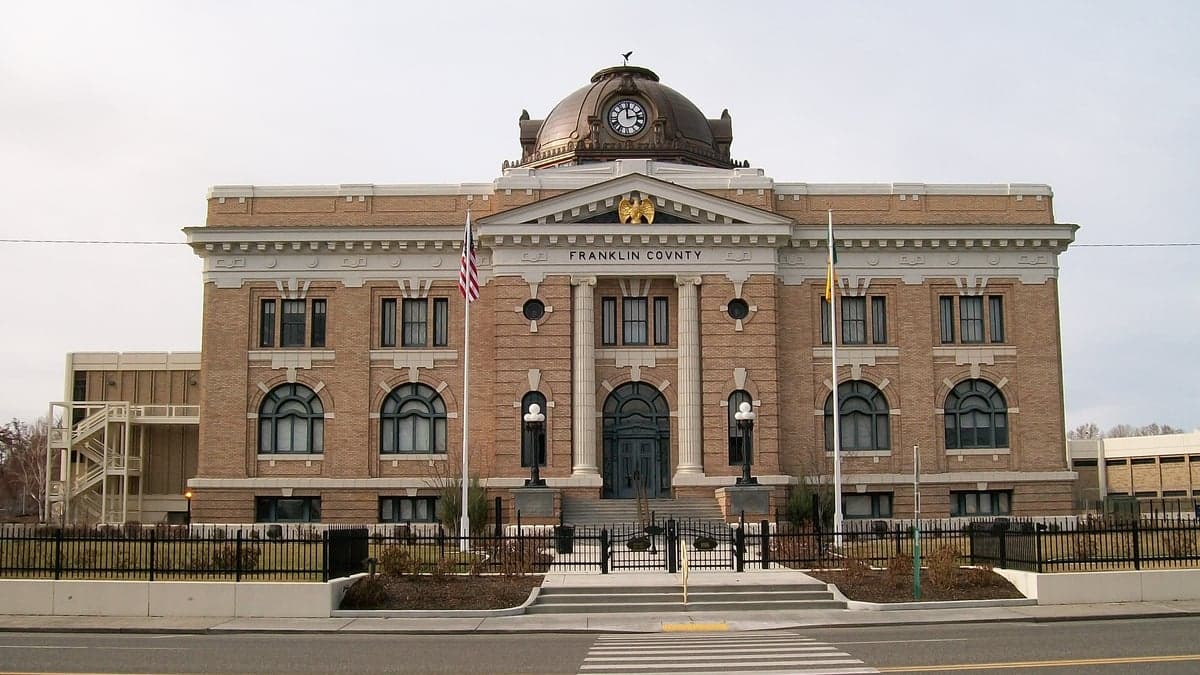
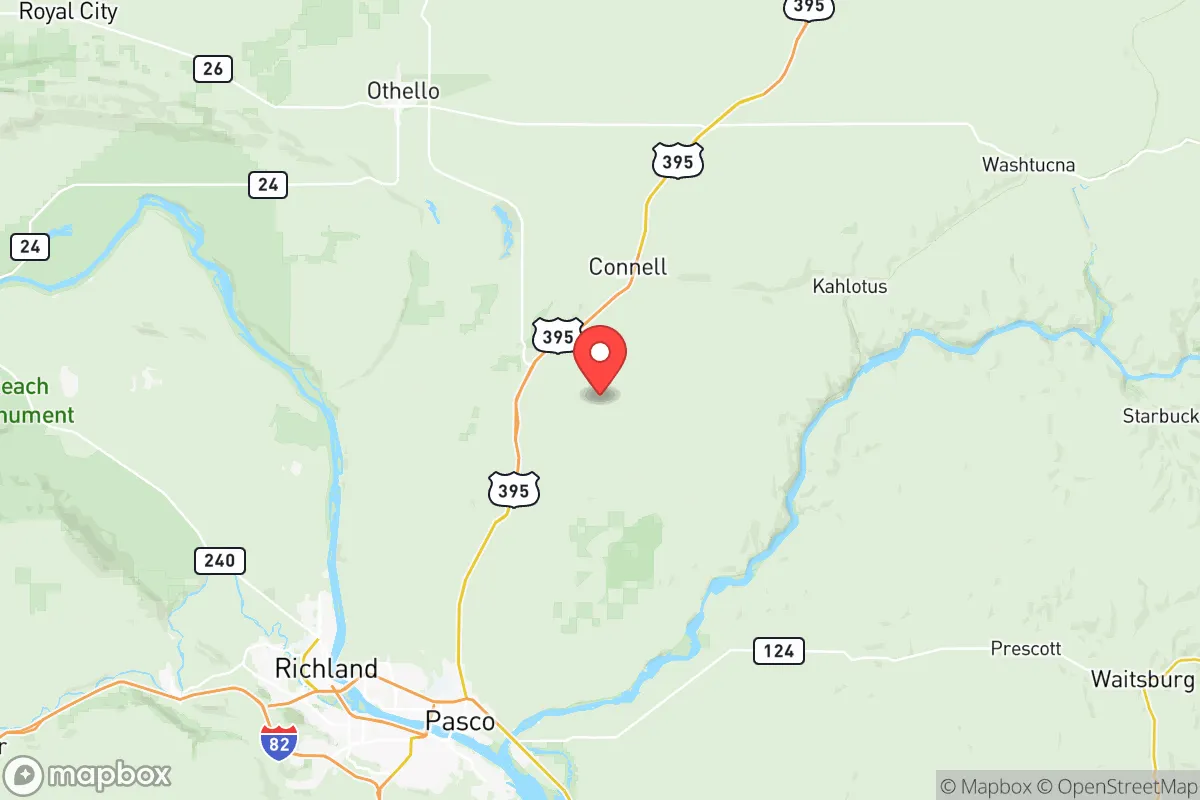
Franklin County, Washington, is a predominantly Hispanic-majority, agricultural powerhouse where nearly 55% of residents identify as Hispanic or Latino, and the county’s character is defined by its deep roots in irrigated farming, food processing, and a rapidly diversifying suburban fringe. With a population of 97,676, the county is one of the most ethnically distinct in the Pacific Northwest, blending a long-established Mexican-American community with a smaller but growing population of East/Southeast Asian and Black residents. The county seat, Pasco, anchors the Tri-Cities region alongside Kennewick and Richland, while smaller towns like Connell and Kahlotus retain a rural, working-class feel. This is a place where the legacy of railroad labor, wartime industry, and modern immigration converge into a community that is both family-oriented and economically resilient.
Settlement & growth (pre-1960)
Long before European settlement, the area now known as Franklin County was the homeland of the Wanapum, Palus, and Yakama peoples, who lived along the Columbia and Snake Rivers for millennia, relying on salmon runs and seasonal trade. The first non-Native presence came with the Lewis and Clark Expedition in 1805, but permanent American settlement did not begin until after the 1855 Yakama War and the subsequent forced removal of Native tribes to reservations. The U.S. Army established Fort Taylor (near present-day Pasco) in 1859, and the first white settlers—mostly Anglo-American farmers and ranchers from the Midwest—arrived in the 1860s and 1870s, drawn by the promise of cheap land under the Homestead Act.
The real population boom began with the arrival of the Northern Pacific Railroad in the 1880s. Pasco was founded in 1884 as a railroad division point, and the town quickly became a hub for rail workers, many of whom were Irish and German immigrants. The railroad also brought Chinese laborers, who built the tracks and later settled in small numbers in Pasco, though most left after the Chinese Exclusion Act of 1882. By 1900, Franklin County’s population was still small—around 5,000—but the completion of the Columbia Basin Irrigation Project in the 1940s and 1950s transformed the region. The project, part of the New Deal-era Grand Coulee Dam system, turned arid sagebrush into some of the most productive farmland in the nation, specializing in potatoes, corn, apples, and wine grapes.
This agricultural revolution triggered the first major wave of Hispanic migration. Beginning in the 1940s, the Bracero Program brought Mexican laborers to work the fields, and many stayed after the program ended in 1964, settling in Pasco’s east side and in the farming communities of Connell and Mesa. Dust Bowl migrants from Oklahoma, Texas, and Arkansas also arrived during the 1930s and 1940s, adding a white Southern Protestant influence that persists today in the county’s conservative leanings. By 1960, Franklin County’s population had grown to roughly 23,000, with a majority-white population but a significant and growing Hispanic minority concentrated in agricultural labor.
Modern era (post-1965)
The 1965 Hart-Cellar Act, which abolished national-origin quotas, had a profound effect on Franklin County, though the shift was less about new immigrant groups from Asia or Africa and more about the acceleration of Mexican immigration. Throughout the 1970s and 1980s, family reunification and continued demand for farmworkers drove a steady influx of Mexican immigrants, who settled primarily in Pasco’s east side and in the unincorporated areas around Basin City and Eltopia. By 1990, the Hispanic share of the population had risen to over 30%, and by 2000 it had surpassed 40%.
The 1990s and 2000s also saw the arrival of smaller but notable immigrant communities. East/Southeast Asian immigrants—primarily Vietnamese and Filipino—came to work in the region’s food processing plants and healthcare sector, settling in Pasco and, to a lesser extent, Connell. The Indian subcontinent population remains tiny (0.1%), with most employed in professional roles at the nearby Hanford nuclear site or in Pasco’s growing medical sector. The Black population, at 1.8%, is small but has grown slightly since 2000, driven by military and professional families moving to the Tri-Cities area. Domestic migration from the Rust Belt and California has also reshaped the county: since 2010, Franklin County has seen a net inflow of white and Hispanic families from California, Oregon, and Idaho, attracted by lower housing costs and a slower pace of life. Suburbanization has spread westward from Pasco toward the Tri-Cities core, with new subdivisions in West Pasco and along the Highway 395 corridor.
Today, Franklin County is 54.8% Hispanic, 37.7% white, 1.8% Black, 1.5% East/Southeast Asian, and 0.1% Indian. The foreign-born share is 14.5%, well above the national average, and the county’s median age is 31—younger than the state average—reflecting high birth rates among Hispanic families. The college-educated share is just 20.4%, the lowest in the Tri-Cities region, as many residents work in agriculture, construction, and food processing rather than white-collar professions. Politically, the county leans Republican, with a strong rural and working-class base, though Pasco’s growing Hispanic electorate has shifted some precincts toward Democrats in recent elections.
The future
Franklin County is becoming more diverse, but the trajectory is one of Hispanic majority consolidation rather than broad multi-ethnic diversification. The Hispanic share is projected to rise to 60-65% by 2040, driven by natural increase (high birth rates) and continued immigration from Mexico and Central America. The white population is declining in absolute numbers as older residents age out and younger whites move to larger cities. The East/Southeast Asian and Black populations are expected to grow slowly, primarily through professional migration to the Tri-Cities area, but they will remain small shares of the total. New communities are concentrating in Pasco’s expanding suburbs, particularly in the West Pasco and Road 68 corridor, while the rural towns of Connell and Kahlotus are likely to see population stagnation or decline as agricultural consolidation reduces the need for farm labor.
Culturally, the county is evolving from a predominantly Mexican-American agricultural community into a more pan-Latino and bilingual region, with increasing numbers of Salvadoran, Guatemalan, and Honduran families. The public schools in Pasco are already majority-Hispanic and Spanish-English bilingual programs are common. The county’s conservative identity is likely to persist, but with a distinctly Hispanic flavor—socially conservative on issues like abortion and family structure, but more supportive of immigration reform and labor rights. For a newcomer, Franklin County offers a tight-knit, family-oriented environment with a strong work ethic, affordable housing, and a growing suburban infrastructure, but limited nightlife, cultural amenities, and higher education options.
Franklin County is becoming a Hispanic-majority, working-class hub of the inland Northwest, where agriculture remains the economic backbone but suburban growth is reshaping the landscape. For someone moving in now, the county offers a low cost of living, a young and growing population, and a community that values hard work and family—but also a place where educational attainment is low, public services are stretched, and the cultural scene is modest. It is a region in transition, but one that is likely to remain a distinctively Hispanic, conservative, and agricultural corner of Washington for decades to come.

* Values derived from national, state, county, city and local statistics and may differ in a specific area. Last updated: 2026-07-03T06:29:24.000Z
Narrative content on this page is AI-generated and may contain mistakes. Verify any details that matter before acting on them.
ReloMaps may earn a commission from affiliate links at no extra cost to you.

