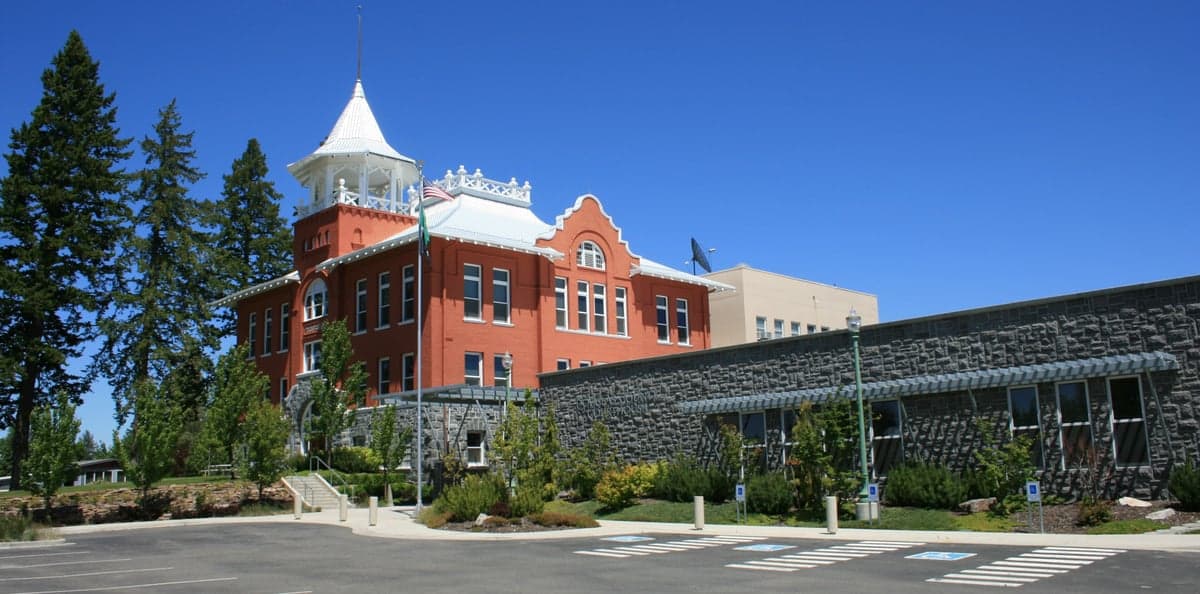
Photo: Wikipedia
Political ClimatePolitical Climate in Douglas County
Showing district-level results — no local-only data available.
Local Political AnalysisPolitical Analysis of Douglas County
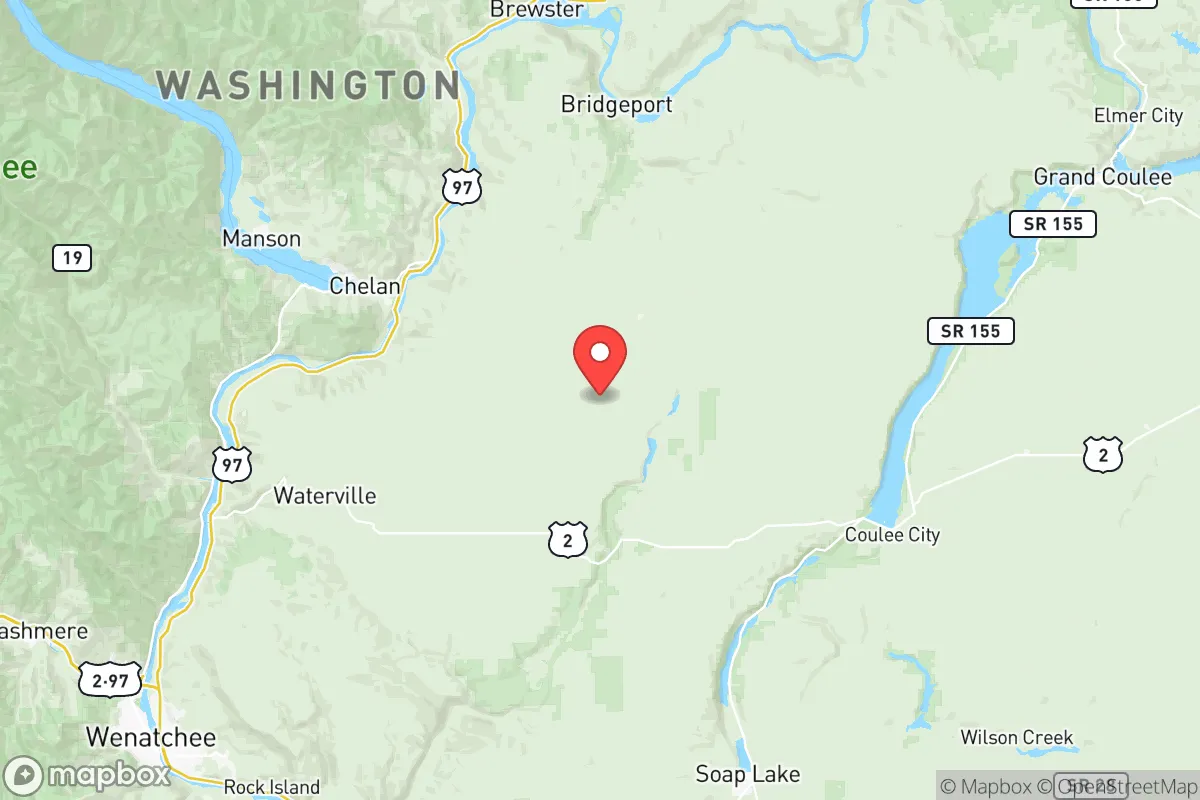
Douglas County, Washington, is a reliably conservative area with a Cook Partisan Voting Index of R+10, meaning it votes about ten points more Republican than the national average. The county has been a Republican stronghold for decades, with East Wenatchee and the rural areas around Waterville and Mansfield consistently delivering large margins for GOP candidates, while the city of Wenatchee (which is in Chelan County) and the more suburban parts of Douglas County near the Columbia River show slightly more competitive, though still conservative, tendencies. The political trajectory here is stable but not static—while the county's overall lean hasn't shifted dramatically, the growing population in the East Wenatchee area has introduced a small but noticeable contingent of moderate and even liberal voters, particularly among newcomers from the Seattle area.
How it compares
Compared to Washington state as a whole, Douglas County is a political outlier. The state leans Democratic overall, with a Cook PVI of D+8, driven by King County and the Puget Sound region. Douglas County, by contrast, is one of the most conservative counties in the state, alongside neighboring Grant and Okanogan counties. In the 2024 presidential election, Douglas County voted for Donald Trump by a margin of roughly 60% to 37%, while Washington state went for Kamala Harris by about 58% to 39%. The contrast is stark: in the rural towns of Bridgeport and Mansfield, Republican margins often exceed 70%, while in East Wenatchee's newer subdivisions near the river, the margin is closer to 55-45. The swing precincts are mostly in the unincorporated areas around Rock Island and Orondo, where independent and split-ticket voting is more common, especially in local races.
What this means for residents
For conservative residents, Douglas County offers a political environment where their views are the norm. Local government, school boards, and law enforcement tend to reflect conservative priorities, such as limited regulation, support for agriculture and resource extraction, and a focus on public safety. The county commission and most city councils in East Wenatchee and Waterville are Republican-leaning, and issues like property rights and Second Amendment protections are generally well-supported. For liberal residents, the political climate can feel isolating, but it's not hostile. There are active Democratic and progressive groups in East Wenatchee, and the proximity to Wenatchee (which is more moderate) provides a social and cultural outlet. The key practical difference is that policy debates here are less polarized than in urban areas—most residents, regardless of party, agree on the importance of water rights, wildfire prevention, and maintaining the region's agricultural economy.
Culturally, Douglas County is distinct from the rest of Washington in its emphasis on rural self-reliance and community ties. The county's economy is heavily tied to agriculture (apples, cherries, and wheat) and the Columbia River dams, which shapes political priorities around water usage and energy costs. Unlike the more urbanized western Washington, there is less emphasis on environmental regulation and more on economic development and infrastructure. The county's conservative lean also means that social issues like abortion and LGBTQ+ rights are less prominent in local discourse, though they do come up in state-level elections. For newcomers, the biggest adjustment is the slower pace of life and the expectation of neighborly involvement—politics here is less about national headlines and more about who shows up at the county planning meeting or the local grange hall. The trajectory is likely to remain conservative, but as the East Wenatchee area continues to grow, expect the political conversation to become slightly more nuanced, with a growing emphasis on balancing development with the county's agricultural heritage.

State Political ClimatePolitical Climate in Washington
State Political AnalysisPolitical Environment in the State
Washington state has been a reliably blue stronghold for the past two decades, but its politics are far more complex than a simple partisan label. The state’s overall lean is driven overwhelmingly by the Seattle metropolitan area, which accounts for roughly two-thirds of the state’s population. In the 2024 presidential election, King County (Seattle) delivered a +38-point margin for Democrats, while the rest of the state outside the Puget Sound region voted Republican by a similar margin. The net result is a state that has not voted for a Republican presidential candidate since 1984, yet consistently elects moderate Republican governors (most recently Jay Inslee, a Democrat, but preceded by two-term moderate Democrat Christine Gregoire and before that, Republican Gary Locke). The trajectory over the last 10-20 years has been a slow but steady leftward shift, driven by massive in-migration to the Seattle tech corridor and the exurban expansion of King County’s political culture into formerly competitive suburbs like Snohomish and Pierce counties.
Urban vs. rural divide
The political map of Washington is a textbook case of the urban-rural split. The I-5 corridor from Olympia north through Tacoma, Seattle, and Everett is the Democratic engine, with King County alone producing about 40% of the state’s total votes. The city of Seattle itself is among the most progressive major cities in the country, routinely electing socialist city council members and passing policies like a city-level income tax on high earners (later struck down by courts). In contrast, the eastern half of the state—cities like Spokane, Yakima, and the Tri-Cities (Kennewick, Pasco, Richland)—votes reliably Republican, often by 20-30 point margins. The suburbs are where the real action is: Snohomish County (Everett) flipped from a swing county to solidly blue in the 2010s, while Pierce County (Tacoma) remains a purple battleground, voting for Biden by just 5 points in 2020. The exurbs of King County, like Issaquah and Sammamish, have become increasingly Democratic as tech workers move in, while more distant exurbs like Wenatchee and Chelan remain conservative strongholds. The result is a state where a resident of Spokane lives in a completely different political universe than someone in Capitol Hill, Seattle.
Policy environment
Washington’s policy environment is defined by a few key structural features. The state has no personal income tax, relying instead on a high sales tax (state rate 6.5%, but local rates push it to 8-10% in many cities) and a business and occupation (B&O) tax that taxes gross receipts, not profits. This makes the state tax structure regressive—low-income residents pay a much higher percentage of their income in taxes than the wealthy. Property taxes are moderate, but the state’s levy lid laws limit annual increases to 1% plus new construction, which has led to frequent special levies for schools and fire districts. On regulation, Washington is a leader in environmental policy, with a cap-and-trade program (the Climate Commitment Act) and some of the strictest land-use regulations in the West. Education is a perennial battleground: the state was forced by the state Supreme Court (the McCleary decision) to fully fund K-12 education, leading to a massive increase in state spending on schools. Healthcare is heavily regulated, with a state-based insurance exchange and a public option (Cascade Care) that has seen low enrollment. Election laws are among the most accessible in the country: Washington has universal vote-by-mail, same-day voter registration, and automatic voter registration at the DMV. There is no voter ID law, and ballots are returned by mail or drop box. This system has produced consistently high turnout (over 70% in presidential elections) but has also drawn criticism from conservatives who argue it lacks security safeguards.
Recent policy direction
The last five years have seen Washington move decisively left on a range of issues that matter to relocators. On gun and self-defense law, the state passed a ban on the sale of assault weapons (HB 1240) in 2023, a 10-day waiting period for all firearm purchases, and a requirement that gun owners report lost or stolen firearms within 24 hours. Magazine capacity is limited to 10 rounds for long guns and 15 for handguns. The state also has a red-flag law (Extreme Risk Protection Order) that allows courts to temporarily seize firearms from individuals deemed a risk. On parental and education rights, the state has expanded LGBTQ+ inclusive curriculum requirements and passed a law (SB 5599) that allows minors to access shelter and services without parental consent if they are homeless or at risk of abuse. This has been a flashpoint for conservative families. On speech and privacy, Washington has some of the strongest privacy laws in the country (the Washington Privacy Act), but also passed a law (HB 1795) that criminalizes doxxing and restricts the publication of personal information of public officials. On medical and bodily autonomy, the state has codified abortion rights into law (the Reproductive Equity Act), protects gender-affirming care for minors, and allows physician-assisted suicide (the Death with Dignity Act). On property rights, the state’s Growth Management Act severely restricts development in rural areas, and a recent law (HB 1110) mandates that cities allow duplexes, triplexes, and fourplexes in single-family zones, a major shift in housing policy. On taxation, the state has enacted a capital gains tax (SB 5096) on profits over $250,000, which is being challenged in court as an unconstitutional income tax. On voting and ballot access, the state has expanded mail-in voting and automatic registration, but also passed a law (SB 5840) that requires signature verification for all ballots, which has been criticized by both sides for different reasons.
Civil unrest & political movements
Washington has a history of visible political activism, particularly in Seattle. The 2020 protests following George Floyd’s murder led to the CHAZ/CHOP occupation in Seattle’s Capitol Hill neighborhood, where protesters took over several city blocks for weeks, drawing national attention and sparking intense debate about policing and public safety. The state has also seen significant far-right organizing, particularly in rural areas like Spokane and Stevens County, where the Three Percenters and Oath Keepers have had a presence. The Wahkiakum County “constitutional sheriff” movement gained traction in 2021-2022, with local sheriffs refusing to enforce certain state gun laws. Immigration politics are a major fault line: Washington is a sanctuary state (the 2019 Washington Values Act prohibits state and local law enforcement from cooperating with federal immigration enforcement in most circumstances). This has led to tensions in agricultural areas like Yakima County, where the agricultural economy relies heavily on immigrant labor but where many residents oppose sanctuary policies. Election integrity has been a recurring issue: after 2020, a group of Republican state legislators called for an audit of the state’s vote-by-mail system, but no widespread fraud was found. The state’s Independent Redistricting Commission has been praised for producing competitive districts, but the 2021 redistricting process was marred by a scandal when a commissioner was caught leaking confidential data. A new resident would notice the prevalence of political signs and bumper stickers, particularly in the suburbs, and the stark contrast between the progressive activism of Seattle and the more traditional conservative culture of eastern Washington.
Projection
Over the next 5-10 years, Washington’s political trajectory is likely to continue its slow leftward drift, but with increasing internal friction. The in-migration of tech workers from California and other states is concentrated in the Seattle metro area, reinforcing the Democratic majority. However, the state is also seeing significant growth in more conservative areas like Spokane County and the Tri-Cities, driven by lower housing costs and a growing aerospace and tech sector (e.g., Amazon’s expansion in Spokane). The suburban swing counties—Pierce, Snohomish, and Clark (Vancouver)—are likely to become more Democratic as the population becomes more diverse and more educated. The state’s tax structure is under increasing pressure: the capital gains tax is likely to be upheld by the state Supreme Court, which could open the door to a broader income tax, a major issue for conservative relocators. The housing crisis in the Seattle area is pushing people further out, turning formerly red exurbs like Monroe and Granite Falls into purple areas. On the policy front, expect continued battles over gun laws (a potential magazine ban or licensing requirement), parental rights (especially around transgender care and curriculum), and housing deregulation. The state’s Climate Commitment Act will continue to drive up gas prices (currently about $1.00/gallon more than the national average), which is a major political liability in rural areas. A conservative moving to Washington in 2026 should expect to live in a state where their vote is largely irrelevant in statewide elections, but where local control in many counties (e.g., Spokane, Yakima, Chelan) still gives them significant influence over school boards, county commissions, and sheriff’s offices.
For a new resident, the bottom line is this: Washington offers a high quality of life with stunning natural beauty and a strong economy, but the political environment is deeply polarized. If you are a conservative, you will find welcoming communities in eastern Washington and the exurbs, but you will be living under a state government that is actively pursuing policies you likely oppose on guns, taxes, education, and social issues. If you are a liberal, you will find a state that largely aligns with your values, but you will pay a premium in housing costs and taxes, and you will encounter significant political resistance in rural areas. The key is to choose your location carefully: Spokane, Wenatchee, and the Tri-Cities offer a more conservative environment, while Seattle, Bellevue, and Olympia are solidly progressive. The suburbs of Vancouver (Clark County) and Tacoma (Pierce County) are the true swing areas, where the political future of the state will be decided. Regardless of your politics, expect a state that is actively experimenting with progressive policy, and be prepared for the consequences—both good and bad—of living in one of the most politically dynamic states in the country.
* Values derived from national, state, county, city and local statistics and may differ in a specific area. Last updated: 2026-08-22T22:15:00.000Z
Narrative content on this page is AI-generated and may contain mistakes. Verify any details that matter before acting on them.
ReloMaps may earn a commission from affiliate links at no extra cost to you.

