Photo: Wikipedia
Demographics of Douglas County
Affluence Level in Douglas County
A middle-class area roughly in line with national averages across income, home values, education, and employment.
People of Douglas County
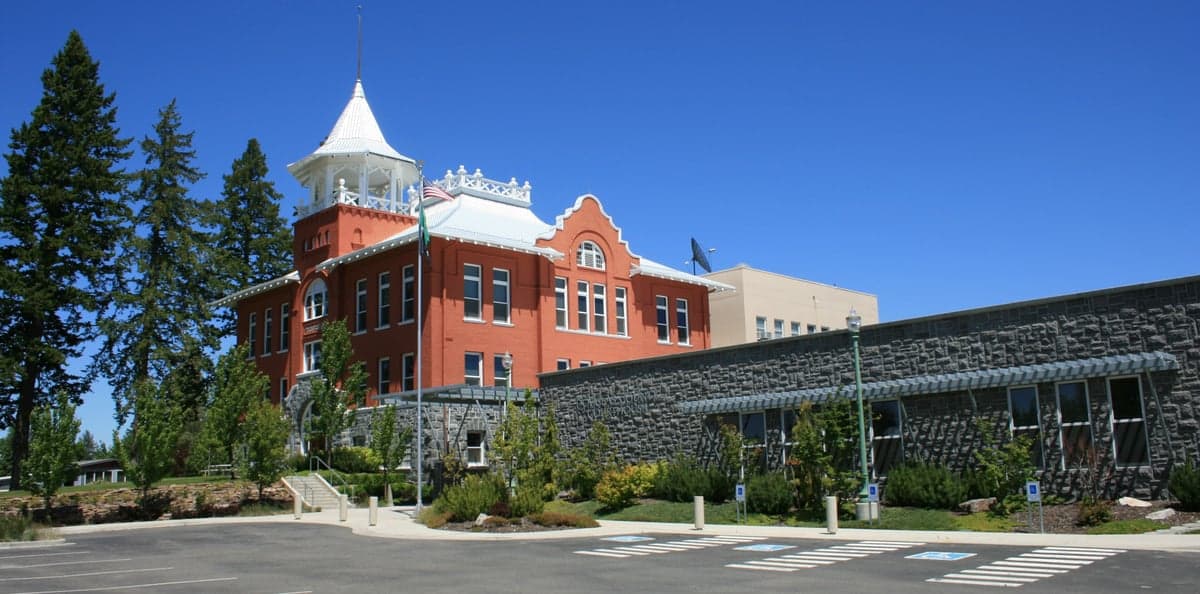
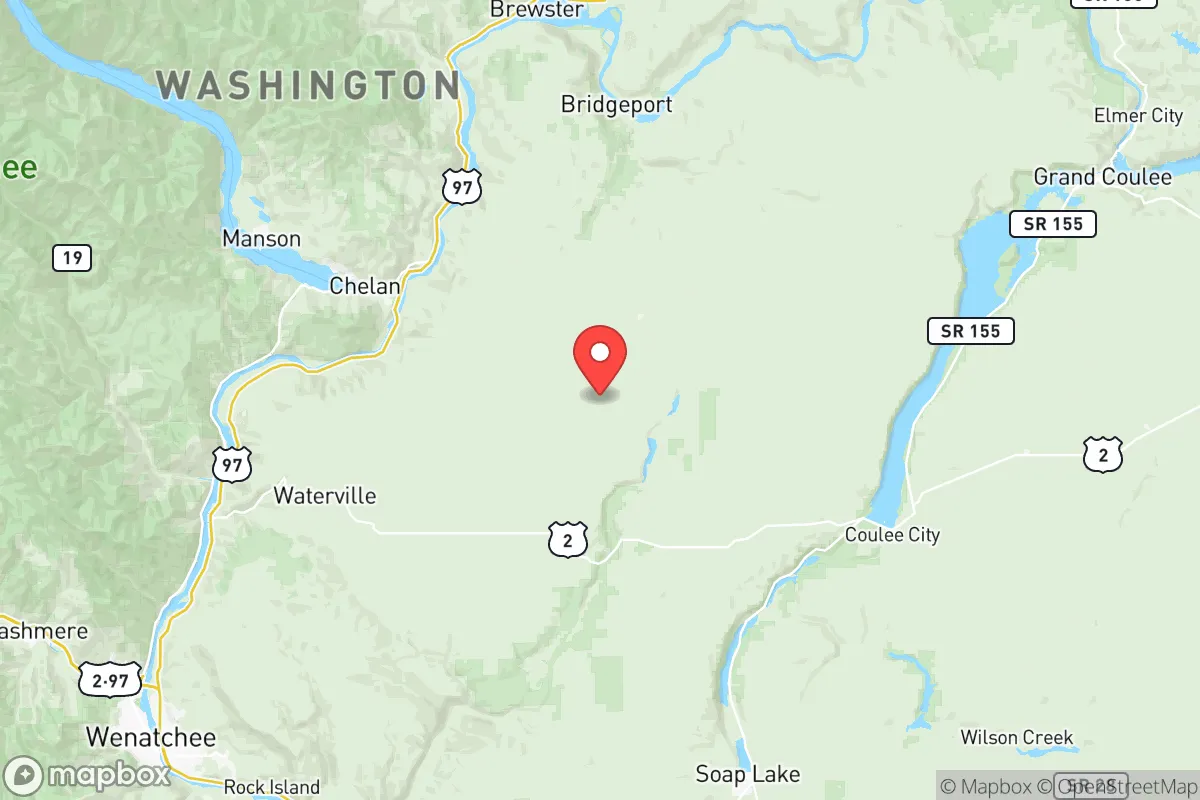
The people of Douglas County, Washington, today number 43,733, forming a community that is predominantly white (59.2%) with a substantial and growing Hispanic population (34.7%) that shapes much of the region's cultural and economic life. The county is lightly populated, with a population density of just 22 people per square mile, and its identity is rooted in agriculture, small-town values, and a working-class ethos centered on the Columbia River. The largest population centers are the county seat of Waterville, the agricultural hub of East Wenatchee, and the historic railroad towns of Bridgeport and Mansfield, each reflecting distinct waves of settlement.
Settlement & growth (pre-1960)
Before American settlement, the land now comprising Douglas County was inhabited by the Sinkiuse-Columbia people, a Salish-speaking tribe whose territory stretched along the Columbia River. The Sinkiuse were semi-nomadic, relying on salmon runs and root gathering, and their population was decimated by smallpox and other diseases introduced by European traders in the early 19th century. By the time the first permanent American settlers arrived in the 1870s, the Sinkiuse had been largely displaced, with many removed to the Colville Indian Reservation to the north.
The first major wave of American settlement came in the 1880s and 1890s, driven by the arrival of the Great Northern Railway. The railroad built a line through the central part of the county, establishing stations at Waterville (the future county seat) and Bridgeport (a key crossing on the Columbia River). These early settlers were predominantly of Northern European stock—English, Irish, and German farmers—drawn by the promise of cheap land under the Homestead Act and the potential for dryland wheat farming. The town of Mansfield, founded in 1900, became a center for this wheat-growing community, with its grain elevators still dominating the skyline today.
A second, smaller wave arrived in the 1910s and 1920s, consisting of Scandinavian immigrants—Norwegians, Swedes, and Finns—who settled in the northern part of the county around Bridgeport and Orondo. These families were attracted by the region's apple orchards, which were expanding rapidly thanks to irrigation projects along the Columbia. The completion of the Wenatchee Reclamation District in the 1920s transformed the river valley into a fruit-growing powerhouse, and the population of Douglas County grew from 9,000 in 1910 to 12,000 by 1930.
The Dust Bowl of the 1930s brought a third wave: "Okies" and "Arkies" from the Great Plains, who arrived seeking work in the orchards and wheat fields. Many of these families settled in the East Wenatchee area, which was then a small unincorporated community across the river from Wenatchee. The post-World War II period saw a modest influx of returning veterans who took advantage of the GI Bill to buy farmland, particularly around Waterville and Mansfield, but the county's population remained relatively stable at around 15,000 through the 1950s.
Modern era (post-1965)
The 1965 Hart-Cellar Act had a limited direct impact on Douglas County, as the region did not attract the large-scale immigration seen in coastal cities. However, the act's family reunification provisions did set the stage for a gradual increase in Hispanic population, which began in earnest in the 1970s and accelerated through the 1990s. The primary driver was agricultural labor demand: apple, pear, and cherry orchards in the East Wenatchee and Orondo areas required seasonal workers, and many Mexican and Mexican-American families who arrived for harvests eventually settled permanently. By 2000, the Hispanic share of the county's population had risen to 18%, and by 2020 it had reached 34.7%.
Domestic migration has also reshaped the county since the 1990s, though at a slower pace than in Washington's booming western counties. A steady trickle of retirees and remote workers from the Seattle area has moved into East Wenatchee and the Rock Island area, drawn by lower housing costs and the dry, sunny climate. This influx has increased the county's college-educated share to 21.9%, though this remains well below the state average of 36%. The foreign-born population now stands at 12.3%, nearly all of whom are Hispanic, with smaller numbers of East/Southeast Asian (0.6%) and Indian subcontinent (0.3%) residents concentrated in East Wenatchee and Waterville.
Suburbanization has been limited but real: East Wenatchee, which incorporated as a city in 1935, has grown from a small orchard town of 2,000 in 1970 to over 14,000 today, functioning as a bedroom community for Wenatchee across the river. The county's Black population remains tiny at 0.5%, reflecting the region's lack of industrial employment that historically drew African Americans to other parts of Washington. The overall population has grown from 26,000 in 1990 to 43,733 in 2024, a 68% increase driven almost entirely by Hispanic natural increase and continued agricultural migration.
The future
Douglas County is becoming more diverse, but the change is almost entirely driven by the growth of the Hispanic population, which is projected to reach 40-45% of the total by 2040. This growth is concentrated in East Wenatchee and the orchard communities of Orondo and Bridgeport, where Hispanic families are now the majority in many neighborhoods. The white population is aging and declining slightly, as younger non-Hispanic residents tend to leave for college or jobs in Seattle and Spokane.
The county's cultural identity is evolving into a bilingual, bicultural one, particularly in the East Wenatchee area, where Spanish is commonly heard in stores and schools. The Waterville and Mansfield areas, by contrast, remain overwhelmingly white and English-speaking, creating a subtle urban-rural and cultural divide within the county. New residential development is concentrated in East Wenatchee and along the Highway 2 corridor, with scattered rural subdivisions near Rock Island and Orondo.
Over the next 10-20 years, the county is likely to see continued slow growth, reaching perhaps 50,000 by 2040, with the Hispanic share rising steadily. The agricultural economy will remain central, but the expansion of remote work may bring more white-collar residents to East Wenatchee, gradually raising the college-educated share. The county will not become a major immigrant destination for non-Hispanic groups, but its Hispanic community will continue to deepen its roots, with second- and third-generation families moving into professional and civic roles.
For someone moving in now, Douglas County offers a stable, family-oriented environment with a strong agricultural heritage and a growing Hispanic cultural presence. The population is becoming more diverse in one dimension—ethnicity—while remaining relatively homogeneous in others, such as religion (predominantly Protestant and Catholic) and political outlook (conservative-leaning). The county's future is one of gradual change, not transformation, and newcomers will find a community that values hard work, self-reliance, and neighborliness, whether in the wheat fields of Waterville or the apple orchards of East Wenatchee.

* Values derived from national, state, county, city and local statistics and may differ in a specific area. Last updated: 2026-08-22T22:15:00.000Z
Narrative content on this page is AI-generated and may contain mistakes. Verify any details that matter before acting on them.
ReloMaps may earn a commission from affiliate links at no extra cost to you.

