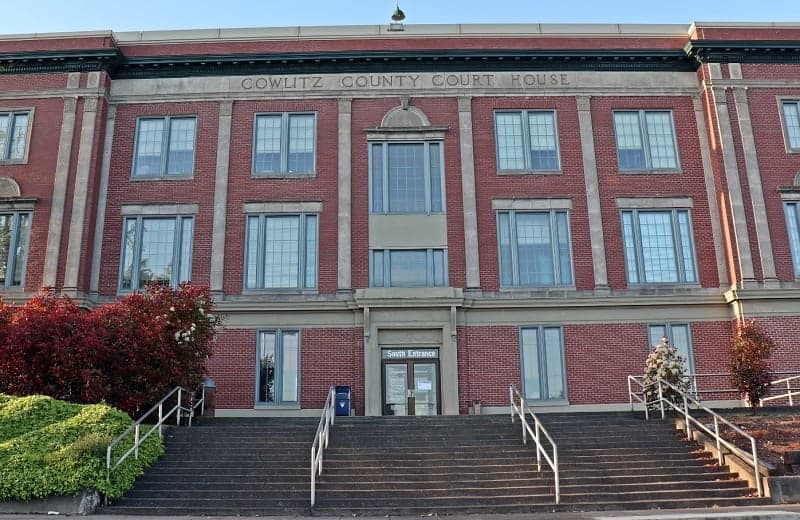
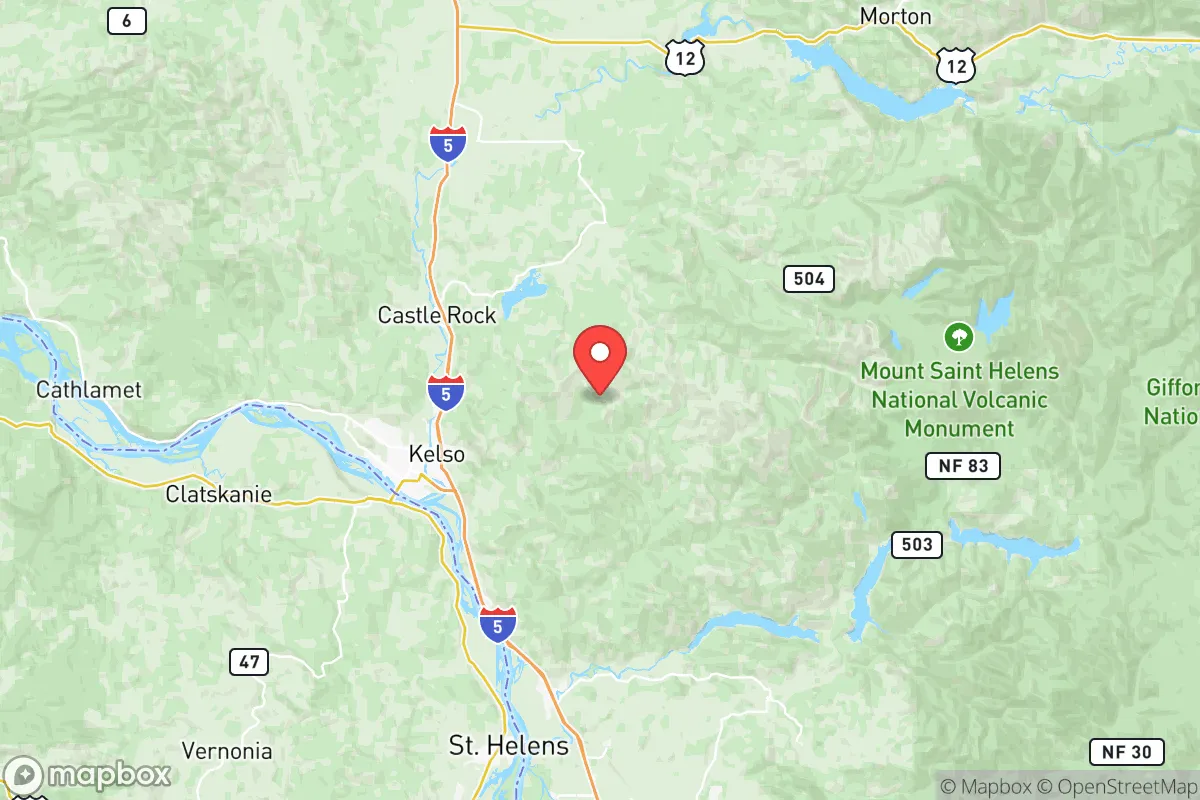
Photo: Wikipedia
Political ClimatePolitical Climate in Cowlitz County
Showing district-level results — no local-only data available.
Local Political AnalysisPolitical Analysis of Cowlitz County
Cowlitz County has been a genuine political bellwether for decades, but its center of gravity has shifted. Once a reliably blue-collar Democratic stronghold — think timber and mill towns that voted for FDR and then Reagan — the county now carries a Cook Partisan Voting Index of R+2, meaning it leans about two points more Republican than the nation as a whole. That shift mirrors the broader realignment of working-class white voters in the Pacific Northwest, but Cowlitz County hasn't flipped completely; it's become a consistently competitive, Republican-leaning area where margins are thin and change arrives precinct by precinct.
How it compares to the rest of Washington state
Cowlitz County stands apart from Washington state's overall political character, which is solidly Democratic thanks to King County (Seattle) and the growing suburbs around Puget Sound. While no official Cook PVI exists for the entire state, Washington hasn't voted for a Republican president since 1984 and has a Democratic trifecta in Olympia as of 2026. Cowlitz County, by contrast, typically votes a few points to the right of the state. In the 2024 presidential race, for example, Cowlitz County voted for Donald Trump by about 8 points, while Washington state overall went for Kamala Harris by roughly 19 points — a nearly 27-point gap. The county is more culturally and politically aligned with Southwest Washington's exurbs and rural areas — places like Clark County's eastern precincts and Lewis County — than with the Seattle metro. The biggest internal divide is between the county's two main population centers: Longview and Kelso. Longview, the larger city and a former industrial hub, still tilts Democratic, though its margins have tightened. Kelso, just across the Cowlitz River, leans Republican by a wider margin. The rural towns tell the story even more clearly. Castle Rock, Woodland, and Kalama are solidly red, while the town of Cathlamet, in the county's southwestern tip, is a rare blue outlier consistent with the more tourist-dependent, amenity-driven Wahkiakum County just to its west. The true swing precincts are in the suburbanizing zones around the I-5 corridor outside Longview and Kelso — places like the Lexington neighborhood or the area around Lower Columbia College, where ticket-splitting is common.
What this means for residents
For a conservative resident, the R+2 lean means local elections are winnable but require real shoe-leather work — there's no safe red gerrymander. The county council and school boards tend to shift between narrow Republican and narrow Democratic majorities depending on the cycle. For a liberal resident, the county's trajectory can feel frustrating, but local activism still matters; a handful of votes can flip a precinct, and the Democratic Party has a robust presence in Longview and through groups like the Cowlitz County Democrats. What both sides share is a practical, live-and-let-live culture that's more about local issues — timber regulations, housing costs, I-5 traffic — than national culture wars, at least in person.
Two policy distinctions set Cowlitz County apart from much of Washington. First, the county is generally more skeptical of state-level environmental and land-use regulations, especially when they limit timber harvests or rural development. Second, local law enforcement and the county commission have been outspoken critics of Washington's recent police reforms (HB 1310 and related laws), with the sheriff's office publicly stating it would limit enforcement of certain state mandates. This creates a practical tension: a resident of Longview might live under a city council that leans liberal on housing policy while the county as a whole fights state mandates on policing and forestry. That friction is the real story of Cowlitz County — not a simple red-blue split, but a place where national labels break apart under the weight of local industry and geography.

State Political ClimatePolitical Climate in Washington
State Political AnalysisPolitical Environment in the State
Washington state has shifted from a classic swing state to a solidly Democratic stronghold over the past two decades, with Democrats controlling every statewide office and both legislative chambers since the early 2010s. The state hasn’t voted for a Republican presidential candidate since 1984, and in 2024, the Democratic margin was a comfortable +19 points. However, this blue overall trend masks a fierce internal split—the Puget Sound region drives the state left, while huge swaths of Eastern Washington and rural areas are deeply conservative. For a relocator with conservative leanings, the practical reality is you’ll find plenty of like-minded neighbors, but you’ll be living under a state government that consistently pushes progressive policies on taxes, guns, and education.
Urban vs. rural divide
The political map of Washington is a tale of two states. The western third, dominated by King County (Seattle) and its surrounding suburbs, generates roughly two-thirds of the state’s population and votes overwhelmingly Democratic. In 2024, King County alone delivered a +40-point margin for the Democratic presidential ticket. Meanwhile, the eastern two-thirds of the state—cities like Spokane, Yakima, and Tri-Cities (Kennewick, Pasco, Richland)—vote solidly Republican. Spokane County, once a Republican stronghold, has become a competitive battleground; it voted for Trump by single digits in 2020 and 2024. The truly rural areas, like Ferry County and Stevens County up near the Canadian border, often vote 70%+ Republican. A few notable exceptions exist: Whatcom County (Bellingham) has flipped blue driven by Western Washington University and Canadian migration, while Clark County (Vancouver) is a classic exurban split—once reliably red, it now leans slightly blue as Portland commuters move north. For a conservative, living in Eastern Washington or the outer exurbs of Puyallup or Bonney Lake means a very different political reality than Seattle or Olympia.
Policy environment
Washington’s policy environment is defined by the trade-off between high economic freedom in some areas and heavy regulation in others. The state has no personal income tax, a major draw for high earners and business owners. Instead, it relies heavily on a high sales tax (state rate 6.5%, with local add-ons pushing it to 10%+ in many cities) and steep property taxes. For a conservative relocator, the absence of income tax is a huge plus, but the property tax burden on a median home (now roughly $600,000 statewide) can sting. Regulatory posture is decidedly green: the state has a strict carbon pricing system (the Climate Commitment Act), a ban on new gas-powered cars by 2035, and some of the nation’s tightest limits on building in wildfire-prone areas. Education policy leans progressive—the state has robust funding for public schools but also robust charter school restrictions and a strong teachers’ union. Healthcare is heavily regulated; the state runs its own insurance exchange under the Affordable Care Act and has some of the highest insurance premiums in the country. Election laws are very convenient: vote-by-mail is universal, same-day registration is available, and ballot drop boxes are widespread. For conservatives, this system feels secure and accessible, though some grumble about the lack of voter ID requirements.
Recent policy direction
The last five years have seen Washington move aggressively on several fronts that matter to a relocator weighing freedoms. On gun and self-defense law, the state passed some of the nation’s toughest restrictions: a ban on magazines over 10 rounds (2022), a ban on certain semi-automatic rifles (2023), and a requirement for a state firearms license and 10-day waiting period for all purchases. These laws are currently being challenged in court but are in effect. On parental and education rights, the state has moved the other direction—it requires schools to notify parents only if a child requests a name/pronoun change that contradicts school records, effectively undercutting parental notification. On speech, Washington has no statewide hate speech law that limits expression, but local ordinances in Seattle and King County create speech codes around public protests. On privacy and surveillance, the state passed the Washington Privacy Act (2021), which gives residents strong data rights—a rare plus for both left and right. On medical autonomy, Washington has legalized adult-use cannabis (2012), protects abortion rights in state law (codified 2023), and permits assisted suicide. On property rights, the state’s Growth Management Act tightly controls rural development, which frustrates landowners in Eastern Washington. On taxation, a new capital gains tax (7% on profits over $250k) was upheld by the state supreme court in 2023 and is expected to face a ballot repeal attempt. For a conservative, the state is a mixed bag: lower taxes on income but high sales/property taxes, strong property rights rhetoric but tight land-use control, and a clear trend toward tighter gun laws and more progressive social policy.
Civil unrest & political movements
Washington has a visible and sometimes volatile political activism scene. During the 2020 protests, Seattle saw the six-week “CHOP” occupation, which became a national flashpoint. Since then, the Capitol Campus in Olympia regularly hosts large protests—on issues from abortion rights to police reform to the carbon tax. On the right, the Three Percenters and other militia groups are active in Eastern Washington, and the state has seen a rise in county-level “Second Amendment sanctuary” resolutions (passed in 20+ rural counties). Immigration politics are hot: counties like Yakima and Grant County have large farmworker populations, and the state has a “sanctuary” law limiting local cooperation with ICE. This creates tension—local sheriffs in Okanogan County and Klickitat County have publicly refused to enforce it. Election integrity controversies are muted compared to other states; Washington’s vote-by-mail system is broadly trusted, but activists on the right have raised concerns about ballot harvesting and the lack of signature verification auditing. A new resident will notice bumper stickers and flags as the main flashpoints: you’ll see “Trump 2024” flags in Wenatchee and “No New Taxes” signs in Ridgefield, just as you’ll see “BLM” signs in Olympia and “Housing for All” banners in Seattle. It’s a state where political differences are lived visibly, but rarely escalate to violence in daily life.
Projection
Over the next 5-10 years, Washington’s political trajectory points toward continuing Democratic dominance at the state level, but with growing internal friction. The Puget Sound region’s population growth (fueled by Amazon, Microsoft, and Boeing’s successor firms) will continue to pull the state leftward on social and environmental policy. However, the exurban and rural parts of the state are growing too—places like Spokane Valley and Bonney Lake are seeing conservative families move in from California and Oregon. The key trend is that while Democrats will keep the governorship and legislature, the margins in the state house may narrow slightly as rural populations rebound post-pandemic. A more immediate factor: the state’s carbon pricing system is driving up gas and energy costs, which is politically unpopular in Eastern Washington and could fuel a ballot initiative movement to repeal or modify it. For a conservative moving here now, expect the state to remain blue but become more internally divided. You’ll have a conservative-friendly lifestyle in the eastern half of the state, but you’ll also face rising property taxes and increasingly tight land-use rules. If you’re looking for a state that’s trending red, Washington isn’t your pick; but if you can tolerate a blue state government while living in a red community, this is a workable choice.
Bottom line for a new resident: You can live comfortably in Washington as a conservative, especially in Eastern Washington or the outer suburbs of the I-5 corridor. Just be ready to pay high sales and property taxes (but no income tax), navigate tight gun and land-use regulations, and accept that your state government will be at odds with your views on many issues. If you value a strong outdoors lifestyle, a growing job market, and a lack of income tax, Washington can work well even if you lean right—but don’t expect the political landscape to shift in your favor anytime soon.
* Values derived from national, state, county, city and local statistics and may differ in a specific area. Last updated: 2026-06-29T05:20:43.000Z
Narrative content on this page is AI-generated and may contain mistakes. Verify any details that matter before acting on them.
ReloMaps may earn a commission from affiliate links at no extra cost to you.

