
Photo by Matthew Lancaster on Unsplash
Political ClimatePolitical Climate in Poquoson City County
Showing district-level results — no local-only data available.
Local Political AnalysisPolitical Analysis of Poquoson City County
Poquoson City County is a reliably Republican stronghold in a state that has shifted blue in recent cycles. With a Cook Partisan Voting Index (PVI) of R+3, the city leans about seven points more conservative than Virginia as a whole, which carries a D+4 rating. This isn't a new development—Poquoson has voted for the GOP presidential candidate in every election this century, often by double-digit margins, though the gap has narrowed slightly in the last two cycles as suburban voters have drifted leftward. The city's political identity is rooted in its history as a tight-knit, waterman-oriented community, and that culture still shapes how people here approach everything from taxes to land use.
How it compares
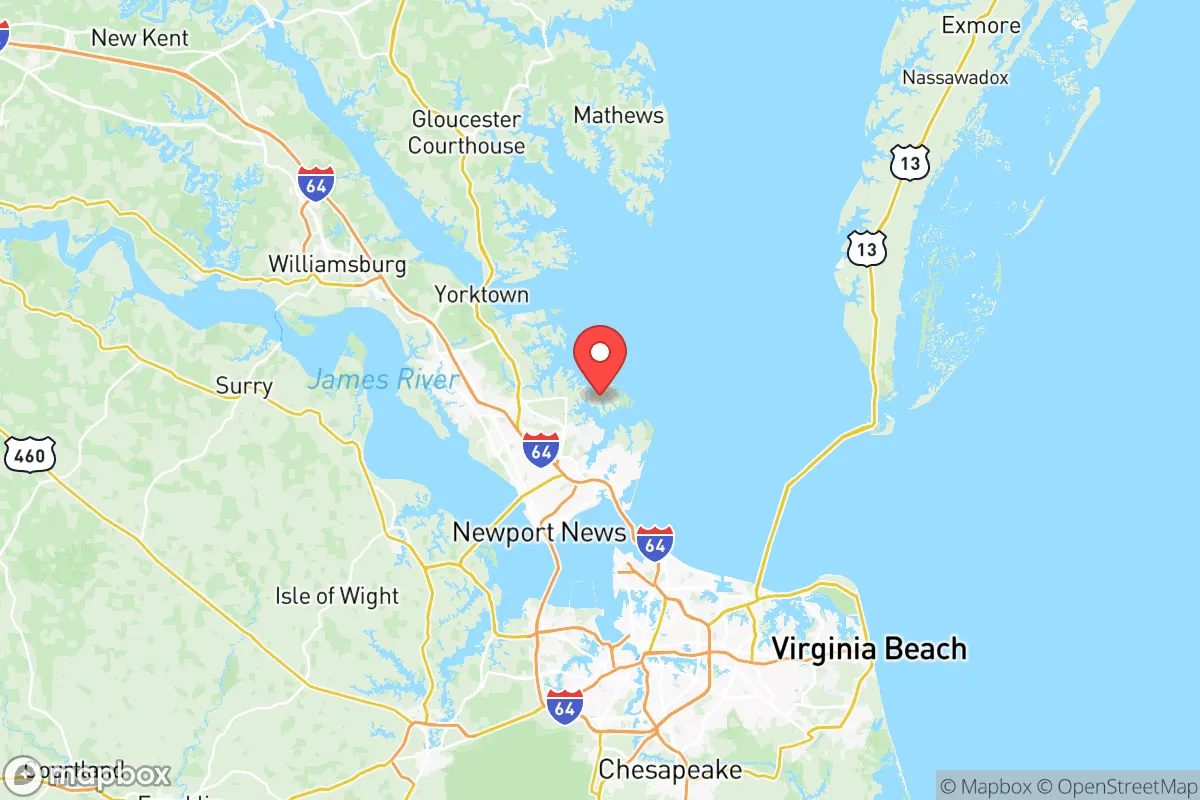
The contrast between Poquoson and the rest of Virginia is stark. While the state has trended Democratic thanks to explosive growth in Northern Virginia, Richmond, and Hampton Roads' urban core, Poquoson has held steady. In the 2024 presidential election, Donald Trump carried the city by roughly 12 points, even as Kamala Harris won Virginia by about 5 points statewide. That's a 17-point gap. Within Poquoson itself, the political geography is fairly uniform—there aren't distinct towns or neighborhoods that break sharply left or right. The entire city is a single precinct, so there's no internal variation like you'd see in a larger county with rural, suburban, and urban pockets. That said, the waterfront areas along the Back River and Chesapeake Bay tend to be the most conservative, driven by older, long-term residents and watermen who are deeply skeptical of environmental regulations. The newer subdivisions closer to the Poquoson-Yorktown line, like those around Poquoson High School, have a slightly more moderate tilt, reflecting the influx of military and defense contractor families who may not share the same generational attachment to local GOP orthodoxy.
What this means for residents
For conservative residents, Poquoson feels like a safe harbor. Local elections are dominated by Republicans, and the city council and school board rarely face serious ideological challenges from the left. Tax policy is generally low-and-slow, and there's little appetite for new spending on things like public transit or affordable housing mandates. For liberal residents, the reality is more isolating. They're a clear minority, and while there's no active hostility, progressive viewpoints on issues like climate change, gun policy, or school curriculum are often met with polite dismissal. That said, the city's small size—roughly 12,000 people—means that personal relationships can transcend political labels. A liberal neighbor who's been here for decades is still a neighbor, not an adversary. The real tension isn't between left and right, but between preservationists who want to keep Poquoson's rural, working-waterfront character and pro-growth voices who see new development as necessary to keep the tax base healthy.
One cultural distinction that sets Poquoson apart is its relationship with the water. The city is literally a peninsula, and the seafood industry—especially crabbing and oystering—remains a core part of local identity. This creates a unique political dynamic: even conservative residents tend to support stronger environmental protections for the Chesapeake Bay, because the local economy depends on clean water. That's a nuance you don't see in many other R+3 districts. On the policy front, Poquoson has also been a testing ground for sea-level rise adaptation, with the city investing in living shorelines and flood mitigation infrastructure. This pragmatic, non-ideological approach to a tangible threat is one of the few areas where the city's politics don't fit neatly into a red-blue box. Looking ahead, the trajectory is likely slow and steady—Poquoson will probably remain Republican-leaning, but the margin may continue to shrink as younger residents and newcomers bring more moderate views on social issues and the environment.

State Political ClimatePolitical Climate in Virginia
State Political AnalysisPolitical Environment in the State
Virginia has transformed from a reliably conservative Southern state into a competitive, D+4 lean-blue commonwealth over the past two decades, driven by explosive growth in the Washington D.C. suburbs and a realignment of the once-Democratic rural south. The shift is dramatic: as recently as 2008, Barack Obama was the first Democrat to carry Virginia since 1964, and the state has voted blue in every presidential election since. But that top-line number masks a deeply polarized state where the urban crescent from Northern Virginia down through Richmond to Hampton Roads pulls left, while the vast rural expanse west of I-95 and south of the James River has become some of the most conservative territory in the Mid-Atlantic. For a relocator, the practical reality is that your experience of Virginia's politics will depend almost entirely on which of these Virginias you land in.
Urban vs. rural divide
The political map of Virginia is a story of two gravitational centers. Northern Virginia — specifically Fairfax, Loudoun, and Prince William counties — now generates roughly half the state's economic output and votes blue by margins of 20 to 40 points. Loudoun County, once a conservative stronghold, flipped decisively and now sends Democrats to the statehouse. Richmond, the capital, is a solidly liberal city surrounded by increasingly conservative suburban and exurban counties like Chesterfield and Hanover. Hampton Roads, anchored by Virginia Beach and Norfolk, is a genuine swing region where military families and shipyard workers create a more mixed electorate. The rural southwest — places like Bristol, Martinsville, and the coal country around Wise County — votes Republican by margins exceeding 40 points, with cultural and economic grievances that feel a world away from the coffee shops of Arlington. The I-81 corridor through the Shenandoah Valley, including cities like Harrisonburg and Staunton, is a fascinating microcosm: college towns that lean left surrounded by deep-red farmland.
Policy environment
Virginia's policy landscape reflects its purple status, with a tax structure that is moderate by national standards but increasingly progressive at the margins. The state income tax is a flat 5.75% on most income, with a lower rate on the first bracket — not the lowest in the South, but competitive. Property taxes are set at the local level and are generally moderate, though Northern Virginia rates can be steep due to high home valuations. The state has no vehicle property tax, which is a meaningful difference from neighbors like North Carolina. On regulation, Virginia is a Dillon Rule state, meaning localities only have powers explicitly granted by the General Assembly — a fact that has become a flashpoint in recent years as conservative counties try to assert control over issues like data centers and solar farms. Education policy has been a battleground: the state has seen fierce fights over transgender student policies, critical race theory in Loudoun County schools, and the expansion of charter schools, which remain limited compared to other states. Election laws are moderately accessible — no-excuse absentee voting was made permanent in 2021, but voter ID is still required. The state has a Republican governor, Glenn Youngkin, but a Democratic-controlled state Senate, creating a divided government that has produced a lot of noise but relatively few major policy shifts since 2022.
Recent policy direction
The last four years have been a tug-of-war that illustrates Virginia's split personality. On gun policy, the 2020 Democratic trifecta passed a suite of restrictions including universal background checks, a red flag law, and a one-handgun-per-month limit — a major shift for a state with a strong hunting and gun culture in the west and south. Youngkin has been unable to roll these back due to the Democratic Senate, so they remain in place. On education, Youngkin issued executive orders banning "inherently divisive concepts" in schools and pushed for expanded lab schools and charter options, but the legislature blocked his more ambitious parental rights bills. On abortion, Virginia remains an island of relative access in the South — the state allows abortion up to 26 weeks, and a 2023 attempt by Youngkin to enact a 15-week ban failed in the Senate. On energy, the state is caught between the clean energy mandates of the 2020 Virginia Clean Economy Act and the reality that data center demand is exploding, particularly in Loudoun and Prince William. On criminal justice, the 2020 police reform package and the abolition of parole remain controversial, with rural counties complaining of soft-on-crime policies while urban areas push for further reform. The bottom line: Virginia is not trending decisively in either direction — it is stuck in a grinding stalemate where neither side can fully implement its agenda.
Civil unrest & political movements
Virginia has been a flashpoint for national political movements in ways that smaller states often are not. The 2017 Unite the Right rally in Charlottesville and the subsequent violence put the state on the map as a battleground over Confederate monuments and white nationalism. The 2020 protests in Richmond saw the Robert E. Lee statue become a gathering point for both Black Lives Matter demonstrators and armed counter-protesters. The Loudoun County school board meetings in 2021 became a national template for the parental rights movement, with heated debates over mask mandates, critical race theory, and transgender policies drawing national attention. On immigration, the state has a patchwork of sanctuary policies — some cities like Alexandria and Richmond limit cooperation with ICE, while rural sheriffs in places like Shenandoah County proudly advertise their cooperation. Election integrity remains a live issue: the 2020 election in Virginia was smooth by national standards, but Republican activists continue to scrutinize the state's permanent absentee voting list and same-day registration. The 2021 gubernatorial election, which Youngkin won by focusing on education and parental rights, showed that the state's political energy is still very much up for grabs.
Projection
Over the next five to ten years, Virginia's trajectory is likely to be a slow, grinding shift leftward driven by demographics, but with enough friction from the rural and exurban vote to keep it competitive. Northern Virginia continues to grow faster than the rest of the state, and the people moving there are younger, more diverse, and more liberal. The Hampton Roads region is aging and losing population, which hurts Democrats' margins there. The rural southwest is shrinking, which reduces the Republican vote share but also concentrates it. The wild card is the exurban ring around Richmond and the I-81 corridor — places like Spotsylvania, Stafford, and Frederick County — which are growing fast and are politically contested. If these areas trend blue, Virginia becomes a solidly Democratic state within a decade. If they hold red, it remains a purple swing state. For a relocator, the practical implication is that the state's political direction will be determined by where you and people like you choose to live.
For a new resident, the bottom line is that Virginia offers a genuine choice: you can live in a deep-blue suburb with excellent schools and high taxes, a deep-red rural county with low regulation and strong gun rights, or a purple city like Virginia Beach where neither party has a lock on power. The state's divided government means that neither side is likely to run roughshod over the other in the near term, which provides a measure of stability. But the culture war fights are real and visible — you will see political signs, hear debates at school board meetings, and feel the tension between the two Virginias. If you want a state where your vote clearly matters and where the political future is still being written, Virginia is one of the few places in the country where that is genuinely true.
* Values derived from national, state, county, city and local statistics and may differ in a specific area. Last updated: 2026-08-08T12:40:14.000Z
Narrative content on this page is AI-generated and may contain mistakes. Verify any details that matter before acting on them.
ReloMaps may earn a commission from affiliate links at no extra cost to you.

