
Photo by Matthew Lancaster on Unsplash
Demographics of Poquoson City County
Affluence Level in Poquoson City County
An upper-middle-class area. Household wealth, education levels, and homeownership run ahead of national benchmarks.
People of Poquoson City County
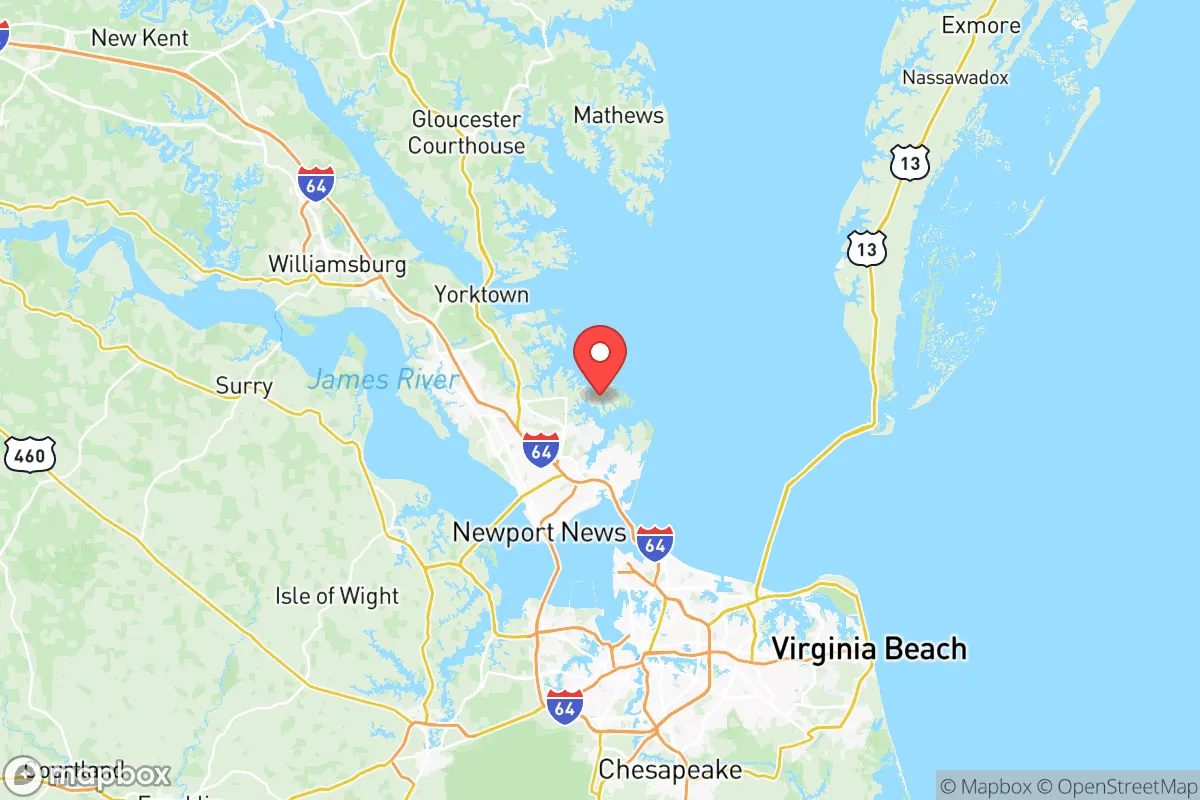
Poquoson City County, Virginia, is a small, tight-knit community of 12,556 residents that has retained a distinctly homogeneous character even as neighboring Hampton Roads has diversified. With a population that is 88.8% White, a foreign-born share of just 1.0%, and a strong local identity rooted in centuries of watermen culture, Poquoson stands apart as one of the most demographically stable enclaves in coastal Virginia. The city's residents are overwhelmingly native-born, with deep generational ties to the land and waterways, and the community projects a quiet, family-oriented conservatism that reflects its history as a self-reliant fishing and farming peninsula.
Settlement & growth (pre-1960)
The land that is now Poquoson was originally inhabited by the Powhatan Confederacy, specifically the Chiskiack tribe, who lived along the Chesapeake Bay tributaries and relied on fishing, hunting, and small-scale agriculture. English colonists from the Virginia Company began settling the lower York River peninsula as early as the 1620s, with the area that would become Poquoson receiving its first permanent English inhabitants by the 1630s. The name "Poquoson" itself is derived from an Algonquian word meaning "a great marsh" or "low land," reflecting the tidal landscape that defined early life here.
Throughout the colonial period and into the 19th century, Poquoson remained a sparsely populated, rural extension of York County. The population was almost entirely of English and Scots-Irish descent, families who worked as watermen, farmers, and shipbuilders along the creeks and inlets. Unlike the plantation-heavy Tidewater region to the west, Poquoson's marshy terrain was not suited to large-scale slave-based agriculture, so the area had a relatively small enslaved population. After the Civil War, the community remained overwhelmingly White and native-born, with little in-migration from other regions or countries. The Bennett's Creek and Messick areas became early settlement clusters where watermen families lived and worked for generations, passing down oyster and crab harvesting knowledge through family lines.
By the early 20th century, Poquoson was still a rural fishing village with fewer than 2,000 residents. The construction of military installations in nearby Hampton and Newport News during World War I and World War II brought some economic spillover, but Poquoson itself remained isolated and insular. The Poquoson River and its tributaries—Chisman Creek, Back River, and Plum Tree Creek—defined the settlement pattern, with homes and businesses clustered along the waterfront. The community's first school, Poquoson High School, opened in the 1920s, and the area remained unincorporated until the late 20th century. The population grew slowly but steadily, reaching roughly 5,000 by 1960, still overwhelmingly White and native-born, with a strong cultural attachment to the watermen's way of life.
Modern era (post-1965)
The 1965 Hart-Cellar Act, which dramatically reshaped American immigration patterns, had almost no measurable effect on Poquoson. The city's foreign-born population remains at just 1.0% in 2026, one of the lowest rates in Virginia. Unlike the broader Hampton Roads region, which saw significant growth in Hispanic, Asian, and Black populations after 1970, Poquoson's demographic profile has remained remarkably stable. The city incorporated as an independent city in 1975, separating from York County largely to preserve local control over land use and schools—a move that reflected the community's desire to maintain its character amid the suburban sprawl of the Peninsula.
The major demographic shift in Poquoson since 1965 has not been immigration but domestic out-migration of younger adults and a gradual aging of the population. Many young people leave for college and careers in Hampton Roads or beyond, and the city has not attracted significant numbers of new residents from other parts of the country. The Hispanic population has grown modestly to 3.9%, and the Black population stands at 1.7%, but these changes are small relative to regional trends. East and Southeast Asian residents make up 1.3% of the population, and Indian-subcontinent residents account for 0.5%. These groups are dispersed rather than concentrated in any particular neighborhood, and no ethnic enclaves have formed. The Poquoson City Public Schools system, with its strong academic reputation and 40.1% college-educated adult population, has been a modest draw for some families, but the city has not experienced the rapid suburbanization seen in nearby York County or James City County.
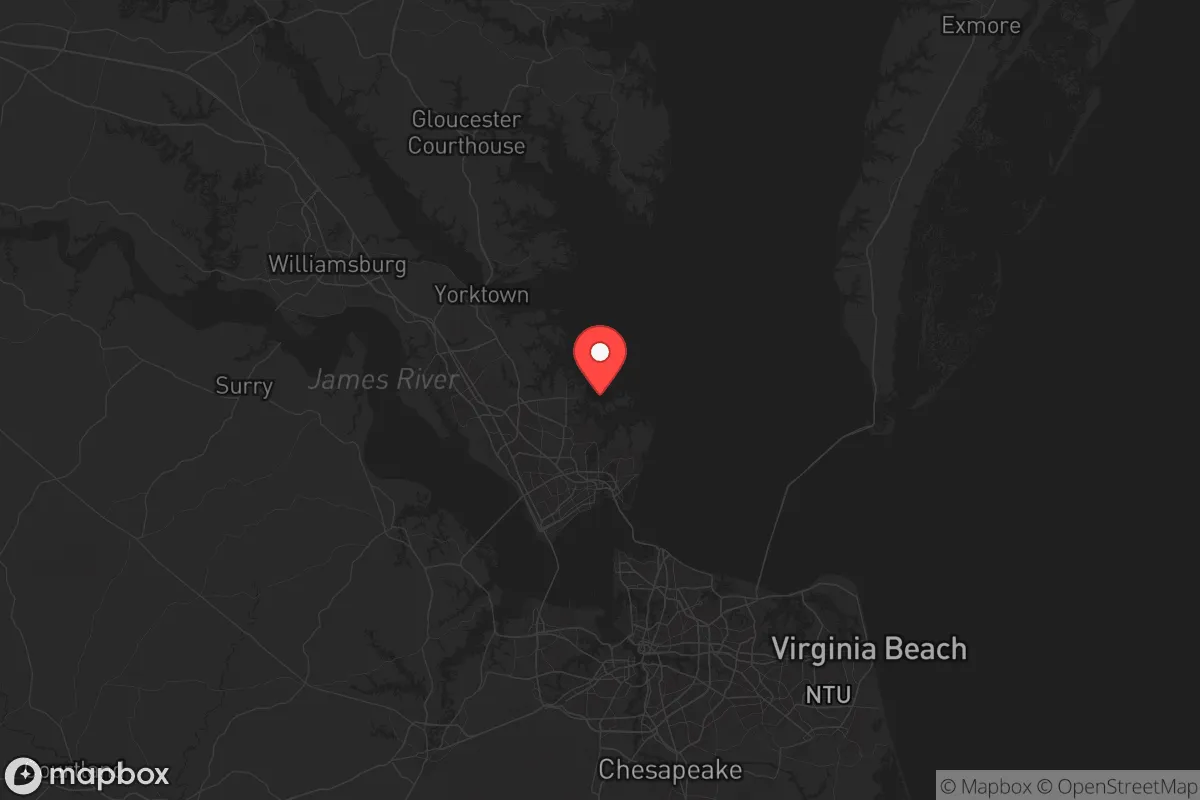
Suburbanization in Poquoson has been limited by geography—the city is a peninsula bounded by water on three sides—and by local zoning that has favored low-density residential development. Newer subdivisions such as Wythe Creek Farms and Poquoson Shores have attracted some families from the broader region, but the housing stock remains dominated by single-family homes on large lots, with few apartments or condominiums. The watermen's industry has declined significantly since the 1980s due to environmental pressures and regulation, but the cultural identity of Poquoson as a "watermen's town" persists, celebrated at events like the annual Poquoson Seafood Festival.
The future
Poquoson's population is projected to remain stable or decline slightly over the next 10-20 years, with continued aging and limited in-migration. The city's foreign-born share is unlikely to rise significantly given the lack of economic pull factors and the high cost of waterfront housing. The Hispanic and Asian populations may grow incrementally as the broader Hampton Roads region diversifies, but Poquoson is unlikely to become a destination for immigrant communities. The city's cultural identity will likely remain rooted in its watermen heritage and native-born character, though the practical connection to the water is fading as younger generations pursue careers outside the fishing industry.
The biggest demographic question for Poquoson is whether it can attract and retain younger families. The school system is a strength, but the limited housing stock, lack of rental options, and distance from major employment centers in Norfolk and Virginia Beach make it a less convenient choice than more connected suburbs. If the city were to allow more diverse housing types—townhomes, apartments, mixed-use development near Poquoson Avenue—it could draw a more diverse population. Without such changes, Poquoson will likely remain a small, homogeneous, aging community, prized by those who value its quiet, low-crime character and generational roots, but increasingly disconnected from the demographic currents reshaping the rest of coastal Virginia.
For someone moving in now, Poquoson offers a rare thing in 2026: a community where nearly everyone is native-born, where the pace of change is slow, and where local identity is still tied to the land and water rather than to corporate or military employers. It is a place for those who want stability, safety, and a deep sense of place, not for those seeking diversity, urban amenities, or rapid economic opportunity. The city's future is one of preservation rather than transformation, and that is precisely what its residents have chosen.

* Values derived from national, state, county, city and local statistics and may differ in a specific area. Last updated: 2026-08-08T12:40:14.000Z
Narrative content on this page is AI-generated and may contain mistakes. Verify any details that matter before acting on them.
ReloMaps may earn a commission from affiliate links at no extra cost to you.

