Quality of Life in Newport News City County
A livable area that tracks near national norms for affordability, walkability, and neighborhood health.
What does Quality of Life tell us?
Quality of Life measures an area by evaluating factors like cost of living, nearby amenities, country club access, airport proximity, socioeconomic signals and neighborhood character. For large states, this is a general average — quality of life can vary dramatically between metro areas, suburbs, and rural communities within the same state.
What does this tell us?
Quality of Life measures an area by evaluating factors like cost of living, nearby amenities, country club access, airport proximity, socioeconomic signals and neighborhood character. For large states, this is a general average — quality of life can vary dramatically between metro areas, suburbs, and rural communities within the same state.
Cost of Living
1% above national average
96%
The Real Cost of Living in Newport News City County for 2026
| Tier | Individual | Family (4) |
|---|---|---|
| Survival | $21k | $39k |
| Comfortable | $47k | $69k |
| Luxury | $117k+ | $182k+ |
| Elite (Top 5%) | $138k+ | $214k+ |
Quality-of-Life Analysis
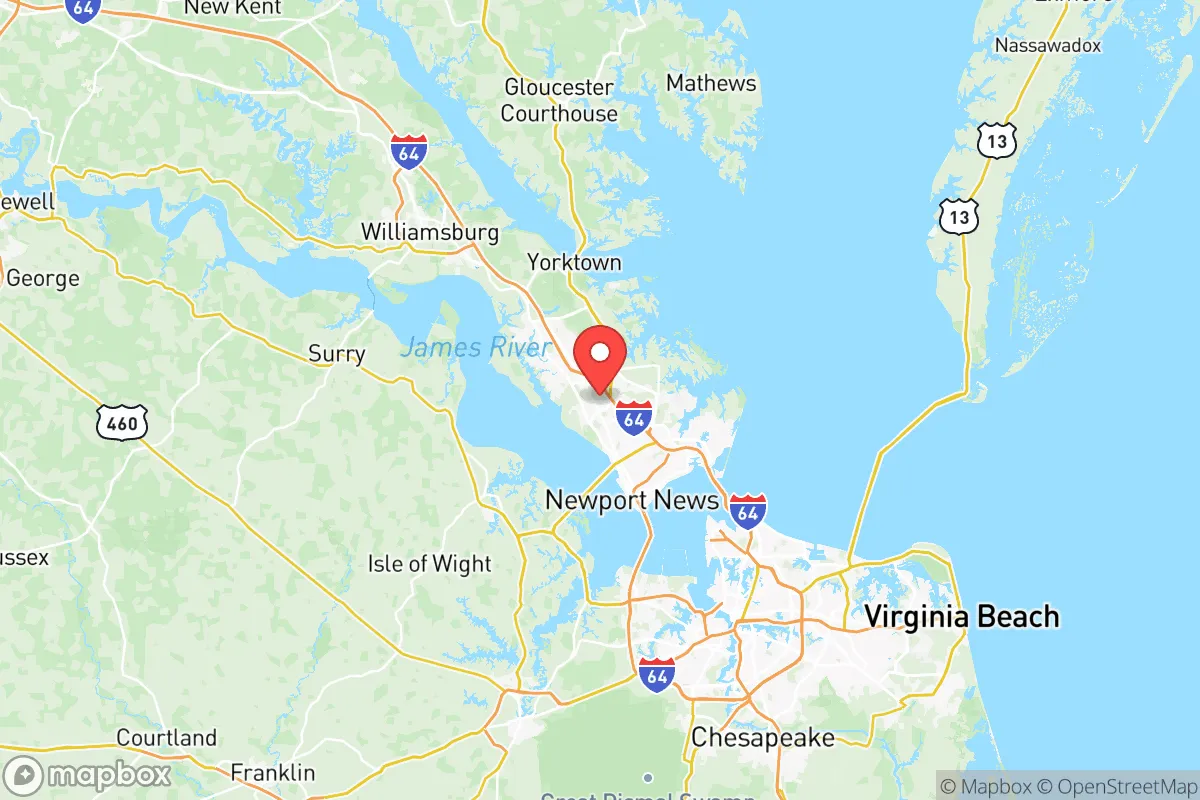
Newport News City County, Virginia, is a unique jurisdiction that functions as an independent city yet encompasses the full spectrum of quality-of-life options found in a traditional county, from dense urban centers to quiet suburban enclaves and even pockets of rural land. Unlike a sprawling county with separate towns, Newport News is a consolidated city-county, meaning its 69 square miles contain a single municipal government but a diverse patchwork of neighborhoods and communities. This structure draws a wide range of residents: defense contractors and shipyard workers to the industrial southeast, young professionals and students to the central corridor near Christopher Newport University, and families seeking suburban space to the northwestern neighborhoods that border York County.
Largest town(s) & population centers
The city's primary population centers are not separate towns but distinct districts. The southeast community, anchored by the historic Hilton Village and the massive Newport News Shipbuilding yard, is the city's industrial and employment heart. Daily life here is walkable in parts, with early 20th-century homes, local cafes along Warwick Boulevard, and a strong sense of maritime history. The central corridor, centered around Christopher Newport University (CNU) and the Patrick Henry Mall area, functions as the city's commercial and cultural hub. This area features a mix of mid-century ranch homes, newer townhome developments, and apartment complexes catering to students and professionals. The northern end of the city, particularly the neighborhoods of Denbigh and Kiln Creek, offers a more suburban experience with planned communities, golf courses, and big-box retail along Jefferson Avenue. The average commute of 23.2 minutes is manageable, as most residents work within the city or in neighboring Hampton and York County.
Smaller towns & rural pockets
While Newport News has no incorporated towns, several unincorporated communities and distinct neighborhoods provide a small-town feel. Hilton Village, a planned World War I-era community, operates like a small town with its own commercial strip, farmers market, and civic league. Riverside, along the James River, is a quiet, leafy neighborhood of historic homes and waterfront parks that feels removed from the city's bustle. Further north, Lee Hall preserves a rural character with its historic plantation homes, the Lee Hall Mansion, and access to the Newport News Park, one of the largest municipal parks on the East Coast. The area around Endview Plantation and the Warwick River remains lightly developed, with horse farms, wooded lots, and a slower pace of life that contrasts sharply with the shipyard district.
Cost & lifestyle range
The cost of living index of 101 (on par with the national average) masks significant variation across the city. The most affordable options are found in the southeast neighborhoods like Marshall Courts and the East End, where median home values can dip below $180,000 and rents are closer to $1,000 per month. These areas offer proximity to the shipyard but often have older housing stock and higher crime rates. At the upper end, Kiln Creek and the neighborhoods near CNU command median home values above $300,000, with newer construction, better schools, and lower crime. The citywide median home value of $243,300 and median rent of $1,285 place Newport News as a moderate-cost option compared to Northern Virginia or Richmond. Lifestyle choices range from urban apartment living in the City Center at Oyster Point—a mixed-use development with restaurants, a movie theater, and events—to rural acreage in Lee Hall, where residents can own property with space for gardens or horses while still commuting to the shipyard in under 25 minutes.
Newport News City County is best suited for residents who want access to a major industrial employer and coastal amenities without the high costs of Virginia's larger metros. Families thrive in the suburban northern neighborhoods with their good schools and parks, while history buffs and creatives are drawn to the character of Hilton Village and the downtown arts district. The city's compact size and single government structure mean that services are uniform, but the lived experience varies dramatically from block to block, making it essential for newcomers to visit specific neighborhoods before choosing where to settle.

Crime in Newport News City County
Generally safer than 60% of comparable U.S. locations.
Violent CrimeViolent Crime Analysis
Property CrimeProperty Crime Analysis
Crime Analysis
Newport News City County, Virginia, reports a violent crime rate of 209.3 per 100,000 residents and a property crime rate of 1,392 per 100,000, placing it in a middle tier for safety within the Hampton Roads region. While these figures are lower than those of nearby Norfolk and Portsmouth, they remain elevated compared to the safest suburbs in the area, such as York County and Poquoson. The city's crime landscape is heavily influenced by its status as a dense, urbanized port community, where economic disparities and gang activity in specific corridors drive the majority of incidents.
Crime in context
Newport News' violent crime rate of 209.3 per 100,000 is roughly 60% higher than the national average of approximately 130 per 100,000, though it falls well below the rates of larger Virginia cities like Richmond (which often exceeds 400 per 100,000). Property crime in Newport News, at 1,392 per 100,000, is comparable to the national average of roughly 1,400 per 100,000, but significantly higher than in neighboring Hampton (1,100 per 100,000) and the affluent suburb of Yorktown (under 800 per 100,000). The city's crime index is notably lower than that of Portsmouth, which consistently posts higher violent crime rates due to concentrated poverty and gang violence. However, Newport News' proximity to the Newport News Shipbuilding yard—a major economic engine—also creates transient population pockets that can correlate with higher theft and larceny rates in commercial districts.
What residents experience
Residents of Newport News report that property crime—particularly vehicle break-ins and package theft—is the most common safety concern in daily life, especially in neighborhoods near Jefferson Avenue and Warwick Boulevard. Violent crime, while less frequent, is highly concentrated in specific areas: the Southeast Community (around 28th Street and Marshall Avenue) and the East End (near 16th Street and Roanoke Avenue) see the bulk of shootings and aggravated assaults, often linked to drug trafficking. In contrast, the northern end of the city—including the neighborhoods of Hidenwood, Riverside, and the City Center at Oyster Point—experiences far lower crime rates, with many blocks reporting zero violent incidents annually. The presence of progressive-leaning judicial policies in Newport News' 7th Judicial District has been a point of contention; critics argue that lenient sentencing for repeat property offenders and drug-related crimes has contributed to a revolving-door effect, where individuals arrested in the Southeast Community are quickly back on the streets, undermining deterrence. This pattern is less pronounced in the more conservative jurisdictions of York County and Poquoson, which maintain stricter enforcement and lower recidivism rates.
Neighborhood-level safety in Newport News varies dramatically. The safest areas include the Port Warwick mixed-use development, the Kiln Creek subdivision (which straddles the York County line), and the Denbigh area near the Newport News/Williamsburg International Airport. These communities benefit from active homeowners' associations, private security patrols, and proximity to higher-income census tracts. Conversely, the Downtown corridor near the shipyard and the Midtown area around 35th Street remain higher-risk, with property crime rates double the city average. For families considering relocation, the contrast between the progressive criminal justice approach in Newport News proper and the more conservative, victim-focused policies in surrounding counties is a critical factor. While the city offers urban amenities and employment at the shipyard, the safety trade-offs are most acute in the southern and central wards, where residents face the highest likelihood of encountering repeat offenders.
* Values derived from national, state, county, city and local statistics and may differ in a specific area. Last updated: 2026-07-23T18:21:16.000Z
Narrative content on this page is AI-generated and may contain mistakes. Verify any details that matter before acting on them.
ReloMaps may earn a commission from affiliate links at no extra cost to you.

