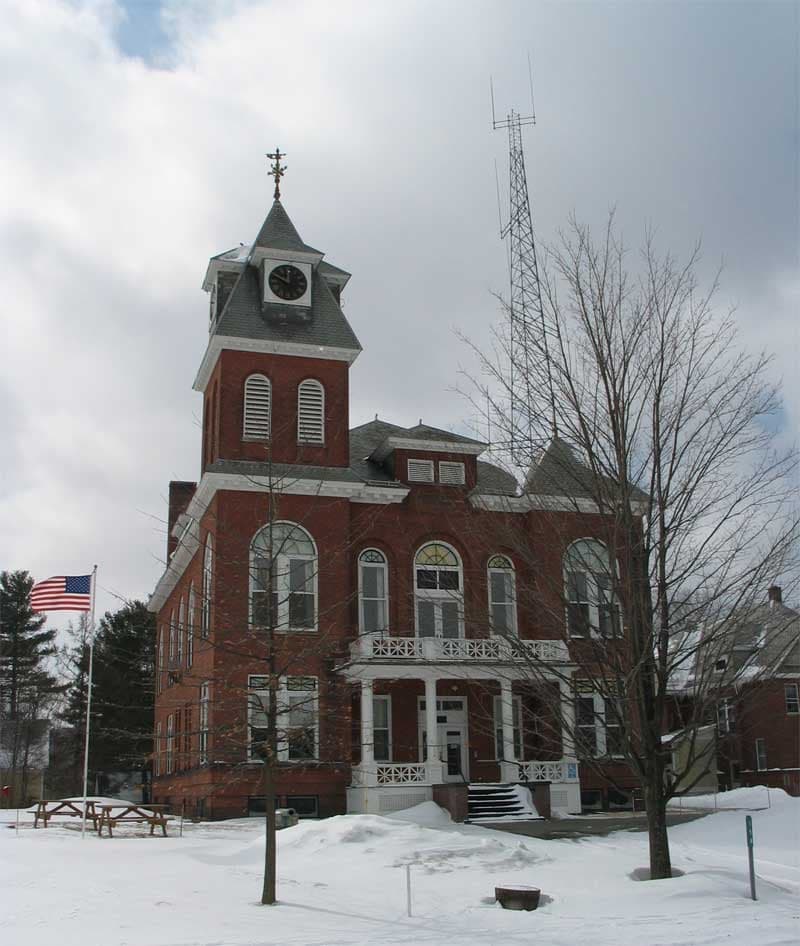
Photo: Wikipedia
Political ClimatePolitical Climate in Lamoille County
Showing state-level results — no local-only data available.
Local Political AnalysisPolitical Analysis of Lamoille County
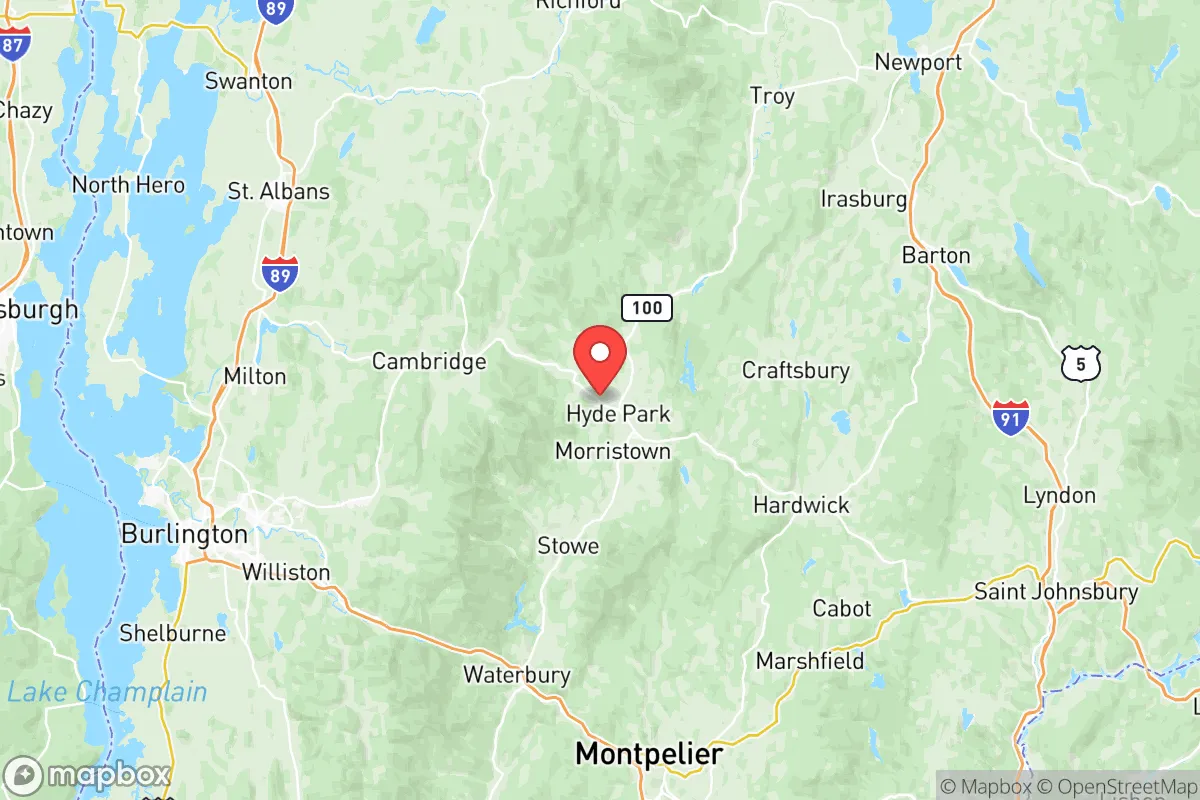
Lamoille County is a solidly Democratic stronghold, carrying a Cook PVI of D+17 — identical to Vermont as a whole. This isn't a purple county; it's a deep blue one, and it's been trending that way for a generation. The shift is most visible in the county seat, Hyde Park, which used to be a swing town but now reliably delivers Democratic margins of 15-20 points. The real story, though, is the variation within the county: Stowe is the bluest of the blue, routinely voting 70%+ Democratic, while the more rural, working-class towns like Belvidere and Waterville lean more conservative, often splitting their tickets or voting Republican in local races. Johnson and Morristown (which includes Morrisville) are the swing precincts — they can go either way depending on the candidate and turnout, but even they've been drifting left over the past decade.
How it compares
At first glance, Lamoille County looks like a carbon copy of Vermont's statewide politics — same D+17 PVI, same general Democratic dominance. But the comparison gets interesting when you look under the hood. Vermont's Democratic lean is heavily driven by Chittenden County (Burlington and its suburbs), which is D+30 or more. Lamoille County is bluer than the rest of rural Vermont, which averages closer to D+10 or D+12. That means Lamoille is an outlier among the state's rural counties — it's more liberal than neighboring Orleans (R+2) or Caledonia (D+5), but less liberal than Chittenden. The reason is simple: Stowe's tourism and second-home economy pulls the county left, while the working farms and logging communities in the northern towns pull it right. The net result is a county that votes like the state as a whole, but for different reasons — it's a microcosm of Vermont's urban-rural divide, compressed into one small county.
What this means for residents
For liberal residents, Lamoille County is a comfortable place to live. You'll find local government aligned with your values on most issues — the county's delegation to Montpelier is reliably progressive, and town meetings in Stowe and Hyde Park routinely pass climate resolutions and social justice measures. For conservative residents, it's more complicated. You're not a pariah — especially in Belvidere or Waterville, where you'll find plenty of neighbors who share your views — but you're definitely in the minority countywide. Local elections can feel like a foregone conclusion, and you'll often see your preferred candidates lose by 60-40 margins. That said, the county's small size means politics is still personal; people know each other across party lines, and the hyper-partisan nastiness you see in bigger counties is rare. The practical effect is that both sides can find their niche, but the overall direction of the county — more development, more environmental regulation, more progressive taxation — is set by the Democratic majority.
Culturally, Lamoille County stands apart from the rest of Vermont in one key way: its relationship with tourism and second-home owners. Stowe's economy is built on out-of-state money, which creates a unique political dynamic. Year-round residents often feel squeezed between the demands of wealthy seasonal homeowners (who push for low taxes and limited development) and the needs of local workers (who need affordable housing and year-round jobs). This tension plays out in local zoning battles and school funding debates, and it gives Lamoille County a more pragmatic, less ideologically pure flavor than, say, Chittenden County. You'll find Democrats here who are skeptical of new housing mandates and Republicans who support environmental conservation — it's a place where the politics are blue, but the conversations are still distinctly Vermont: practical, local, and a little bit stubborn.

State Political ClimatePolitical Climate in Vermont
State Political AnalysisPolitical Environment in the State
Vermont is one of the most reliably Democratic states in the country, with a Cook Partisan Voting Index of D+17, meaning it votes about 17 points more Democratic than the national average in presidential elections. The state hasn’t voted for a Republican presidential candidate since George H.W. Bush in 1988, and the Democratic lean has only deepened over the past two decades, driven by the growth of the Burlington metro area and the influx of out-of-state transplants. That said, the political reality is far more nuanced than the statewide numbers suggest — Vermont’s small population and strong localist traditions mean that a conservative relocator can find pockets of like-minded community, especially in the rural Northeast Kingdom and southern counties, while a liberal relocator will feel right at home in Chittenden County and the ski towns.
Urban vs. rural divide
The political map of Vermont is a textbook case of the urban-rural split, but on a smaller scale than in larger states. Chittenden County, home to Burlington, South Burlington, and Essex, is the state’s Democratic stronghold — Burlington itself votes about 80% Democratic in presidential races, driven by a young, educated population, the University of Vermont, and a robust tech and healthcare sector. The rest of the state is more mixed. Rutland County and Bennington County in the south lean Democratic but with significant Republican minorities — Rutland City voted 55% for Biden in 2020, while surrounding towns like Poultney and Castleton are more competitive. The Northeast Kingdom (Orleans, Essex, and Caledonia counties) is the most conservative region, with towns like Newport and St. Johnsbury often voting Republican by 10-15 points in state races, though they still trend blue in presidential elections. Washington County, home to the state capital Montpelier, is solidly Democratic but with a strong independent streak — Montpelier’s politics are progressive even by Vermont standards, while nearby Barre has a working-class, more moderate character. The ski towns of Stowe and Killington are liberal enclaves, but the surrounding rural areas in Lamoille and Windsor counties are more evenly split.
Policy environment
Vermont’s policy environment is shaped by a progressive majority in the state legislature and a Republican governor, Phil Scott, who has been in office since 2017. This dynamic produces a moderate-to-liberal policy mix. Taxes are high: Vermont has a progressive income tax with a top rate of 8.75%, a statewide property tax that funds education (averaging about $1.50 per $100 of assessed value), and a 6% sales tax. Regulation is generally business-friendly at the local level but strict on environmental and land-use issues — Act 250, the state’s landmark development review law, adds significant time and cost to new construction. Education is a top priority: Vermont spends more per pupil than almost any other state, and school choice is robust, with towns often sending students to neighboring districts. Healthcare is heavily regulated, with a single-payer-like system for Medicaid and a strong emphasis on primary care, but private insurance remains the norm for most workers. Election laws are among the most accessible in the country: Vermont has automatic voter registration, same-day registration, no-excuse absentee voting, and universal mail-in ballots for all elections since 2020. Gun laws are moderately restrictive: the state passed universal background checks, a red flag law, and a ban on large-capacity magazines in 2018, but there is no assault weapons ban and concealed carry is shall-issue. Abortion is protected by state law, and Vermont was the first state to enshrine abortion rights in its constitution via a 2022 ballot measure.
Recent policy direction
Over the past five years, Vermont has moved decisively left on several fronts, though Governor Scott’s vetoes have moderated some of the most ambitious proposals. Gun and self-defense law: The 2018 package (S.55) remains the baseline, but a 2023 bill to ban the sale of certain semi-automatic rifles failed after Scott threatened a veto. Parental and education rights: Vermont has no parental notification requirement for abortion, and a 2023 law (Act 1) codified LGBTQ+ inclusive curriculum in public schools, sparking backlash from conservative parents in rural districts. Speech and privacy: Vermont has strong privacy protections for personal data (Act 171 of 2020), but no specific law targeting online speech — the state’s small size means most political discourse happens in local town meetings and Facebook groups. Medical and bodily autonomy: Vermont legalized assisted suicide in 2013 (Act 39) and has no waiting period for abortion — it’s one of the most permissive states in the Northeast. Property rights: Act 250 remains a flashpoint — a 2024 effort to streamline permitting for affordable housing failed, leaving developers frustrated. Taxation: A 2023 proposal for a statewide payroll tax to fund universal childcare was defeated, but a 2024 bill to create a public option for health insurance (the “Vermont Health Care for All” plan) is still in committee. Voting and ballot access: Vermont’s universal mail-in voting, enacted in 2020, was made permanent in 2021 — turnout in 2024 was over 70%, among the highest in the nation.
Civil unrest & political movements
Vermont is not known for large-scale civil unrest, but there are active political movements on both sides. Left-wing activism is centered in Burlington and Montpelier, where groups like the Vermont Workers’ Center and the Sunrise Movement have organized for a Green New Deal and universal healthcare — protests in 2020 over racial justice drew thousands, but were largely peaceful. Right-wing activism is smaller but visible in the Northeast Kingdom and southern Vermont, where groups like the Vermont Republican Assembly and local Second Amendment sanctuaries (over 100 towns have passed resolutions) push back against gun laws and vaccine mandates. Immigration politics are muted — Vermont has a small foreign-born population (about 6%), and Burlington is a designated “sanctuary city,” but there have been no major flashpoints. Secession or nullification rhetoric is rare, though a fringe “Second Vermont Republic” movement advocates for independence — it has no real political power. Election integrity controversies are minimal: Vermont’s universal mail-in system has been widely accepted, and there have been no major fraud allegations. The most visible flashpoint for a new resident might be the annual Town Meeting Day in March, where local budgets and policies are debated in person — it’s a uniquely Vermont tradition that can get heated over school funding and land use.
Projection
Over the next 5-10 years, Vermont’s political trajectory is likely to continue leftward, but at a slower pace than the last decade. Demographic shifts are the key driver: in-migration from out of state, particularly from New York and Massachusetts, is bringing more liberal voters to Chittenden County and the ski towns, while the native-born population in rural areas is aging and shrinking. The state’s population grew by only 2.8% between 2010 and 2020, and the trend is toward urbanization — Burlington and its suburbs are gaining residents, while the Northeast Kingdom is losing them. This will deepen the urban-rural divide, making the state more Democratic overall but also more polarized within its borders. Policy direction will likely see incremental progress on healthcare (a public option is possible by 2028) and housing reform (Act 250 may be tweaked, not overhauled), but major tax increases are unlikely given Governor Scott’s veto power and the state’s economic fragility. What a relocator should expect: If you’re moving to Burlington or Montpelier, you’ll find a deeply progressive environment where conservative views are a minority. If you’re moving to the Northeast Kingdom or southern Vermont, you’ll find a more mixed community where your views are respected but you’ll be in the political minority locally. The state’s small size means you can’t escape the overall liberal tilt, but you can find your niche.
Bottom line for a new resident: Vermont is a blue state with a red fringe, not a purple state. If you’re a conservative, you’ll find like-minded neighbors in the Northeast Kingdom and parts of Rutland County, but you’ll be voting against the majority in most statewide races. If you’re a liberal, you’ll feel at home almost everywhere, especially in Chittenden County. The practical takeaway is that Vermont’s politics are less about partisan warfare and more about local control — your town meeting vote matters more than your party registration. For a relocator, the key is to pick your town carefully: Stowe and Burlington are liberal bubbles, while Newport and Bennington offer more balance. The state’s high taxes and strict land-use laws are non-negotiable, but the quality of life, low crime, and strong community ties are real compensations. Come for the mountains, stay for the town meeting — just know what you’re signing up for.
* Values derived from national, state, county, city and local statistics and may differ in a specific area. Last updated: 2026-08-23T21:30:52.000Z
Narrative content on this page is AI-generated and may contain mistakes. Verify any details that matter before acting on them.
ReloMaps may earn a commission from affiliate links at no extra cost to you.

