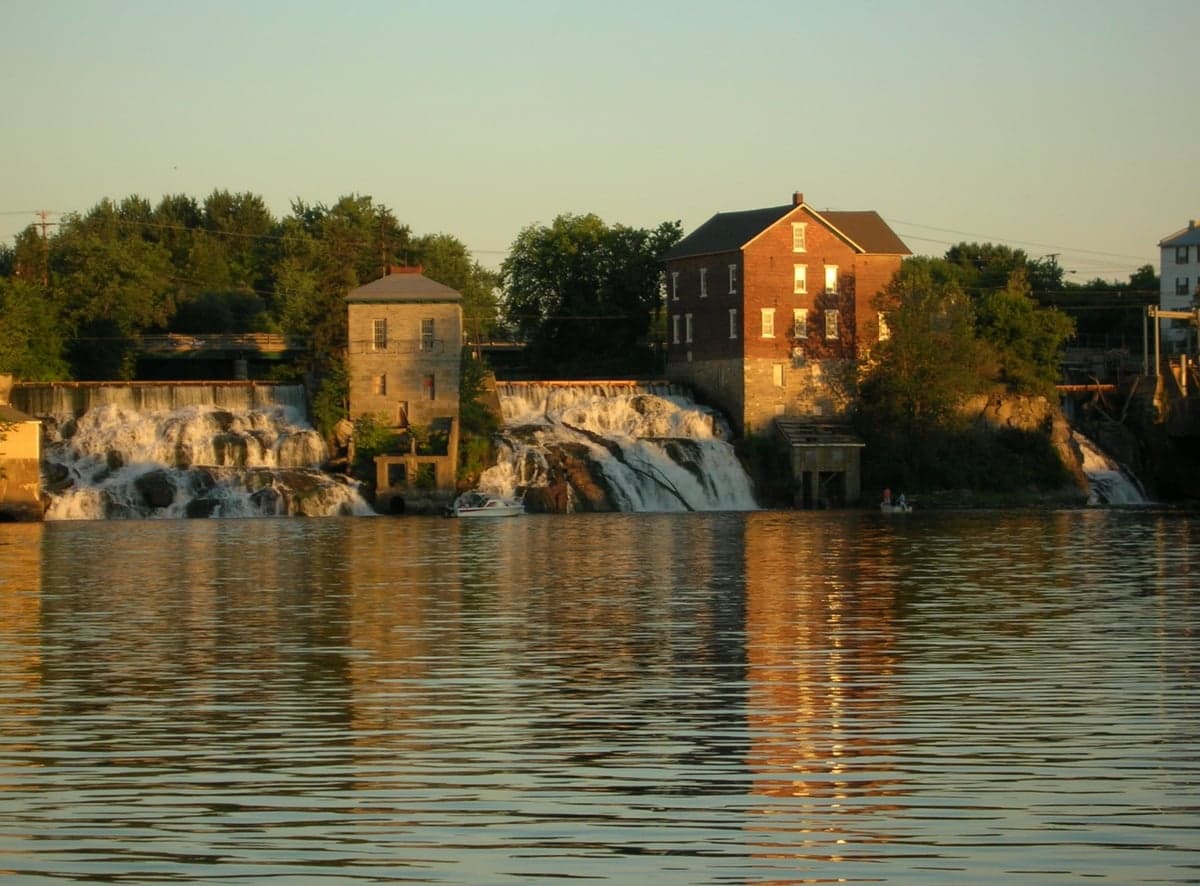
Photo: Wikipedia
Personal Sovereignty in Vergennes, VT
Moderate friction. Expect trade-offs in some aspect of personal liberty and independence.
What does Personal Sovereignty tell us?
Personal Sovereignty measures your capacity for self-reliance and independence with minimal government friction. Higher scores mean fewer barriers between you and the way you want to live... but it assumes you have the space you need and good neighbors.
What does this tell us?
Personal Sovereignty measures your capacity for self-reliance and independence with minimal government friction. Higher scores mean fewer barriers between you and the way you want to live... but it assumes you have the space you need and good neighbors.
State Policy
Energy independence: Importer (15% of energy produced in-state)
Personal Liberty
Homesteading

Personal Liberty Analysis
For the individual or family prioritizing personal sovereignty, Vergennes, Vermont presents a study in contradictions. As Vermont’s smallest city, it offers a tight-knit, rural atmosphere where self-reliance is a practical necessity, yet it operates under the full weight of one of the most progressive state governments in the nation. The day-to-day autonomy you experience here is heavily shaped by state-level mandates on everything from energy to education, making it a location where local community resilience must constantly push back against Montpelier’s reach. Your personal freedom will be defined less by what the city allows and more by how effectively you can navigate and insulate yourself from state-level overreach.
Tax burden and regulatory posture for residents and small businesses
Vermont’s tax burden is among the highest in the country, and Vergennes residents feel this acutely. The state imposes a progressive income tax with a top marginal rate of 8.75%, and property taxes are notoriously high, often exceeding $2.00 per $100 of assessed value when combining state and local education taxes. For a small business owner or a family trying to build wealth, this is a significant drag. The regulatory environment is equally demanding, with strict Act 250 land-use laws that can turn even a modest home addition or a new workshop into a bureaucratic ordeal. While the city itself may have a more pragmatic, working-class attitude compared to wealthier resort towns, you are still subject to state-level building codes, energy efficiency mandates, and environmental regulations that can feel intrusive for anyone seeking to operate with minimal government interference. The cost of compliance here is a real, recurring expense.
Self-defense rights and the reality of Vermont gun laws
On the surface, Vermont’s gun laws are a bright spot for the sovereignty-minded. The state has a proud tradition of constitutional carry — no permit is required to carry a concealed firearm, and there is no state-level registration or licensing scheme for long guns or handguns. However, the picture has darkened since 2018. Following a school shooting threat, the legislature passed Act 94, which raised the purchase age to 21, banned magazines over 10 rounds (with a few exceptions), and outlawed bump stocks. A 2023 law, S.4, further restricted carrying firearms in public buildings, hospitals, and schools, and created a "risk-based" extreme risk protection order (ERPO) process. You can still own and carry a firearm for self-defense, but the magazine capacity limit is a real constraint for a survivalist preparing for extended scenarios. The political climate in Chittenden County and Montpelier is hostile to gun rights, meaning further restrictions are a constant threat. In Vergennes, local sentiment is more mixed, but you will be living under state laws that are increasingly at odds with a robust self-defense posture.
Self-reliance and homesteading viability: lot sizes, zoning, and off-grid feasibility
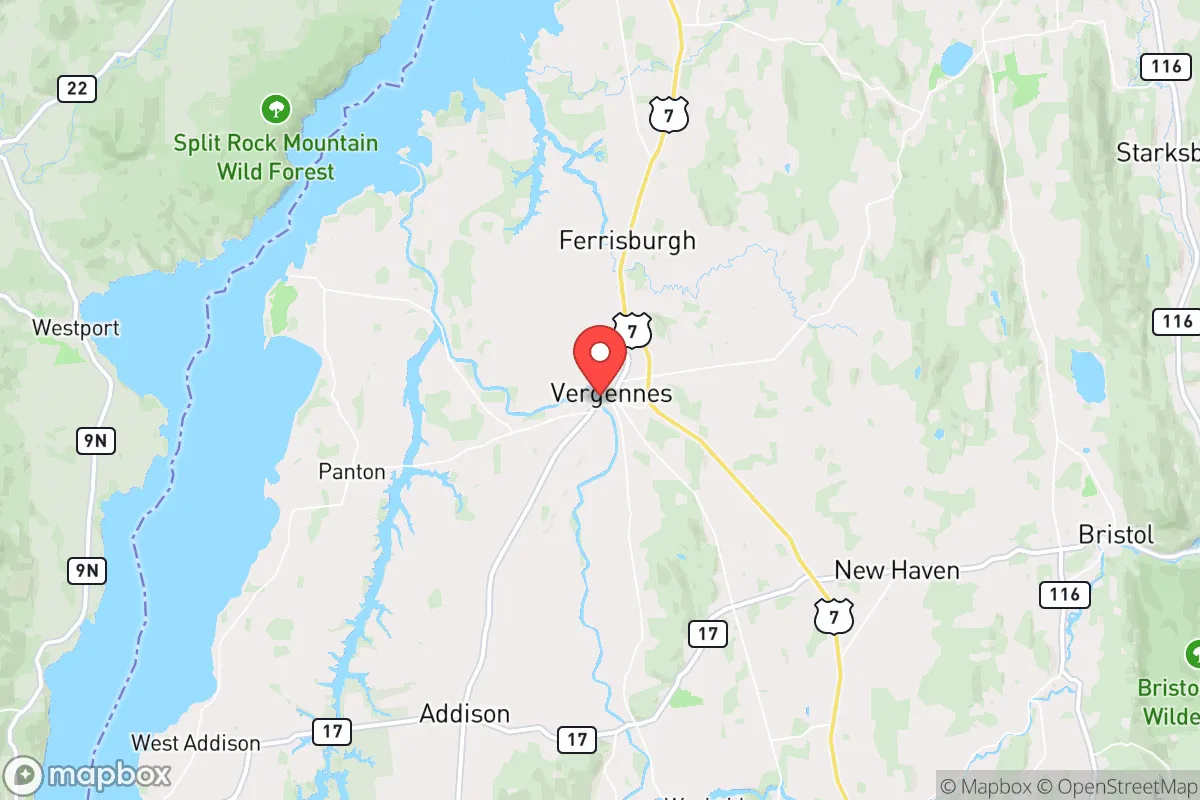
Vergennes itself is a compact city of about 2.5 square miles, so true homesteading within city limits is limited. Most residential lots are small, typically a quarter-acre or less, and city zoning restricts keeping livestock like chickens or goats. The real opportunity lies in the surrounding towns of Addison, Waltham, and Ferrisburgh, where you can find rural parcels of 2 to 10+ acres with far fewer restrictions. Off-grid living is legally challenging in Vermont. State building codes require connection to a septic system and adherence to strict energy codes, and while solar panels are common, going fully off-grid with no utility connection can be difficult to get permitted. Rainwater collection is legal for outdoor use but restricted for potable indoor use without a complex permit. For a prepper, the best strategy is to buy land in an unincorporated town outside the city and build a "camp" (a seasonal dwelling) that skirts some of the full-time occupancy codes, or to find an existing older farmhouse with grandfathered rights. The growing season is short (about 120 days), but the soil in the Champlain Valley is rich, making market gardening a viable side pursuit.
Personal liberties: parental rights, medical autonomy, speech, and property
This is where the tension between local life and state control is most acute. Vermont has some of the strongest parental rights laws on paper, including a "Parental Bill of Rights" that affirms a parent’s fundamental right to direct their child’s education and healthcare. However, the state also mandates comprehensive sex education and has no opt-out for LGBTQ+ content, which can conflict with conservative values. Medical autonomy is severely restricted. Vermont was one of the first states to mandate childhood vaccinations for school attendance, with only a medical exemption allowed (no religious or philosophical exemptions). During the COVID-19 pandemic, the state imposed some of the longest-lasting emergency orders in the nation, including a mask mandate for children under 5. For a parent concerned about medical freedom, this is a major red flag. Free speech is protected, but the social climate in much of Vermont is uniformly progressive, meaning expressing dissenting views on public health or education can lead to social ostracism. Property rights are heavily circumscribed by Act 250, which gives state regulators broad authority over any development that could affect "aesthetics" or "community character." You do not have the right to do whatever you want with your land. A neighbor can effectively veto a new building if they claim it blocks their view of the Green Mountains.
In the final analysis, Vergennes offers a mixed bag for the sovereignty-minded individual. The community itself is resilient, self-reliant, and historically independent — a legacy of its shipbuilding and industrial past. You can find neighbors who share your concerns about government overreach and who will help you in a crisis. However, you are swimming against a strong state-level current. Compared to a place like rural New Hampshire or northern Idaho, Vermont’s regulatory grip on your property, your medical choices, and your children’s education is much tighter. For a survivalist or prepper, Vergennes is a location where you can build a solid local network and enjoy a beautiful, productive landscape, but only if you are prepared to fight for your freedoms at the ballot box and in the town hall, and to accept that some battles — like medical mandates — may already be lost at the state level. It is a place for the engaged, not the retreatist.

* Values derived from national, state, county, city and local statistics and may differ in a specific area. Last updated: 2026-04-30T14:48:33.000Z
Narrative content on this page is AI-generated and may contain mistakes. Verify any details that matter before acting on them.
ReloMaps may earn a commission from affiliate links at no extra cost to you.

