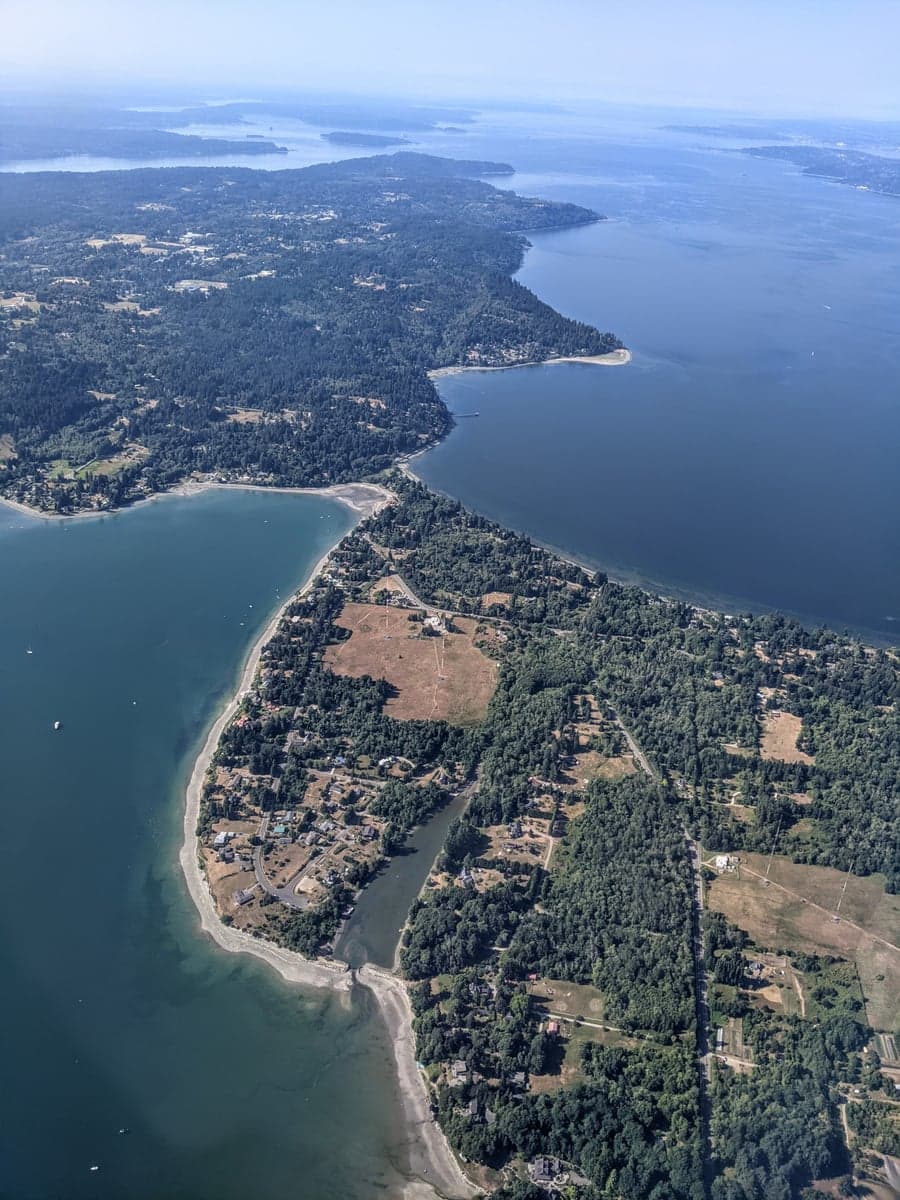
Photo: Wikipedia
Political ClimatePolitical Climate in Vashon, WA
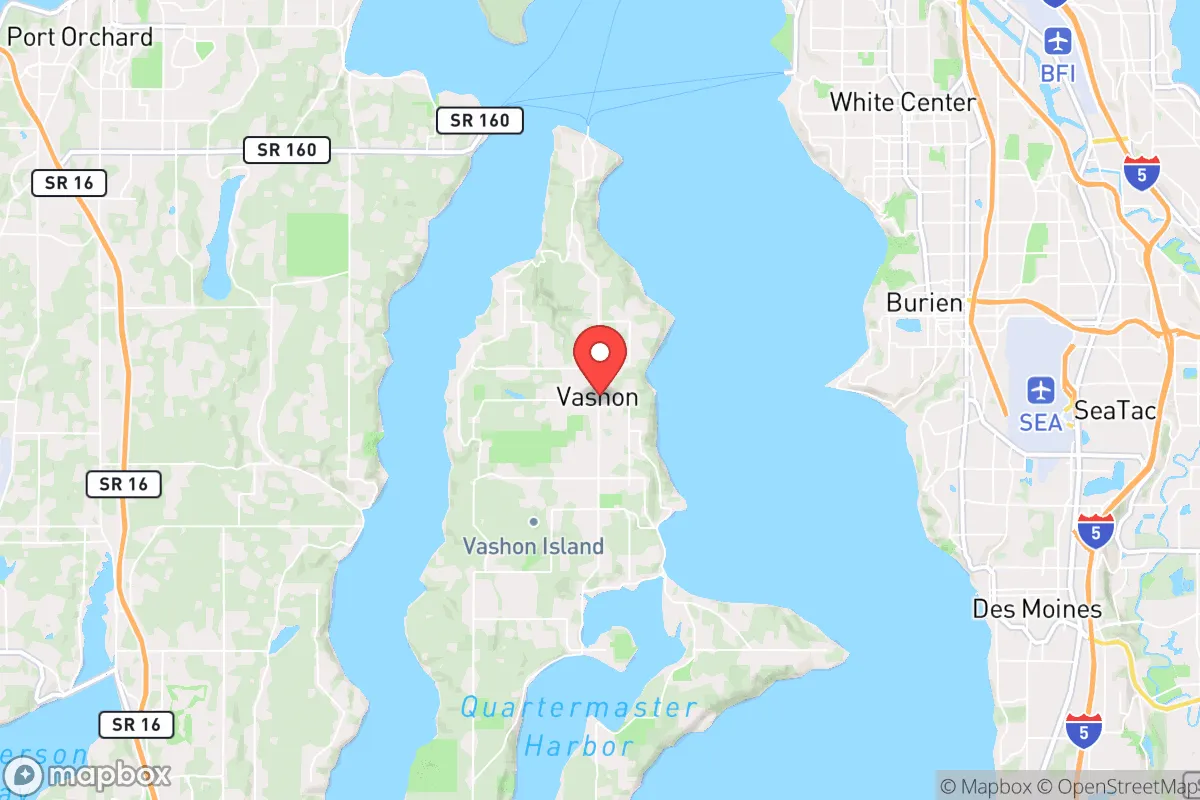
District shown is the primary district for this city’s centroid. Cities may span multiple districts.
Local Political AnalysisPolitical Analysis of Vashon, WA
Vashon’s political climate is one of the most reliably progressive pockets in the Seattle metro area, with the island’s Cook Partisan Voting Index (PVI) weighing in at a striking D+39. That means Democratic candidates regularly perform 39 points better here than the national average — a margin that puts it on par with Seattle’s densest liberal neighborhoods. The trajectory over the last decade has been a steady leftward shift, driven largely by an influx of creative professionals and remote workers who fled the city during the pandemic but kept their values. This isn’t a swingy place; presidential races here tilt 85-90% Democratic, and local nonpartisan off-year elections often see progressive candidates dominate by similar margins. The drift mirrors a broader West Coast trend, but Vashon’s density and isolation accelerate it — you’re more likely to see Gadsden flags on Bainbridge Island boats than on Vashon ferries.
How it compares
Comparisons with Washington state itself are a bit tricky because “Washington, WA” isn’t a common political unit—one presumably means King County versus the rest of the state. Vashon is markedly more liberal than Washington as a whole, which still harbors significant blue-dog Democrat and conservative pockets east of the Cascades, such as Yakima and Spokane. A drive across the Narrows Bridge to Gig Harbor reveals a stark contrast — Gig Harbor and the Key Peninsula vote redder in every statewide race; Pierce County outside Tacoma leaned 51% Republican in the 2024 governor’s race. Closer by, neighboring Bainbridge Island registers about D+28, while Tacoma’s more moderate precincts sit around D+11. Vashon’s isolation, cultural weight of Wegmans-whopper brands and local activism, and lack of stoplights means it functions like a small blue island inside a generally moderate-blue state.
What this means for residents
For liberal residents, Vashon is a living progressive reflex — most neighbors assume you hold the same views on climate action, police reform, and school funding. You can count on robust turnout for local levies and county-level Democratic party events; the Vashon Democratic Club’s monthly meetings often see 50-plus people packing a VFW Hall. But the concrete effect shapes daily life: the Whulsh Island’s zoning code is stringent, meaning new residential development is often rebuffed by group opposition to even moderate density. For conservative residents and others outside the political majority, life can feel a bit eye-rolling. If you wave a Gadsden flag or put up a Trump sign, you might get subtle social errors or head shakes, but outright conflict is rare — more a quiet withdrawal than open warfare. The real divide comes over property taxes for progressive-minded programs that conservative residents see as creeping entry for “want more state.” Non-registered voters especially find it hard to get a seat on the planning commission or school board without fitting the dominant mold. But both sides agree on one thing: the ferry system is a shared daily grievance that cuts across lines.
Culturally and in policy, Vashon stands apart from the rest of Washington in some interesting ways. The island is home to one of the per-capita most organic farmfronts in the region, a dense local food system, and a fiercely independent town council that once denied a 2,500-square-foot “big box” supermarket referendum. That moves are both ecologically progressive and a quintessentially island-distrustful favor toward big outsiders — which might explain why both left-leaning folks and libertarian-minded loggers can agree that small town rule shouldn’t be overridden. The biggest split is over how fast to grow and what growth looks like: some want infill units to bring down housing costs, others fear losing the unique 70s-vibe somberness. Think of the place as a weird activist commune with good ferry coffee.

State Political ClimatePolitical Climate in Washington
State Political AnalysisPolitical Environment in the State
Washington state has been a reliably blue stronghold in presidential elections since 1988, but its political reality is far more nuanced than a simple partisan label suggests. The state’s Democratic lean is driven overwhelmingly by King County (Seattle) and a handful of other urban cores, while vast swaths of Eastern Washington and even parts of the Puget Sound region vote reliably Republican. Over the last 20 years, the state has shifted leftward on social and environmental policy, but that shift has been met with growing resistance from rural and exurban communities, creating a deeply divided political landscape that any relocator should understand before moving.
Urban vs. rural divide
The political map of Washington is essentially a story of two states. The western third, anchored by Seattle, Bellevue, and Redmond, is among the most liberal regions in the country, with King County alone delivering roughly a third of the state’s total Democratic votes. Spokane, the largest city east of the Cascades, has historically been a moderate-to-conservative stronghold, though it has been trending purple in recent cycles. Meanwhile, rural counties like Yakima, Grant, and Stevens vote overwhelmingly Republican, often by margins of 60-70%. The divide is not just geographic but cultural: urban voters prioritize climate action, public transit, and progressive social policy, while rural voters focus on property rights, resource extraction (timber, agriculture), and resistance to state mandates. A notable exception is Clark County (Vancouver), which has become a competitive swing area as Portland expats move north, though it still leans slightly blue in statewide races.
Policy environment
Washington’s policy environment is defined by a few key structural features. The state has no personal income tax, relying instead on a high sales tax (state rate of 6.5%, with local add-ons pushing it above 10% in some cities) and a business and occupation (B&O) tax. Property taxes are moderate but have been rising due to voter-approved levies. The state has a strong regulatory posture on environmental issues, including a cap-and-trade program (the Climate Commitment Act) and strict land-use rules under the Growth Management Act. Education policy is a mixed bag: Washington spends above the national average per pupil, but outcomes vary widely by district, and the state has struggled with teacher shortages in rural areas. Healthcare is heavily regulated, with a state-based insurance exchange and expanded Medicaid under the Affordable Care Act. Election laws are among the most accessible in the country: all elections are conducted by mail, with ballots automatically sent to registered voters, same-day registration is available, and voting is generally convenient. This system has produced high turnout but also drawn criticism from conservatives who worry about ballot security, though no major fraud has been documented.
Recent policy direction
Over the past five years, Washington’s legislature has moved decisively on several fronts that matter to relocators. On gun and self-defense law, the state passed a ban on high-capacity magazines (2022) and a ban on assault-style weapons (2023), both of which are being challenged in court. A 2024 law also imposes a 10-day waiting period on all firearm purchases. On parental and education rights, the state has expanded LGBTQ+ inclusive curriculum requirements and passed laws protecting transgender students’ access to sports and facilities, which has sparked backlash in conservative districts. Speech and privacy are generally protected under the state constitution, but a 2023 law restricts the use of facial recognition technology by law enforcement. On medical and bodily autonomy, Washington has codified abortion access into state law and protects providers from out-of-state lawsuits. Property rights are a flashpoint: the state’s Growth Management Act limits development in rural areas, and a 2023 law preempts local zoning to allow more density near transit, which has angered suburban homeowners. Taxation remains a perennial issue; a 2021 state supreme court ruling upheld a capital gains tax on high earners, which opponents argue is an income tax in disguise. Ballot access remains broad, but a 2024 law requires signature verification on all mail ballots, a modest tightening that has drawn support from both parties.
Civil unrest & political movements
Washington has a long history of political activism, from the WTO protests in Seattle (1999) to the 2020 Black Lives Matter demonstrations that saw parts of downtown Seattle occupied. The state is also home to organized conservative movements, particularly in Eastern Washington, where groups like the Washington State Republican Party and local “Moms for Liberty” chapters have been active in school board races and ballot initiatives. Immigration politics are a major fault line: Washington is a sanctuary state, with laws limiting local law enforcement cooperation with federal immigration authorities, and Seattle has gone further by restricting ICE access to city facilities. This has created tension with rural counties, some of which have declared themselves “Second Amendment sanctuaries” or passed resolutions opposing state mandates. Election integrity controversies have been relatively muted compared to other states, though some Republican county officials have called for hand-counting ballots. A visible flashpoint for new residents is the “Seattle is dying” narrative around homelessness and drug use, which has fueled a backlash against progressive policies and contributed to the election of more moderate city council members in 2023.
Projection
Over the next 5-10 years, Washington is likely to remain a blue state at the presidential level, but the margin could narrow as in-migration from California and Oregon brings both progressive and conservative newcomers. The key demographic trend is the growth of the Puget Sound region (Seattle, Tacoma, Everett) and the Vancouver-Portland metro, which will reinforce Democratic dominance in statewide races. However, rural counties are likely to become even more Republican as they feel increasingly alienated from state policy. The wild card is the state’s independent voters, who make up about 30% of the electorate and have shown willingness to split tickets, particularly on tax and property rights issues. A relocator moving in now should expect the state to continue its progressive trajectory on social and environmental policy, but with periodic backlash at the local level, especially in suburban and exurban areas where housing costs and school policies are driving voter frustration.
For a new resident, the bottom line is that Washington offers a high degree of personal freedom on some dimensions (no income tax, mail voting, abortion access) but significant regulation on others (gun laws, land use, environmental rules). Conservatives will find like-minded communities in Eastern Washington and parts of the suburbs, but they will be in the minority in statewide elections. Liberals will find a welcoming policy environment in the urban cores but may be frustrated by the state’s high cost of living and housing scarcity. The state’s political climate is best understood as a negotiated truce between two very different regions, and your experience will depend heavily on which side of the Cascades you choose to call home.
* Values derived from national, state, county, city and local statistics and may differ in a specific area. Last updated: 2026-09-12T19:13:52.000Z
Narrative content on this page is AI-generated and may contain mistakes. Verify any details that matter before acting on them.
ReloMaps may earn a commission from affiliate links at no extra cost to you.

