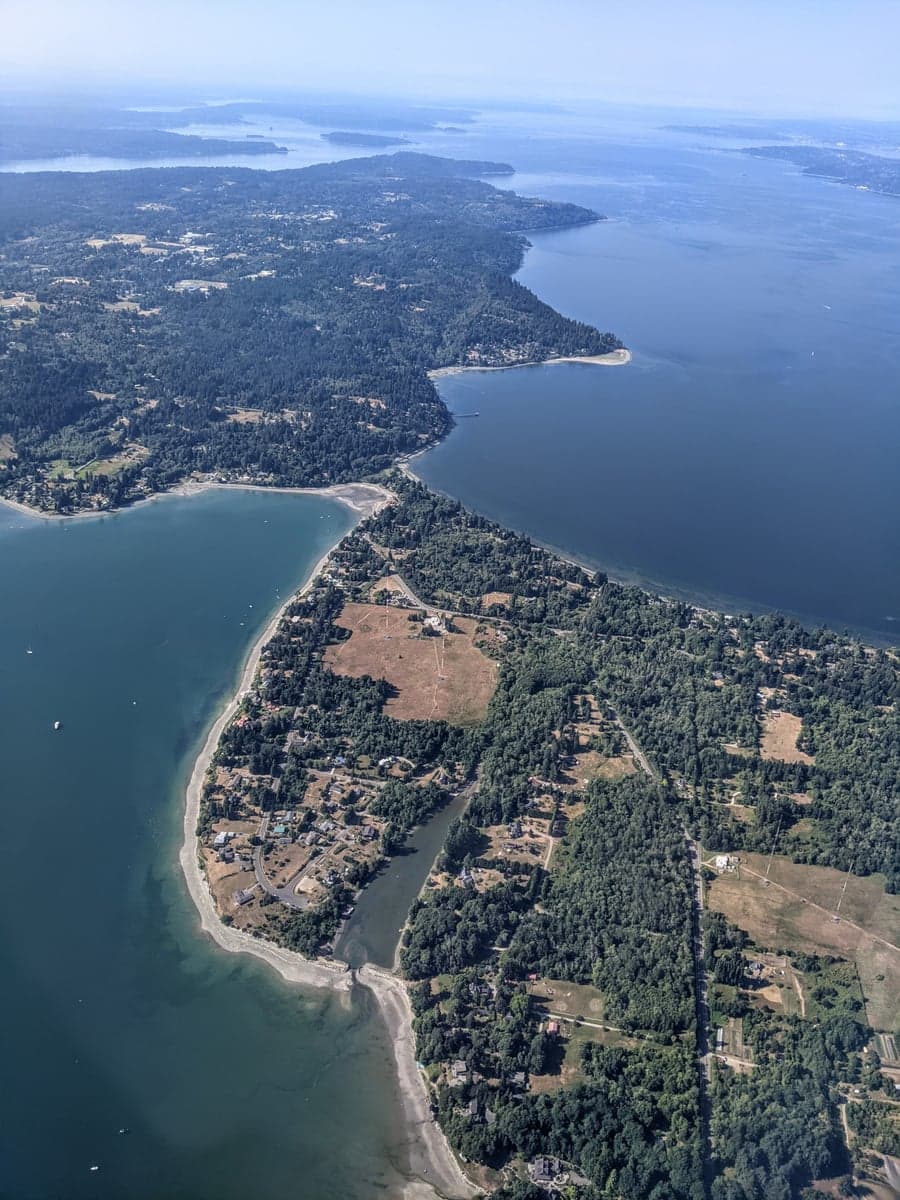
Photo: Wikipedia
Demographics of Vashon, WA
Affluence Level in Vashon, WA
An upper-middle-class area. Household wealth, education levels, and homeownership run ahead of national benchmarks.
People of Vashon, WA
The people of Vashon, Washington today number 10,424, making it one of the most distinctive small communities in the Puget Sound region. The island is notably less diverse than Seattle and King County as a whole, with 85.2 percent of residents identifying as white, a foreign-born population of just 2.9 percent, and a median age that skews older. The community is characterized by a high concentration of college-educated residents (51.9 percent), a strong arts and agricultural identity, and a fiercely independent, insular character that stems from its geographic isolation. While the population has grown modestly, its demographic mix is shifting slowly toward slightly more Hispanic (6.1 percent) and East/Southeast Asian (1.2 percent) residents, while the Black (0.2 percent) and Indian subcontinent populations (below 0.1 percent) remain minute.
How the city was settled and grew
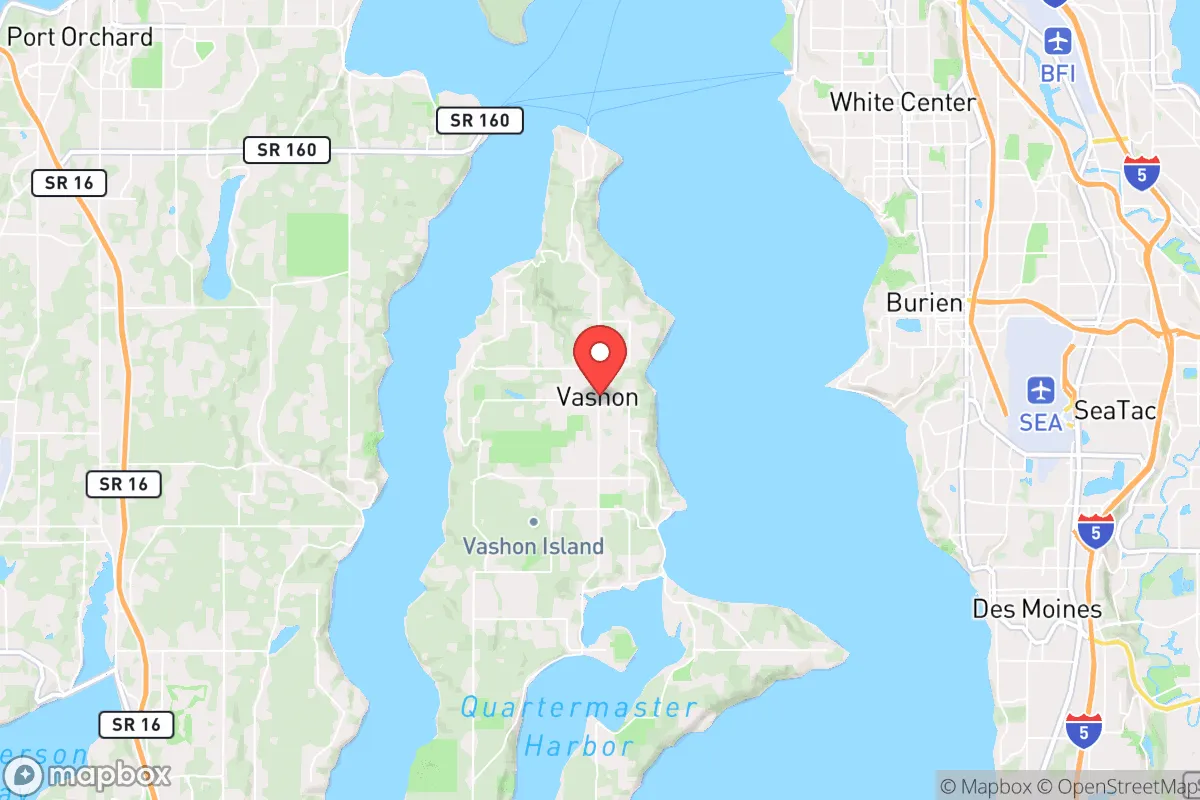
Vashon Island was originally home to Coast Salish peoples, primarily the Suquamish Tribe, who maintained seasonal camps around Dockton and Portage on the island's south end. The first permanent non-Native settlers were white American and European homesteaders who arrived in the 1850s and 1860s, drawn by the Donation Land Claim Act of 1850. These early farmers and loggers clustered in what is now Vashon Heights and the central Vashon Town core, clearing the dense forest for fruit orchards, dairy farms, and a short-lived hop boom. By the 1880s, a wave of Scandinavian immigrants—particularly Swedes, Norwegians, and Danes—arrived to work in logging and to build the island's growing dairy and berry export businesses. They settled thickly in the Burton area on the island's southwestern lobe, where a deep-water dock allowed steamships to haul produce directly to Tacoma and Seattle. A second significant white settlement group arrived during the 1890s–1910s as people from other parts of the U.S. and the British Isles were drawn to the island's new brickworks and a coal mine at Glennacreek. The island’s population peaked around 4,000 in the 1910s, then declined as the brick plants closed and ferry service remained irregular, leaving an island dominated by a small, close-knit, and almost entirely white rural population through the mid-20th century.
Modern era (post-1965)
The modern transformation of Vashon’s population began with a new wave of domestic in-migration in the 1970s. The opening of the state ferries’ passenger-only "Vashon Express" route to Seattle and the growing counterculture scene in the Pacific Northwest drew a diverse group of artists, writers, and families seeking a bucolic, affordable retreat from Seattle’s urban pressures. This wave was overwhelmingly white and disproportionately college-educated, settling across the island but particularly in the woodsy Maury Island area and along the west side near Chautauqua. They built a community centered on progressive politics, organic farming, and artisanal craft. Meanwhile, immigrants from Mexico and Central America began arriving in the 1980s, following earlier connections with the island's agricultural revival—specifically the strawberry and raspberry farms around Burton and Dilworth. Today, the Hispanic population of 6.1 percent is the island’s most visible non-white demographic, concentrated among those agricultural neighborhoods and in the rental housing stock near the Vashon Town core. The East/Southeast Asian population (1.2 percent) is small but established, largely in the professions (medicine, education) whose families live in the Vashon Town center and around Cemetery. The Black or African American population remains effectively zero, and the foreign-born share of 2.9 percent is among the lowest in King County.
The future
The population of Vashon is slowly aging and likely to become slightly more modestly diverse in the next 10 to 20 years. The island's real estate market has strengthened significantly since 2020, driving further white in-migration of remote workers and retirees who can afford median home prices now well exceeding $800,000. The Hispanic population is expected to grow slowly from natural fertility and continued labor demand in the berry and nursery industries, but high housing costs are pushing younger families—Hispanic and white alike—off the island. Increasingly, new residents are older, wealthier, and more or conservative, especially in Vashon Heights and Maeyne, while Burton and Dockton retain a more rural, year-round, and slightly more socioeconomically mixed population. The foreign-born share will likely tick up, but will remain anchored to the Hispanic agricultural workforce and a small number of East/Southeast Asian professionals—diversity will broaden only where new immigrants can afford the housing. The island’s overall character is solidifying as a well-educated, politically diverse white community with a modest Hispanic minority and a tiny Asian minority, a pattern that will persist unless the local economy diversifies significantly beyond tourism, agriculture, and home construction. For someone considering a move to Vashon, the reality is of a place that retains a small-town, almost rural feel, with a cultural core that is progressive but practically homogeneous, and where demographic change proceeds at a pace slower than the rest of King County.

* Values derived from national, state, county, city and local statistics and may differ in a specific area. Last updated: 2026-09-12T19:13:52.000Z
Narrative content on this page is AI-generated and may contain mistakes. Verify any details that matter before acting on them.
ReloMaps may earn a commission from affiliate links at no extra cost to you.

