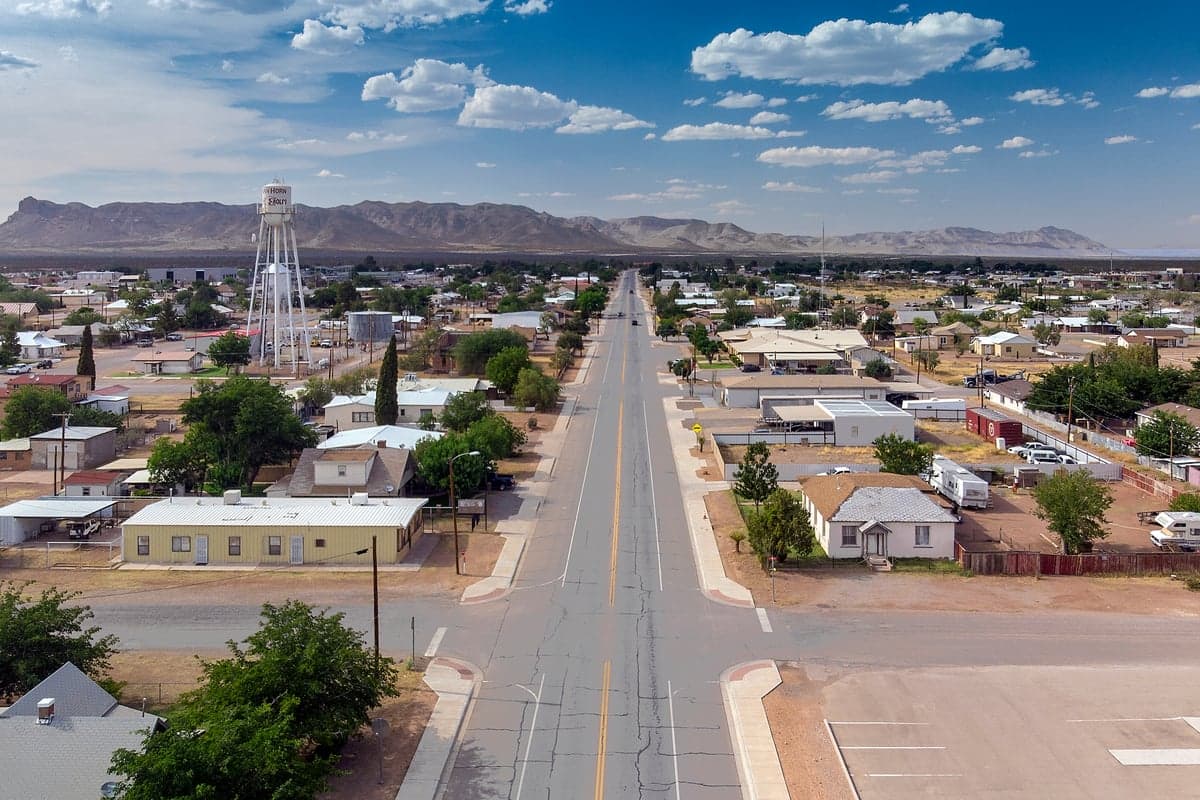
Photo: Wikipedia
Strategic Assessment of Van Horn, TX
Strong survivability profile. Good buffer from population centers, with manageable environmental and tactical risks.
What does the Strategic Assessment tell us?
Our Strategic Assessment grades tactical survivability of an area. Major population centers, military targets, fallout zones, natural disasters, and border exposure all drive risk — lower exposure means a more defensible position in a crisis.
This is heavily inspired by Joel Skousen's Strategic Relocation book. Highly recommended you checkout the book ($)What does this tell us?
Our Strategic Assessment grades tactical survivability of an area. Major population centers, military targets, fallout zones, natural disasters, and border exposure all drive risk — lower exposure means a more defensible position in a crisis.
This is heavily inspired by Joel Skousen's Strategic Relocation book. Highly recommended you checkout the book ($)Strategic Pillars
Key Distances
Regional Safe Places
Below is our recommended "safe zones" in Texas and the surrounding area based on our strategic heuristics. For most people, it's unrealistic to live in a “safe zone” full-time due to work, family or other personal reasons. They tend to be more rural. However, many of these areas are perfect for second homes and retreat properties that double as a vacation home or even a short-term rental.

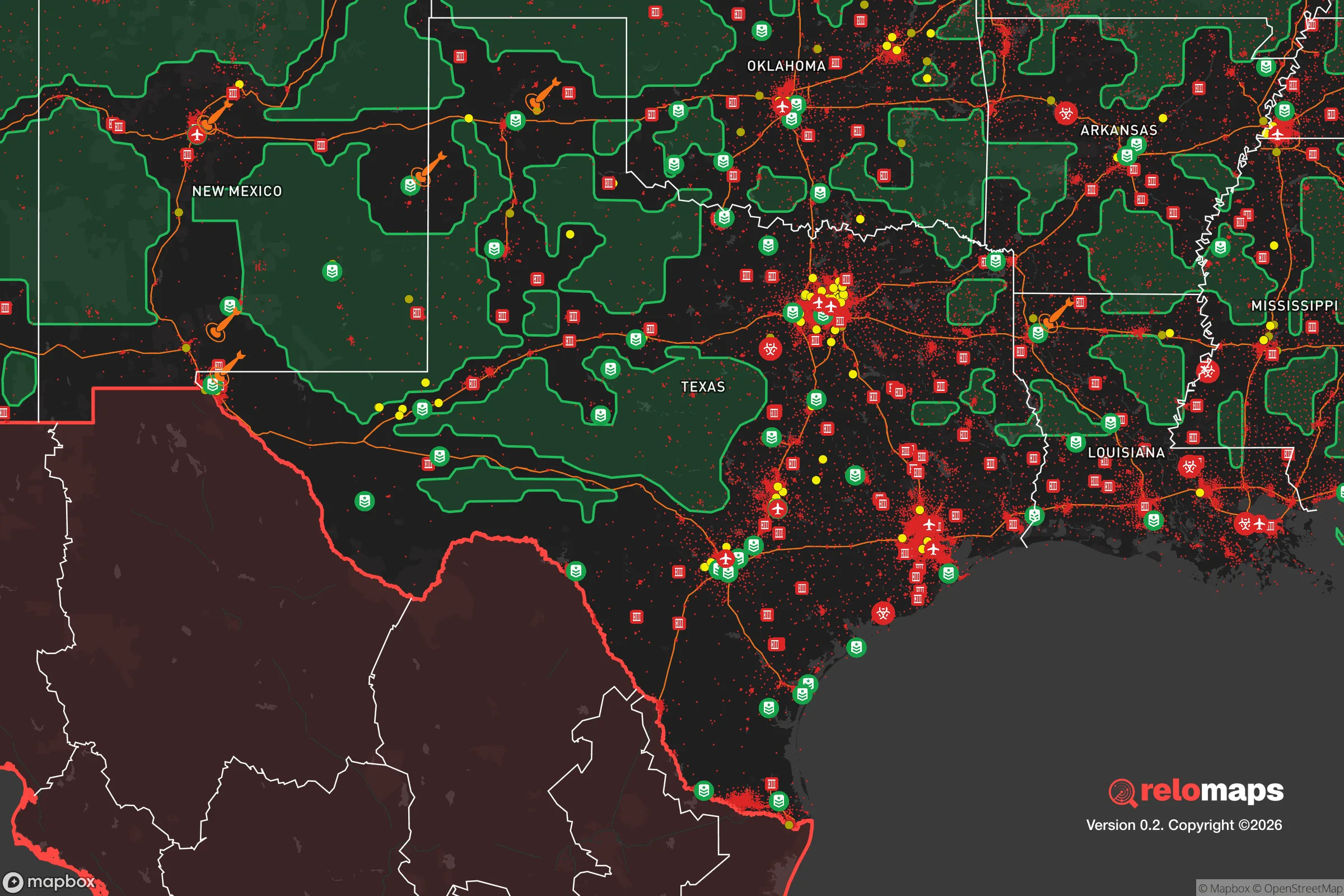


Important Note: For informational purposes only. This does not mean nothing bad ever happens in the green zones. Please use common sense. This is based on public data and modeled with AI. We tried to take a conservative approach but mistakes happen. We update this regularly as new information becomes available.
Solar Generator Recommendations
Backup power matters more here than in safer locations. We've picked three solar generators across budgets and capacity tiers — start with the budget unit if you only need a few essentials, or step up if you want to run a fridge and HVAC for days at a time.
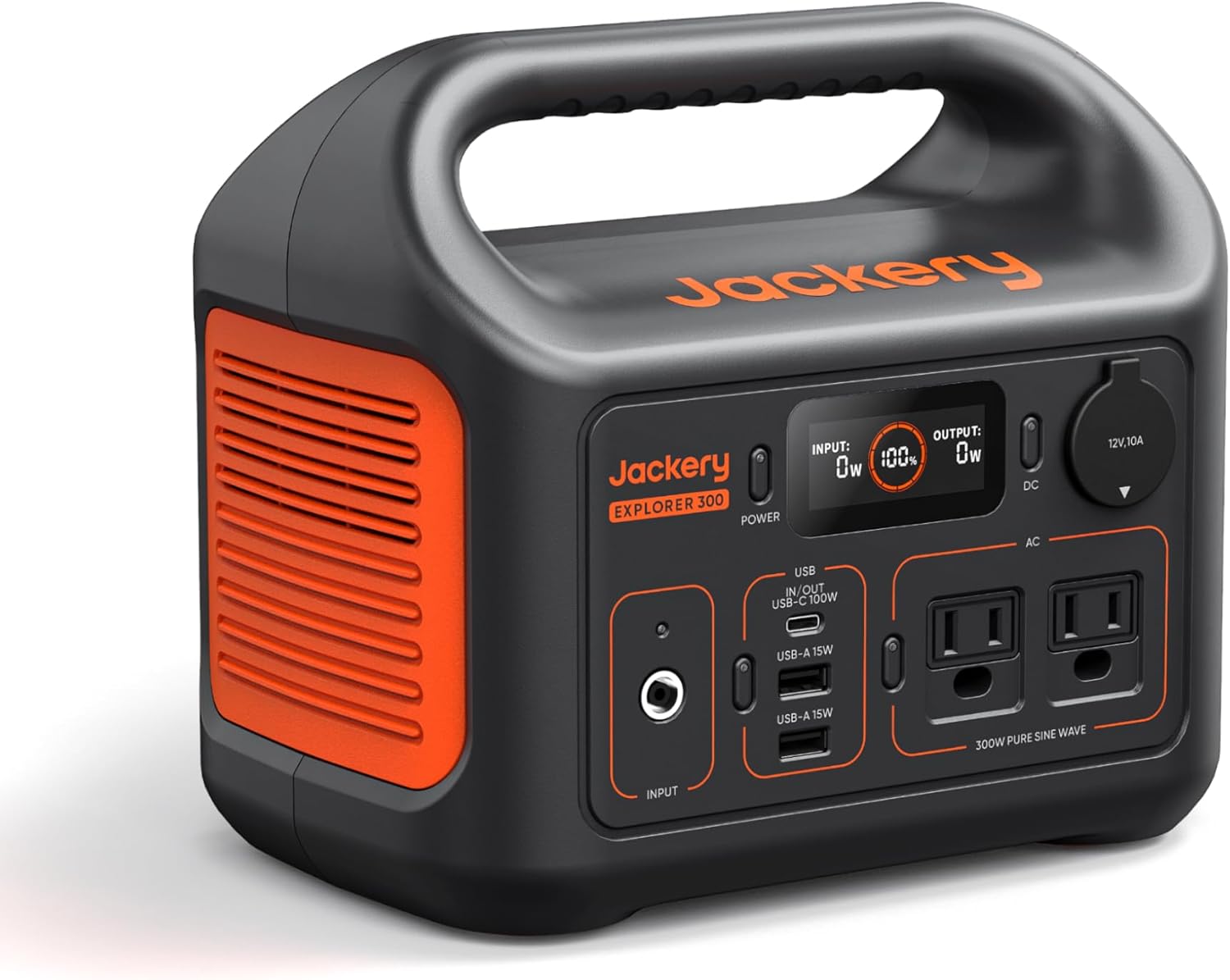
Jackery Portable Power Station Explorer 300
Budget OptionPower on the Go: Weighing only 11 lbs, it's convenient to set up and store with book-sized foldable solar panels

BLUETTI Portable Power Station AC180
Designed for both indoor and outdoor scenarios, AC180 is highly capable as it has a robost capacity and continuous output power.

EF ECOFLOW DELTA Pro Ultra Power Station
Upgraded PickEcoFlow DELTA Pro Ultra is a whole-home energy system designed to grow with your family. Integrated with the Smart Home Panel 2, it scales to meet your evolving energy needs — keeping your home powered, intelligent, and secure through every stage of life.
We earn a commission, at no additional cost to you.
Strategic Assessment Analysis
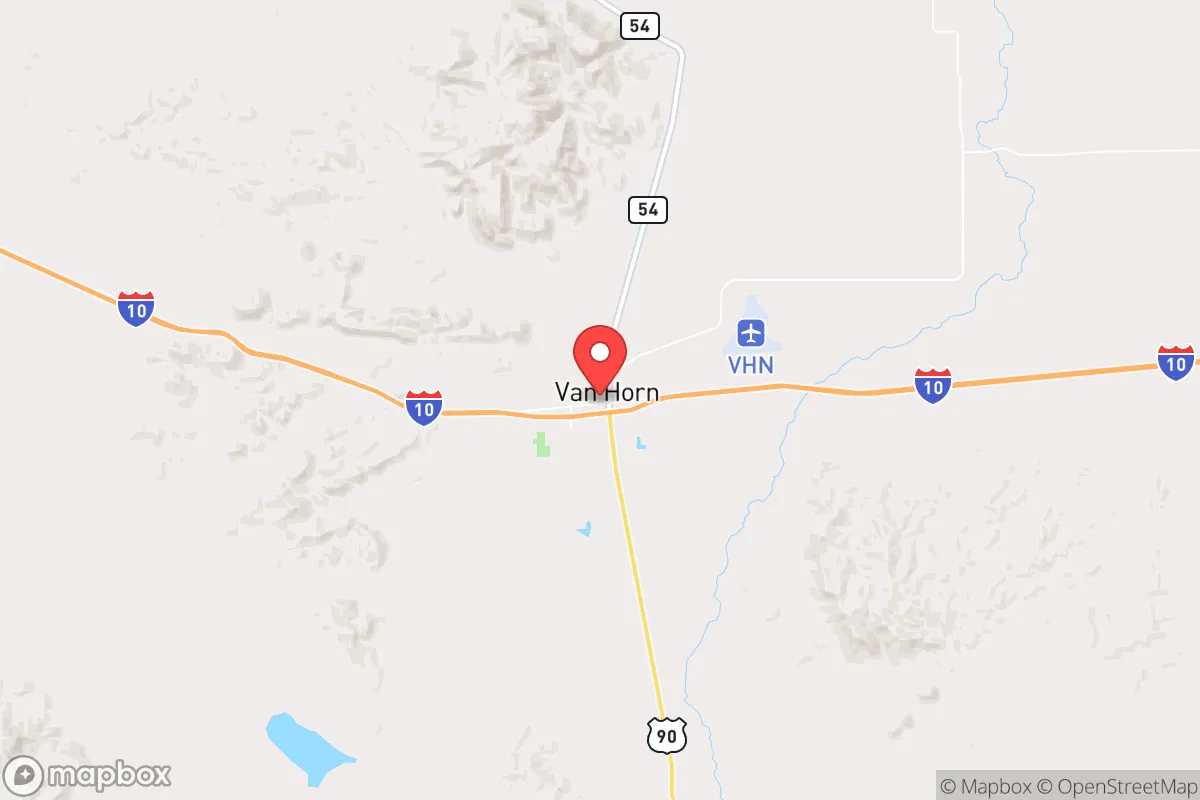
Van Horn, Texas, offers a compelling strategic profile for the relocation-minded reader prioritizing resilience and self-sufficiency, largely due to its extreme remoteness and position as a logistical hub in the vast Trans-Pecos region. Situated at the intersection of Interstate 10 and U.S. Highway 90, this town of roughly 1,800 residents sits over 120 miles from the nearest major population centers—El Paso to the west and Midland-Odessa to the northeast—providing a natural buffer against the cascading failures and social unrest that can accompany urban disasters. Its location in Culberson County, the least densely populated county in Texas, means that a relocator here is buying into a landscape defined by wide-open spaces, low traffic, and a community that has historically weathered boom-and-bust cycles tied to the railroad, mining, and now, increasingly, logistics and border security.
Geographic position and natural advantages for long-term survival
Van Horn’s primary strategic asset is its position within the Chihuahuan Desert, a high-elevation (4,000+ feet) environment that offers distinct advantages over more humid or coastal regions. The area’s arid climate means fewer mold and moisture-related infrastructure failures, and the low humidity is a natural preservative for stored food, equipment, and building materials. The surrounding terrain—a mix of flat desert basins, rugged mountains like the Sierra Diablo and Apache Mountains, and sparse juniper-piñon woodlands—provides ample opportunities for off-grid living, with many parcels of land available for purchase at relatively low cost compared to the rest of Texas. Water is the critical variable here, but the region sits atop the Bone Spring-Victorio Peak aquifer, and while it’s not a high-yield source, shallow wells can be viable in certain areas. The town itself draws from the Rio Grande Basin via the Van Horn Water System, but a self-sufficient relocator would need to invest in rainwater catchment or a private well, as municipal supply is limited and subject to drought conditions. The natural isolation also means that Van Horn is far from major fault lines, hurricane zones, and floodplains, reducing exposure to the most common natural disasters that plague other parts of Texas.
Risks, exposures, and proximity to fallout-relevant landmarks
While Van Horn’s remoteness is a strength, it also carries specific risks that a strategic relocator must weigh. The most significant man-made exposure is its proximity to the Permian Basin oil and gas fields, roughly 90 miles to the northeast, which are a prime target for industrial accidents, pipeline ruptures, or even sabotage in a conflict scenario. The town itself sits along the I-10 corridor, a critical east-west artery for military logistics and commercial transport, which could become a chokepoint or target during a major disruption. Additionally, the nearby Fort Bliss military installation (about 110 miles west) and the White Sands Missile Range (about 150 miles northwest) are both potential sources of electromagnetic pulse (EMP) or kinetic threats, though Van Horn’s distance and the intervening mountain ranges provide some shielding. For those concerned with nuclear fallout, the prevailing winds in this region are generally from the southwest, meaning that a detonation at the Permian Basin or Fort Bliss would likely carry fallout away from Van Horn, but a strike on the strategic I-10 corridor could still pose a risk. The area is also subject to extreme drought and wildfire risk, particularly in the dry grasses and brush of the surrounding rangelands, which can spread rapidly with the high winds common to the region. A relocator should plan for a defensible perimeter around any property, including firebreaks and a reliable water source for fire suppression.
Practical resilience for a relocator: food, water, energy, and defensibility
For the individual or family serious about self-sufficiency, Van Horn presents a mixed but workable picture. Food security is the weakest link: the local grocery store is a small Brookshire’s, and the nearest major supermarkets are in El Paso or Odessa, a two-hour drive each way. A relocator would need to rely heavily on bulk purchasing, home gardening (possible with raised beds and drip irrigation in the short growing season), and hunting—mule deer, javelina, and quail are present, but populations are not dense. Water is the non-negotiable: municipal water is treated and reliable but expensive, and a well-drilled to the Bone Spring aquifer can cost $15,000–$25,000, with variable yields. Rainwater catchment is feasible given the average 10–12 inches of annual precipitation, but storage capacity must be substantial (5,000+ gallons) to bridge dry spells. Energy independence is more achievable: the region averages over 300 sunny days per year, making solar photovoltaic systems highly effective, and wind speeds are moderate but consistent enough for small-scale turbines. Net metering is available through the local electric cooperative, but a battery backup system is advisable given the area’s vulnerability to grid failures from winter storms (as seen in 2021) or summer heat waves. Defensibility is a strong point: the low population density means that a well-chosen property with good sightlines and a single access road can be secured with minimal effort. The local sheriff’s office is responsive but understaffed, so a relocator should be prepared to handle security personally, including maintaining a firearm and establishing a neighborhood watch with like-minded neighbors. The community itself is small and tight-knit, with a strong ranching and veteran presence, which can be an asset for mutual aid but also means that newcomers should invest time in building trust before relying on local networks.
The overall strategic picture for Van Horn is one of high reward paired with high responsibility. It offers genuine isolation from the chaos of urban centers, a defensible terrain, and a climate that supports off-grid energy and long-term storage, but it demands that a relocator bring or develop significant skills in water management, food production, and self-defense. The town is not a prepper’s fantasy—it has real economic challenges, limited healthcare access (the nearest hospital is in Pecos, 70 miles away), and a harsh environment that will test anyone unprepared for desert living. For the reader who values distance from fallout targets, low population density, and a community that values self-reliance, Van Horn is a strong candidate. But it is not a place for those seeking a turnkey solution; it is a base camp for building a resilient life from the ground up, with the understanding that the same isolation that protects you also means you are largely on your own when things go wrong.

* Values derived from national, state, county, city and local statistics and may differ in a specific area. Last updated: 2026-11-11T17:19:33.000Z
Narrative content on this page is AI-generated and may contain mistakes. Verify any details that matter before acting on them.
ReloMaps may earn a commission from affiliate links at no extra cost to you.

