 Popular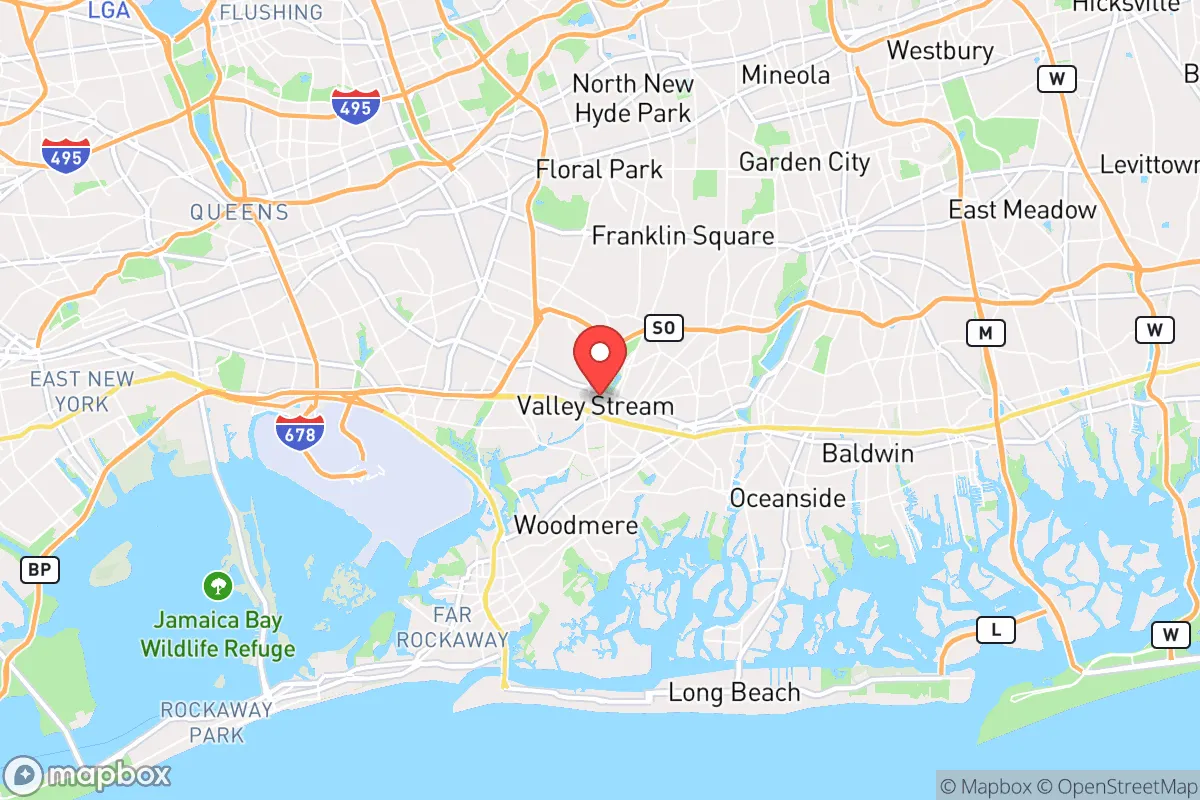
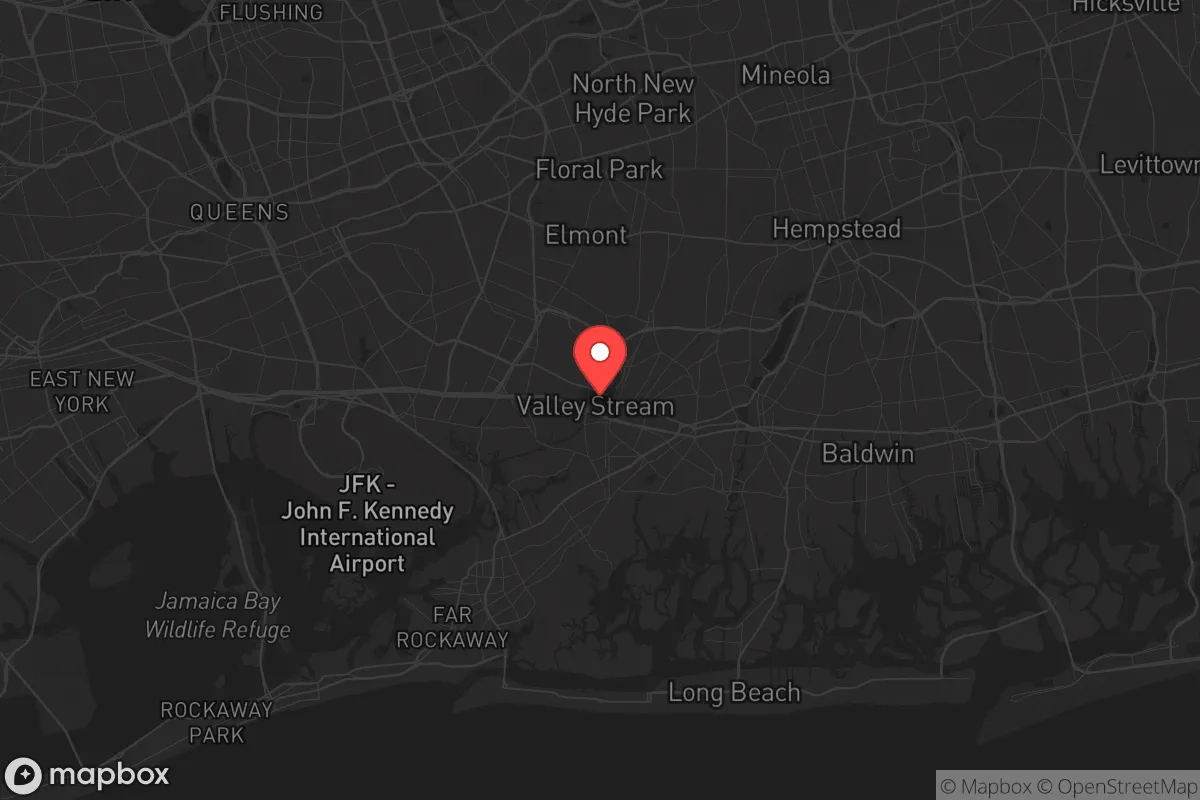
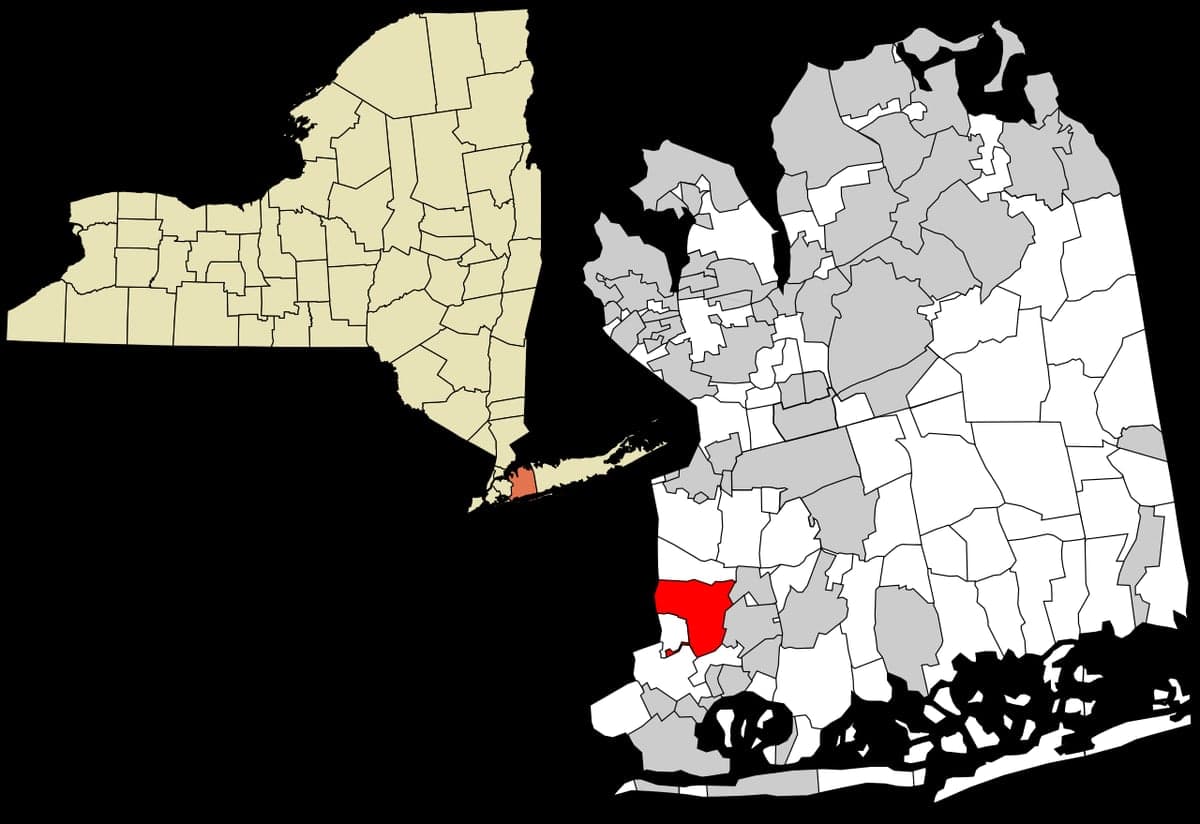
Photo: Wikipedia
Strategic Assessment of Valley Stream, NY
High tactical risk. This location is likely close to major population centers, strategic targets, or sits in a high-disaster corridor. A retreat property and careful exit planning is required.
What does the Strategic Assessment tell us?
Our Strategic Assessment grades tactical survivability of an area. Major population centers, military targets, fallout zones, natural disasters, and border exposure all drive risk — lower exposure means a more defensible position in a crisis.
This is heavily inspired by Joel Skousen's Strategic Relocation book. Highly recommended you checkout the book ($)What does this tell us?
Our Strategic Assessment grades tactical survivability of an area. Major population centers, military targets, fallout zones, natural disasters, and border exposure all drive risk — lower exposure means a more defensible position in a crisis.
This is heavily inspired by Joel Skousen's Strategic Relocation book. Highly recommended you checkout the book ($)Strategic Pillars

Key Distances
Regional Safe Places
Below is our recommended "safe zones" in New York and the surrounding area based on our strategic heuristics. For most people, it's unrealistic to live in a “safe zone” full-time due to work, family or other personal reasons. They tend to be more rural. However, many of these areas are perfect for second homes and retreat properties that double as a vacation home or even a short-term rental.
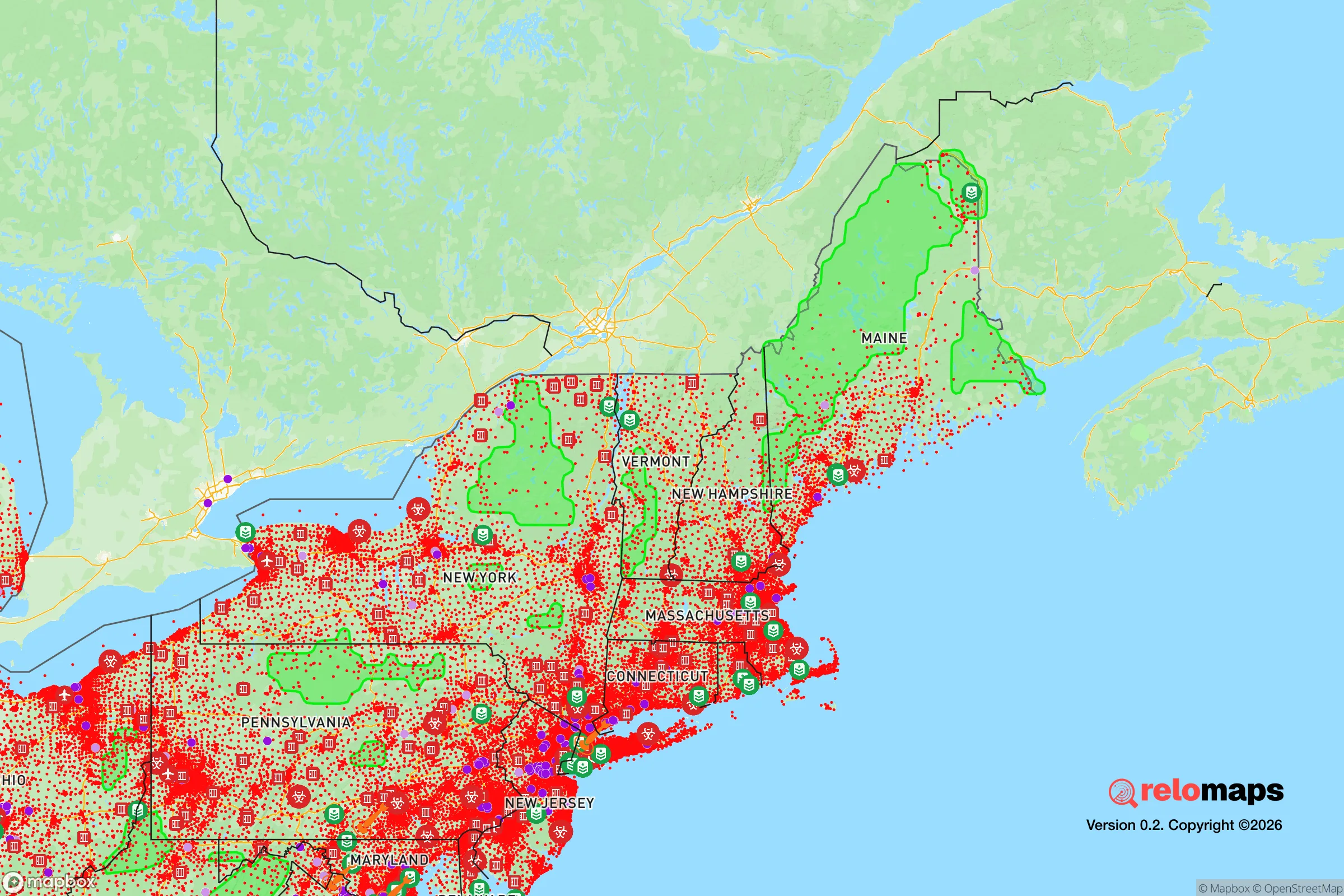
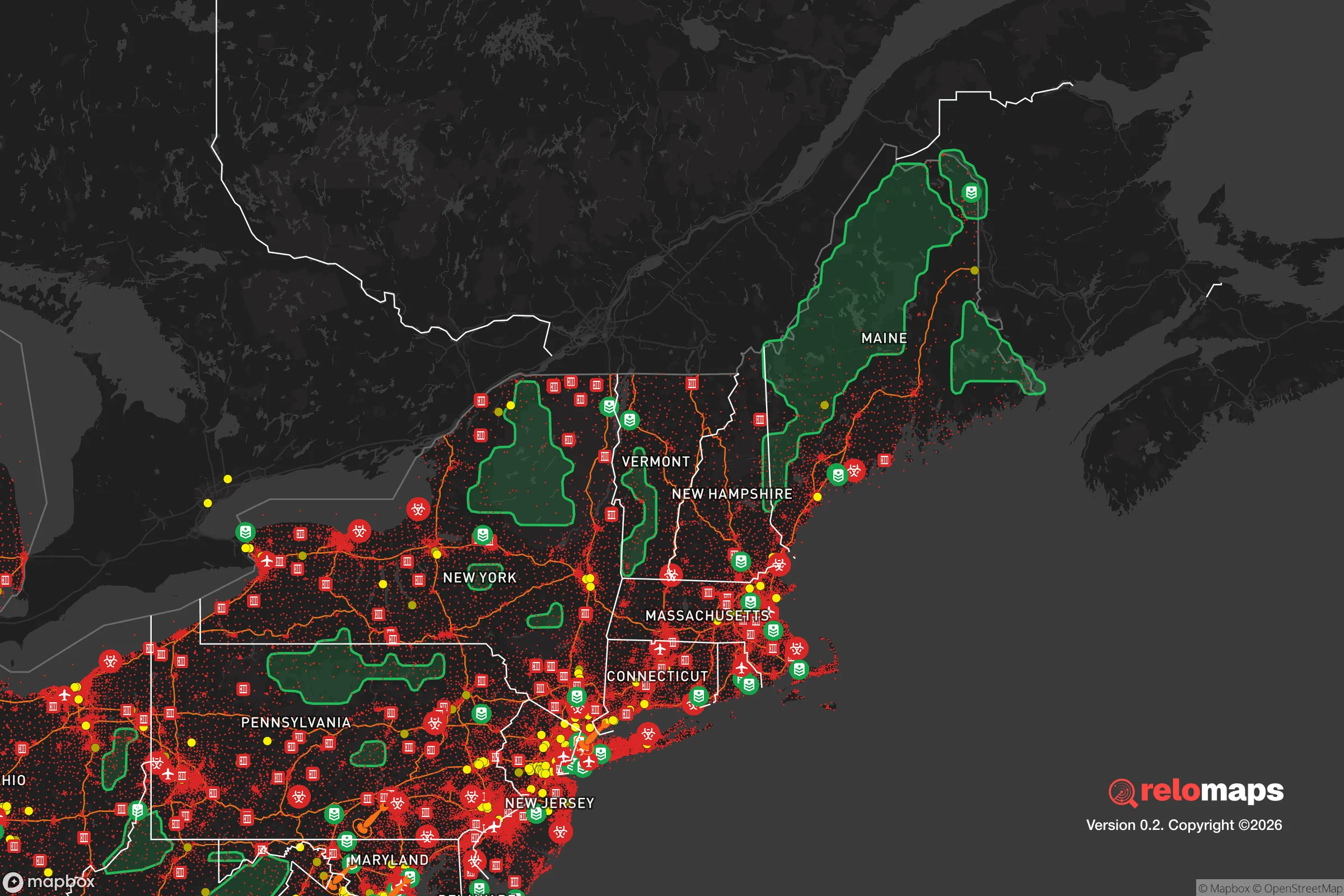


Important Note: For informational purposes only. This does not mean nothing bad ever happens in the green zones. Please use common sense. This is based on public data and modeled with AI. We tried to take a conservative approach but mistakes happen. We update this regularly as new information becomes available.
Solar Generator Recommendations
Backup power matters more here than in safer locations. We've picked three solar generators across budgets and capacity tiers — start with the budget unit if you only need a few essentials, or step up if you want to run a fridge and HVAC for days at a time.

Jackery Portable Power Station Explorer 300
Budget OptionPower on the Go: Weighing only 11 lbs, it's convenient to set up and store with book-sized foldable solar panels

BLUETTI Portable Power Station AC180
Designed for both indoor and outdoor scenarios, AC180 is highly capable as it has a robost capacity and continuous output power.

EF ECOFLOW DELTA Pro Ultra Power Station
Upgraded PickEcoFlow DELTA Pro Ultra is a whole-home energy system designed to grow with your family. Integrated with the Smart Home Panel 2, it scales to meet your evolving energy needs — keeping your home powered, intelligent, and secure through every stage of life.
We earn a commission, at no additional cost to you.
Strategic Assessment Analysis
Valley Stream, New York, presents a complex strategic picture for the conservative prepper. Its primary advantage—proximity to New York City—is also its greatest liability. While the village offers a dense, established suburban infrastructure and a degree of community cohesion, its location on Long Island creates a single-point-of-failure vulnerability that is difficult to mitigate. For the relocator prioritizing long-term resilience over short-term convenience, Valley Stream is a location that demands a high level of active preparation and a clear evacuation plan, not a place where one can simply hunker down and wait out a crisis.
Geographic position and natural advantages for long-term survival
Valley Stream sits on the southwestern edge of Nassau County, roughly 15 miles east of Midtown Manhattan. Its name derives from its position along a series of streams and ponds that drain into Jamaica Bay, part of the larger Atlantic coastal ecosystem. The area is flat, with an average elevation of just 20 feet above sea level, which is a double-edged sword. On one hand, the terrain offers no natural defensive high ground and is prone to localized flooding during heavy rain or storm surge events. On the other, the flat land makes for easy travel by foot or bicycle if roads become impassable. The village is bisected by the Southern State Parkway and the Long Island Rail Road's Far Rockaway branch, providing multiple transit options in normal times but also creating chokepoints that could be easily blocked during an evacuation. The proximity to the Atlantic Ocean and Jamaica Bay means saltwater intrusion is a real concern for any well-drilling or long-term water sourcing, and the soil is sandy and loamy, which drains quickly but is not ideal for sustained agriculture without significant amendment. The area's natural advantages are limited to its access to water (though not potable without treatment) and its position within a dense network of suburbs that, in a collapse scenario, would become a contested zone rather than a sanctuary.
Risks, exposures, and proximity to fallout-relevant landmarks
The single greatest strategic risk for Valley Stream is its location on Long Island, a geographic dead end. Any major event—whether a terrorist attack on Manhattan, a grid-down electromagnetic pulse (EMP) event, or a large-scale natural disaster—would turn the island into a trap. The only road egress points are a handful of bridges and tunnels to the north and west, all of which would be jammed or closed within hours of a crisis. Valley Stream is particularly exposed because it sits directly in the path of anyone fleeing New York City eastward. In a mass evacuation scenario, the village would be overwhelmed by refugees, not a safe haven. Additionally, the area is within the fallout zone of several potential targets. John F. Kennedy International Airport is less than 5 miles to the west, a prime target for any airburst or ground-level nuclear device. The nearby refineries and chemical plants in Linden and Elizabeth, New Jersey, across the bay, are also high-value targets. The Long Island Rail Road's Valley Stream station is a major transit hub, making the village a potential secondary target or a chokepoint for civil unrest. The density of the population—over 40,000 people in just 3.5 square miles—means that any biological or chemical incident would spread rapidly. The area's flat, open geography offers no natural shielding from fallout, and the predominantly wood-frame construction of homes provides minimal protection against radiation. For the prepper, this is a location where the primary strategy must be evacuation within the first 12 hours, not long-term sheltering in place.
Practical resilience for a relocator: food, water, energy, and defensibility
For a relocator committed to staying in Valley Stream, practical resilience requires a level of preparation that exceeds typical suburban prepping. Water is the most critical vulnerability. The village's water supply comes from the Nassau County aquifer, which is vulnerable to saltwater intrusion and contamination from the nearby landfills and industrial sites. A long-term power outage would render electric pumps useless, and the shallow water table means that hand-pumped wells are possible but require significant upfront investment and are at risk of contamination from surface flooding. Food storage is complicated by the lack of space. Most homes have small basements or no basements at all, and the high humidity in summer makes long-term dry storage difficult. A root cellar is not feasible in the sandy soil. The best option is a combination of freeze-dried foods stored in a climate-controlled interior closet and a robust pantry rotation system. Energy independence is achievable but expensive. Solar panels are viable, but the flat roofs of many homes and the prevalence of tall trees mean that a ground-mounted array in a backyard is often the only option. A natural gas generator is a better bet for short-term outages, but the gas supply itself is vulnerable to pipeline disruption. Defensibility is the weakest link. The village's grid-like street pattern and dense housing make it impossible to secure a perimeter. A single-family home on a quarter-acre lot offers no standoff distance. The best defense is a low-profile lifestyle—don't advertise supplies, maintain good relations with neighbors, and have a plan to retreat to a more defensible secondary location if the situation deteriorates. The local police department is professional but would be overwhelmed in a widespread event. For the prepper, the focus should be on mobility and cache placement, not fortification.
The overall strategic picture for Valley Stream is one of high risk and high maintenance. It is not a location for a beginner prepper or someone seeking a self-sufficient retreat. Its advantages—access to a dense job market, good schools, and a strong sense of community—are real but are outweighed by the geographic trap of Long Island and the proximity to high-value targets. For the conservative relocator who must be near New York for work or family, the best approach is to treat Valley Stream as a base camp, not a fortress. Invest in a well-stocked go-bag, a reliable vehicle with a full tank of gas at all times, and a pre-planned route to a rural property in the Hudson Valley or Pennsylvania. The key to surviving a major event from Valley Stream is not to be there when it happens. If you are committed to staying, focus on community-building, water storage, and a low-profile existence. But the honest assessment is that this village offers a false sense of security—it looks stable and safe on a sunny day, but the underlying vulnerabilities are severe. For the serious prepper, Valley Stream is a place to pass through, not a place to dig in.

* Values derived from national, state, county, city and local statistics and may differ in a specific area. Last updated: 2026-05-01T04:48:23.000Z
Narrative content on this page is AI-generated and may contain mistakes. Verify any details that matter before acting on them.
ReloMaps may earn a commission from affiliate links at no extra cost to you.

