 Popular
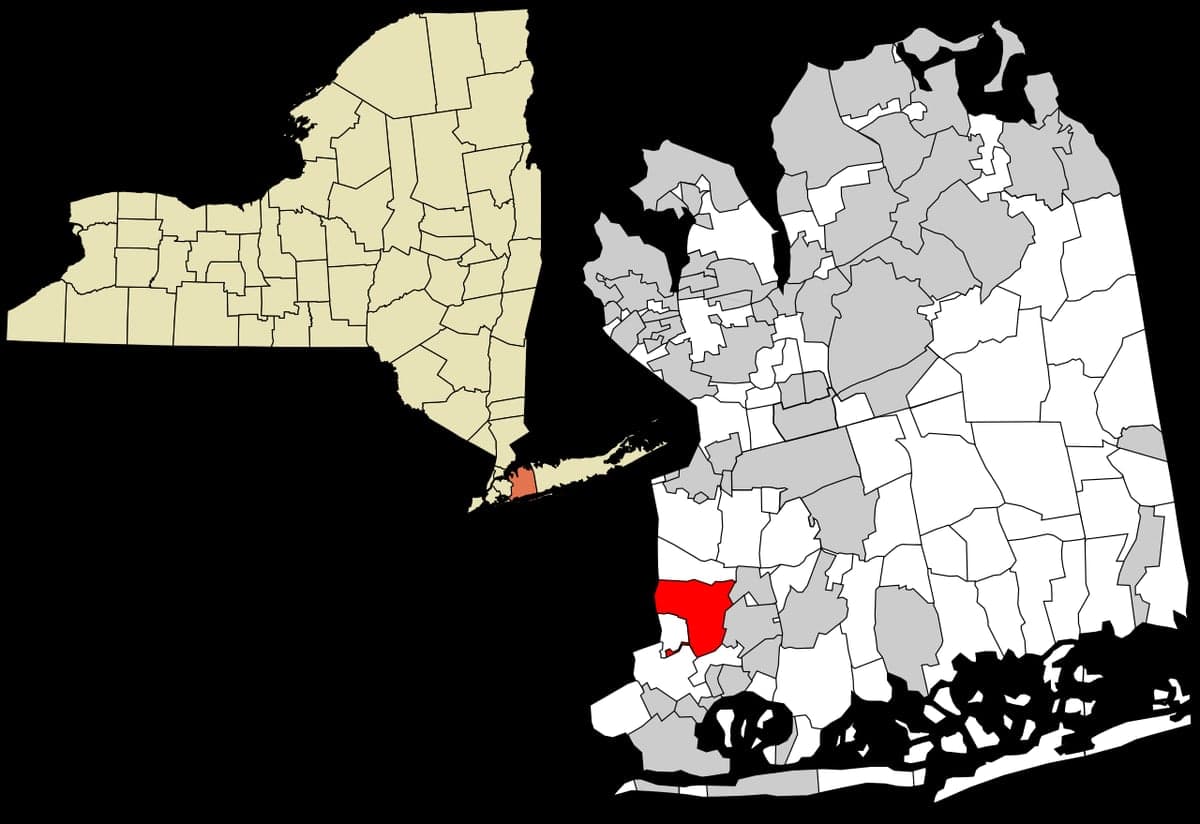
Photo: Wikipedia
Demographics of Valley Stream, NY
Affluence Level in Valley Stream, NY
An upper-middle-class area. Household wealth, education levels, and homeownership run ahead of national benchmarks.
People of Valley Stream, NY
Valley Stream, New York, is a densely settled suburban village of 40,278 residents, characterized by its remarkable racial and ethnic diversity. The population is nearly evenly split among four major groups: White (24.5%), Hispanic (25.0%), Black (24.6%), and Indian subcontinent (11.8%), with smaller East/Southeast Asian (6.6%) and foreign-born (7.7%) communities. This is not a place of a single dominant culture but a mosaic of distinct enclaves, where 38.2% of adults hold a college degree, reflecting a mix of middle-class professionals and long-standing working-class families. The village’s identity is rooted in its history as a classic Long Island railroad suburb, but its people today tell a story of successive waves of migration and settlement.
How the city was settled and grew
Valley Stream’s population history begins in the mid-19th century, when the arrival of the Long Island Rail Road in 1867 transformed a sparsely populated farming area into a commuter suburb for New York City. The original settlers were largely of English, Dutch, and German stock, drawn by cheap land and the promise of a rural escape from Brooklyn and Manhattan. These early families built the village’s first homes in what is now the Gibson neighborhood, near the railroad station, and along the central corridor of Rockaway Avenue. By the early 20th century, a second wave of Irish and Italian immigrants arrived, working as laborers on the railroad and in local construction. They settled in the Central Avenue district and the area around Hendrickson Park, establishing Catholic parishes and small businesses that anchored the community through the 1920s and 1930s. The post-World War II boom brought a third wave: Jewish families fleeing crowded New York City neighborhoods, who built homes in the Green Acres section and the streets off North Central Avenue. By 1960, Valley Stream was overwhelmingly White, with a population of roughly 36,000, and was known as a safe, middle-class bedroom community.
Modern era (post-1965)
The 1965 Hart-Cellar Immigration Act and the broader civil rights movement reshaped Valley Stream’s population dramatically. Starting in the 1970s, Black families—many from Brooklyn and Queens—began moving into the Hendrickson Park and Gibson neighborhoods, drawn by affordable housing and good schools. This in-migration accelerated through the 1980s and 1990s, and by 2020, Black residents made up nearly a quarter of the population. Simultaneously, Hispanic immigrants—primarily from Puerto Rico, the Dominican Republic, and Central America—settled in the Central Avenue corridor and the area around Valley Stream State Park, establishing bodegas, churches, and community organizations. The most striking post-1965 shift, however, has been the arrival of Indian subcontinent families, particularly from Guyana, Trinidad, and directly from India. Starting in the 1990s, these families concentrated in the Green Acres and North Valley Stream sections, drawn by the reputation of Valley Stream’s school district and the proximity to Hindu temples and Indian grocery stores in nearby Hicksville and Floral Park. Today, Indian residents (11.8%) form a larger share than East/Southeast Asian groups (6.6%), a distinction that reflects distinct migration chains and settlement patterns. The White population, once over 90%, has fallen to 24.5%, with many long-time families moving to more distant Suffolk County suburbs.
The future
Valley Stream’s population is not homogenizing; it is tribalizing into distinct, stable enclaves. The Indian subcontinent community in Green Acres is growing through chain migration and high birth rates, and is likely to approach 15-18% of the population within a decade. The Hispanic share, concentrated in Central Avenue, is also rising, driven by both immigration and natural increase, and may surpass 30% by 2035. The Black population, by contrast, appears to be plateauing, as younger families face rising home prices and look to more affordable areas in Suffolk County. The White population is aging and declining, with few young families replacing retirees. The East/Southeast Asian community remains small and stable, centered in the Gibson area. The foreign-born share (7.7%) is low for a diverse suburb, suggesting that most growth is now from second-generation families rather than new arrivals. The next 10-20 years will likely see Valley Stream become a majority-minority village where no single group holds a majority, but where distinct ethnic neighborhoods persist.
For someone moving in now, Valley Stream is becoming a place where diversity is lived, not just statistical—a village of parallel communities that coexist but do not fully blend. The schools are strong, the commute to Manhattan is under 40 minutes, and the housing stock is a mix of pre-war colonials and post-war ranches. The bottom line: this is a stable, middle-class suburb where the population is shifting toward a Hispanic-Indian-Black plurality, and where the character of each neighborhood matters more than the village-wide average. A newcomer should choose their block carefully, as the experience of living in Green Acres versus Central Avenue can be markedly different in terms of language, culture, and daily life.

* Values derived from national, state, county, city and local statistics and may differ in a specific area. Last updated: 2026-05-01T04:48:23.000Z
Narrative content on this page is AI-generated and may contain mistakes. Verify any details that matter before acting on them.
ReloMaps may earn a commission from affiliate links at no extra cost to you.

