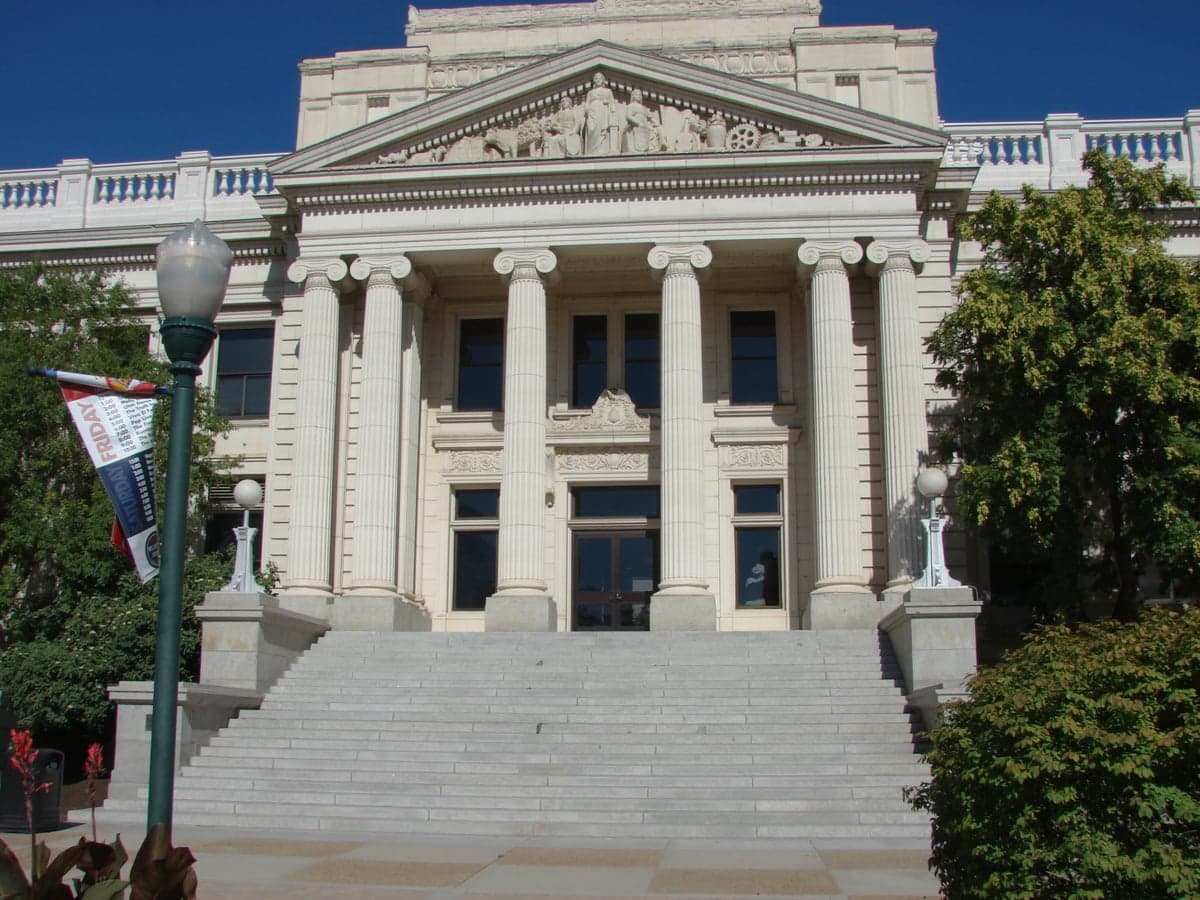
Photo: Wikipedia
Quality of Life in Utah County
A livable area that tracks near national norms for affordability, walkability, and neighborhood health.
What does Quality of Life tell us?
Quality of Life measures an area by evaluating factors like cost of living, nearby amenities, country club access, airport proximity, socioeconomic signals and neighborhood character. For large states, this is a general average — quality of life can vary dramatically between metro areas, suburbs, and rural communities within the same state.
What does this tell us?
Quality of Life measures an area by evaluating factors like cost of living, nearby amenities, country club access, airport proximity, socioeconomic signals and neighborhood character. For large states, this is a general average — quality of life can vary dramatically between metro areas, suburbs, and rural communities within the same state.
Cost of Living
44% above national average
69%
The Real Cost of Living in Utah County for 2026
| Tier | Individual | Family (4) |
|---|---|---|
| Survival | $23k | $43k |
| Comfortable | $95k | $140k |
| Luxury | $153k+ | $238k+ |
| Elite (Top 5%) | $180k+ | $280k+ |
Quality-of-Life Analysis
Utah County offers a broad quality-of-life spectrum, from the dense, amenity-rich suburbs of Provo and Orem to the small-town atmosphere of Springville and Payson, and finally to the rural, agricultural valleys of towns like Goshen and Elberta. The county's character shifts dramatically within a short drive, attracting everyone from tech professionals and university students to farming families and those seeking a quieter, more isolated lifestyle. With a cost of living index of 144 (44% above the national average) and a median home value of $489,200, the county commands a premium for its proximity to outdoor recreation and the Wasatch Front job market, but the specific price and pace of life vary significantly by location.
Largest town(s) & population centers
The urban core of Utah County is anchored by Provo and Orem, which together form a contiguous metropolitan area. Provo is home to Brigham Young University and a growing tech sector often called the "Silicon Slopes," giving the city a youthful, educated, and increasingly professional feel. Daily life here is walkable in certain neighborhoods, with a strong emphasis on university events, local dining, and access to the Provo River and Rock Canyon. Orem, directly north, is more suburban and family-oriented, with a higher concentration of big-box retail and a slightly lower median home price than Provo. Further north, Lehi and American Fork have become major employment hubs, housing headquarters for companies like Adobe, Vivint, and Xactware. These cities offer newer subdivisions, extensive commercial corridors, and some of the county's highest home values, but also the longest commute times as residents travel between job centers.
Smaller towns & rural pockets
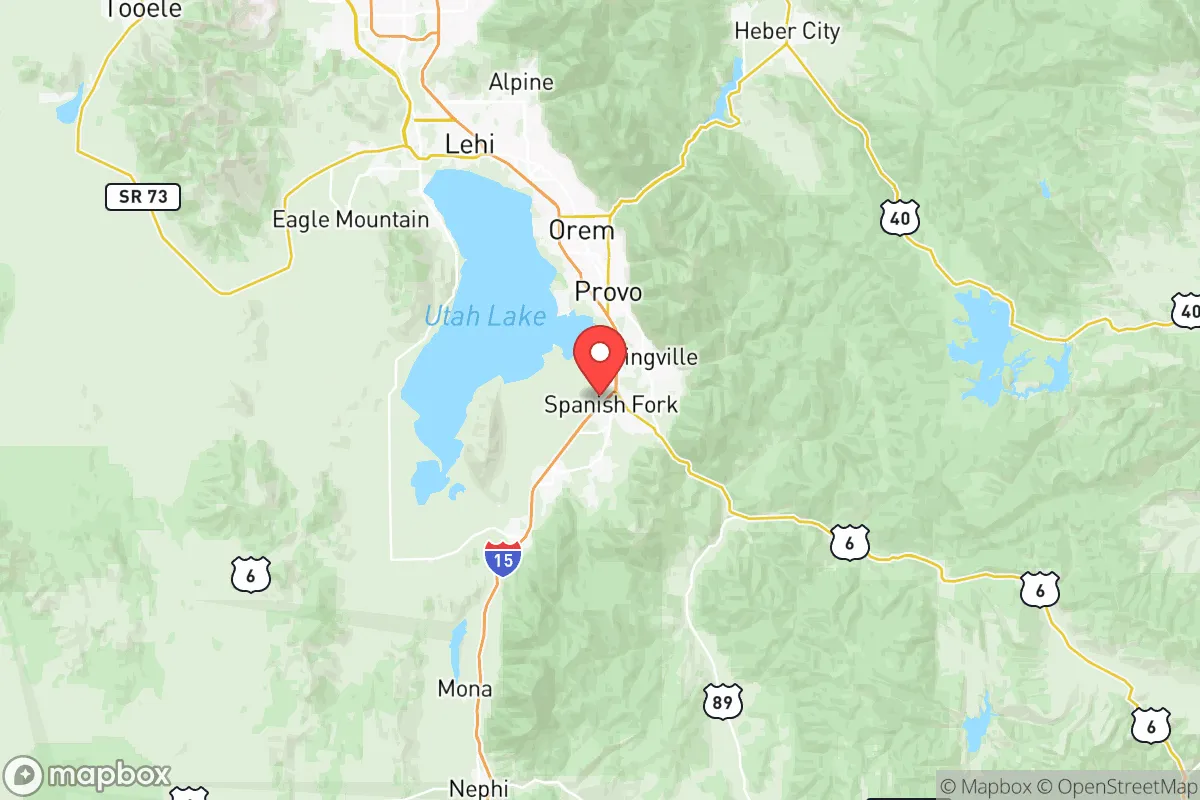
Moving south from the urban core, the county's character becomes progressively more small-town and agricultural. Springville and Spanish Fork offer a middle ground: they have their own historic downtowns and growing populations, but retain a more relaxed pace than Provo. Further south, Payson and Salem feel distinctly smaller, with Salem in particular known for its lake and large-lot homes. The most rural pockets lie in the county's southern and western valleys. Goshen and Elberta are unincorporated farming communities where life revolves around agriculture, with few commercial services and wide-open spaces. Fairfield, near the Cedar Valley, is another tiny, historic settlement that offers a remote feel while still being within commuting distance of Lehi. These areas lack the retail and dining options of the north, but offer significantly more land for the price and a quiet, self-sufficient lifestyle.
Cost & lifestyle range
The cost of living in Utah County is not uniform. The highest prices are concentrated in the northern cities of Alpine and Highland, where median home values can exceed $700,000, and in the newer developments of Lehi and Saratoga Springs. These areas offer the newest schools, the most extensive trail systems, and the shortest commutes to tech jobs. At the lower end of the cost spectrum, Payson and Santaquin offer median home values closer to $400,000, and rural areas like Goshen or Elberta can have even lower entry points for land and older homes. The county-wide median rent of $1,441 is manageable for dual-income households but can be a stretch for single earners, particularly in the north. The average commute of 22 minutes is a county-wide figure; residents of southern towns like Santaquin often face 30-40 minute drives to Provo or Lehi, while those living in Lehi may have a commute under 10 minutes. Lifestyle choices are stark: a family in Alpine might prioritize top-rated schools and proximity to tech offices, while a family in Goshen might prioritize acreage, privacy, and a slower pace, accepting a longer drive for basic errands.
Utah County is best suited for individuals and families who value a strong sense of community, whether that community is a bustling university town, a suburban subdivision, or a rural farming valley. The county's diversity means that a tech worker, a BYU student, and a fourth-generation farmer can all find a place that fits their budget and lifestyle, though the trade-offs in commute, amenities, and housing type are significant. Those who thrive here are typically comfortable with a culture heavily influenced by the LDS Church and are seeking a balance of economic opportunity and outdoor recreation, with the specific flavor of that balance varying dramatically from one town to the next.

Crime in Utah County
Generally safer than 67% of comparable U.S. locations.
Violent CrimeViolent Crime Analysis
Property CrimeProperty Crime Analysis
Crime Analysis
Utah County is one of the safest large counties in the United States for violent crime, with a rate of 218.1 incidents per 100,000 residents that sits well below both the national average and the Utah state average. Property crime, however, is a more pressing concern at 1,278.4 per 100,000, a figure that closely tracks the state average but is notably lower than the national rate. The county’s overall safety profile is heavily shaped by its conservative political culture and the policies of its local prosecutors, which prioritize public safety and victim rights over progressive criminal justice reforms.
Crime in context
Utah County’s violent crime rate of 218.1 per 100,000 is roughly 40% lower than the national average of 380 per 100,000 and also below the Utah state average of approximately 240 per 100,000. This places the county among the safest in the Intermountain West for violent offenses like homicide, rape, robbery, and aggravated assault. Property crime at 1,278.4 per 100,000 is slightly above the Utah state average of about 1,200 per 100,000 but remains 25% below the national property crime rate of roughly 1,700 per 100,000. The gap between violent and property crime rates is typical for suburban and exurban counties where theft and vehicle break-ins outpace personal violence. The Utah County Attorney’s Office, led by a conservative elected prosecutor, maintains a tough-on-crime stance that includes aggressive prosecution of repeat offenders and opposition to bail reform, which helps keep violent crime low but does not fully deter property offenses in high-traffic retail corridors.
What residents experience
Residents of Utah County’s larger cities like Provo and Orem report property crime as their primary safety concern, particularly theft from vehicles and bicycle theft near Brigham Young University and the University Mall. Lehi and American Fork, which have seen explosive population growth along the I-15 corridor, experience elevated property crime rates tied to construction site theft and package theft from new subdivisions. In contrast, smaller communities like Alpine, Highland, and Cedar Hills consistently report the lowest crime rates in the county, with violent crime nearly nonexistent and property crime limited to occasional unlocked-car entries. The county’s conservative judicial philosophy means that offenders convicted of violent crimes face significant prison time, and the district attorney’s office actively seeks enhanced sentences for gang-related activity and crimes involving weapons. This approach has kept Provo’s downtown and the neighborhoods around Utah Lake safe for families, though residents in Springville and Spanish Fork note that property crime has ticked upward as the Wasatch Front’s population has expanded southward.
Neighborhood-level variation is pronounced and predictable: areas near transit hubs, major shopping centers, and university campuses see the most property crime, while the foothill communities east of I-15 and the bedroom communities west of the lake enjoy the lowest rates. The county’s overall safety is reinforced by a strong police presence in Provo and Orem and by neighborhood watch programs that are active in nearly every incorporated city. For families and retirees, Utah County offers a level of personal safety that is increasingly rare in the American West, provided they choose a home in the quieter suburbs rather than the denser urban core.
* Values derived from national, state, county, city and local statistics and may differ in a specific area. Last updated: 2026-06-15T20:53:07.000Z
Narrative content on this page is AI-generated and may contain mistakes. Verify any details that matter before acting on them.
ReloMaps may earn a commission from affiliate links at no extra cost to you.

