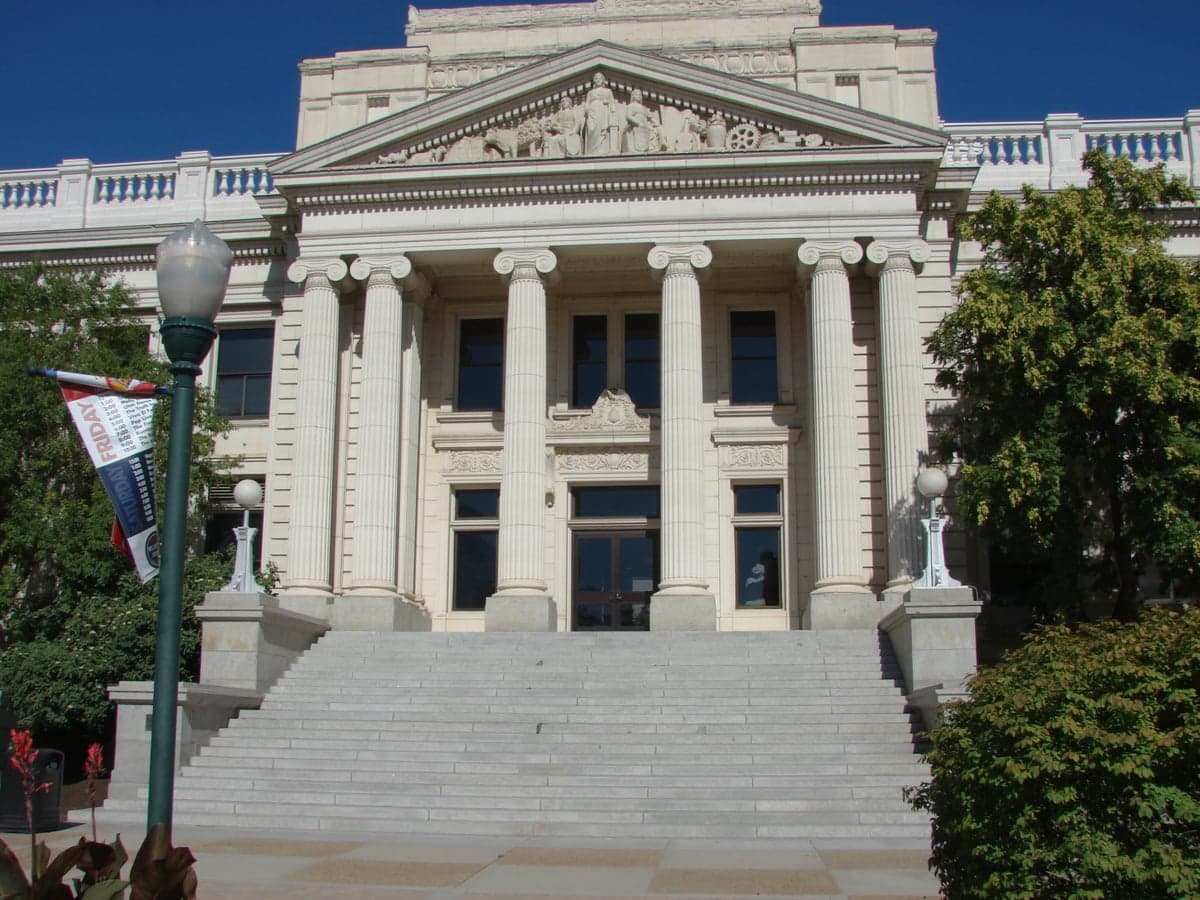
Photo: Wikipedia
Political ClimatePolitical Climate in Utah County
Showing district-level results — no local-only data available.
Local Political AnalysisPolitical Analysis of Utah County
Utah County has long been one of the most reliably Republican strongholds in the nation, with a Cook Partisan Voting Index (PVI) of R+14, but the political reality on the ground is far more nuanced than that single number suggests. The county’s trajectory is shifting, especially along the Wasatch Front corridor, where explosive population growth is bringing in a younger, more diverse electorate that is slowly nudging the area away from its deep-red past. While the county still votes overwhelmingly Republican in federal races, the margins are tightening in certain precincts, and local elections are increasingly competitive in ways they weren't even a decade ago.
How it compares
Utah County’s R+14 PVI makes it significantly more conservative than the state of Utah as a whole, which sits at R+11. That three-point gap might sound small, but it represents a real political gulf in practice. The difference is most visible when you compare the county’s suburban and rural precincts to the more moderate Salt Lake Valley. For example, Provo’s downtown and university-adjacent neighborhoods have become the county’s most liberal pockets, with precincts near Brigham Young University occasionally voting Democratic in local races. Meanwhile, Lehi and American Fork remain deeply conservative, though their tech-driven growth is attracting transplants from blue states who don't always vote the same way as native Utahns. Springville and Spanish Fork are reliably red, while Payson and Santaquin lean even further right. The swing precincts are almost entirely concentrated in Provo’s central core and along the I-15 corridor in northern Utah County, where new housing developments are filling up with out-of-state arrivals. Compared to the rest of Utah, Utah County is less influenced by the moderate Republicanism of Salt Lake County and more shaped by the cultural conservatism of the LDS Church’s headquarters in nearby Salt Lake City.
What this means for residents
For conservative residents, Utah County remains a comfortable place where their values are reflected in local policy, school board decisions, and community norms. Republican candidates rarely face serious general-election challenges, and the county’s legislative delegation is among the most conservative in the state. For liberal residents, the picture is more complicated. They are a clear minority, but they are not invisible. Provo’s downtown core and the areas around Utah Valley University have become small blue islands where progressive candidates can win city council seats and where Democratic voters can find community. The practical reality is that a liberal resident can live a full, happy life in Utah County without constant political friction, especially in Provo, but they will likely feel out of step with the broader community on issues like public lands management, education funding, and social policy. The county’s political lean also means that local government tends to prioritize low taxes, limited regulation, and pro-business policies, which has helped fuel the tech boom in the Silicon Slopes area.
Culturally, Utah County is distinct from the rest of the state in its deep integration of LDS Church influence into daily civic life. The county’s high concentration of active LDS members means that church teachings often shape public discourse on everything from alcohol sales to Sunday business hours. This is less pronounced in Salt Lake City or Park City, but in Utah County, it remains a defining feature. Policy-wise, the county has been a testing ground for conservative education reforms, including school voucher programs and curriculum transparency laws, which have been championed by local legislators. For newcomers, the biggest adjustment is often not the politics itself but the social fabric: community life revolves around church congregations, and non-members can sometimes feel like outsiders. That said, the rapid influx of tech workers and remote professionals is slowly diversifying the county’s cultural landscape, making it more welcoming to people of all backgrounds, even if the politics remain firmly right of center.

State Political ClimatePolitical Climate in Utah
State Political AnalysisPolitical Environment in the State
Utah is a deeply conservative state with a Cook Partisan Voting Index of R+11, meaning it votes about 11 points more Republican than the national average. The dominant political coalition is a blend of The Church of Jesus Christ of Latter-day Saints (LDS) cultural influence, a strong free-market business community, and a growing population of out-of-state conservatives drawn to the state’s economic opportunity and family-friendly reputation. Over the last 10-20 years, Utah has actually become more Republican at the state legislative level even as the Wasatch Front has grown more diverse, driven by in-migration from blue states and a high birth rate among conservative families. The state hasn’t voted for a Democratic presidential candidate since 1964, and no Democrat has won a statewide office since 2016.
Urban vs. rural divide
The political map of Utah breaks down along a sharp urban-rural line, but with a twist: even the urban core is center-right. Salt Lake City itself is the state’s lone blue stronghold, consistently voting Democratic by double digits in presidential elections. The surrounding suburbs of Sandy, Draper, and Lehi lean Republican but are more moderate than the rest of the state, often electing pragmatic conservatives who prioritize economic growth and infrastructure. The real engine of Utah’s Republican dominance is the combination of the heavily LDS rural counties—like Sanpete County (home to Ephraim and Manti) and Cache County (Logan)—and the exurban sprawl of Utah County (Provo, Orem, and the tech corridor known as the “Silicon Slopes”). Utah County alone casts more than 20% of the state’s vote and routinely delivers 70-80% for Republican candidates. The only notable exception is Summit County (Park City), which has flipped blue in recent cycles due to an influx of wealthy out-of-state transplants and second-home owners.
Policy environment
Utah’s policy environment is defined by low taxes, limited regulation, and a strong emphasis on local control. The state has a flat income tax rate of 4.65% (reduced from 4.95% in 2025) and no state-level estate or inheritance tax. Property taxes are among the lowest in the nation, with a median effective rate around 0.55%. The regulatory posture is business-friendly, with right-to-work laws and a streamlined permitting process for development. Education policy is dominated by school choice: Utah has a robust charter school system, a private school voucher program (the Utah Fits All Scholarship), and one of the highest rates of homeschooling in the country. Healthcare policy leans toward market-based solutions, with the state expanding Medicaid only partially under a waiver and maintaining a competitive private insurance market. Election laws are moderately restrictive: voter ID is required, same-day registration is not available, and mail-in voting is universal but with signature verification. The state has not adopted ranked-choice voting or automatic voter registration.
Recent policy direction
Recent legislation in Utah has moved decisively toward expanding individual liberties in several domains, while tightening restrictions in others. On gun rights, the state passed permitless carry in 2021 and has a strong preemption law that blocks local gun ordinances. On parental rights, the 2023 “Utah Fits All” scholarship program gives parents direct funding for private school or homeschooling, and the state has passed laws requiring parental consent for minors’ social media accounts and medical procedures. On speech, the state enacted a law in 2024 prohibiting public universities from engaging in viewpoint discrimination and requiring them to adopt policies consistent with the Chicago Principles of free expression. On privacy and surveillance, Utah passed a comprehensive data privacy law in 2022 (the Utah Consumer Privacy Act) and has restricted the use of facial recognition by law enforcement without a warrant. On medical and bodily autonomy, the state banned nearly all abortions in 2023 (trigger law) with exceptions for rape, incest, and life of the mother, and has passed laws restricting gender-affirming care for minors. On property rights, Utah has a strong eminent domain protection law and has resisted inclusionary zoning mandates. On taxation, the trend is toward further reduction: the 2025 income tax cut was paired with a broadening of the sales tax base to include some services. On voting and ballot access, the state has tightened signature verification for mail ballots and shortened the cure period for mismatched signatures.
Civil unrest & political movements
Utah has seen relatively little civil unrest compared to other states, but there are active political movements on both sides. The most visible flashpoint in recent years has been the debate over public lands management, with the “Transfer of Public Lands” movement—backed by the state legislature and many rural counties—demanding that the federal government turn over control of BLM and Forest Service land to the state. This has led to standoffs and lawsuits, particularly in Garfield County and Kane County (near Bryce Canyon and Zion). On the left, the “Utah Rising” coalition has organized around education funding and opposition to school vouchers, while the Mormon Women for Ethical Government group has been active on immigration and refugee resettlement. Immigration politics are relatively moderate for a red state: Utah has a guest worker program for undocumented immigrants (the Utah Compact) and has not passed a “sanctuary city” ban or a strict E-Verify mandate. Election integrity controversies have been minimal, though the state did see a brief push for a full hand-count audit in 2022 that was rejected by the legislature. A new resident would notice the strong presence of the LDS Church in civic life, but also a growing secular and non-LDS population in Salt Lake City and Park City that is reshaping local politics.
Projection
Over the next 5-10 years, Utah is likely to remain solidly Republican but with a more moderate, business-oriented flavor. The key demographic shift is the continued in-migration of conservatives from California and the Pacific Northwest, who tend to be more libertarian on economic issues and less culturally tied to the LDS Church. This will likely push the state toward further tax cuts, deregulation, and school choice expansion, while also creating tensions with the more socially conservative rural base. The Wasatch Front will continue to grow, with Salt Lake County becoming more competitive at the local level as the non-LDS population increases, but the state as a whole will remain R+10 or higher. The biggest wildcard is the potential for a third-party or independent movement—Utah gave Evan McMullin 21% of the vote in 2016 and has a history of flirting with anti-Trump Republicans. Someone moving in now should expect a state that is deeply conservative but pragmatic, with a political culture that values stability, economic growth, and family policy over culture war flashpoints.
For a new resident, the bottom line is that Utah offers a stable, low-tax, family-oriented political environment with a strong emphasis on local control and individual liberty. Conservative residents will find a welcoming policy landscape and a culture that aligns with their values. Liberal residents will find a minority position but a functional, moderate Republican governance that avoids the most extreme culture war battles. The state’s political trajectory is toward more economic freedom and school choice, with a growing tension between the LDS-influenced social conservatism of rural areas and the libertarian-leaning pragmatism of the urban corridor. If you’re looking for a place where the government mostly stays out of your way and the schools are flexible, Utah is a strong bet.
* Values derived from national, state, county, city and local statistics and may differ in a specific area. Last updated: 2026-06-15T20:53:07.000Z
Narrative content on this page is AI-generated and may contain mistakes. Verify any details that matter before acting on them.
ReloMaps may earn a commission from affiliate links at no extra cost to you.

