Quality of Life in Salt Lake County
A livable area that tracks near national norms for affordability, walkability, and neighborhood health.
What does Quality of Life tell us?
Quality of Life measures an area by evaluating factors like cost of living, nearby amenities, country club access, airport proximity, socioeconomic signals and neighborhood character. For large states, this is a general average — quality of life can vary dramatically between metro areas, suburbs, and rural communities within the same state.
What does this tell us?
Quality of Life measures an area by evaluating factors like cost of living, nearby amenities, country club access, airport proximity, socioeconomic signals and neighborhood character. For large states, this is a general average — quality of life can vary dramatically between metro areas, suburbs, and rural communities within the same state.
Cost of Living
46% above national average
68%
The Real Cost of Living in Salt Lake County for 2026
| Tier | Individual | Family (4) |
|---|---|---|
| Survival | $24k | $45k |
| Comfortable | $94k | $138k |
| Luxury | $157k+ | $244k+ |
| Elite (Top 5%) | $185k+ | $287k+ |
Quality-of-Life Analysis
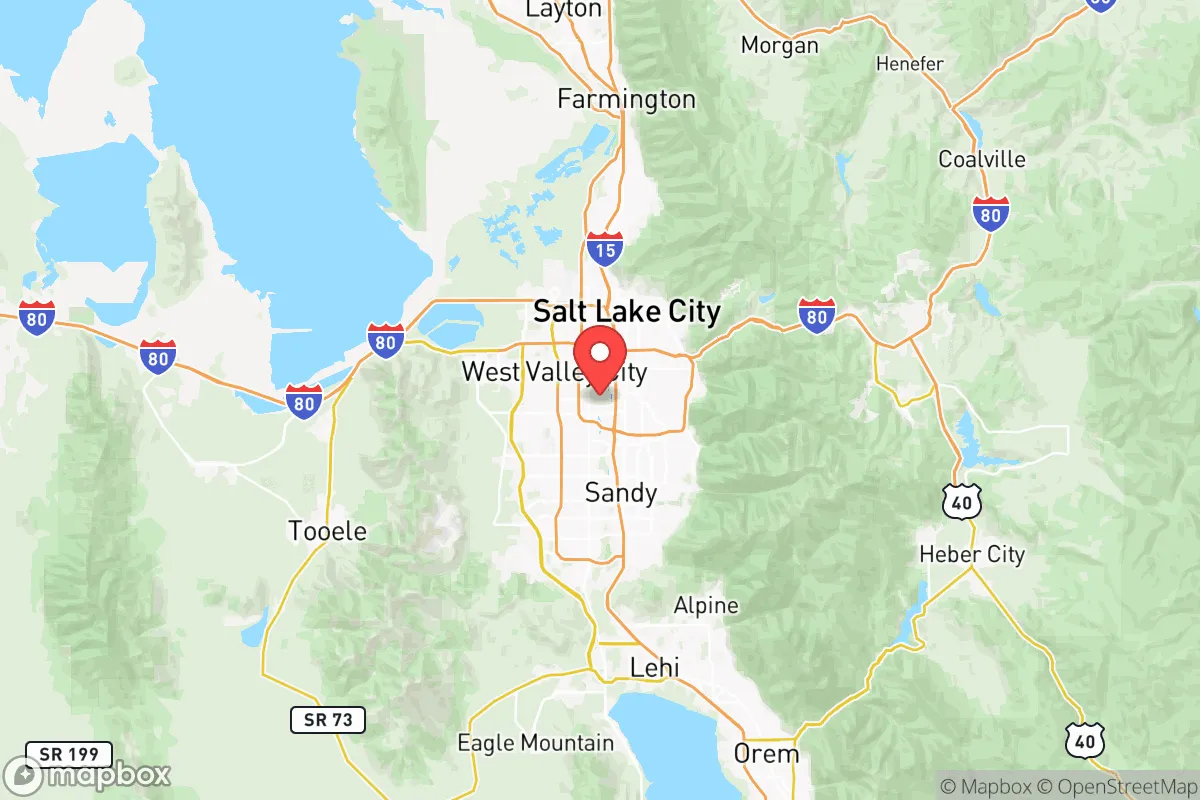
Salt Lake County stretches from the urban core of Salt Lake City east into the Wasatch foothills and west to the Oquirrh Mountains, creating a spectrum of living environments within a single county. Young professionals and renters cluster near downtown transit and nightlife, while families fill the sprawling suburban neighborhoods of the central valley, and a smaller number of residents choose semi-rural pockets for space and mountain access. With a cost-of-living index of 146 (100 = U.S. average), a median home value of $484,500, and a median rent of $1,493, the county offers clear trade-offs between affordability and proximity to amenities.
Largest town(s) & population centers
Salt Lake City is the county's anchor, home to the state capitol, the University of Utah, and a dense downtown core where walkable blocks, light-rail lines, and a growing tech and healthcare employment base define daily life. Just south, the suburbs of West Valley City, Sandy, and West Jordan each top 100,000 residents, with big-box retail, regional malls, and school districts that draw families seeking more space than the city core. Murray stands out as a mid-sized city with strong hospital employment and a commuter-friendly position along Interstate 15. Daily life in these population centers revolves around car-dependent errands and commutes that average just 22.4 minutes — notably shorter than comparable metros — though transit users in Salt Lake City itself often rely on TRAX light rail and bus routes. Nightlife, dining, and cultural attractions concentrate in downtown and the 9th & 9th neighborhood, while suburban centers offer chain restaurants, movie theaters, and large parks.
Smaller towns & rural pockets
Bluffdale, along the county's southern edge, still retains a rural feel with horse properties and agricultural zoning, though new subdivisions are steadily filling former farm fields. Parts of the west-side community of Magna, historically a mining town, offer older, more affordable housing and a small-town main street distinct from the suburban strip malls farther east. On the east bench, unincorporated areas such as Emigration Canyon and Millcreek Canyon provide rural residential pockets where homes sit on acre lots with direct trail access, though they remain within a short drive of downtown Salt Lake City. Farther south, the area around Herriman and Riverton has grown rapidly, but the unincorporated sections near the Oquirrh Mountains still include large-lot properties and quiet dead-end roads. These smaller towns and rural pockets appeal to residents who want more land or a quieter pace without leaving the county's job and school infrastructure entirely.
Cost & lifestyle range
Housing costs vary sharply across Salt Lake County. The most expensive areas lie along the east bench — neighborhoods like Federal Heights, East Millcreek, and Holladay — where median home values can exceed $700,000. These areas offer larger lots, older trees, and proximity to hiking trails and ski canyon access. At the other end of the spread, west-side communities such as West Valley City, Kearns, and Magna have median home values closer to $400,000 and rents that dip below the county median of $1,493. Lifestyle differences mirror the cost spread: east-side residents prioritize outdoor recreation and shorter drives to the mountains, while west-side areas are more family-oriented, with newer schools, lower housing prices, and more chain retail. The central valley suburbs like Sandy and Draper fall in between, offering moderately priced homes and established commercial corridors. Renters in downtown Salt Lake City pay near the county median but get walkability and nightlife that are hard to find elsewhere in the county.
Salt Lake County suits a wide range of households, from downtown professionals and University of Utah students to suburban families and semi-rural homesteaders, as long as they can meet the above-average cost of living. The short 22-minute average commute makes it feasible to live on the cheaper west side and drive to jobs in the central valley or downtown. Those who prioritize mountain recreation and can afford the east bench will find direct canyon access, while buyers on a tighter budget will still find newer homes and decent schools in the western suburbs. The key deciding factor is which trade-off — space versus convenience, cost versus amenities — matters most.

Crime in Salt Lake County
Generally safer than 67% of comparable U.S. locations.
Violent CrimeViolent Crime Analysis
Property CrimeProperty Crime Analysis
Crime Analysis
Salt Lake County presents a mixed safety picture: its violent crime rate of 217.9 per 100,000 residents sits below the national average, but property crime at 1,276.6 per 100,000 exceeds both state and national benchmarks, placing property theft and vehicle break-ins as the leading public safety concern. The county’s geographic and political diversity means that safety varies sharply between suburban enclaves like Draper and Sandy and denser urban centers such as Salt Lake City and West Valley City, where crime concentrations are higher. Residents and prospective movers should weigh both the raw numbers and the underlying effects of local prosecution policies when assessing risk.
Crime in context
Salt Lake County’s violent crime rate is roughly 25% lower than the U.S. average of 380 per 100,000, but property crime runs about 20% higher than the national figure of 1,954 per 100,000 — though that national number has fallen since a peak in 2020. Utah’s statewide violent crime rate is 237 per 100,000, meaning the county is slightly safer than the state as a whole for violent offenses. However, property crime in the county is notably elevated compared to the state average of 1,100 per 100,000. Progressively oriented district attorneys in Salt Lake City and surrounding urban precincts have introduced diversion programs and reduced prosecution for lower-level thefts, a policy approach that critics argue encourages repeat property crimes. By contrast, jurisdictions like Draper and Bluffdale, which maintain more traditional prosecution stances, report property crime rates roughly half the county average.
What residents experience
For the typical resident, property crime poses the most tangible risk: package theft from porches, bicycle theft, and vehicle break-ins are common complaints in neighborhoods near transit corridors in Millcreek and Holladay. Violent crime, while less frequent, clusters in specific zones — West Valley City and downtown Salt Lake City account for a disproportionate share of aggravated assaults and robberies. Suburbs such as Cottonwood Heights and Sandy consistently log violent crime rates below 150 per 100,000, offering a noticeably safer daily experience. The influence of progressive justice reforms is visible: Salt Lake County’s District Attorney Sim Gill, a Democrat first elected in 2010, has emphasized incarceration alternatives and declined to prosecute certain low-level offenses. Supporters say this reduces recidivism; opponents argue it emboldens property criminals and drags response times for victims. Property crime clearance rates in the county hover near 12%, compared to a national average around 18%, suggesting enforcement challenges that some attribute to prioritization over aggressive prosecution.
Neighborhood-level variation is stark. The safest quadrant — the southeastern bench communities of Draper, Sandy, and Alpine (south of the county line) — post violent crime rates under 100 per 100,000 and property crime rates near 900 per 100,000. The higher-risk areas include Magna, an unincorporated community on the western edge, where property crime exceeds 2,000 per 100,000, and portions of South Salt Lake, where a dense concentration of motels and transient housing drives up theft and assault statistics. For new residents, choosing a location within the county often means balancing commute convenience against the reality that progressive prosecution policies in the urban core correlate with higher property-crime concentrations. Savvy homebuyers frequently target neighborhoods patrolled by contract police services from Unified Police Department, which are common in incorporated suburbs and tend to maintain higher officer-to-resident ratios and shorter response times. Ultimately, crime in Salt Lake County is manageable with awareness, but the influence of the local justice system’s ideological lean should be a decisive factor for those prioritizing personal and property security.
* Values derived from national, state, county, city and local statistics and may differ in a specific area. Last updated: 2026-06-01T11:05:45.000Z
Narrative content on this page is AI-generated and may contain mistakes. Verify any details that matter before acting on them.
ReloMaps may earn a commission from affiliate links at no extra cost to you.

