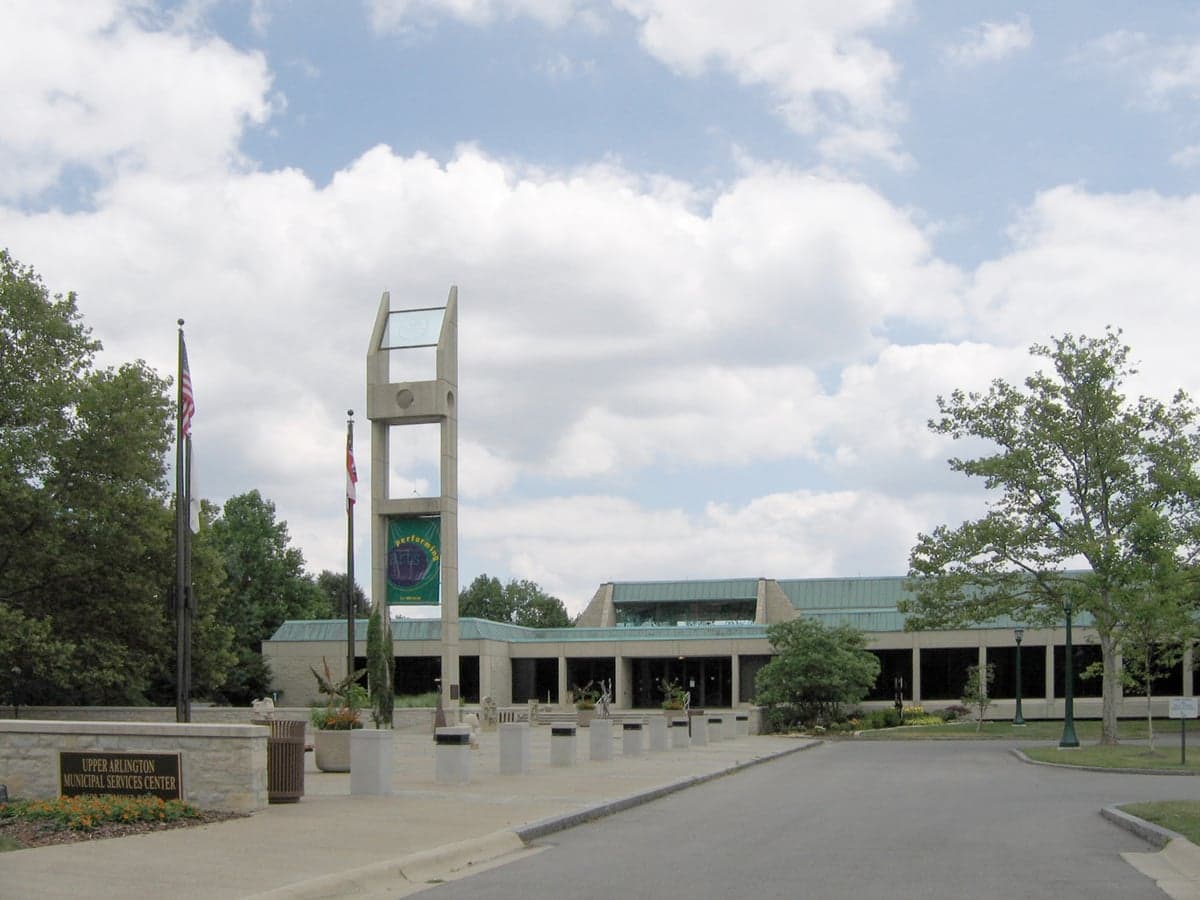
Photo: Wikipedia
Political ClimatePolitical Climate in Upper Arlington, OH
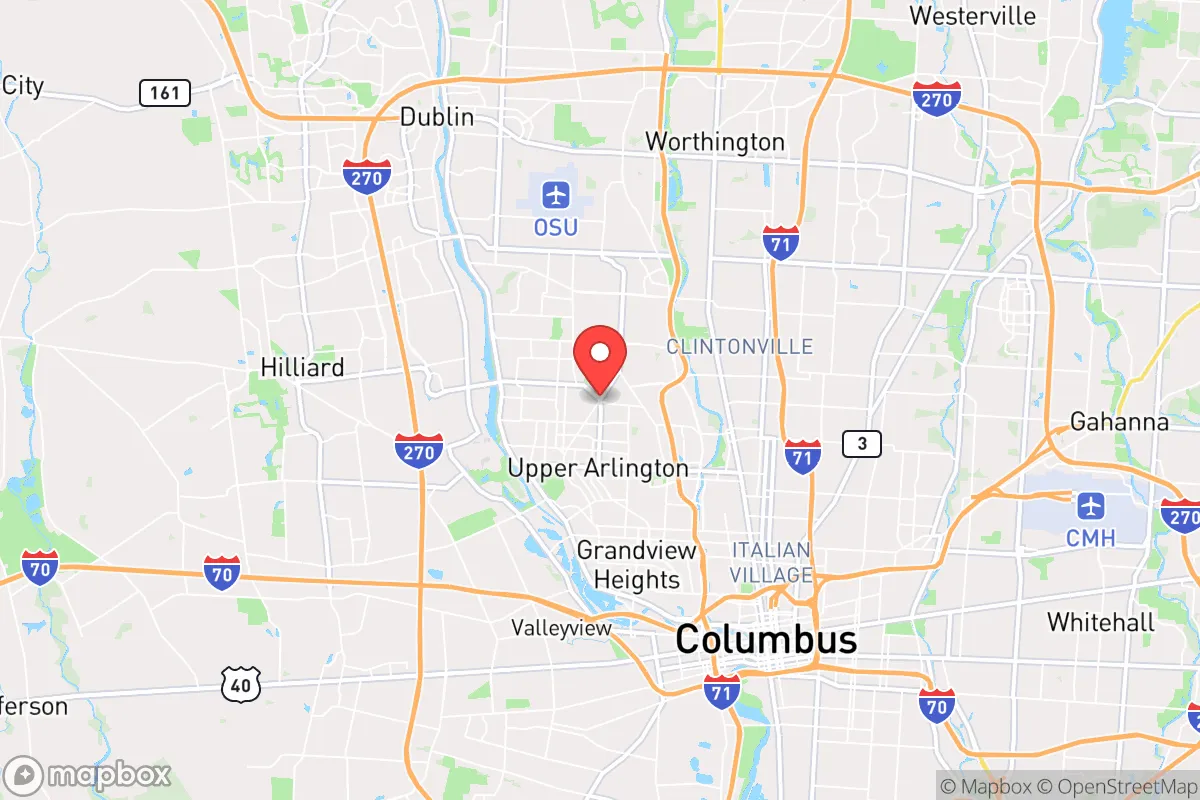
District shown is the primary district for this city’s centroid. Cities may span multiple districts.
Local Political AnalysisPolitical Analysis of Upper Arlington, OH
Upper Arlington, Ohio, has a Cook PVI of D+21, meaning it votes about 21 points more Democratic than the national average. That’s a pretty dramatic shift from what this area used to be. I’ve lived here long enough to remember when this was a reliably conservative suburb—folks voted for fiscal responsibility, local control, and keeping government out of your backyard. Now, the political lean is solidly blue, and the trajectory is only getting more progressive with each election cycle. It’s not just a blip; it’s a real change in the neighborhood’s DNA.
How it compares
To really understand Upper Arlington’s politics, you have to look at what’s around it. Drive ten minutes south to Grandview Heights, and you’ll find a similar D+ vibe—maybe even a little more left-leaning on social issues. But head north or west to places like Dublin or Hilliard, and you’ll see a much more balanced mix, with plenty of conservative-leaning precincts. The real contrast is with the rural townships just outside Franklin County—places like Union County or Delaware County—where the Cook PVI flips hard to the right, often R+15 or more. In those areas, you still hear talk about property rights, school choice, and limited government. In Upper Arlington, that conversation has been replaced by discussions on equity initiatives, climate action plans, and zoning overhauls that feel like they come straight from a city planner’s dream, not from what residents actually want. It’s a stark reminder that your vote here is increasingly out of step with the rest of central Ohio.
What this means for residents
For a long-time resident who values personal freedoms, this shift is more than just an annoyance—it’s a red flag. The local government has gotten more comfortable with what feels like overreach: stricter housing regulations, mandates on everything from energy efficiency to lawn care, and a school board that’s been pushing curriculum changes that prioritize ideology over academics. You used to be able to trust that the city would stay out of your business, but now there’s a creeping sense that every decision is filtered through a progressive lens. Property taxes are high—among the highest in the state—and they keep climbing to fund programs that a lot of us never asked for. If you’re someone who believes in keeping government small and local, you’ll find yourself increasingly at odds with the direction of the city council and school board. The long-term outlook? Unless there’s a major political realignment, expect more of the same: more regulations, higher taxes, and a cultural environment that feels less like the Upper Arlington of the 1990s and more like a suburb of Portland.
One cultural distinction that stands out is the area’s strong identity as a “family-first” community, but that’s being redefined. In the past, that meant great schools, safe streets, and a hands-off approach from the city. Now, it often means mandatory diversity training for staff, bike lane expansions that reduce road capacity, and a push for “affordable housing” mandates that could change the character of the neighborhood. The local paper and Nextdoor are full of debates about these issues, and the divide is real. If you’re considering a move here, just know that the political climate is not what it used to be. It’s a friendly, well-kept place, but the government’s appetite for involvement in your daily life is growing. Keep an eye on the school board elections and city council meetings—that’s where the real battles are happening.

State Political ClimatePolitical Climate in Ohio
State Political AnalysisPolitical Environment in the State
Ohio has long been the quintessential bellwether state, but its political center of gravity has shifted noticeably rightward over the past decade. While it voted for Barack Obama twice, it has since swung decisively Republican, with Donald Trump winning it by 8 points in 2020 and by a similar margin in 2024. The state’s overall partisan lean is now solidly red at the state level, driven by a coalition of working-class voters in small cities and rural areas, though the major metros of Columbus, Cleveland, and Cincinnati still provide the bulk of Democratic resistance. For a conservative relocating here, the trajectory is promising, but the battle lines are drawn clearly between the vibrant, growing red suburbs and the entrenched blue urban cores.
Urban vs. rural divide
The political map of Ohio is a study in stark contrasts. The three C’s—Cleveland, Columbus, and Cincinnati—are Democratic strongholds, with Cuyahoga County (Cleveland) delivering a 30-point margin for Biden in 2020. Columbus, fueled by the massive Ohio State University and a booming tech sector, has become a progressive island in a red sea. Meanwhile, the rural expanse—places like Mercer County in the west and Ashtabula County in the northeast—vote Republican by 40-50 points. The real story, however, is the suburbs. Delaware County, just north of Columbus, was once a swing area but has become a GOP stronghold, voting +18 for Trump in 2020. Warren County, north of Cincinnati, is even redder, with a +30 Republican margin. These suburban counties are where the state’s conservative future is being built, as families flee the urban cores for lower taxes and better schools.
Policy environment
Ohio’s policy environment is a mixed bag, but the trend is toward conservative governance. The state has a flat income tax rate of 3.5% (down from 4.8% in 2020), with a goal of eliminating it entirely. Property taxes are moderate, though they vary wildly by county—expect to pay around 1.5% of home value in Franklin County (Columbus) versus 1.2% in Butler County (suburban Cincinnati). The regulatory climate is business-friendly, with no state-level minimum wage above the federal $7.25, and a right-to-work law is not in place, but union power has waned. On education, Ohio offers a robust school choice program, including the EdChoice voucher system, which lets parents use state funds for private or religious schools—a huge win for parental rights. Healthcare is a battleground: the state expanded Medicaid under Obamacare, but the legislature has pushed back with work requirements and anti-abortion laws, including the 2019 heartbeat bill (blocked by courts) and a 2022 law banning most abortions after six weeks. Election laws have tightened: voter ID is now required, and drop boxes are limited to one per county, a move that has drawn praise from conservatives and criticism from progressives.
Trajectory & freedom
Ohio is becoming more free for conservatives, but the fight is ongoing. The most significant recent expansion of liberty came in 2022 with the passage of HB 99, a constitutional carry law that allows any law-abiding adult to carry a concealed firearm without a permit. This was a major victory for Second Amendment advocates. On parental rights, the state passed HB 8 in 2023, which requires schools to notify parents of any changes to a student’s health or well-being, effectively banning secret gender transitions—a direct counter to progressive overreach. Medical autonomy took a hit with the 2023 passage of Issue 2, which legalized recreational marijuana, but the legislature quickly moved to regulate it heavily, including a ban on home cultivation and high excise taxes. Property rights are generally strong, with no state-level rent control and a favorable eminent domain framework. However, the state’s tax burden, while improving, still ranks in the middle nationally—the flat income tax is a step in the right direction, but the sales tax (5.75% state, plus local) can push over 8% in cities like Cleveland.
Civil unrest & political movements
Ohio has seen its share of political flashpoints. The 2020 protests in Columbus and Cincinnati over George Floyd’s death were large but largely peaceful, though they exposed deep divides. The state has been a hotbed for election integrity concerns: the 2020 election saw a massive push for mail-in voting, which led to the 2021 law tightening ID requirements and limiting drop boxes. Immigration politics are relatively muted, as Ohio is not a border state, but there is a growing sanctuary city movement in Cleveland, which declared itself a “welcoming city” in 2017, limiting cooperation with ICE. This has sparked backlash, with the state legislature considering a bill to ban sanctuary policies. On the right, the Ohio Freedom Alliance and local Tea Party groups remain active, pushing for school board transparency and anti-vaccine mandates. The most visible flashpoint for a new resident would be the constant debate over school curriculum—many suburban school boards, especially in Delaware County, have become battlegrounds over critical race theory and LGBTQ+ content.
Projection
Over the next 5-10 years, Ohio will likely continue its rightward drift, but not without friction. The in-migration pattern is key: people are moving from blue states like California and Illinois into the red suburbs of Cincinnati and Columbus, drawn by lower costs and conservative values. This will reinforce the GOP’s hold on the state legislature and governor’s office. However, the urban cores are growing younger and more diverse, which could flip a few state house districts. The biggest wildcard is the state’s aging population—Ohio has one of the oldest median ages in the Midwest, and younger voters tend to be more progressive. If the state can attract more families from red states, the conservative trajectory is secure. Expect continued fights over school choice, tax cuts, and Second Amendment rights. A new resident moving in now should anticipate a state that is increasingly red, but with a vocal and organized blue minority that will keep things interesting.
Bottom line for a new resident: Ohio offers a solidly conservative policy environment with room to grow, especially in the suburbs. You’ll find lower taxes, strong gun rights, and a school choice system that respects parental authority. But don’t expect a monolith—the urban areas are progressive, and the state’s politics are a constant tug-of-war. If you’re looking for a place where your values are reflected in state law and your vote counts, Ohio is a smart bet. Just pick your county carefully—Delaware or Warren over Cuyahoga or Franklin.
* Values derived from national, state, county, city and local statistics and may differ in a specific area. Last updated: 2026-04-19T05:00:37.000Z
Narrative content on this page is AI-generated and may contain mistakes. Verify any details that matter before acting on them.
ReloMaps may earn a commission from affiliate links at no extra cost to you.

