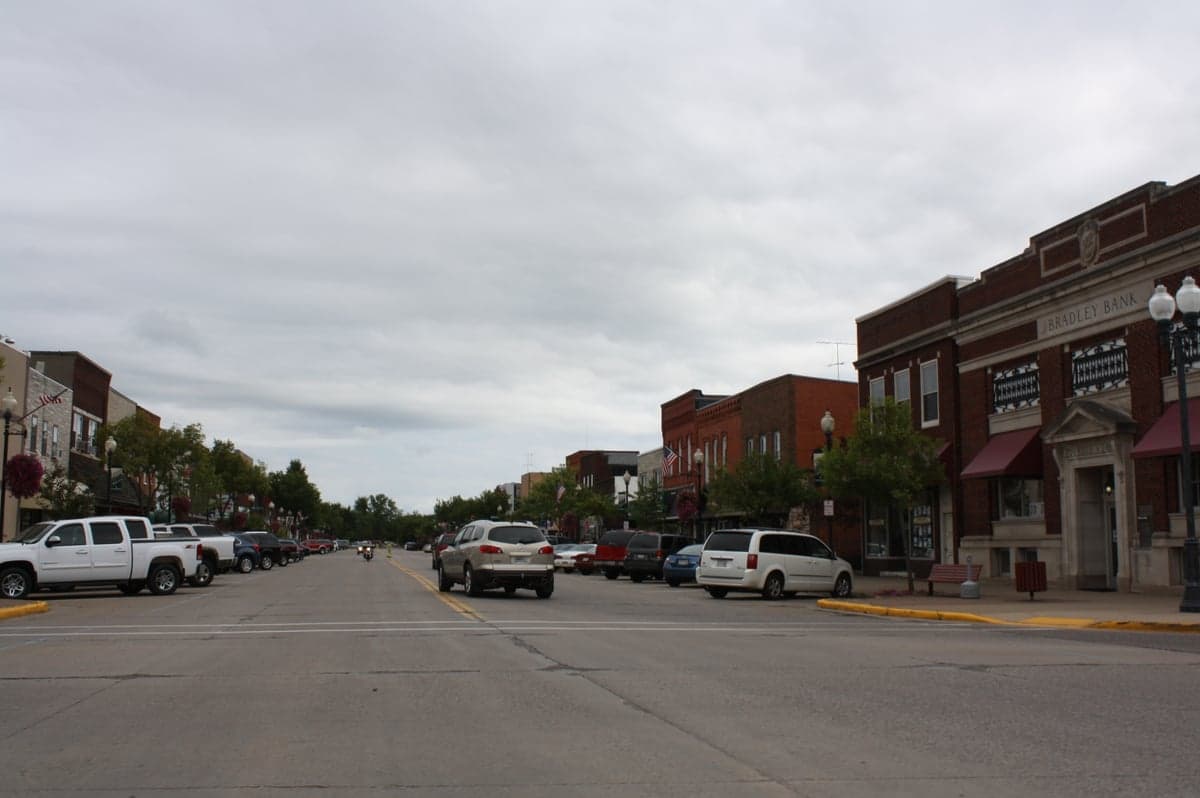
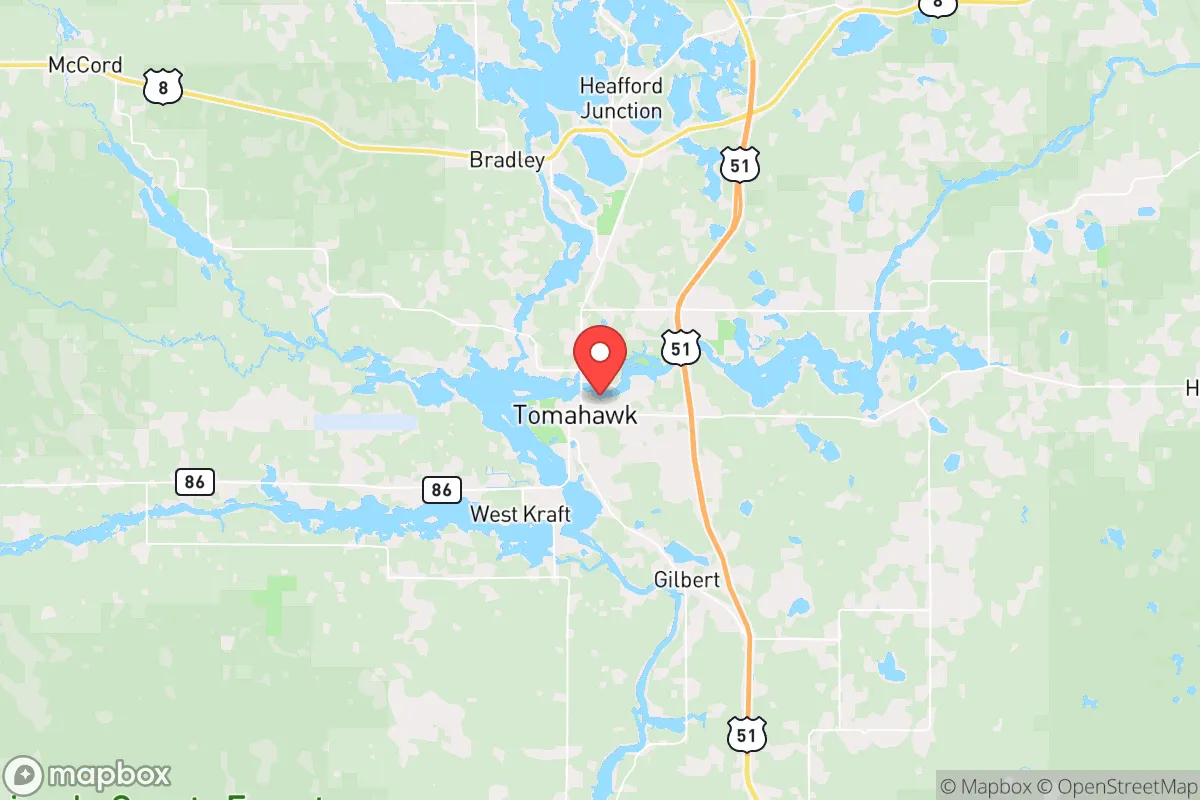
Photo: Wikipedia
Personal Sovereignty in Tomahawk, WI
Moderate friction. Expect trade-offs in some aspect of personal liberty and independence.
What does Personal Sovereignty tell us?
Personal Sovereignty measures your capacity for self-reliance and independence with minimal government friction. Higher scores mean fewer barriers between you and the way you want to live... but it assumes you have the space you need and good neighbors.
What does this tell us?
Personal Sovereignty measures your capacity for self-reliance and independence with minimal government friction. Higher scores mean fewer barriers between you and the way you want to live... but it assumes you have the space you need and good neighbors.
State Policy
Energy independence: Importer (18% of energy produced in-state)
Personal Liberty
Homesteading

Personal Liberty Analysis
Tomahawk, Wisconsin, offers a notably high degree of personal sovereignty, rooted in the state's strong tradition of local control and a legal framework that generally favors individual autonomy over government intervention. For those prioritizing independence—whether in financial decisions, self-defense, or lifestyle choices—the environment here is permissive relative to many other regions, particularly the Upper Midwest and coastal states. The regulatory touch is light in key areas like property use and firearms, while the tax burden is moderate but structured to reward long-term ownership and self-reliance.
Tax burden and regulatory posture in Lincoln County
Wisconsin's overall tax burden is middle-of-the-pack nationally, but Tomahawk's specific mix leans favorably for those seeking to minimize government overhead. The state's income tax is progressive, with rates from 3.54% to 7.65% (2025), but property taxes are the primary local revenue source. In Tomahawk, the effective property tax rate hovers around 1.8% of assessed value, slightly above the national average but typical for rural Wisconsin. However, the key advantage is the state's "first-dollar" property tax credit and the homestead credit for lower-income homeowners, which can significantly reduce the bill for owner-occupied residences. Sales tax is a modest 5.5% (5% state, 0.5% Lincoln County), with no local option for additional sales taxes—a rarity that keeps everyday costs predictable. Regulatory posture is decidedly light-touch. There is no state-level business income tax on pass-through entities (like LLCs or S-corps) for the first $100,000 of income, and Lincoln County does not impose any special business licensing beyond basic state requirements. Zoning is minimal outside the city limits; in the town of Tomahawk (the rural township), there are no county-wide building codes for single-family homes, only state-mandated septic and well regulations. This means a property owner can build a simple cabin or workshop without plan review or permits, as long as it's not in a floodplain or wetland. The regulatory environment is best described as "permissive with guardrails"—the state sets baseline health and safety rules, but local enforcement is often informal and complaint-driven.
Self-defense and gun law specifics in Wisconsin
Wisconsin is a shall-issue state for concealed carry, meaning a permit must be issued to any applicant who meets basic criteria (age 21, no felony, no domestic violence conviction). The process is straightforward: a 4-hour training course, a $40 fee, and a background check. Open carry is legal without a permit for anyone 18 or older who can legally possess a firearm. The state also has preemption—no city or county can enact stricter gun laws than the state, so Tomahawk's local ordinances are uniform with the rest of Wisconsin. Stand-your-ground laws are in effect: there is no duty to retreat before using deadly force in any place where a person is lawfully present. Castle doctrine applies to homes, vehicles, and businesses. Notably, Wisconsin does not require registration of firearms, and there is no state-level waiting period or assault weapons ban. For hunters, the state's generous public lands (over 1.5 million acres of county and state forests within a 90-minute drive) and a three-month deer season with liberal bag limits make self-sufficiency in protein procurement a realistic option. The legal climate is unequivocally pro-self-defense, with no recent legislative pushes for restrictions, even in the wake of national debates.
Self-reliance and homesteading viability: lot sizes, zoning, and off-grid feasibility
For those seeking a homesteading or off-grid lifestyle, Tomahawk's rural areas are among the most accommodating in the Midwest. Outside the city limits, minimum lot sizes in the town of Tomahawk are typically 2 acres for a single-family dwelling, though many parcels are sold in 5- to 40-acre tracts. There is no county-wide zoning for agricultural or residential use in unincorporated areas—only a general "land use" ordinance that prohibits commercial feedlots and industrial operations near residential parcels. Off-grid living is legally feasible: there is no state or county requirement to connect to municipal water or sewer. Private wells and septic systems are standard, and the county health department only requires a soil test and a permit for the septic system (typically $300–$500). Solar panels and wind turbines are allowed without special permits, though net metering with the local utility (Wisconsin Public Service) is limited to 20 kW for residential systems. Rainwater collection is unrestricted. The biggest practical hurdle is winter: the area averages 60 inches of snow annually, so a reliable heating source (wood, propane, or geothermal) is essential. Wood permits on county forest land are cheap (around $20 per cord), and many rural properties have existing woodlots. The regulatory environment for homesteading is best described as "live and let live"—the county will only intervene if a property becomes a public nuisance (e.g., raw sewage, abandoned vehicles, or uncontained garbage).
Personal liberties: parental rights, medical autonomy, speech, and property
Wisconsin's legal framework strongly supports parental rights. The state has a parental consent law for minors' medical procedures (including abortion and gender-related care), and parents have broad authority over their children's education, including the right to homeschool without state approval or curriculum mandates. The state's open enrollment law allows parents to send children to any public school district with available space, and charter schools are common. Medical autonomy is less clear-cut: Wisconsin does not have a state-level right-to-try law for terminally ill patients, but it does allow the use of medical cannabis (though only via a limited program for severe conditions). The state's vaccine mandate for schoolchildren includes exemptions for medical, religious, and personal conviction reasons—a broader exemption than many states. Free speech protections are robust, with no state-level hate speech laws or restrictions on political expression beyond federal limits. Property rights are strongly protected: Wisconsin has a right-to-farm law that shields agricultural operations from nuisance lawsuits, and eminent domain is rarely used for private development. The state also has a constitutional amendment protecting the right to keep and bear arms (passed in 1998), which provides an additional layer of legal security for gun owners. For those who value the ability to make personal decisions without government interference, Tomahawk's legal climate is consistently permissive, with the notable exception of the state's alcohol licensing system (which is more restrictive than many states, requiring a license for any sale or public consumption).
Overall, Tomahawk offers a level of personal sovereignty that is well above the national median and comparable to other rural strongholds in the Mountain West or Deep South, but with the added benefit of a strong local economy and lower crime rates. The combination of light-touch zoning, permissive gun laws, and strong parental rights creates an environment where individuals and families can largely chart their own course without bureaucratic friction. The main trade-offs are the cold climate (which imposes its own constraints on self-reliance) and the moderate property tax burden, which is higher than in some southern states but lower than in the Northeast or West Coast. For a relocation researcher advising a conservative-leaning audience, Tomahawk represents a high-autonomy, low-friction option in the Upper Midwest—a place where the government's role is largely limited to maintaining roads, schools, and basic public safety, leaving the rest to individual initiative.

* Values derived from national, state, county, city and local statistics and may differ in a specific area. Last updated: 2026-11-22T19:01:05.000Z
Narrative content on this page is AI-generated and may contain mistakes. Verify any details that matter before acting on them.
ReloMaps may earn a commission from affiliate links at no extra cost to you.

